The film everyone is desperate to see is the original Teochew. They chose rightly
By Albert Tan
By now, most people who wanted to watch Dear You would have. Even more, if the Teochew original is a must. After nearly a month of big-screen time, any further analysis now would be less a review and more an act of archaeological recovery. We all know exactly what it is, and we all know exactly why you’ve already seen it. But still, there is much to talk about 给阿嫲的情书 (Love Letters Given to Grandma). I have maintained from the beginning that I will only watch the Teochew version and I stood by that with the rigidity of a stale piece of kueh left out in the humidity of a July afternoon—utterly unyielding, slightly crusty, and frankly, prepared to crumble if anyone tries to force me into the Mandarin dub. It was, unsurprisingly, the hardest ticket to get, compared to the version dubbed in 华语 (huayu) or Mandarin. But the path of least resistance did not call out. Three batches of tickets for the Teochew version were released: first 22 screenings, followed by 50, and finally 100. It was only in that third tranche, after I had already planned to travel to Johor Bahru just to catch a Teochew showing, that I was able to secure a pair. I learned again—patience pays.
I’ll lay my cards on the table right now: I’m not Teochew, I’m Hokkien—so please don’t be surprised if my love for a good bowl of prawn mee slightly outshines my enthusiasm for kway teow tng. Since young, I have tended to gravitate towards Teochews for reasons I know not of. So many of my friends speak the dialect and yes, most of them live in Hougang. So while I speak Hokkien well enough, I do consider my Teochew comprehensible. The thing is. I have always thought the two dialects kindred even if they are not exactly the same. Their linguistic resemblance is the result of a shared historical migration pattern and cultural evolution, with ancestral and migratory links to the province of 福建 or Fujian. My father is the Hokkien in my family and his ancestory can be traced to 厦门 or Xiamen. My mother, whose family is also from southern China, is from the county of 雷州 or Leizhou, just north of the China’s Hawaii, the island of 海南 or Hainan. I speak the Leizhou dialect and, as Hainanese is rather similar, I speak the latter too. Without going into complex linguistic genealogy of Southern China, to me, Teochew and Hokkiens are siblings, while Hainanese and Leizhounese are first cousins.
I, therefore, approached Dear You with the affection one holds for a beloved relative from the Mainland. It explains why watching it in Teochew was an imperative. Many people had said to me that “the Mandarin version will still make you cry.” I did not look to Dear You for its emotional resonance but phonological. I do not view the language as a neutral container for information, but as a character in itself. Minnan dialects (闽南语)—to which Teochew belongs—have a musical way of changing tones and distinct, sharp stops in their sounds that Mandarin just doesn’t have. These sounds carry the weight of generations; they evoke the specific rhythms of the 农村 (nongcun, rural areas) or the Nanyang shophouse experience, which Dear You tries to capture. I have grown up in an environment where linguistic homogenisation is the default, where dialects are sidelined by standardised educational and media policies, where I barely get to use the many dialects I speak outside my immediate family. It seems the powers that be are far more comfortable with my dialects being a private relic than a public performance, but surely wanting to watch a movie in one of them and listen to the music of our own history shouldn’t be mistaken for an act of rebellion.
But inside the cinema, the listening experience was rather different. The Teochew spoken by the characters in the film is specifically 潮汕(话) or Chaoshan, a variety native to the region of the same name in eastern 广东 or Guangdong and the ancestral home for many Teochews. Director and screenwriter Lan Hongchun (蓝鸿春), I later learned, intentionally incorporated the distinct accents of 汕头 or Shantou and 潮阳 Chaoyang. This is essentially ‘source’ Teochew. I have never been to Chaoshan, so I have never heard homeland Teochew, but as the film unfolded, many words were familiar to me, just as many were not. The Teochew we speak is diasporic Teochew, shaped by our environment and our history. and our proximity to the Hokkiens, who have been the largest Chinese ethnic group on our island. But that distinction is oddly not established in the film, of which a big part is centred in Bangkok. The Chinese sci-fi writer 陈楸帆 (Chen Quifan), who is from Chaosan, told CGTN : “Each character speak a little bit different dialect even when from the same Chaoshan area.” If that linguistic difference was allowed for the scenes in Chaoshan, it is not clear why Bangkok was given a miss. Thai-Chinese in 1950s Bangkok, even if they were conversant with Teochew, unlikely spoke with the same mainland Chaoshan accent, as suggested by the film. The Teochew diaspora in Thailand had already been integrating for generations. In Dear You, this cinematic homogenisation is jarringly obvious. In striving for Chaoshan authenticity, it ignores the realities of how dialects evolve under the pressure of foreign assimilation.
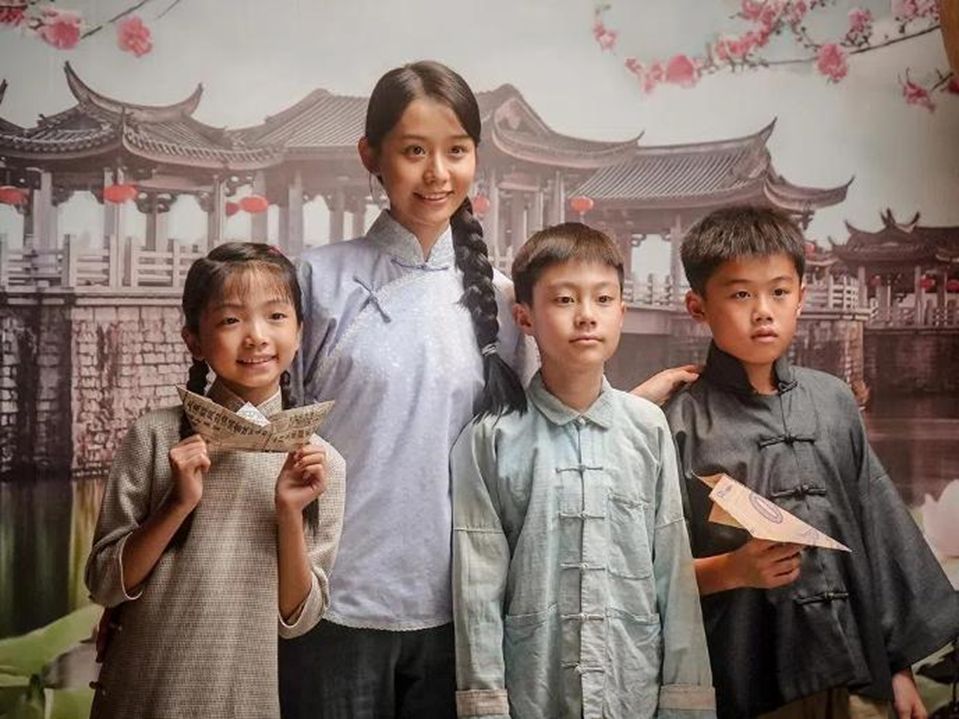
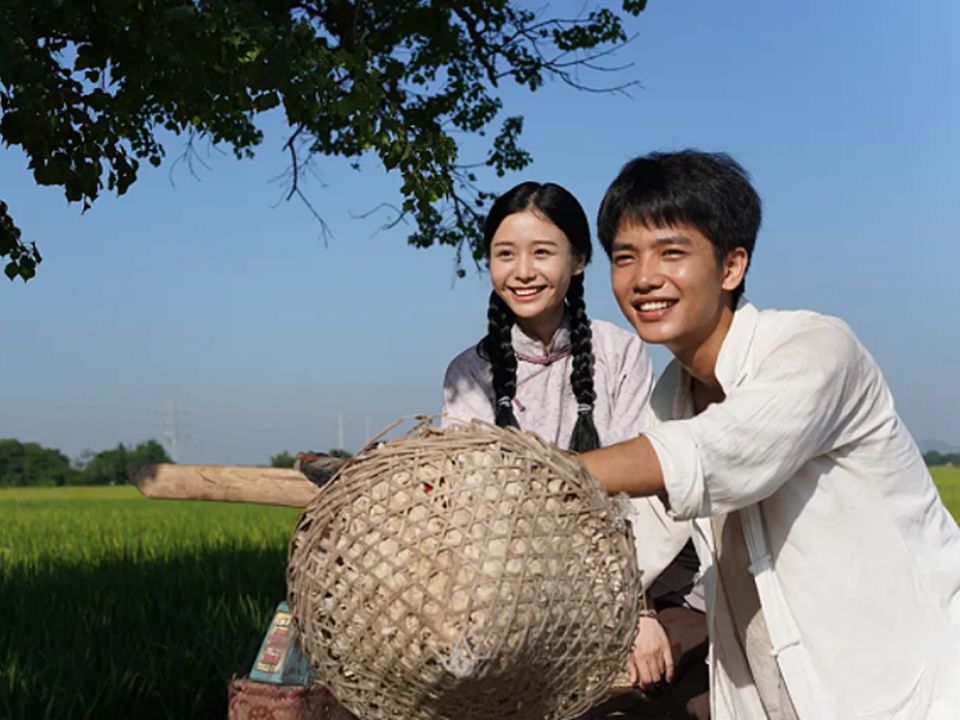
Dear You, I soon realise, can mean different things to different people, even among the Teochews. To me, the film is about two women—one in Chaoshan, one in Bangkok—linked by a single man, yet neither truly possessed him before he met with an unfortunate, premature death. Even the woman who married him and bore him three children found herself, for the rest of her life, living as if she were never wed—her reality as solitary as that of the woman who never had him at all. The illusion of marital security was kept alive by the Bangkok woman, who embraced the grueling reality of her own life while the Chaoshan wife clung to a fantasy of a marriage that had essentially ceased to exist. A significant portion of the film is set against the backdrop of the still-burgeoning Teochew immigrant population in 1950s and 1960s Bangkok, and their economic struggles, particularly among the men, who were the lifeline for their families back home in Chaoshan. Many of them were illiterate. They relied on professional letter-writers to stay in touch with their families and to remit money back home. These correspondences or 侨批 (qiaopi) are the emotional and symbolic spine of the film.
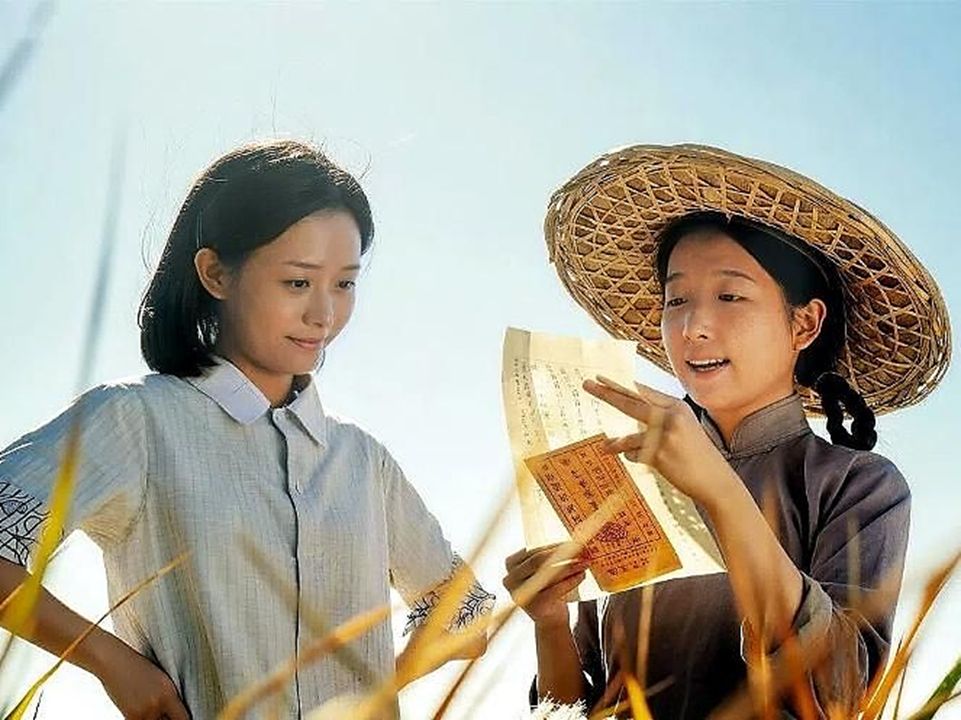
The letters carried money and words of love (but rarely romantic, even if suggested in the film) back to the 侨乡(qiaoxiang), the hometowns of the Chinese in the mainland who have large numbers of family members working overseas. When the mail arrives at the other end, they will be read aloud to the recipients, most of whom are illiterate or semi-illiterate. The paradox of the qiaopi is not unambiguous. The letters were written in elegant, sometimes even literary Chinese (at least to modern Teochews), in what looked like classical idiomatic Chinese style, predominantly comprising the 四字格 (sizige) or four-word phrases. Some of these appeared to be stock phrase: “家中安好 (jiazhong anhao or family well)” or “切勿挂念 (qiewu guanian, do not worry). But the senders themselves back then were often uneducated dockworkers, plantation laborers, shop assistants, or, in the case of the film’s protagonist, the man receiving the attention of the two women, a rickshaw rider. The letter-senders, mostly men, did not only lead double lives, their mails were doubly deceptive. Not only did they conceal hardship, they also presented a voice that was never truly theirs. The distance between lived voice and written script could not be clearer. They were beautifully ghost‑written lies.
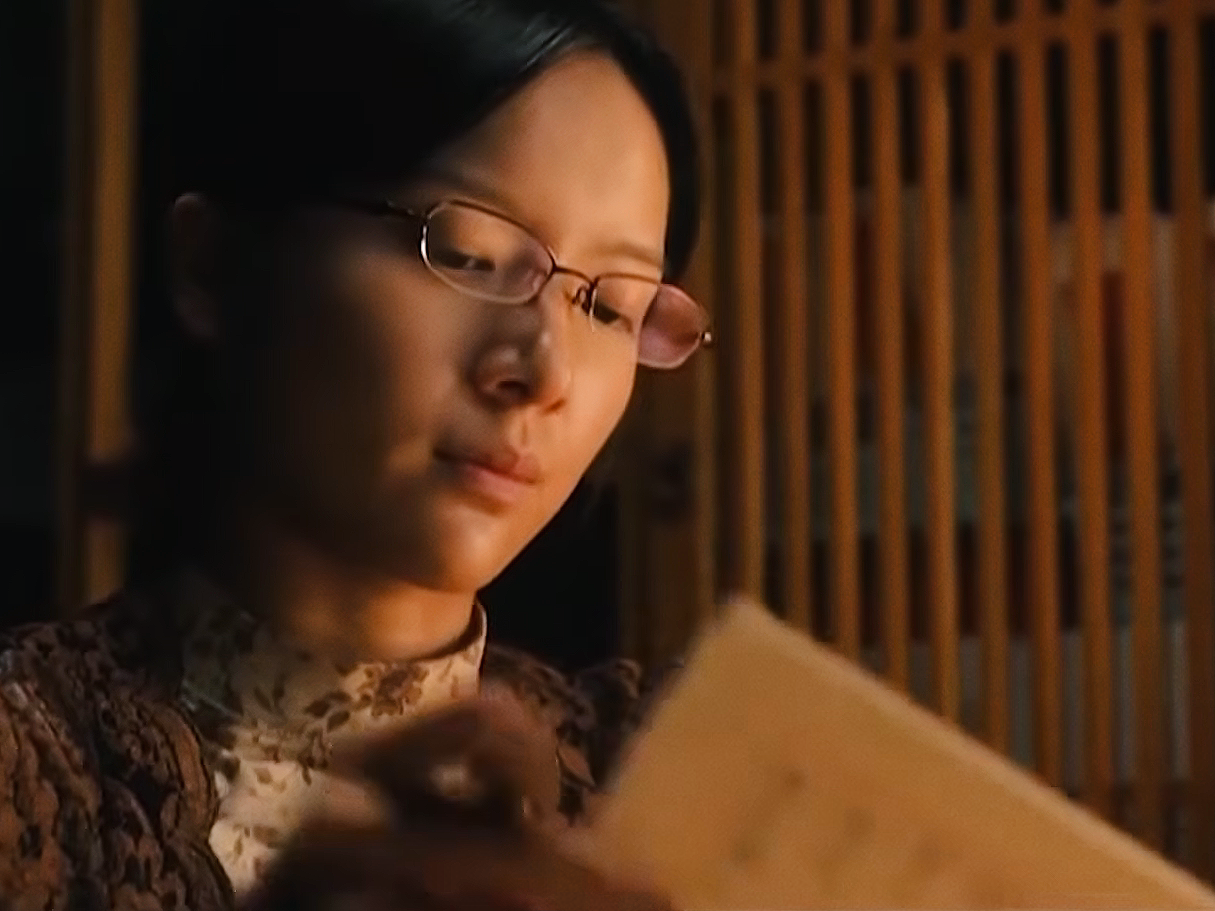
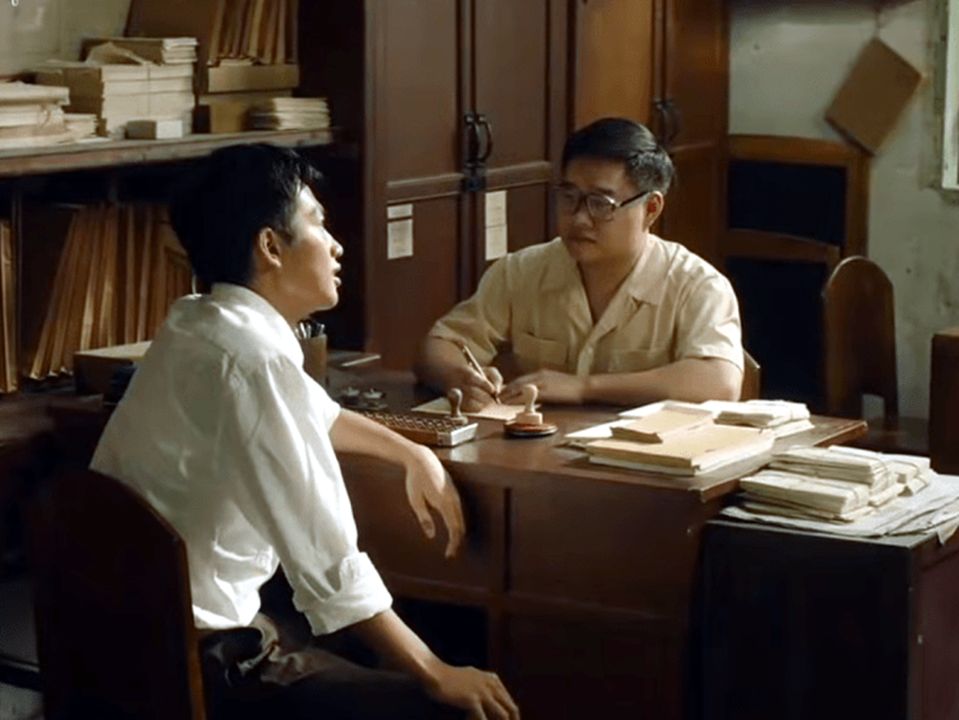
As a narrative device, the qiaopi is a conduit of memory, diaspora, and economic survival, not romantic longing. While Dear You showed the pain of separation, the endurance of hardship;:the illusion of security; one small 侨局 (piju) named 裕豊银信局 (yuli yonxinju), the bureau where the 代笔 (daibi) or “substitute pens” offered their words and penmanship, it curiously set most of the Bangkok action (more than half of the entire film) in scenes that look more like studio sets than actual buildings in Yaowarat, where the main characters supposedly lived and worked and where one estimate suggested that there were at least 150 pijus in the bureaus’ heydays. My understanding is that most of the scenes were filmed in China, specifically in Shantou. The crew in Bangkok was small, arriving in the city reportedly with just two cameras and one gimbal, even mounting a camera on a tuk tuk,, when they had no camera tracks. Very little of Yaowarat was filmed. Although more than half of the storey is set in Bangkok, the city gets only a token visual mention—Wat Arun and a seeming Buddha of the Paknam Phasi Charoen Temple. During his press tour in Malaysia, Mr Lan reportedly said that many of the sets were inspired by the places he had visited during his research in Malaysia, according to CGTN.
Yaowarat Road is the bustling main artery of Bangkok’s Chinatown, believed to be the largest in the world. The construction of the road and it’s vicinity was ordered by King Rama I, the founding architect of the capital Bangkok. Before the road existed, the area was a swampy, rural settlement populated by Chaoshan immigrants who had been relocated from the site of the current Grand Palace. The largely Teochew populace decamped for Sampheng, known to the Teochews as 三聘 (sanpin), a small lane that had nothing to do with betrothals other than an area notoriously overcrowded, but still the beating heart of Bangkok’s entire domestic commerce. By the late 1800s, Sampheng was dangerously congested and prone to fires. To modernise the area, King Rama V built Yaowarat Road. This grand avenue immediately attracted the wealthiest Chinese clans, huge gold shops, and finance houses, shifting the epicentre of Chinatown from the narrow alley of Sampheng to the wide boulevard of Yaowarat. Sampheng remained the ultimate Teochew enclave and it is likely that the protagonist in Dear You settled here in the 1950s, when he met his unfortunate fate.
The story of Bangkok’s Teochew community is one of palpable transformation, where refugees and laborers evolved into the architects of Thailand’s modern economy. As the nation’s largest Chinese ethnic sub-group, their legacy is now inseparable from the fabric of Thai cultural and culinary, as well as royal life. In fact, one of Thailand’s most famous kings, Taksin, is a Teochew, the son of an immigrant royal tax collector from Chenghai District in Shantou and is known in imperial Chinese records as 鄭昭 (Zhengzhao). I do not remember the king’s name or any of these roads mentioned in the film. Dear You is marketed as a “small” story about a “small” life—a grandmother, a grandson, a boxful of letters—but it’s set against a massive historical backdrop that it curiously avoids depicting with adequate breadth. Although it admittedly stays away from being maudlin, it still sticks to the 1950s black-and-white Hong Kong melodramas, now featuring a rickshaw driver totally unaware of the economic giant that he has walked into and then ends up with nothing, even the two women who would do anything for him. The Teochew experience in Thailand is one of ascent and integration, not merely the cycle of poverty and remittance that the film relies on. Yes, it’s a film about absence, but that absence also erases the very real historical presence of Teochews in Bangkok.
If the film renders the Teochew experience as a small, dusty-hued, passively sad story, as I saw it, then perhaps the Minister of Culture, Community and Youth David Neo’s jokey suggestion that it’s just entertainment and not worth a busy office holder’s time—“首先, 部长没有时间看电影 (firstly, a minister has no time for movies)” is quite the logical conclusion. To me, Dear You skims the collective, opting to train the spotlight on a few individuals and their constricted existence. Perhaps, for many, this small-life narrative can be missed since it doesn’t demand engagement with diaspora history. The film’s playing down of the breadth of the Teochew immigration story rather dovetails with our wider avoidance of art as a pillar of culture. To justify the dialect screening, the Teochew version of Dear You at GV cinemas comes under the banner of “Teochew Cultural Movie Showcase”. The film is already marginalised by being framed as a niche cultural event rather than mainstream cinema. When a Minister of Culture has no time for a Cultural Movie Showcase, the irony is as delicious as the film’s 无米粿 (wumiguo), also known as crystal dumpling, whose humble margins somehow funded a life for a total stranger, a beneficiary the seller did not have the pleasure of meeting, at least not until it was too late. But cry I did not.
Film stills: Golden Village/Clover Films

