Celine’s first stand-alone menswear show on the last day of PFW appeared to be a binary excuse for archetypes. In fashion, how many more must there be before one calls it a day?
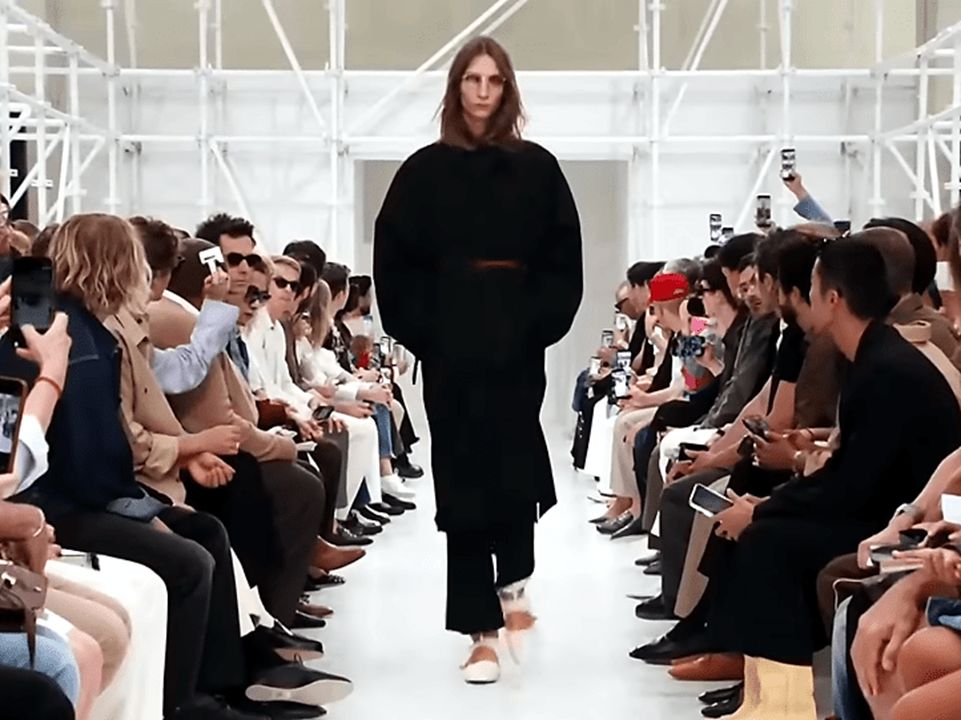
Michael Rider’s debut all-men Celine collection was staged at the Tennis Club de Paris, one of the oldest and most prestigious private sports clubs in France that is not far at all from the more famous Stade Roland Garros. The location, a fashion fave, is, however, no indication that Celine would be offering a sports-centric collection, even less so, a tennis-inspired one. Rather, Mr Rider manifested a line-up of what has been described as “characters”, both Tough and Tender, as the show was called. It was less a cinematic breakthrough and more a gallery of tropes that had expired sometime in the several seasons before Demna Gvasalia’s last collection for Gucci. He was essentially curating a flea market of urban archetypes, all of which had been mined so thoroughly they were practically ethnographic curiosities. The turnouts were different, and each were a arty type—none looked like they have ever stepped into a sports club. They could be fashion students, music festival-goers, K-pop stars and their superfans, modern-day Sinbads, mature dandies, tech bros, and anyone who thinks fashion is the best way to look like an outcast.
Archetypes were once revelatory. Mr Rider’s predecessor Hedi Slimane’s rock star—going way back to his Dior days—felt like sharp cultural condensations. Mr Gvasalia’s normcore and corporate archetypes at Balenciaga turned fashion into social critique or tease. But archetypes, in the spotlight for too long, easily slide into cliché when they float down the runway without polemical bite. Mr Rider dressed the models in the roles he wanted them to play, but they weren’t so much inhabiting a role as they were waiting for their call time to end. They didn’t arouse the imagination even when, for some, they stirred the impulse to spend. Perhaps, archetypes have become a tired trope because they no longer destabilise meaning; they just recycle it. Each new archetype is less a cultural insight than a marketing hook. This was Mr Rider’s debut. It might have worked in his favour if he considered that it was time to reconsider dressing-up with tired sociological tropes. A more honest pursuit would be to junk the shorthand entirely and engineer a visual vocabulary that is intentionally fragmented, volatile, and quite allergic to being filed away under ‘relatable’.
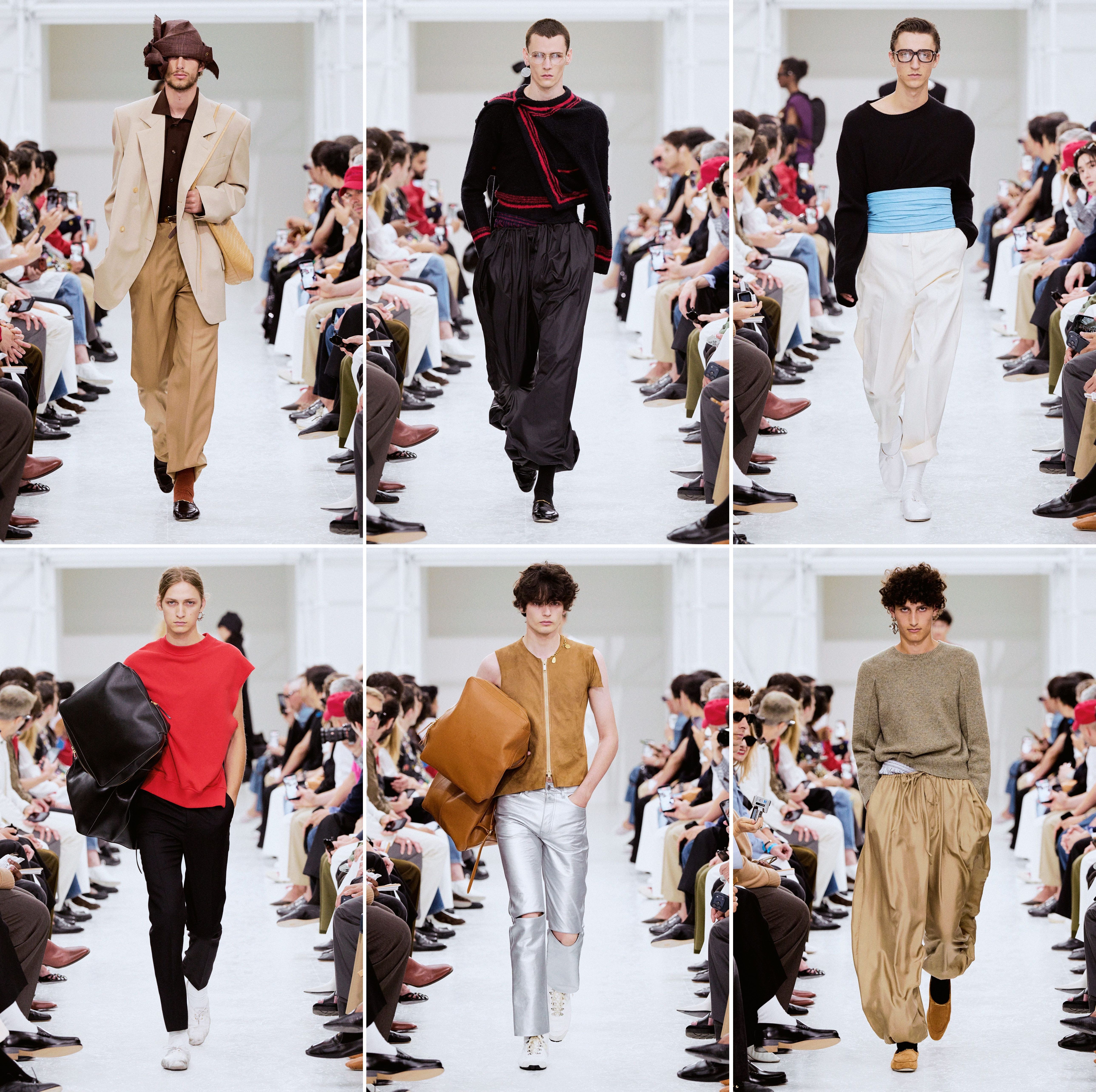
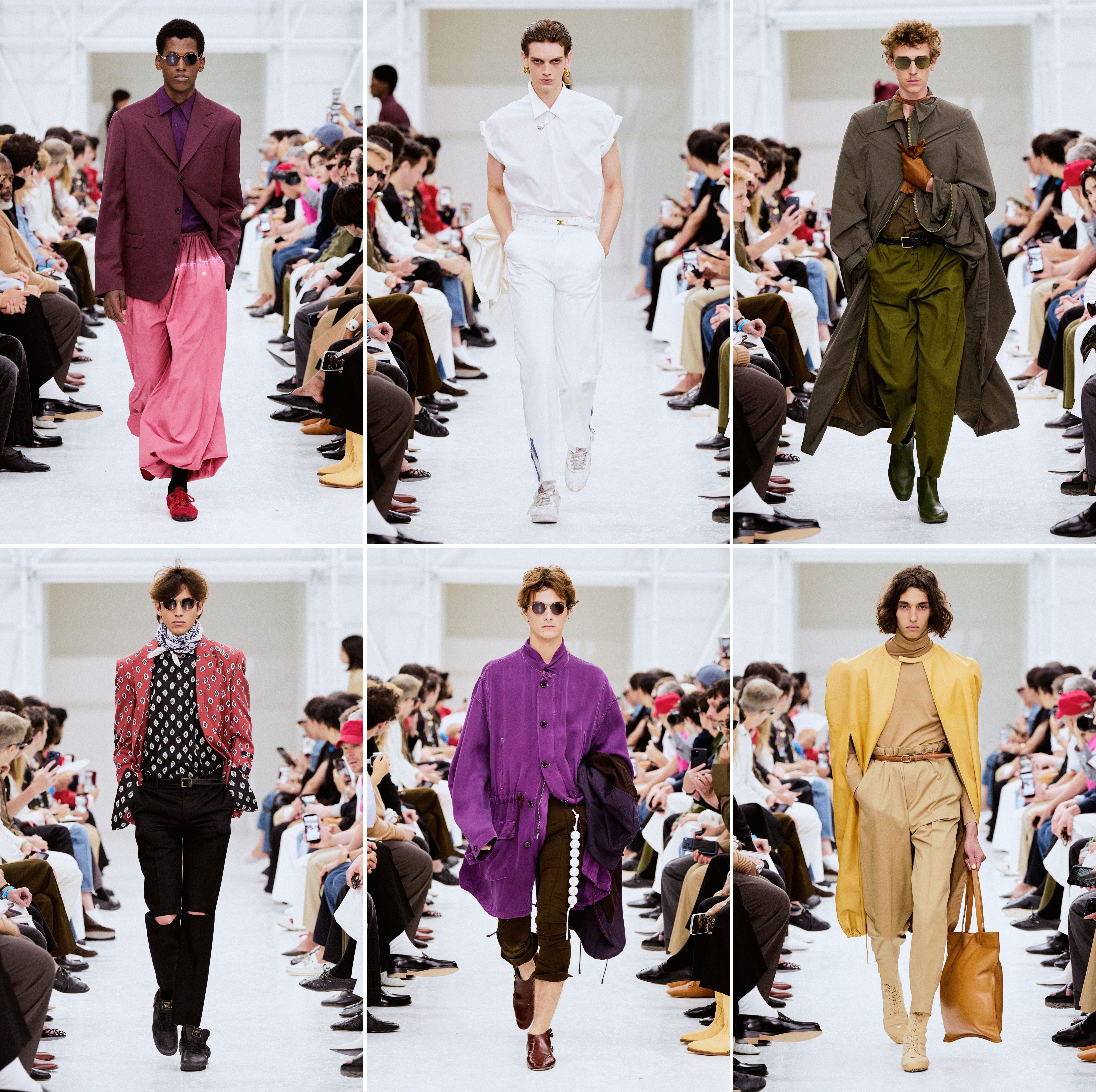
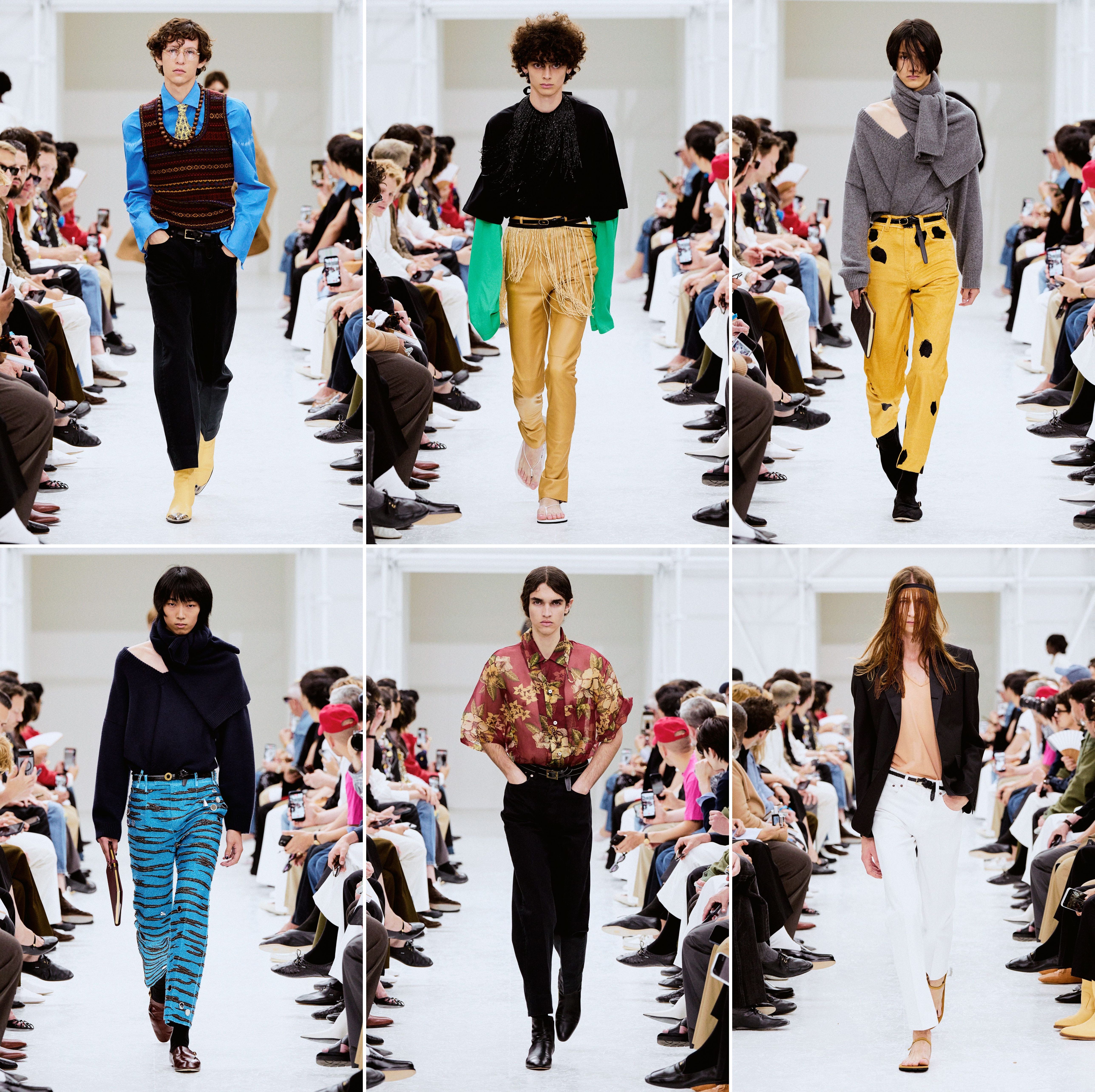
Scrub off the archetypal veneer, the pieces started to look regrettably familiar—much like the standard-issue essentials that seem to be every maison’s go-to baseline this season. Extending the shirt tails to tunic length, widening the neck of pullovers so to accommodate two necks, or tapering the legs of pants to emphasise spindly limps were tweaks, not revelations. They were simply the rhythmic, predictable calibrations of a design language that has decided to sway along with the existing currents of the luxury establishments. Sure, there were the harem pants that may amuse Ali Baba and his band of thieves and the bright blue jeans with tiger stripes or the yellow pair that looked like habitat for mould to delight the club habitues, but would they entice those who do not primarily live under furious strobes? To ensure every fashion-projecting guy—or those who vaguely do—have something to buy, Mr Rider included a scooped neck vest of country knit worn with a Klein blue chemise or the open-neck vacation shirt that Americans find very appealing, given the heat that the U.S. is also experience like most of Europe. Variety is the spice of life, but a spice cabinet that’s too full just makes it impossible to find the salt.
In the show notes, Mr Rider was quoted saying: “Enjoying what we do in the studio and desiring it ourselves, all of it, the clothes and the characters” Did Demna Gvasalia not utter something similar when he was with Vetements? The atelier’s internal wishlist and the runway’s stark requirements rarely find themselves on speaking terms. A stylist’s intervention was required, a task Mr Rider reportedly undertook entirely on his own. Plain denim jeans wouldn’t sing, so it had to have a skinny charm as a belt. You get the picture. The accessories were what caught the attention of many, and the most talked-about were the beaded face curtains. Many considered the face fringing new. We immediately saw the liu (旒) or the beaded fringe of the mianguan (冕冠) or ceremony crown of Chinese emperors that go back to the Zhou (周) dynasty. But Mr Rider’s stringy apron touched the face and swung like extended bangs. It was not meant to look royal, but campy—a New York sense of effete extravagance. And that is understandable since the idea was, according to Celine, a nod to 1990s New York City club kid culture, specifically the antics of Michael Rider’s friend Walt Cassidy, the archetype Big Apple club kid known for his necessarily outrageous looks. There is no better metaphor: tough or tender, they were uniforms of a great night out.
Screen shot (top): Celine/YouTube. Photos: Celine

