Being “smart” is, apparently, the new wellness mandate. And it reaped the predictable haul of attention, confirming that if you broadcast loudly enough, people do clap
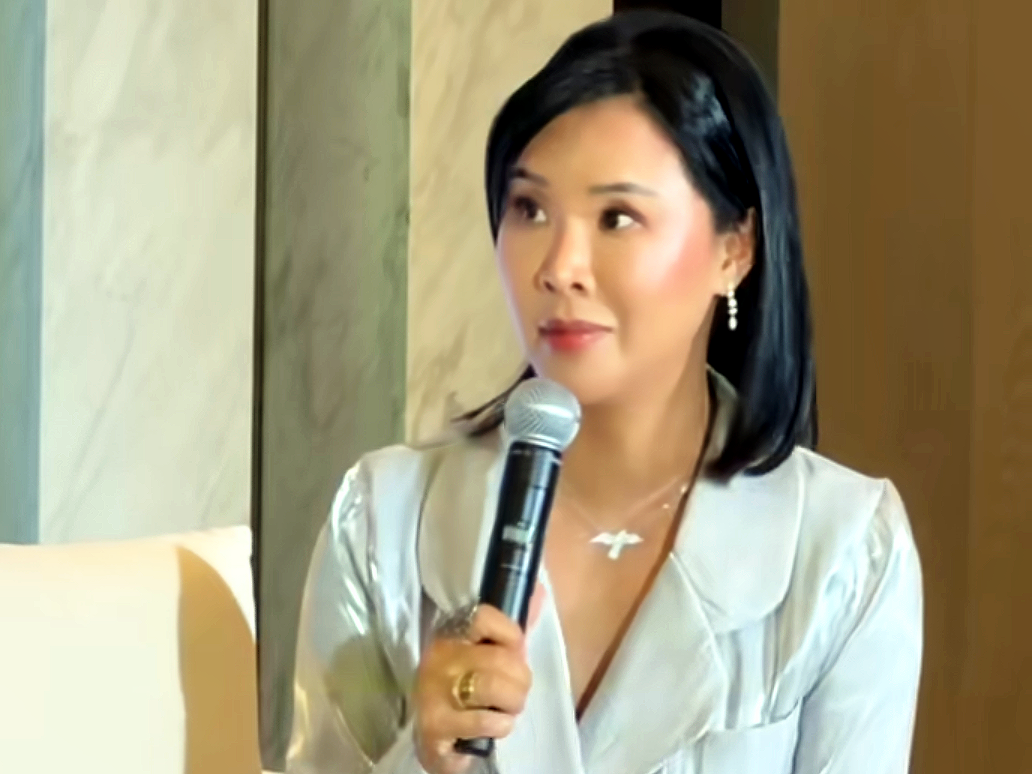
Crystal Lim-Lange at the Vogue Wellness Day
Fashion titles around the world are diversifying into wellness, rather than just clinging to lifestyle themes because, more and more, editorials of pure fashion and such no longer sustain prestige or revenue. Vogue SG is no exception. Four days ago, they staged their inaugural ‘Wellness Day’ at the Mett Singapore. Apart from the usual talks and activities, there were ‘masterclasses’ so that participants could “engage in intimate, expert-led sessions designed for small-group learning—offering practical tips and guided approaches to everyday wellbeing,” as Vogue SG enticed. Apparently, in the current hierarchy of needs, the final barrier to enlightenment is an Ayurvedic self-massage. Among the “mindfulness masterclasses” was one about “The Art of Journalling”, conducted by Crystal Lim-Lange, widely known as a “leadership expert”, who also helpfully offers on Instagram “workwear tips to help you unleash your confidence”. Her fiery session would have stayed on the manicured grounds of the hillside hotel, but it did not the minute she hit post on her TikTok account. As we frequently see, nothing quite validates like the digital applause of the masses.
Ms Lim (she retained her maiden name in addition to her married name. Her husband, Gregor Lange, a German-born psychologist, did the same) shared only a portion of her speech, so we don’t know what led her there. In a nutshell, she said “Singaporeans don’t speak up because they’re damned smart.” We assume she meant that we calculate the risk and know we will not be appreciated. She then said that she had been asked by corporations that she consults for to conduct “speak up workshops” but these, she asserted, don’t work unless companies fix deeper issues. That reel has since attracted 57.7k views and 2,429 likes; it successfully corralled the usual digital onlookers, proving once again that the bar for capturing the public’s fleeting attention remains comfortably subterranean. What truly caught our ears was her use of that intensifier “damned”. The word is striking precisely because it’s not typical leadership speak. In a keynote or panel, one expects polished, neutral phrasing—“savvy”, “astute”, “strategic”. By choosing “damn smart”, Ms Lim deliberately broke register—a refreshing pivot to pass for insight.
What truly caught our ears was her use of that intensifier “damned”. The word is striking precisely because it’s not typical leadership speak
It may have been a stylistic triumph, but if we keep our heads, “damned” remains, quite stubbornly, a swear word. It is possible that, rather than “really smart”, Ms Lim meant “effing smart”, just as fellow influencer, the ever-elegant Xiaxue, would intone. Both cuss words are meant to grab attention by violating the norms of polished discourse. Xiaxue uses the F-word frequently to brand herself as raw, unfiltered, and anti‑establishment. Ms Lim used ”damned” to prettify herself as relatable, insider‑ish, and chummy. It was a spectacle garnish chosen to be a subtle enough transgression that felt edgy to a corporate audience, but sanitised enough to never threaten her consulting contracts. Both women hang on to different severity of profanity. but for a common goal: authenticity. Two months ago, on the podcast Yah Lah But, Ms Lim declared: “I’m all about authenticity.” To insist upon one’s own “authenticity” is a fascinating indictment, signaling a product rather than a personality: An influencer quickly stop being and start performing. It is the hallmark of the very algorithm voice that we have been talking about: a performative assurance that the mask is, in fact, the face—though, should candor strikes as abrasive, do rest assured that it is, at least, “merely me”.
Ms Lim understands the hierarchical order of her social and professional world. For her social media persona, she touts herself as her followers’ “work bestie” (a dangerous word choice as one errant finger could turn it into a beastie). A word with roots in British English, bestie is a conflation of best and friend. The phrase “work bestie” is, however, a misnomer when it is used in a digital social context, where the only thing truly social about the experience is the shared illusion of intimacy. It is a horizontal term, but she uses it vertically. She creates the illusion of a peer relationship while maintaining the higher ground of a paid consultant. The true beauty of the “work bestie” is that it promises emotional safety in spaces that are potentially unsafe or without the much-needed “hygiene factor”. More exquisitely, she offers the comfort of a confidante, yet provides the solutions of a management consultant. She isn’t quite fixing the hierarchy as much as just making you feel like you have a friend within the bunker. It does not really matter if she can truly help you speak up. When she dispatched “damned smart”, she was one of you; she held your hand, she understood your inability to share your thoughts. The bestie always does.
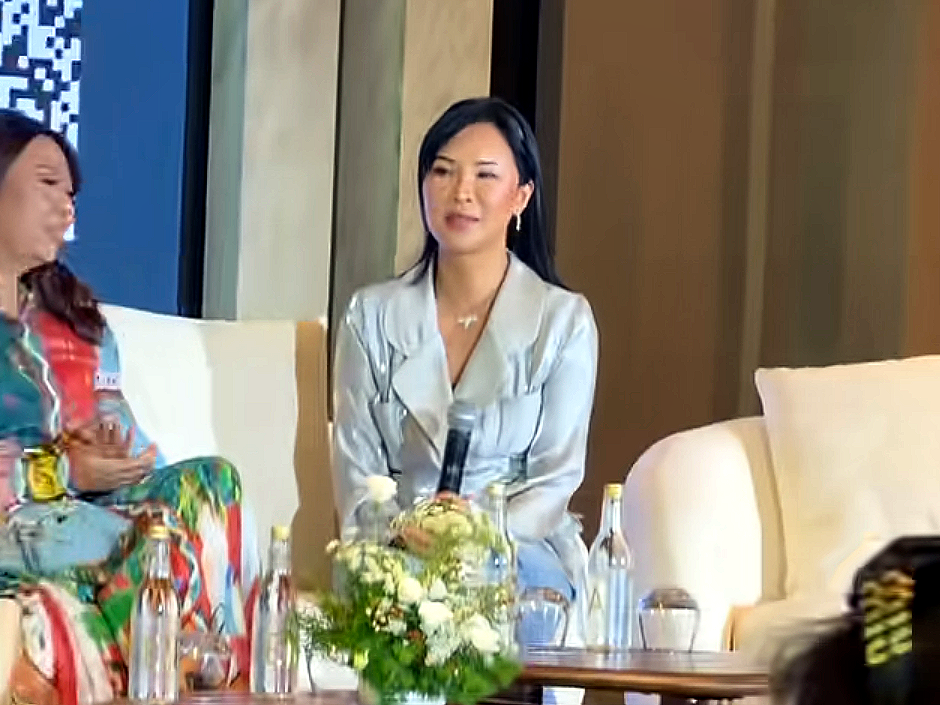
Ms Lim, pleased with her performance
Ms Lim, admittedly, created the ideal hook—“speak up”, with the perfect level of naughty, enough to feel like a real talk session. But she left “speak up” hanging in the air, a vague prompt. The exasperation in her voice, however, seemed to suggest talk back. “Speak up”, to us, implies constructive contribution within the system—voicing ideas, concerns, or disagreements in a way that’s framed as collaborative. It’s the language of psychological safety and inclusion. But Ms Lim did not refer to that belonging. Rather, to her, speaking up means “taking an interpersonal risk, taking a risk to ask a question, taking a risk to say ‘I don’t know’” and, terrifyingly, “taking a risk to challenge my boss”. It sounded terribly career-ending. If “speaking up” is synonymous with risk‑taking, does it not shift the frame away from dialogue and towards defiance? And to her, after all the personal hazards, the question to ask is “will I be rewarded”. Singaporeans do not “speak up”, as it were, because they do not want to be heard—itself a peril. There is a pervasive, tiresome insistence on the need to “speak up,” not as a noble professional duty but a thinly veiled transaction. Clearly, the algorithm voice can’t tell the difference between a physical public forum and a virtual TikTok grid.
Throughout her brief enlightening, Ms Lim did not really teach her audience how to be better colleagues; she was offering them hacks on how to survive—or profit from—a toxic environment by treating their professional integrity as a speculative trade. There is something delightfully Trumpian about that: What she described is transactional, rather than dialogic. It is hard to ignore the cultural dissonance between the American-style, corporate-rebel aesthetic she performed and the reality of the local professional environment (when was “challenging my boss” a growing-up mantra on our island?). Ms Lim adopted speaking eyes, a strident voice, and rapid-fire speech. Her delivery avoided professional tools of speech. She sounded like a school teacher venting in a staffroom about those vexing students she was unable to coax to “speak up”. With the microphone punctuating her comely, baby-blue, Vogue-worthy, unconstructed coatie, she valorised silence yet inadvertently demonstrated why silence persists. When some of us looked at that reel, we shuddered at the prospect of her as a boss, let alone someone to challenge. As one marketing head said to us. “I’d rather dance in the typhoon.”
It is a poignant image, but the reality is more baleful: the influencer-consultant climate is even more palpable. That and the influencer-teacher cyclone are twin low-pressure systems, both equally adept at sucking people in. If visibility and bravado matter more than rigour, Ms Lim is in marvelously good influencer-as-guru company. Whether it’s “damned smart” in a wellness panel or Classicle Club’s stunning all-lowercase captions and the gazette‑print bra of founder Brooke Lim, who now frolicks in Los Angeles, all of them share the same metric: it isn’t truth or pedagogy, it’s payoff. Ultimately, the point isn’t clarity—it’s pageantry. There is a social media blur here: The tutor becomes influencer, the consultant becomes performer. In a way, it is no different from Vogue SG’s pivot into wellness. It’s all part of the same economy of showiness, all afflicted with similar symptoms of collapse, where authority is diluted into lifestyle performance. If consulting can be motivational theatre, fashion, too, can be wearing couture while learning how to breathe. Quite frankly, it can’t get deeper than that.
Screen shots: crystallimlange

