Reports that Gucci dropped a staggering US$10 million on a single Times Square show exposed how tone-deaf and bloated the marketing theatre can be
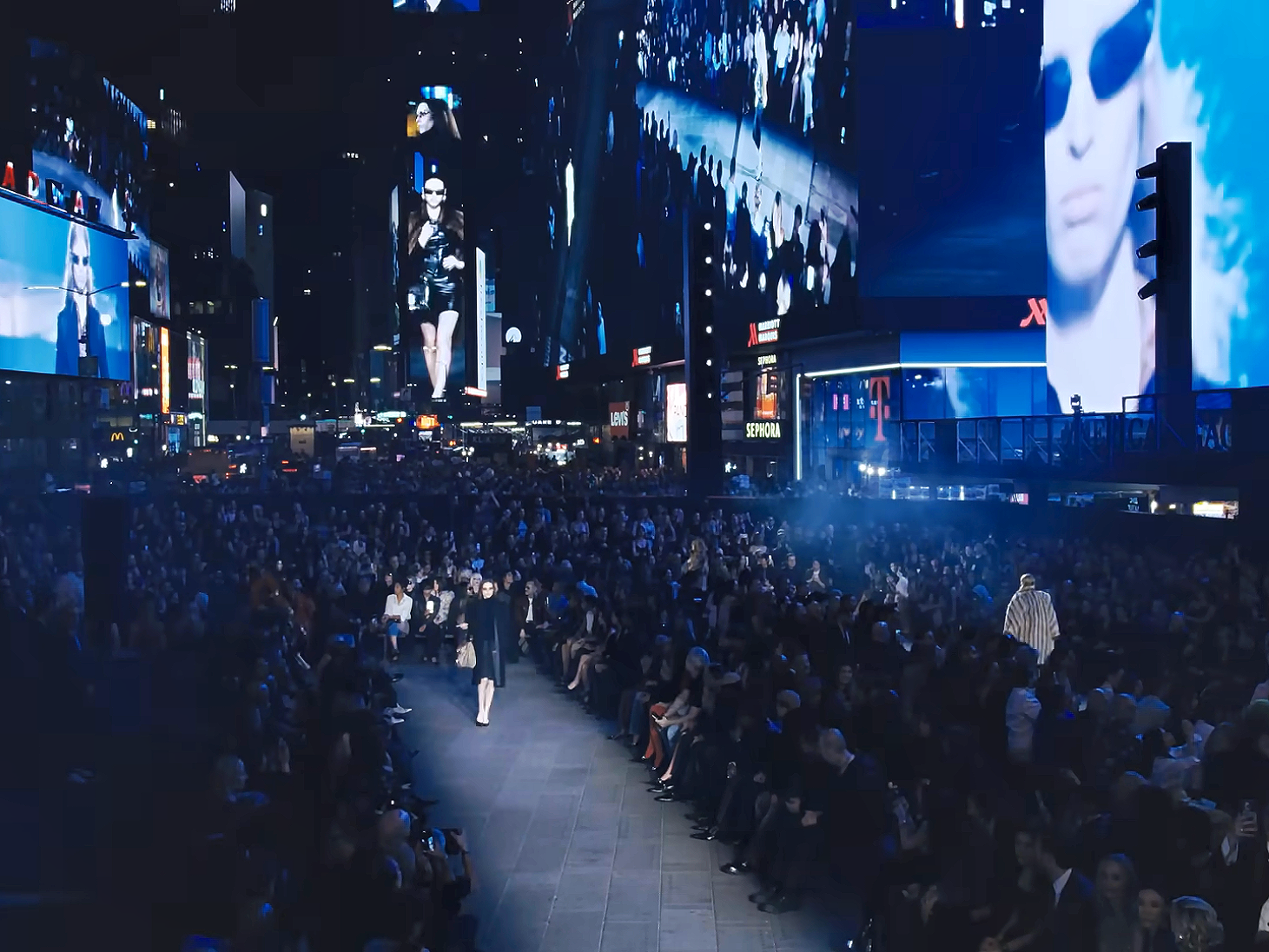
The entire Times Square was shut down for a Gucci show
Social media is agog and hyperventilating over the rumoured cost of Gucci’s Times Square takeover. Industry insiders and digital watchdogs have pinned the price tag at a staggering ballpark of $10 million—a casual figure that Gucci’s new CEO, Francesca Bellettini, has yet to confirm (or conveniently decline). Anyone who has ever tried to lock down a Manhattan thoroughfare knows it doesn’t come cheap, and given the sheer scale of the crazy outdoor lockdown, the estimate feels entirely plausible. It is not exactly a digestible figure. We know fashion houses aren’t just selling clothes—they’re selling the theatre of excess. The asphalt runway wasn’t about garments so much as about proving that Gucci can burn through a sum that, for most households, represents money they’ll never see, let alone touch, in their lifetime. This is where the rhetorical shift becomes ethically charged. In earlier eras, extravagance was cloaked in exclusivity—private salons, couture ateliers. Today, it’s public, performative, and intentionally provocative. The $10 million figure isn’t just a budget line; it’s a headline designed to spark outrage, awe, and viral circulation.
Okay, let’s look at the hard numbers. To understand why a US$10 million price tag is an understatement rather than an exaggeration, we have to ignore velvet ropes and look at the raw transactional geography of the evening. A standard, high-budget prêt-à-porter show staged within the ready-made infrastructure of a Parisian institution like the Louvre traditionally commands a benchmark of US$1 million. To Blue Origin way past that figure by a factor of ten requires a systematic, brute-force commercial lockout. “Full takeover” in the Bowtie—Times Square’s neon heart—requires paying astronomical corporate kill fees just to ghost fifty competing brands across fifty separate skyscrapers. Beneath those glowing screens, the budget evaporates right onto the raw asphalt. The team essentially built a temporary city inside a live pedestrian intersection—funding municipal permits, NYPD details, overnight infrastructure, and the international shipping costs for human blockbuster props like Tom Brady, Paris Hilton, and Cindy Crawford (to close the show). Add the inevitable four-story afterparty on Madison, and that eight-figure sum makes perfect sense. It’s the literal cost of an aggressive corporate arms race for pure consumer headspace, entirely unburdened by whether the shoulders of their jackets are flattering on the people who may wish to buy them.
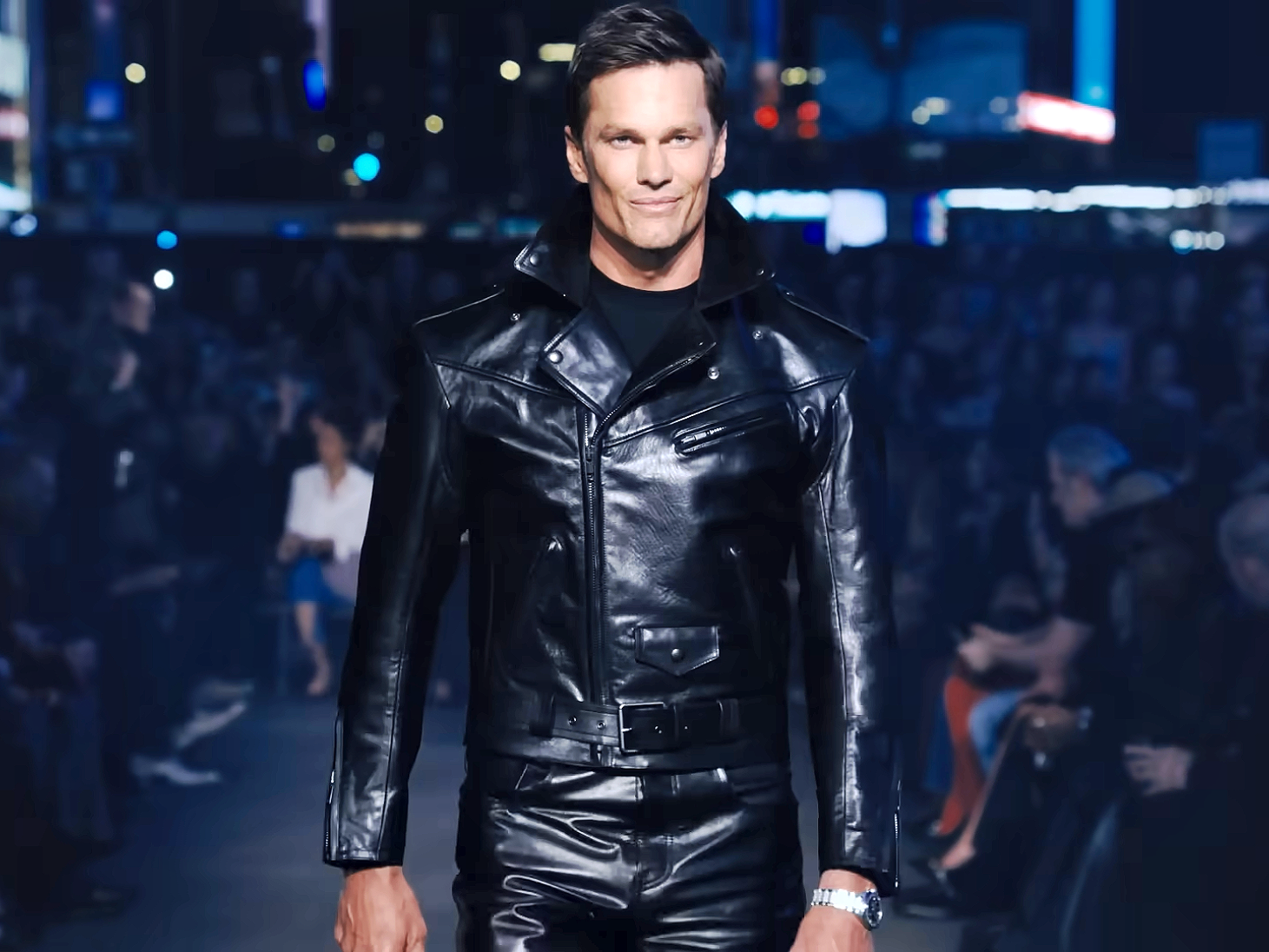
Gisele-free Tom Brady strutting his stuff
The Gucci show did not reveal anything aesthetically brilliant about the clothes that we have never seen before. But it did suggest that New York is the only global capital corruptible enough to allow this kind of corporate hijacking. As we viewed the show again on YouTube to grasp the atrocity of the event, we realised that it is only in America that Gucci could have pulled off that stunt. It will never happen in that other world-famous pedestrian intersection, Tokyo’s Shibuya Crossing. To note: Times Square is effectively babysat by a corporate business district. Shibuya Crossing is still raised by the state and weaned on user civility. Even the most rigorous Japanese orderliness cannot civilise a human flash flood of influencers and Gucci-ettes. Tokyo treats public space with institutional reverence. Shibuya Crossing exists to move three thousand people a minute, not to be sliced into a private VIP enclosure for strangers to quietude—Western celebrities. Times Square, conversely, has long commodified its soul. It is a hyper-capitalist playground where public infrastructure is gladly bartered away to the highest bidder, turning a civic thoroughfare into a billboard-lit meat market while everyday citizens foot the bill for the inflation.
At a moment when America’s cultural exports are already doing it few favours, Gucci has thoughtfully decided to lean into reality TV antics and the country’s thriving white trash aesthetic. Societal decay can be design brief. Demna Gvasalia’s ongoing love affair with America is well-documented. The romance was gloriously expressed via his fall 2024 Balenciaga collection staged against the backdrop of Los Angeles, treating the city as a live-action mood board, complete with Erewhon grocery bags and coffee cups. Not to be outdone in the arena of high-fashion anthropology, Gucci’s recent street runway was similarly peopled with its own curated “archetypes”. It seems Gvasalia has allowed both houses to arrive at the same creative epiphany, one in the day, the other at night. Or could it be systemic Kering strategy? Clearly the easiest way to capture the contemporary American zeitgeist is simply to numb its structural decline and transform the mundane debris of late-stage capitalism into multi-million-dollar sociology experiments. Because, in America, you can.
Screen shots: gucci/YouTube

