In the aftermath of the embarrassing mess that was the Audemars Piguet X Swatch launch over the weekend, AP emerges rather stunningly as the strategic victor
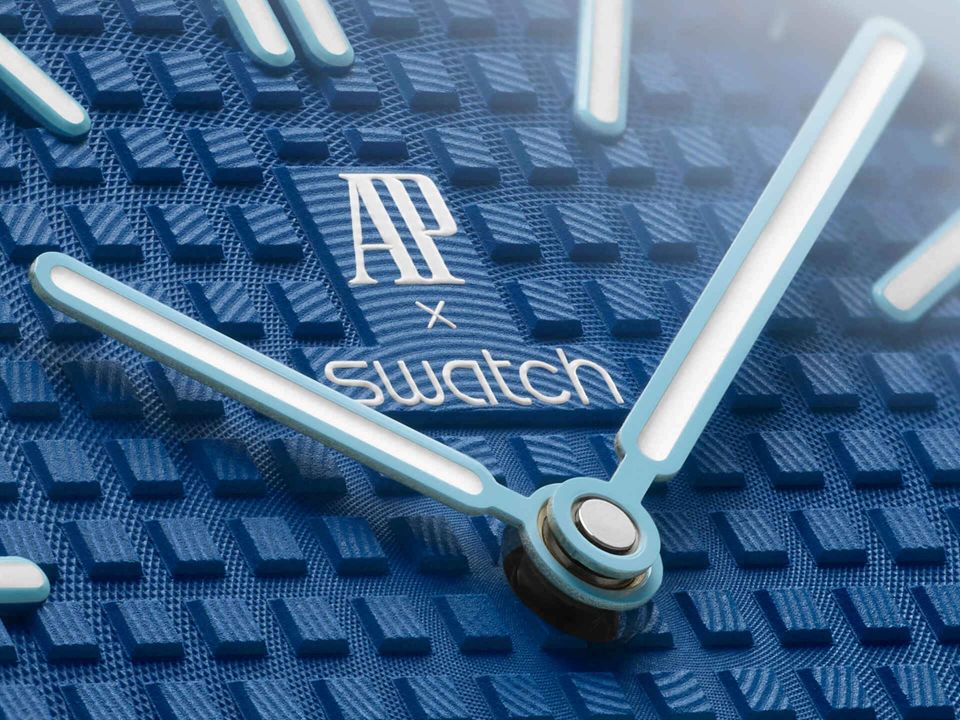
The Audemars Piguet (AP) x Swatch Royal Pop collaboration has been both a marketing triumph and a logistical fiasco. Across the UK, Swatch stores faced a second day of closures, according to the BBC. “Forced to close” was how The Independent described Swatch choosing to stay shut. That alone underscores how badly the rollout of the timepiece spiraled out of control. It was not just a one-off disruption in a small town, but a sustained breakdown in crowd management and consumer handling experienced globally. The Swatch store in our own air-conditioned hive, VivoCity, was similarly shuttered—though, fortunately for Swatch’s consumerist migration, only for a single day. This prolonged shutdown, even just in the UK, amplified the sense of spectacle and dysfunction around Swatch, while paradoxically magnifying Audemars Piguet’s aura. AP wasn’t the one locking doors, urging people not to rush to stores, or facing angry queues. Instead, it became the brand associated with such “overwhelming”—currently the buzzword—demand that stores couldn’t cope. Brand strategy rarely looks this beautifully auspicious.
In fengshui (风水), essentially the Chinese GPS for tracking positive vibes and avoiding cosmic crashes, the launch of the Royal Pop can be seen as a classic case of severe qi (气) imbalance, blockages, and self-inflicted shaqi (杀气, negative energy). While marketers might view the overnight lines, angry crowds (themselves generators of the shaqi), and rapid sellouts as a sign of high demand, classical fengshui principles point to an operational execution handled with the delicate, soothing touch of a leaf blower in a meditation hall. And the damage is to the energetic footprint of Swatch in particular. While Swatch absorbed the brunt of the chaotic, aggressive energy on the ground, AP executed a textbook manoeuvre known as 借龙之气 (jielong zhiqi) or ‘borrowing the dragon’s breath’ while shielding its own gleaming palace. To hijack the classical idiom of mountains and water, AP won by outsourcing the chaos.. They let Swatch sweat through the messy currents of the buying rush, while they sat on the bank, calmly harvesting the gold washed ashore.
While marketers might view the overnight lines, angry crowds, and rapid sellouts as a sign of high demand, classical fengshui principles point to an operational execution handled with the delicate, soothing touch of a leaf blower in a meditation hall
AP knew there was ore to be sieved, but to appreciate why the Oak master was willing to let its partner roil in logistics, we must look past the cheerful Bioceramic faces of the Royal Pop and into the sterile courtrooms of Tokyo and Washington. In 2024, after an unsuccessful registration of the Royal Oak’s design (octagonal bezel, screws, ‘Tapisserie’ dial, crown, lugs) as a trademark, AP appealed to the IP high court, but the judge threw it out faster than expired Hokkaido milk. A year later, AP found themselves in similar silt in the U.S. when the registration of the 3D configuration of the Royal Oak (octagonal bezel with screws, waffle-pattern dial, bracelet links) was also rejected. For many watch connoisseurs, the Royal Oak is culturally iconic and easily told apart. However, recognisability doesn’t equal trademark distinctiveness, and the law requires the designs to be non-functional and distinctive. The two courts basically found AP’s design too utilitarian. These rulings, unfortunately, mean competitors can legally produce watches with similar shapes, as long as they don’t copy AP’s branding, such as their recognisable logotype. And they have.
In Japan, there is a cheeky little watch brand that has been known and loved for their innovations in digital watches. Casio was not, in the beginning, a watchmaker. In fact, their first product was a hands-free ‘cigarette-smoking ring’. From that, they created the world’s first compact, all-electric calculator. That was all before 1957, but a decade later, Casio utilised its expertise in digital technology to diversify into digital watches and in 1974, the now iconic Casiotron was born, a wristwatch that looked too advanced even for the John Carpenter debut Dark Star. The brand continued to innovate on many fronts, including the rugged G-Shock and the ultra-premium, indie-fave MR-G. But it was in 2019, before the dastardly outbreak of the COVID pandemic, that Casio launched the GA-2100 that had fanboys and luxury watch collectors gasp with immense delight. It was nicknamed CasiOak. We don’t need to explain why. The beauty of the CasiOak—first in resin and then in metal—is that the DNA is undeniable, but a jury would acquit. Casio never wanted it to be an imitation, but they sure did want it to be popular. As with the Royal Pop, people are happy to buy and wear the CasiOak because they cannot afford (or won’t pay) the AP original. This was, until recently, a very real, very untapped market.
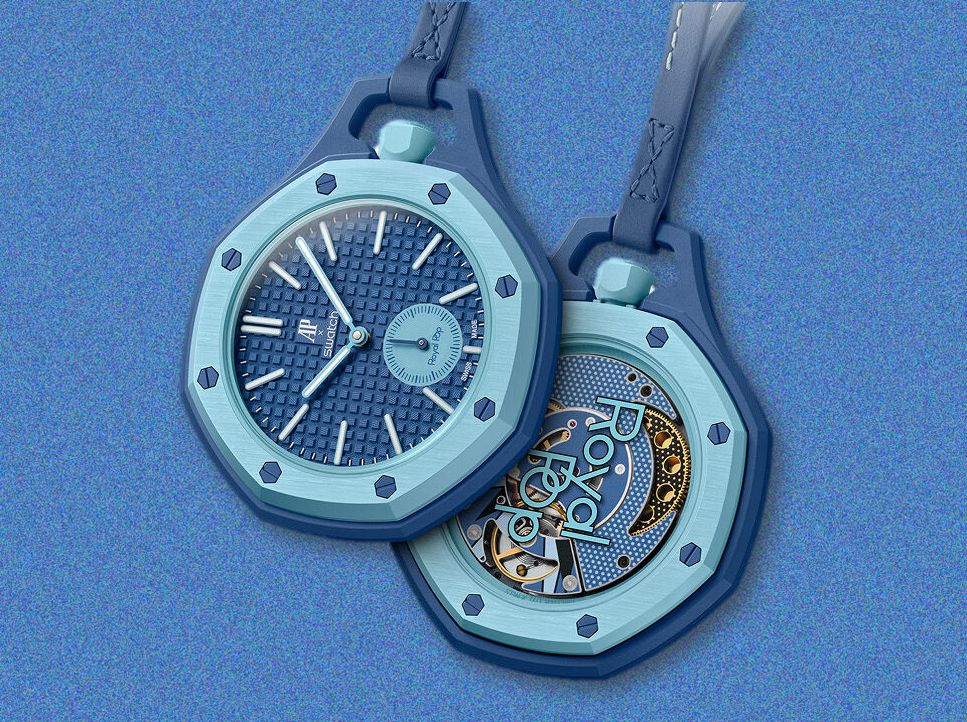
It is imaginable that AP was not amused by the CasiOak. They were probably not even slightly flattered. While the watchmaker can legally target copycats using its specific trademarked combination of an octagonal bezel and eight exposed screws, it has no legal recourse against Casio’s screwless, resin design. For those wretched buyers, the CasiOak wasn’t a compromise so much as a badge of taste that signaled awareness of horological culture without the rigid financial barrier. That’s why CasiOak exploded in popularity. It “democratised” the Royal Oak aesthetic. Luxury houses never enjoy seeing their signature designs replicated in mass-market form. AP was unable to take the agonising smell of their exclusivity evaporating into the mainstream. That’s why the Royal Pop collaboration with Swatch is so intriguing. It’s almost like AP reclaiming the narrative. Instead of being passively imitated (like with the CasiOak) and outwardly irritated, AP decided to test the structural integrity of its own mythos by seeing if it could survive the perilous journey from hand-finished Tapisserie to mass-molded plastic. The eventual ‘Pop’ is on AP’s terms, not Casio’s, nor Swatch’s. But more importantly, the collaboration could be an implicit rebuttal to those trademark defeats: Look, consumers instantly recognise our octagonal bezel! With the rabid reaction to Royal Pop, Audemars Piguet can now beat their heaving chests: This isn’t just functional. It’s cultural shorthand for AP.
Audemars Piguet’s willingness to dip their pedicured toes into the murky waters of mass production is likely due to one thing. Rather, one person: Ilaria Resta, the brand’s chief executive, who joined the brand in 2024. Ms Resta is formerly from Procter & Gamble (Pampers to Pantene, Vicks to Venus). She brought to AP a very different mindset from the traditional haute horlogerie playbook. The aura of luxury can be performed with the same toolkit as detergent or depilatory aid. Probably to her, the collaboration with Swatch wasn’t a lapse in luxury discipline. There is a calculation here by a CEO trained in consumer goods, who knows that prestige today is built not only in exclusivity but in cultural ubiquity. In many ways, this is also reflected in Chanel. Two years before Ms Resta’s appointment at AP, the French maison confirmed their current CEO, Leena Nair, who came from Unilever (Ben & Jerry’s and Wall’s). These leaders do not shrink from a little mass exposure. While purists worry about thinning the brand, they figure if their products are widely seen, it proves that they’ve successfully conquered the world. And it’s not selling out if you still own your own shop. In the consumerist world today, rarified objects are pushed aside for cultural saturation. The line is smudged, and in many cases, you can’t tell it was once there.
Photos: Swatch

