On the red carpet of this First Monday of May, there was a very specific, tragic kind of sensory bankruptcy. And as much as the organisers want you to believe it is art, it is not. The red carpet of the Met gala today is a mirror, not a canvas
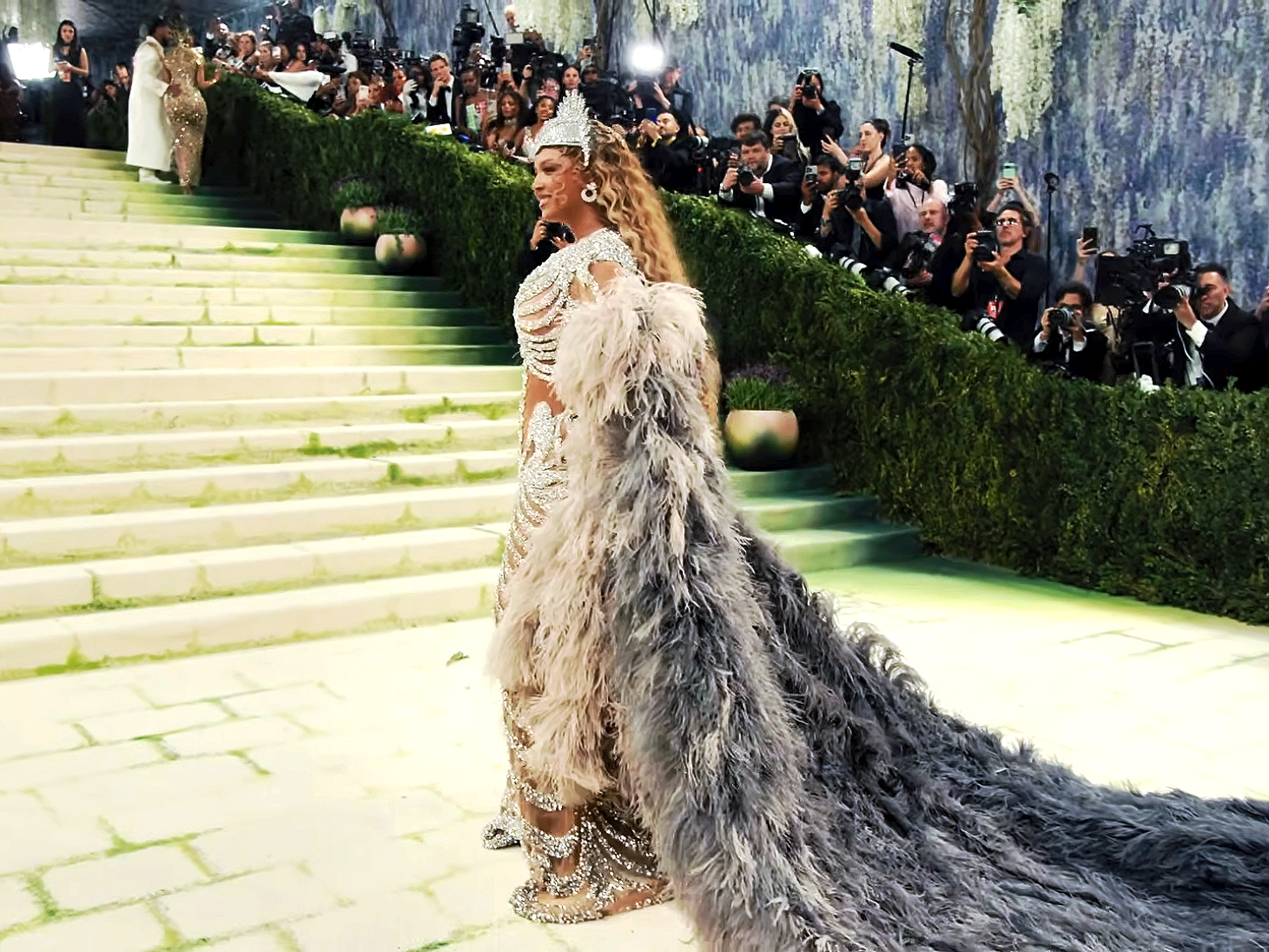
Beyoncé arriving like a queen
Anna Wintour probably thought, like so many of her fans, that she is a work of art. That was why she came as herself, in Chanel. What else could she have worn? This devil doesn’t wear Prada, at least not for the Met Gala. The theme, Fashion is Art, be damned. And even more so because she repeated the silhouette and surface treatment of another feathered Chanel number that she wore at the 2019’s Camp: Notes on Fashion. Perhaps she was confused? Fashion is Art, and is also Camp? It was an excellent strategy: when you are the institution, you don’t dress for the theme, even when you approved and promoted it. You just show up, and the occasion happens to be occurring in your presence. There is no need to confirm what is already known: even icons can succumb to the creeping comfort of a uniform.
The danger, of course, is that this love-to-repeat is contagious. And it was. Beyoncé, arriving with Jay-Z and her couture-newbie daughter, Blue Ivy—whose jacket required the constant intervention of a handler to behave—donned a silhouette that felt suspiciously familiar. She did not resuscitate a dead horse, but she did exhume the ghost of the Riccardo Tisci-designed Givenchy ‘naked dress’ she wore to the 2015 Met Gala, a full decade ago. The only evolution was the beaded skeletal sprawl across her body, a motif that renders it anatomical: a dress that, as before, insists on nudity while masquerading as necro-couture, a tedious paradox of coverage and exposure. A decade later, even with a new generation in tow, the commitment to this specific, sterile brand of visibility remains unchanged. The Met Gala red carpet has inadvertently become a graveyard of past branding successes.
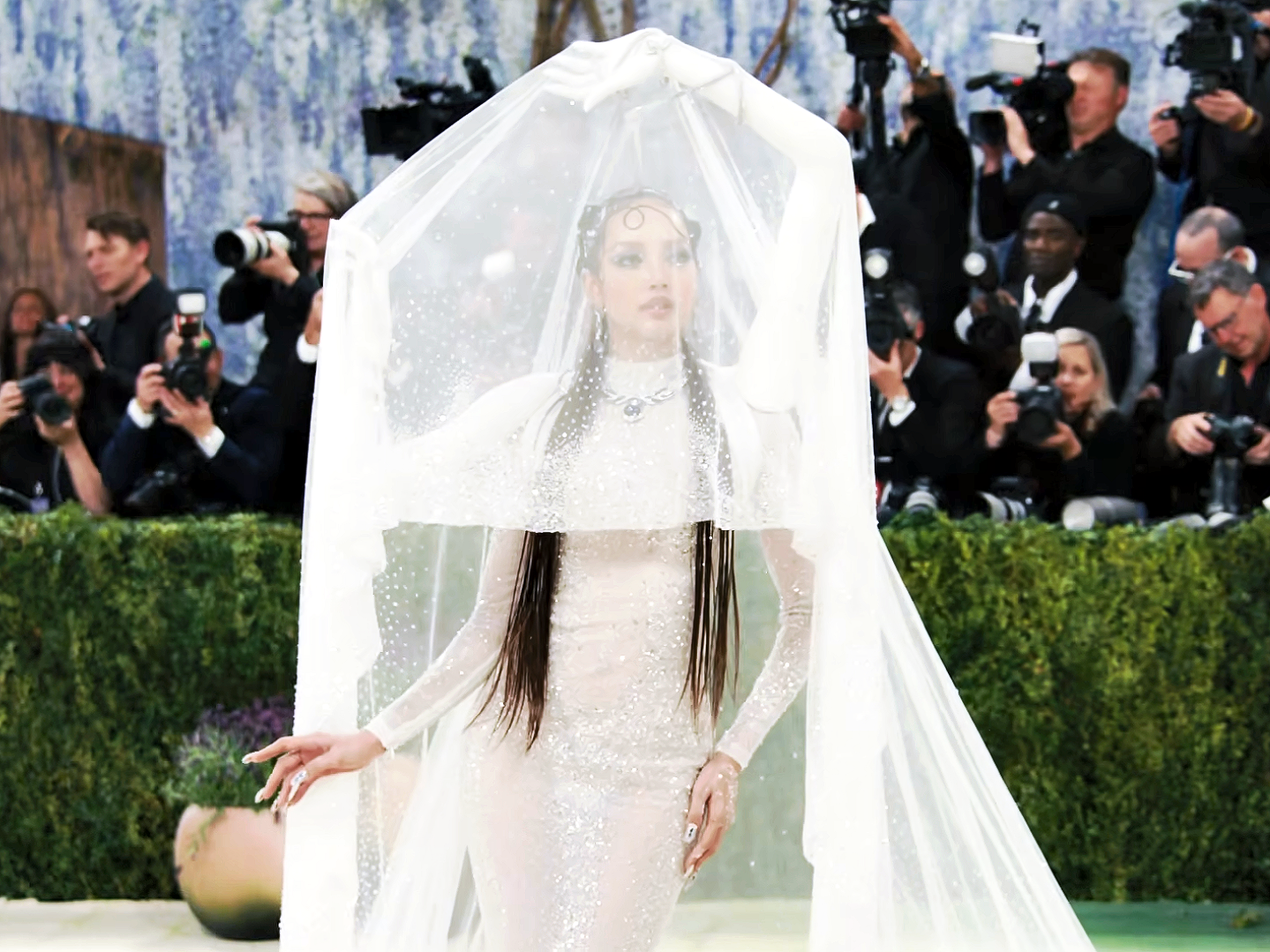
Lisa, ever the drama Queen, wore a Robert Wun number that comprised of a pair of arms holding the veil up to keep the shape of a food cover
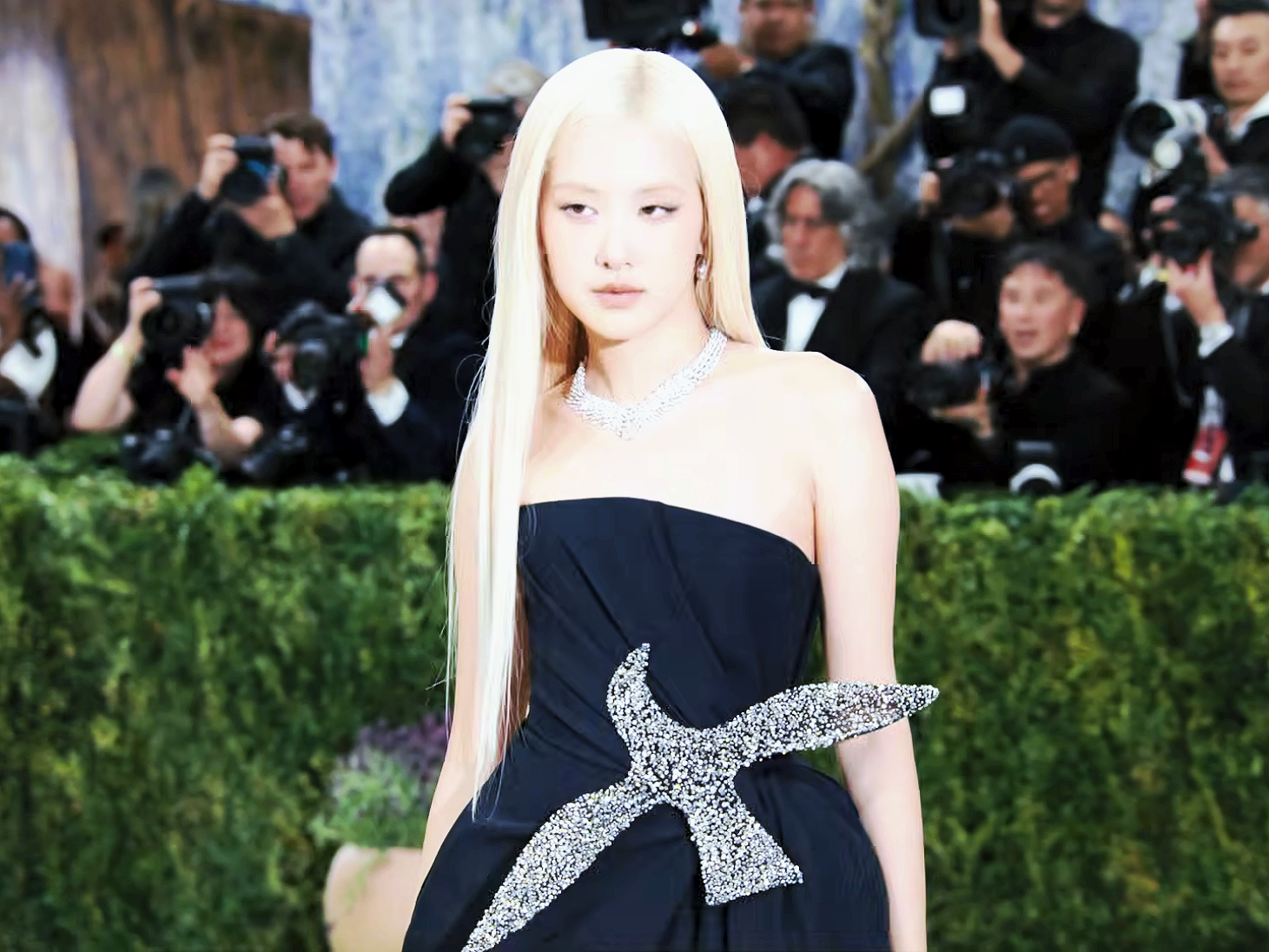
In contrast, fellow group mate Rosé wore a simple bustier gown with oversized waist brooch that she called a “bird”
This is not merely a failure of imagination; it is an active repudiation of the very premise of Fashion is Art. Most attendees, in fact, took fashion more seriously than art. The irony is that this collapse of categories—as offered by the Costume Institute—is itself a kind of art: performance art pretending to be couture worship. In fact, so few of the stars were able to connect the dots between fashion and the art in their outfits. When asked by top-of-the-stairway host Lala Anthony, Chanel-clad Nicole Kidman merely repeated the dress code and added: “I wanted something red because I wanted to embrace the way in which red is used in art… it is a strong symbol for love, for passionate love, for power… and motherhood.” It is truly a marvel of modern mediocrity that with just the first major star to be interviewed, the Gala was able to manufacture a level of rhetorical fatigue usually reserved for the breathless, rehearsed banter of two weather reporters attempting to make a light drizzle sound like the opening act of an apocalypse.
Even songwriter Rosé, in a black Saint Laurent dress (again, or what else?) that was homage to Yves Saint Laurent’s own tribute to Braque, was not able to say what the art was in her dress. She did not even mention Braque or doves, only “birds”. Instead of articulating the lineage, she offered something vague. If art is meant to stir the soul, her description was essentially a screen saver. It reveals how the Gala’s spectacle often strips art of its specificity, leaving only generic symbolism. The dress carried a rich art-historical reference, but the words erased it. The Costume Institute curates with museum-level precision, but the celebrities deliver flattened, almost meme-ready statements. That gap was also what fueled the sense of fatigue. The theme was too difficult to translate into accessible language for most stars, leaving behind them, a trail of hollow buzzwords and loose connections, instead of genuine, informed interpretations. By the twentieth star interview, “art” had been so thoroughly gutted of its art, that it was nothing more than a rhythmic grunt to fill the dead air between camera flashes.
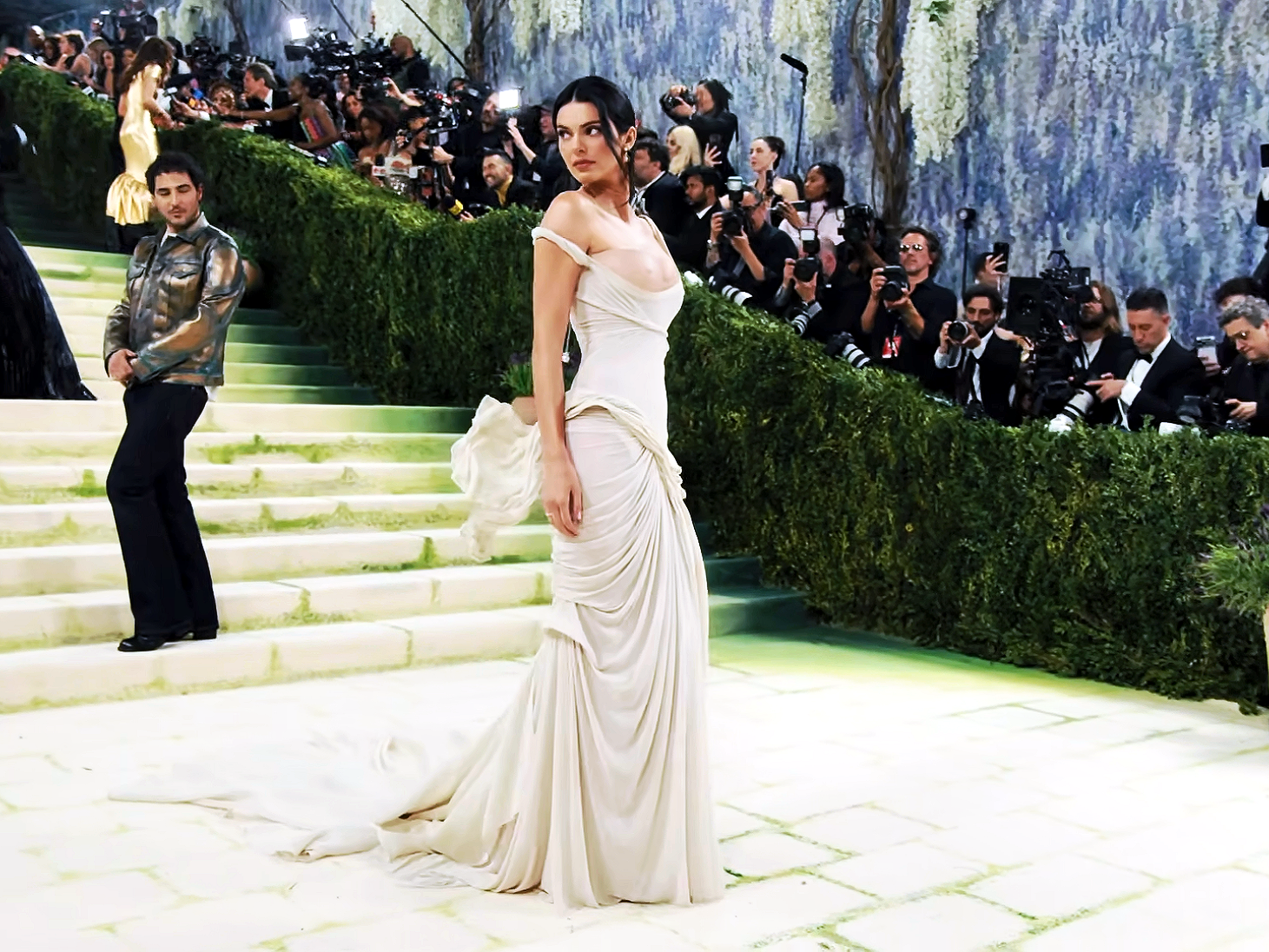
Kendall Jenner in a Zac Posen grown that was inspired by the Winged Victory of Samothrace statue
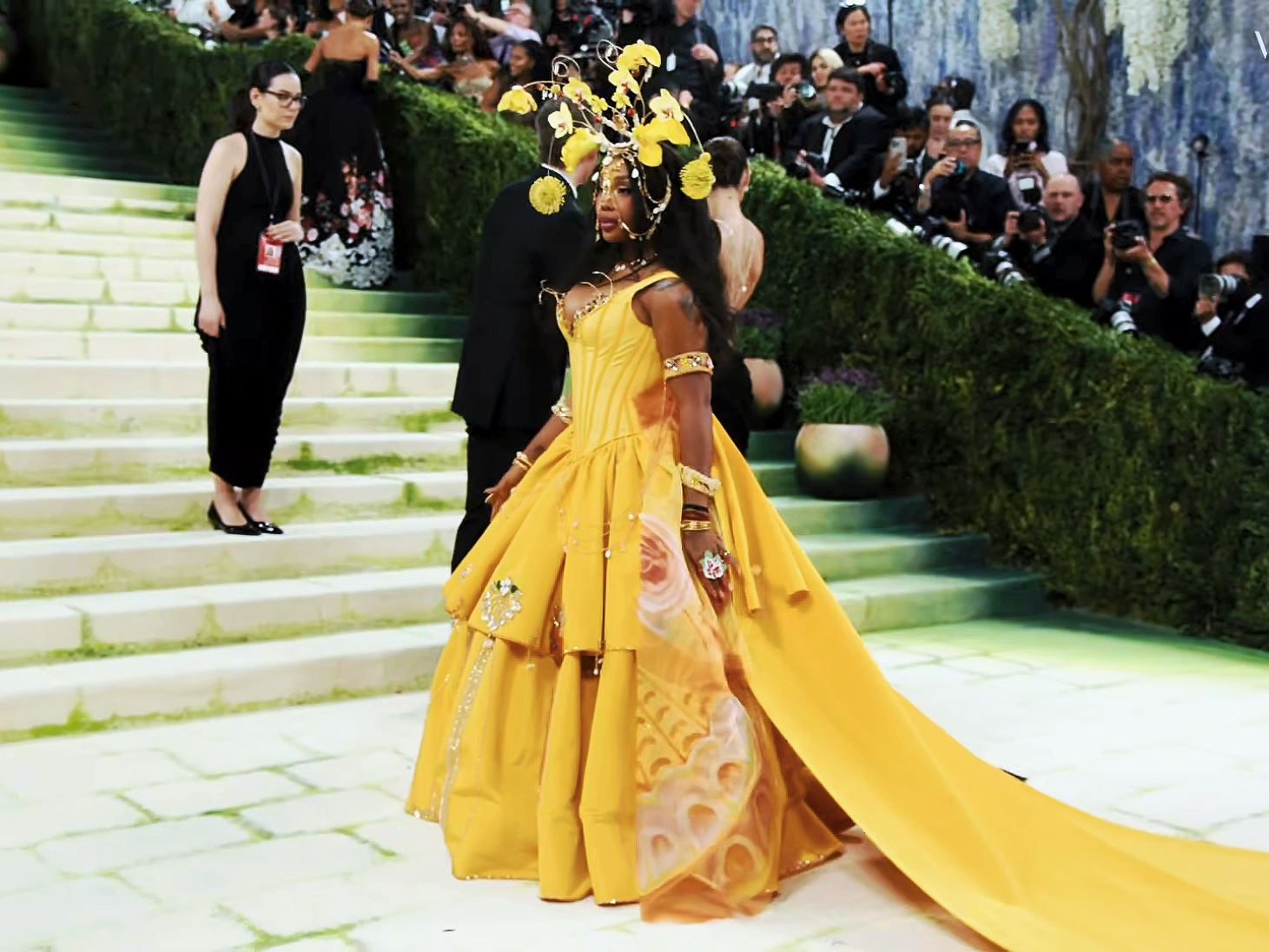
SZA taking note that it’s spring time in Bode
Our regular readers would wonder why, up till this juncture, we barely mentioned the clothes worn. To be certain, we rolled out of bed before the sun was even up, just to catch the livestream, but the reward for our masochism was a profound sense of regret. When garments are so devoid of intent, so clearly designed as a temporary, high-gloss surface for a camera to bounce off, it doesn’t merit the labor of a review, even a perfunctory one. It is essentially landfill couture. Or back to the flower patch if art didn’t work out (that’s SZA, in Bode, two years late for the Garden of Time red carpet). The only honest reference to “art” was from Kendall Jenner, who referred to her endeavour “like high school art class”. Finally, a critic with the refreshing honesty to admit that most ‘creative vision’ is really just a glorified glue-stick-and-glitter-and-tape situation. It may be a matter of time before we start calling scrapbooking a multimedia installation and demanding a retrospective at one of the newly opened Condé M Nast Galleries at the Met.
While we were watching the peacock parade, the ridiculous queue to get before that flight of stairs, and the inane interviews in which every star is “gorgeous” and well-loved, we kept receiving messages from friends far and near, asking us what we thought of the Met Gala red carpet. Out of ten that we counted, nine used one word: BORING, and yes, in full caps. The other, an outlier, simply said, “Show me the art.” The choice of spectacle over ‘art’, preferring limbs to be on one’s back (Lisa and Jordan Roth, both in Robert Wun), like the pained victims in One Missed Call (2003), is precisely what renders it so profoundly tedious. Boring wasn’t just the general dullness, but also the institution that has failed its primary duty: to challenge the viewer. To suggest that there was no art is not a critique; it is merely a confession that we have been looking at the world with our eyes wide shut. It is an admission of spiritual poverty. Pitiful it is to watch people so confidently catalog their own deficits and call it an artistic judgment. The Met Gala as a meaningful arbiter of taste no longer holds true. We’ve been duped for too long.
Screen shots: vogue/YouTube

