For his first Valentino couture collection, Alessandro Michele, shows—again—that he is the eccentric of excess
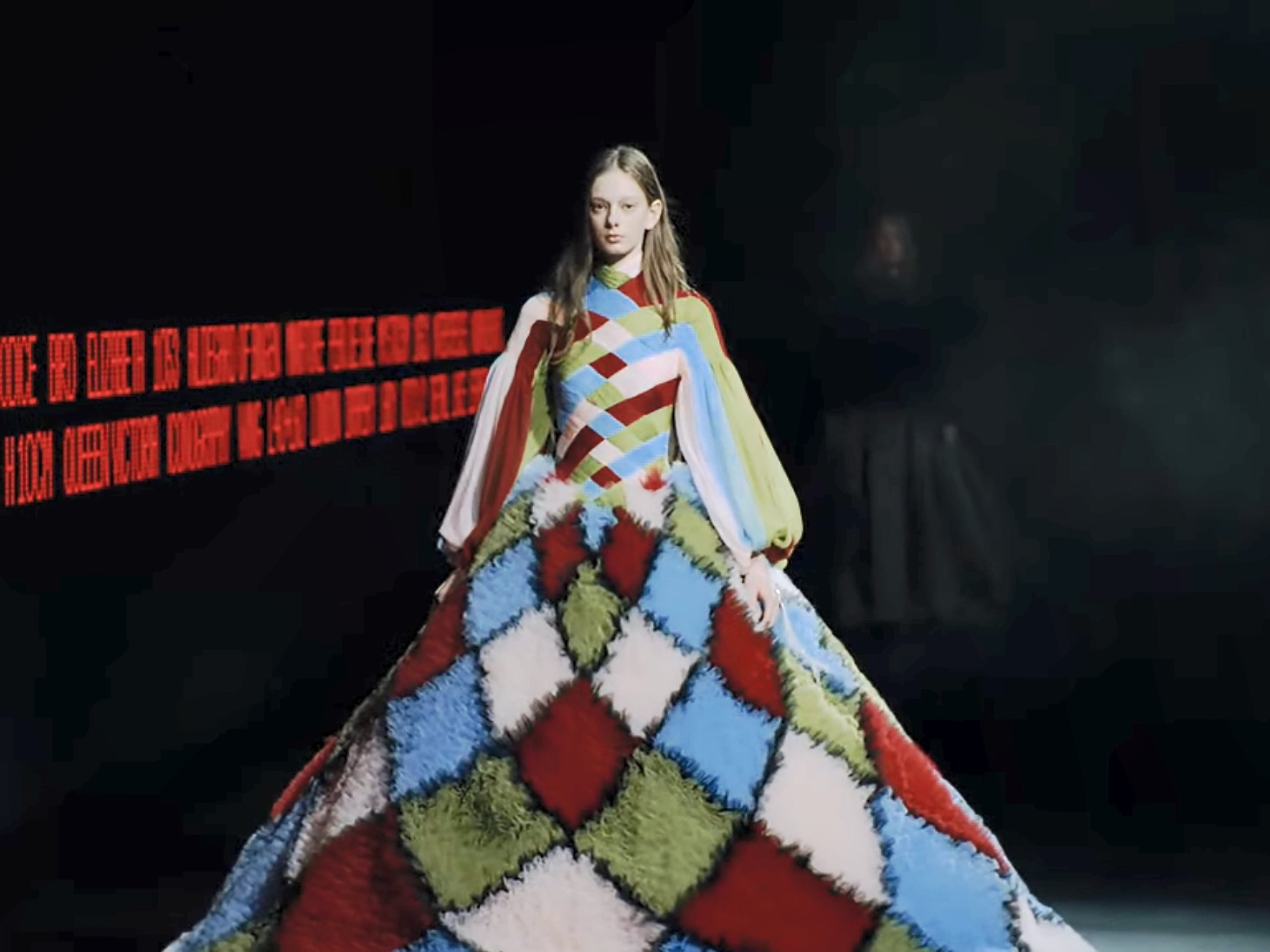
To ‘modernise’ the Valentino couture, Alessandro Michele looked back. It was not just at his own florid design history, but also at Valentino’s large archive, which was to be expected. He needed to cast his research backwards so that he won’t be accused of totally deviating from Valentino—especially from the brand’s hey days of the ’60s and ’70s. But Mr Michele does not do things without amplification. He can take something that recalls the past, but he needed to blow everything up till the sum of their parts look nothing like those of the originals. So in totality, the clothes appeared not like what Valentino himself and his successors had created (or that an average Valentino customer, for whom a certain style sanity is required, would recognise). This was not Valentino redux; this was Valentino re-luxed, couture extrême.
To create a presentation also evocative of the past, Mr Michele had his models appear on stage one by one, but instead of the cards bearing the number assigned to the looks that were carried during haute couture’s heydays, the number now appeared as digital digits, behind which texts (a mix of fashion words and terms that English lit students might find meaningful) in glowing red scrolled horizontally across, non-stop. Attendees of the show complained how dark the theatre-like space was. They also reported that on their seats were show notes that came as burdensome stacks of papers, including those that described each single outfit with word salads of adjectives and nouns and proper nouns that would be forgotten when the page was turned. Mr Michele has always subsisted on pretentiousness, and this time, his couture—and its description—demanded a surfeit of it.
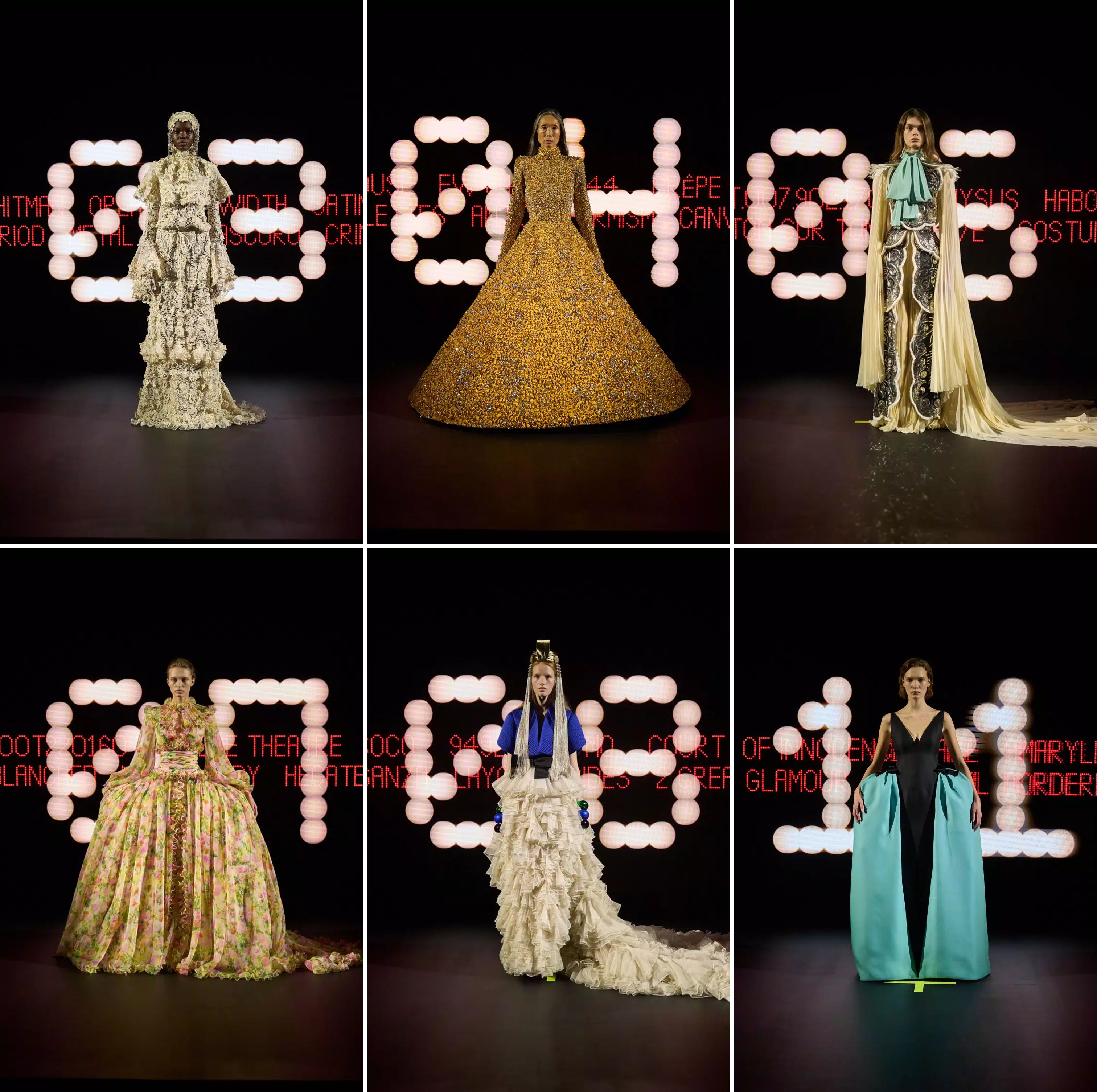
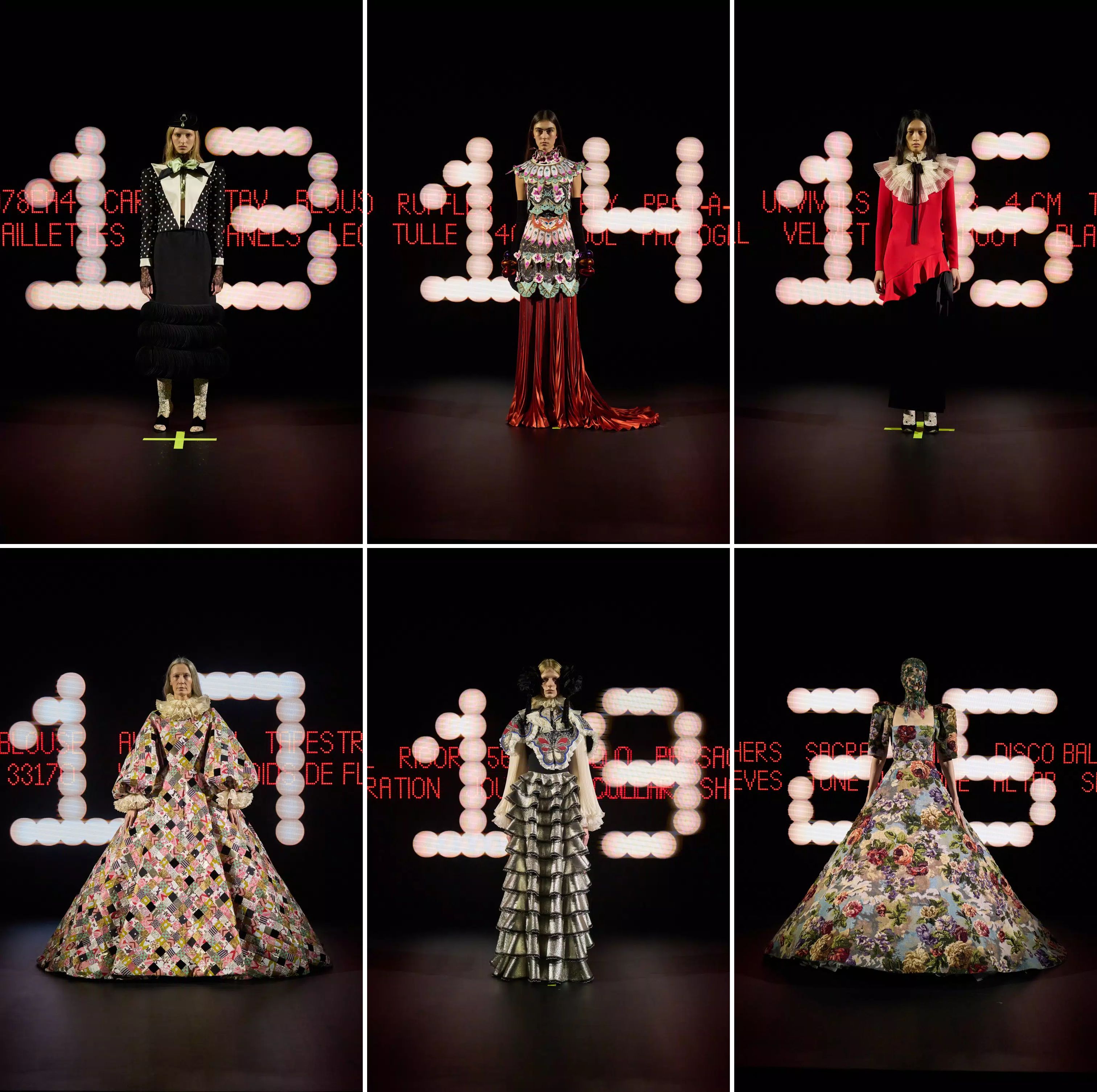
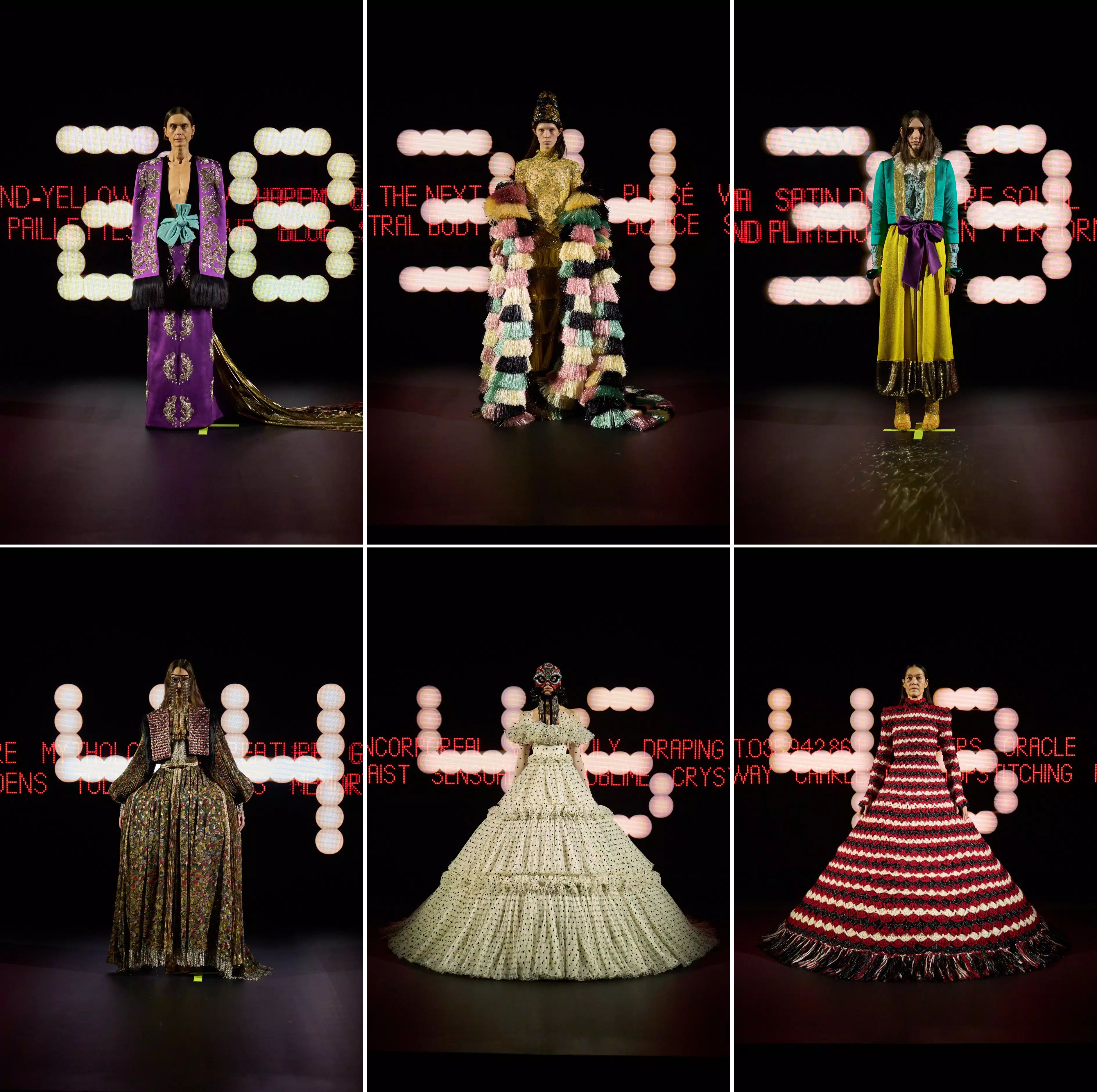
This was revivalism in the most overwrought sense. At the risk of repeating ourselves, Mr Michele illustrated once again that he could out-ruffle, out-flounce, out-tier, out-hoop, out-pannier, out-bow, out-ribbon, out-fringe, out-pleat, out-quilt, out-lace, out-feather, out-embroider, out-sequin, out-bead, out-encrust anyone, even himself. Mr Michele does not only use embellishment and ornamentation to enhance the appearance of his clothes, he employs them to overwhelm. We have seen them at Gucci, we are seeing them again, possibly more so for the couture, showing off his intemperate side. And, while couture has a thing for shapes, his were so maximal and exaggerated (panniers wide enough to be palm rests) that they were really costumes for the most part. The show notes stated the “man hours” required for each look, as if the longer the time spent on the garments some how augment their value and desirability. Consider the far out accessories—such as face adornments—and it was clear the clothes’ overall financial value would be increased, too.
To be sure, Mr Michele tried to set his couture apart from the ready-to-wear, somewhat. He made many of the pieces larger than any wardrobe would be able to house them. Some of the looks, such as four, we have seen at Balenciaga. We were instantly transported to the last looks of the brand’s spring/summer 2020 season. Mr Michele took the sparkly route rather than the shiny. He cannot, of course, escape his well-entrenched magpie embellishment sensibility. And as he continued, every imaginable couture technique was out in full force, as if to ensure an encyclopedic tour de force of what the metiers could do. They would also serve as counterpoise to the ready-to-wear’s already florid bent, such as the gown that, from top to hip, was made of decorated panels that the Chinese would recognise as 云肩 (yunjian or cloud shoulder). It is not clear that that many looks were created to be worn. What this first Valentino haute couture collection under Alessandro Michele would presage was really hard to say.
Screen sbop (top): valentino/YouTube. Photos: Valentino
 Style on the Dot