At first there was a Skye Tan, then now a Nicholas Tan. Both not only share the same surname, they have been associated with the Singaporean bag brand Aupen. But who really owns it?
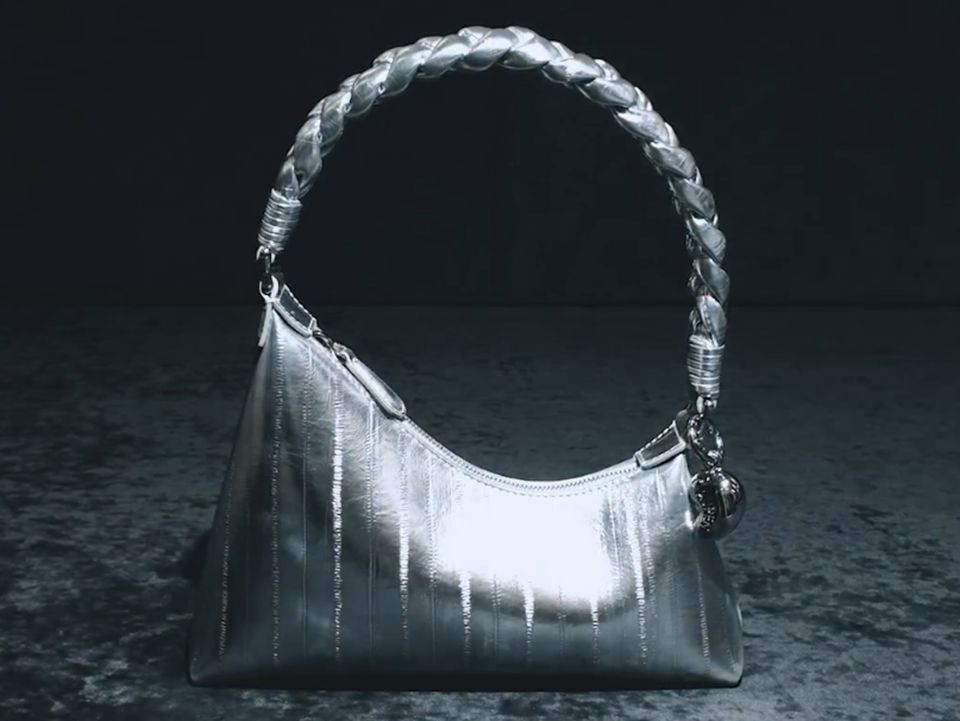
Aupen’s ‘Nirvana’ handbag. Photo: Aupen
The mystery deepens. Not only has bag brand Aupen’s production origin now been unidentified—it’s no longer “made in Singapore”, as it once supposedly was, by the “craftsmen of Singapore”, the label is finally no longer shy of identifying a founder. In a revamped website, Aupen is now linked to an individual with a name. On the brand’s ‘About Us’ page, we are informed that Aupen is “founded by Nicholas Tan and based in Singapore (no longer, as was earlier communicated, also in Brooklyn, New York)”. It goes on to say what Aupen is about and what it stands for. Nothing else is revealed about Mr Tan. We do not know, for example, if he designs the bags. In our earlier research, following the online scoop of the brand’s unlikely manufacture in Singapore by Tanner Leatherstein, we mentioned that ACRA records revealed Aupen, registered on 10 Jan 2024, to be “wholly owned by Grand Ocean Products Pte Ltd”. We did not state it then, but ACRA information also showed that Grand Ocean Products is “wholly owned by Tan Xue-Wei, Nicholas”.
In last year’s April issue of Vogue Singapore, the magazine ran a feature on Aupen to spotlight their collaboration with the 2-year-old label, without so much as mentioning that it was a Singaporean brand. They identified a Skye Tan, described as a “fashion photographer (then later established as “Singaporean”), current creative director and head of product design”, to be “at the helm of this up and coming brand”. No photograph of the mortal subject was featured (just brand-supplied images of their products on a model). As a matter of fact, published profiles of him are not accompanied by even his head shot. In another report by Her World last March, Sky Tan was said to have cut his teeth at Ralph Lauren, Louis Vuitton, Paul Smith, as well as the French couturier Stephane Rolland after graduating from School of Visual Arts, New York. Vogue SG quoted Skye Tan saying rather earnestly, “Aupen started quite organically actually. I never thought I would have my own brand.” If Aupen is his own brand, where does Nicholas Tan come in? Could the other Tan be a ghost investor?
Vogue Singapore identified a Skye Tan, described as a fashion photographer (then later established as “Singaporean”), current creative director and head of product design”, to be “at the helm of this up and coming brand”
You can, of course, own a brand and not be its founder. Although the Vogue SG piece was packaged as a profile on Skye Tan, little was really revealed about him as a designer of bags. At the time of the editorial, he was based in New York. He went on to say: “During my daily commute in New York City, my inspirations come from my surroundings such as the colours of the subway seats to the shape of the benches in Central Park. Some of the curves in our bags were sketched referencing the slopes that I take walking through Sunset Park in Brooklyn”. Skye Tan spoke of what inspired him, not the “design collective” that Aupen often referred to itself. No mention of our island either, no talk that the bags were made here. Or how a photographer became a bag designer, especially of structured bags that require specific skills.
Is Skye Tan and Nicholas Tan the same person? One marketing consultant we spoke to told us that it is not unusual for fashion figures to have different names or to pad their backstory to appear more important or appealing. “People in fashion can chose whoever they want to be,” he said. “Certain ambiguities can sometimes enhance the appeal of the products sold.” But unclear standing, especially related to the provenance of the manufacture of one’s products can lead to curiosity that may shake the brand’s reputational core. We can respect the desire of the owner of Aupen—whoever he really is—for total privacy, but putting out inconsistent image of one’s founding self or the elusive product designer does not underscore credibility or advance its brand value or influence, or enhance the emotional impact he hopes to affect in the marketplace.
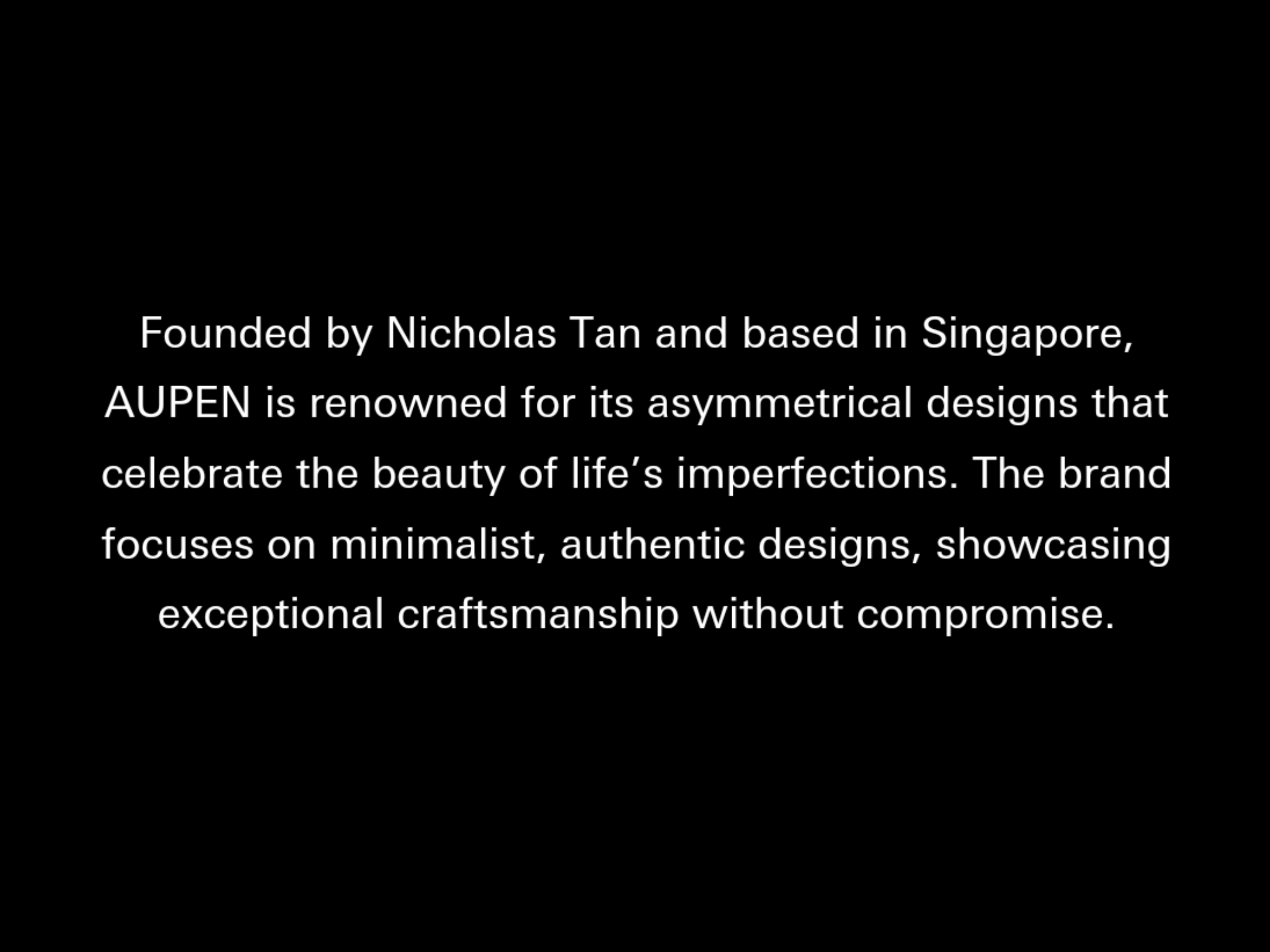
Aupen’s new ‘About Us’ page on their website
And there is the confusing claim by Vogue SG that Aupen “bags are constructed entirely from vegan leather”. They quoted Skye Tan saying: “The impact of regular leather is immense when it comes to land use, greenhouse gas emissions and biodiversity loss. Aupen aims to be part of a revolution in the industry away from animal sources.” He added, “I keep hearing from buyers that many customers still prefer cow leather, but I hope to show the world that eco-friendly options can be cute and fun too.” As it turned out, they had a change of heart and now prefer leather and has transitioned to calfskin in January this year, as CNA pointed out. On the Aupen website, it is stated clearly: “All of our bags are made from high-quality calfksin leather.” The brand is, in fact, proud of using skins “certified by the Leather Working Group”, as declared on their Instagram page. In fact, it is Aupen’s use of leather and their sharp pricing that led Tanner Leatherstein—the Turkish leather specialist Volkan Yilmaz—to dissect the bags last month, and question the provenance of its manufacture.
To add to the mysterious nature of Aupen, there has been the remake—in less than two years of their existence—of their Instagram page, as well as their website, which seemed to be executed in response to Tanner Leatherstein’s fascinating investigation. It began on 10 May, when the brand wiped clean its Instagram account, keeping just three posts. There was also the announcement that “Aupen Design Collective bids goodbye”. That quickly led to speculation that the brand was going to close. Aupen then explained to The Straits Times that the “design team (an earlier photo on their website show four unnamed individuals” was “merely taking a break”. The IG page was refurbished again, with the first post emerging on 5 August, around the time Tanner Leatherstein went digging for more information to determine where Aupen bags were really made. And then recently the website was refurbished, as if in response to Tanner Leatherstein’s nearly-fifteen-minute post on YouTube, titled: Inside the fake luxury hype: What Aupen doesn’t want you to know. Presently featuring just three bags for sale, the refreshed site appears to show Aupen at its most enigmatic yet.

