In a baffling twist of presidential style, the American leader has swapped hand-stitched for off-the-rack, quietly outsourcing his office wear
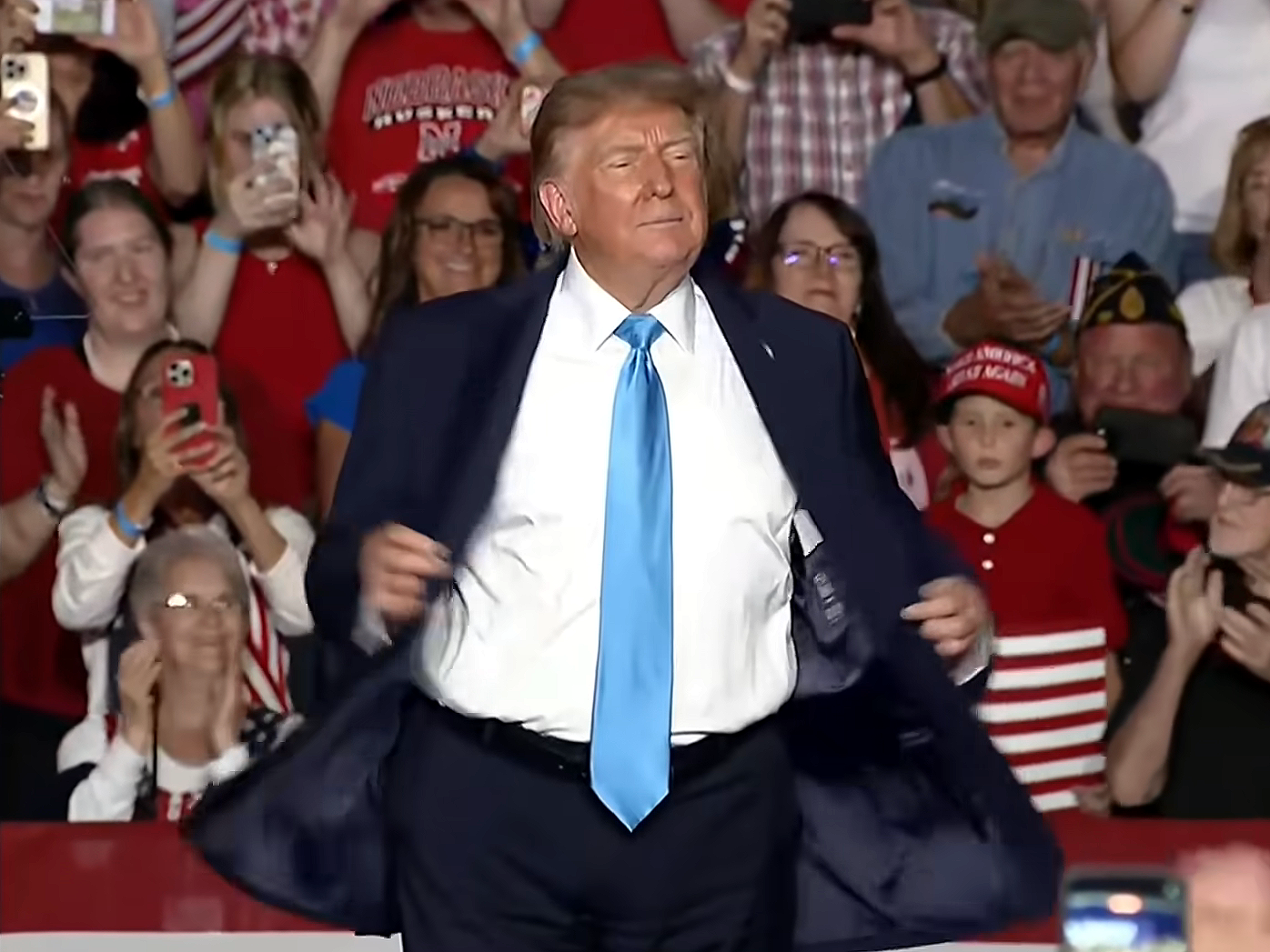
Contrary to popular belief, an imprecise cut was not the sole reason why Donald Trump’s suit jackets always look lumpy, like they were tailored for a completely different shape or stature, or species. At a rally last Monday in Grand Island, Nebraska, Mr Trump ended his typically inspiring and lengthy speech, walked to the left of the podium, and broke into his trademark hand dance to the Village People’s YMCA. He reached down to the button and button hole of his unfastened suit jacket; then flipped the two sides of the ungainly garment outwards before buttoning up. At that precise moment, a photographer caught the dramatic toss. When the shot was published, the helpfully curious, including the menswear writer Derek Guy, zoomed in on the two interior labels. Each identified the maker of the garment: Jos A Bank, a long-standing American retailer specialising in men’s tailored clothing, but hardly a bastion of impeccable suiting styles. They are emphatically not Brioni.
It is not the price difference that aroused our curiosity, but the collapse of the world’s most powerful man’s persona. Mr Trump famously wore Brioni suits on The Apprentice. The New York Times also noted in 2005 that he dons the Kering-owned brand, quoting him saying: “I like Brioni; they treat me fantastically” and again in 2016, with confirmation from then campaign spokeswoman Hope Hicks that he wore the label leading up to his first election win. Brioni says Italian luxury, billionaire, executive privilege. (The paper also stated that he wore Martin Greenfield Clothiers, another American brand.) And then suddenly we get Jos A Bank, which communicates suburban banking officer (a label the character Stu Rubin would wear in the 2009 Sam Raimi horror, Drag me to Hell), law partner in Cincinnati, or, as the Jos A Bank website describes, “everyday low price”. It is tempting to wonder, did the avatar load the wrong skin? Brioni to Jos A Bank is now trending (even a friend from Springfield sent us a screen shot of a social media post). Such cultural details defy any attempt at scripting. It’s like Kai Trump now shopping exclusively at Costco. The garment still covers the body, but the atas reputation had taken a hit.
Brioni to Jos A Bank is now trending. Such cultural details defy any attempt at scripting
To be sure, Jos A Bank is not inherently bad, but it is an odd choice for a man who brags that he only takes the best. We are intrigued by the thought that it could be one of the label’s suits that Mr Trump wore to take in all that gold in Versailles and dine there last June. To be sure, Emmanuel Macron did not place himself on loftier ground since he is known to wear suits from the family-operated Parisian tailoring shop Jonas et Cie. And Jos A Bank can look spiffy on those who know how to wear their suit. Joe Biden, who is known to pick Ralph Lauren, also enjoys Jos A Bank for everyday wear, but he does not make it look like he bought it from DXL. Whatever one thinks of his politics, Mr Biden generally looks good in office. His tailoring was never fashion-forward. He did not try to be a Pitti Uomo peacock or some Milanese pizza chain owner. He adopted a fairly conventional Washington silhouette and they possessed qualities Mr Trump’s suits do not have: clean, straight shoulders; jacket-length balance; and visible waist suppression. Mr Biden mostly looked tidier and more polished even when his suits were not particularly memorable. He may not have been stylish, but, in looking pulled together, he was spiffy.
Mr Trump’s Jos A Bank suit has been identified as part of the brand’s ‘Traveler’ line. On their website we learn that these suits are “tailored fit suit”. But Mr Trump showed that “tailored fit” is really a product category, not a guarantee of appearance on every male physique. The images on the website showed very trim suits and the models‘ waists looked almost nipped-in. Conversely, Mr Trump’s visual evidence overwhelmed the label’s positive messaging. The advertising promised one thing, the wearer, quite another. This reinforces the point we have been making since we took notes of Mr Trump’ attire as a president. The revelation isn’t that he wears mid-market suits, but that it confirmed what we have suspected all along: from the hang of the jackets, they are off-the-rack. Even more amusing is that the fabrics are what the brand calls CoolMotion, a blend of 66% wool, 30% 37.5 polyester, 4% spandex. What would his bible-clutching fans who happily quote the old testament—specifically Leviticus 19:19 or Deuteronomy 22:1—say? Additionally, the fabric has “antimicrobial” properties, which Mr Trump would appreciate because has a fear of microbes?
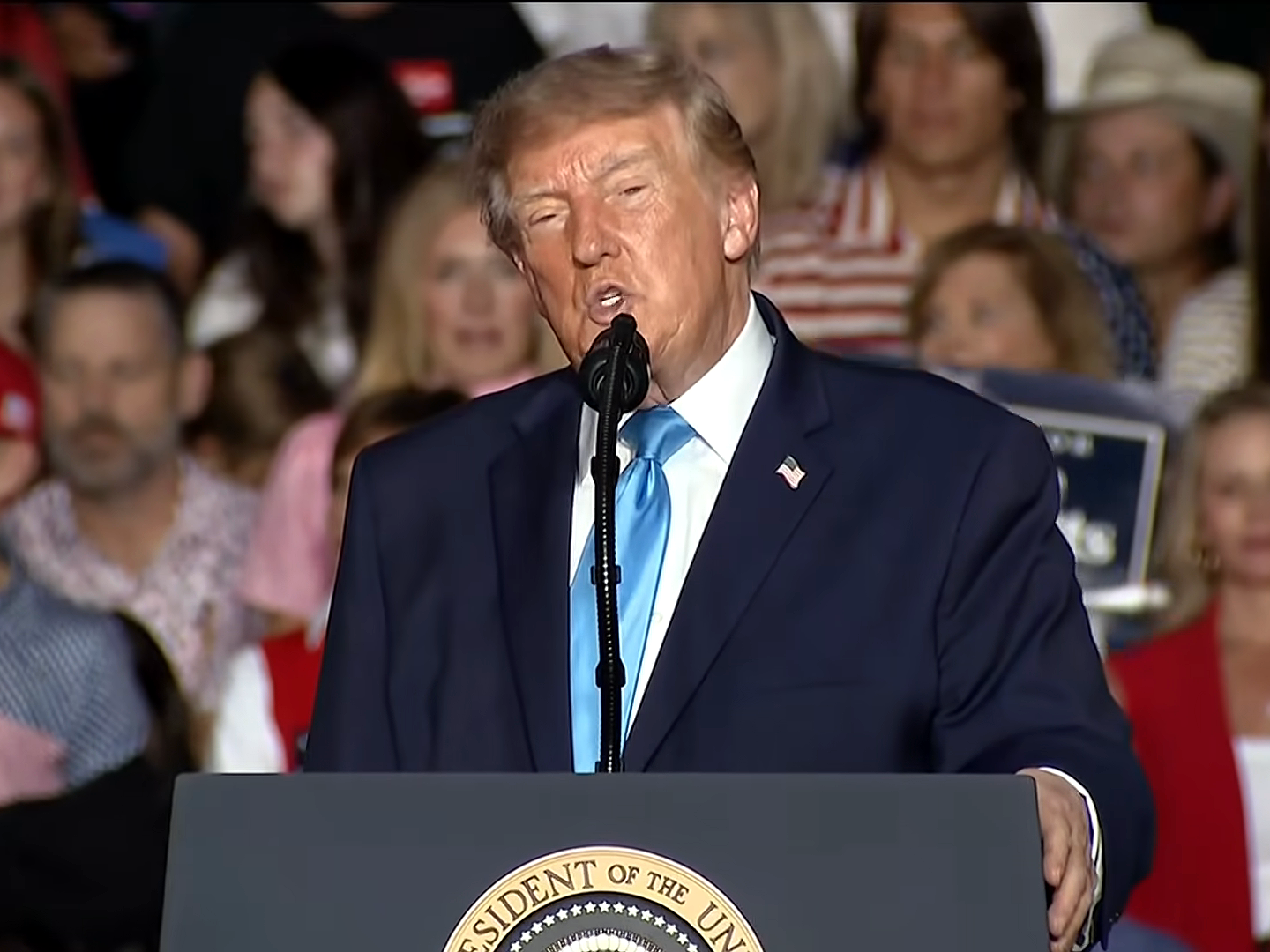
Many women after a certain decade tend to gravitate towards “auntie clothes” (also referred to as obasan [Japanese for auntie or middle-aged] style). It is possible that Mr Trump, deep into the winter of his twilight years, is moving towards a more avuncular manner of dress. The Jos A Bank jacket he wore made it clear he had long since given up on fashion in favour of extreme comfort in front of a camera and on stage. The shoulder line drifted well past his natural armscye, the sleeves—already loose—ballooned around the upper arm, and the waist, quite simply, was a non-entity. Perhaps this is less tailoring and more age-related style migration. Many people, men and women alike, gradually stop dressing to emphasize sharpness, athleticism, or attractiveness and start dressing to emphasize comfort, familiarity, and authority. The clothes stop saying “look how good I look”, offering, instead, “I am powerful enough not to care.” That image arguably fits Trump’s populist political persona better than a razor-sharp bespoke suit would. The CEO neatly turned into Uncle Donald.
What is perhaps most intriguing about the suit is its provenance. Mr Trump wore a 121-year-old American brand to match his America First messaging, but since 1998, Jos A Bank is made outside America. It was that year that the company sold off their entire manufacturing division to focus strictly on retail. On their website the brand only says that their suits are “imported”, but media reports have pointed to production in China, Bangladesh, and Vietnam (interestingly, Jos A Bank’s sibling brand Joseph Abboud is made in the U.S.). If domestic manufacturing is a core political message, why not wear something demonstrably made in the United States? Generous in promise, little to show for in execution—it is a theme entirely consistent with this administration. Former press secretary Karoline Leavitt was caught in the same supply-chain trap, defending trade tariffs at the White House podium while wearing Chinese-made pieces from both British labels and American staples like Ann Taylor. Even the First Lady wears Dior. Clearly, political rhetoric and personal aesthetics are as frequently apart as the First Couple. Though at least the rhetoric occasionally shares a room.
Screen shots: newschannelnebraska/YouTube

