The CJ Hendry Flower Market is really vacuous—neither flower nor market, but a sterile, performative exercise that the public, in an uncritical stupor, was seduced to treating as art
The videos appeared on our feeds so frequently it bordered on harassment. To watch a crowd of adults abandon both dignity and motor control—all for the sake of an Instagram backdrop, or worse, a speculative flip on Carousell—is to realise that self-respect is not merely negotiable; it has a remarkably low resale value. For an “installation” sold entirely on its aesthetic, it is remarkable how swiftly the atmosphere turned. Watching the shoving and the scrambling, it is hard not to conclude that the difference between homo sapiens and livestock is largely a matter of lighting. Fascinatingly, the allure of these petals remains entirely uninterrogated. We have not figured why anyone would find them appealing, given they possess all the charm of disposable plastic forks. Apparently, in the current climate, we are far too busy clutching our pearls at the conduct flower fans to notice that we have been actively lining up to purchase future landfill fodder.
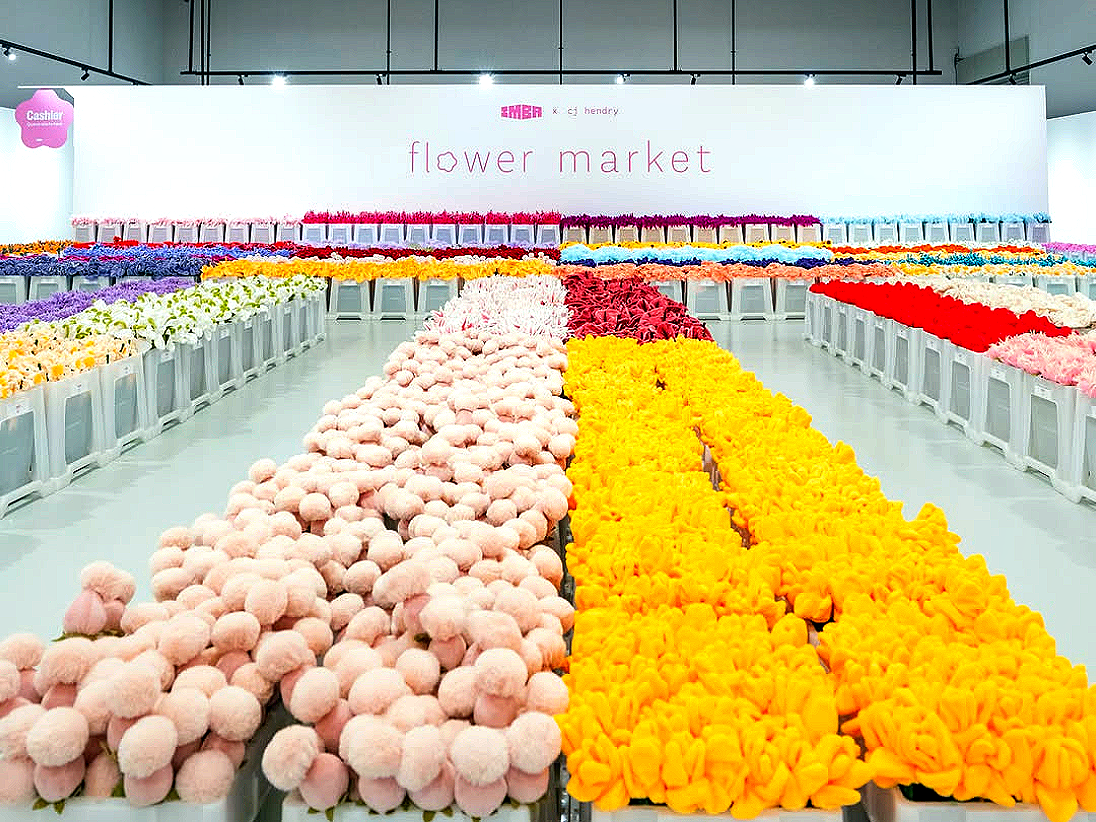
We were told by all the pre-event publicity that the CJ Hendry Flower Market is an “installation”. The description cleverly cloaks the Aussie affair in the aura of art. In practice it functions more like a pop‑up retail stunt. According to Gardens by the Bay, where the event was held, “the large-scale installation features over 30 varieties of plush flowers—including Singapore-exclusive blooms—inviting visitors to wander through the space and build their own bouquet.” The genius of the arrangement is almost admirable: botanical cataloging when in fact it’s a product range. And “Singapore‑exclusive blooms”, borrowing the prestige of national symbols and turning them into bait for scarcity and resale. As expected, the press swallowed it whole and didn’t choke. The Business Times joyfully repeated: “At Flower Market, you’re invited to wander among rows of plush blooms in vibrant colours, feel the comforting softness of their fabrics, and select stalks to make your own bouquet.” This not just sanitised art-speak, it is someone spending more time with a press release than at the market.
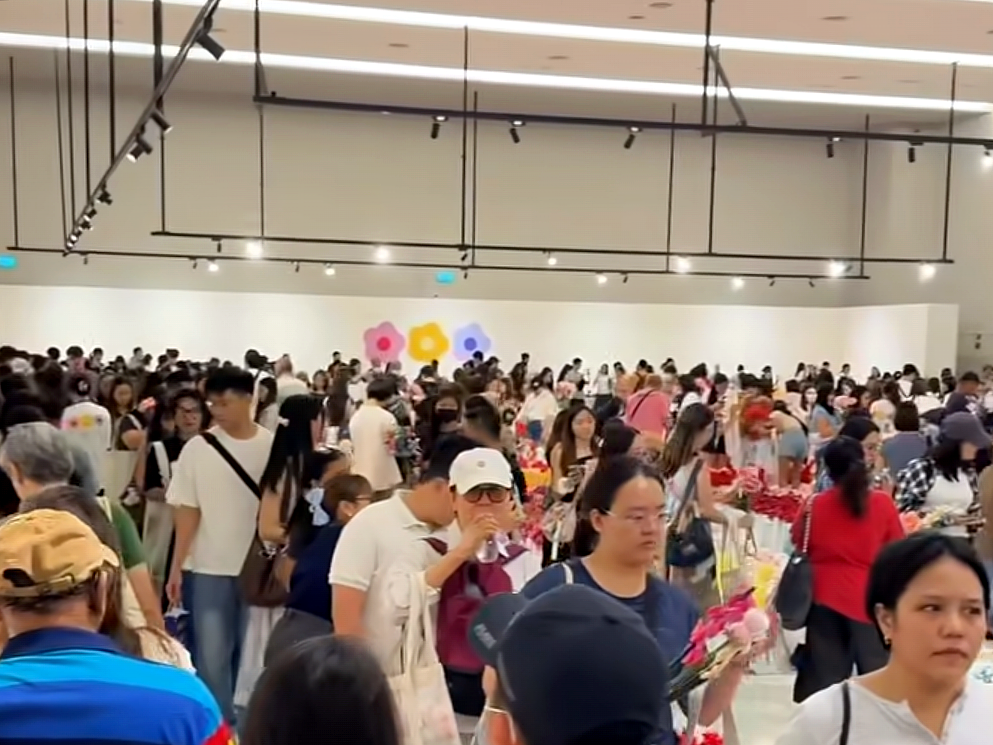
The term “installation” typically implies a degree of conceptual depth and aesthetic inquiry. It is not unreasonable then to expect a gallery, but it turns out to be a pasar, more chaotic than Far East Flora three days before Chinese New Year. The floral plushies are sold by the stem, queued for like a sneaker drop, and flipped online for profit (some resellers are asking S$100 per stalk). It is hard to identify the art in the utterly-yielding, toy-like blooms, stuffed into boxes, placed on the floor. They are, in truth, mass-manufactured, die-cut polyester shapes, assembled to look like giveaways at a mother and baby fair. Our hype-cycle has recently settled on the term “studio-grade” for the petroleum-based fabric used. Whatever luxury-washing that could pathetically be, these are not Dior couture flowers. There are no boules and couteaux (tools dating back to the 19th century) involved in their manufacture. Remarkable, in fact, is the industrial sameness. It says with certainty: products, not art. A stalk is issued without charge as a door gift, the final insult to the rhetoric of “installation”. As the brisk sales show, it is not generosity—it’s a token of attendance as bait.
On the brand’s Instagram page, a reel was shared showing the flower-gatherers could not identify CJ Hendry—some even misgendering the very person they were ostensibly queuing to worship. It was, perhaps, the most honest moment of the entire exhibition: no evidence of art appreciation, just manic shopping. The frenzy around the flowers reportedly is part of the artwork. Ms Hendry’s supposedly probing how scarcity and hype transform kitsch into treasure. Oftentimes, however, fake treasure is nothing but real trash. And that investigation, scheduled to end this evening, is now extended by a day, allowing the brand to continue to take the chaotic energy of a market and drop it into a sterile, curated theatre space (such as the IMBA Theatre). The aesthetic strength of the product is irrelevant; what matters is the contextual shift that turns a S$7 trinket into an art collectible. But because of the pretension of ‘artistic’ value attached to it, it is hard to ignore the manipulative hand in it. This is, ultimately, a performative space. The flowers are not nice because they are not intended to be nice—they are meant to be mementos, and to be fought over for.
Screen shots: cjhendry/Instagram

