Three bodies, one massive main character in Nicole Scherzinger. The Pussycat Dolls sang at the American Music Awards, but as a single growl
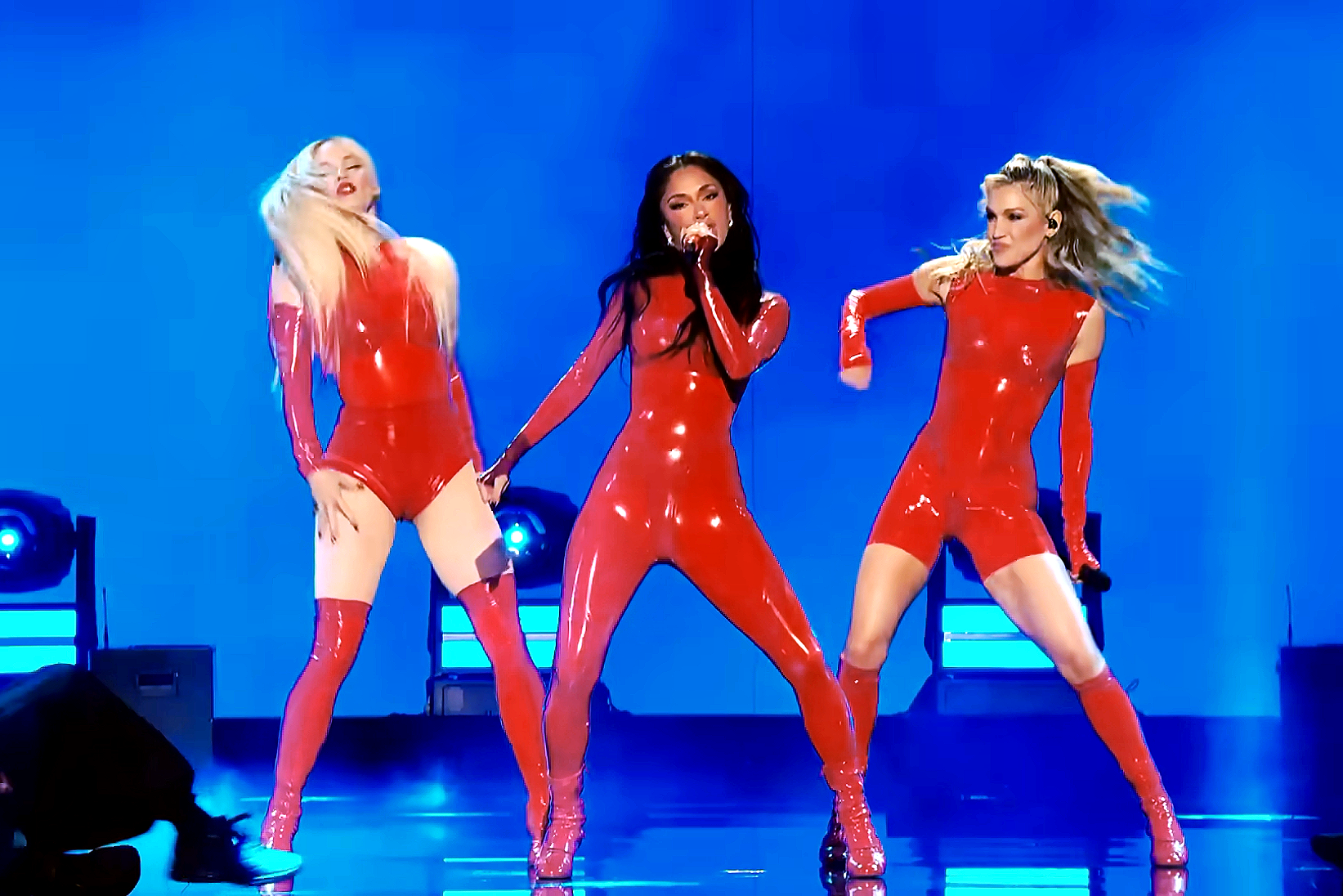
The Pussycat Dolls were back on stage after weeks of foreboding that they might. Their announced-in-March “global comeback concert” tour, PCD Forever, was largely gutted (except for one desperate stand in Los Angeles) and now they were at the American Music Awards (AMA), executing their routine with the synchronised, high-gloss exhumation of a brand that the market had already buried. The relentless threats—sorry, promises—that they would return to reclaim a pop landscape had stubbornly moved on without them. Nicole Scherzinger and her highly advanced backing dancers finally materialised. They executed their routine as flawlessly as their bodies allowed, a relentless barrage of hair whips and Bend ya Back contortions, as Ms Scherzinger screamed deliriously after the opener Buttons, “We’re back.” How ringing the plea for recognition; the demand to be wanted again. They were once “unstoppable”, but the Pussycat Dolls were, in fact, stoppable, stopped and now, aggressively trying to unstop.
When the trail spot hit Ms Scherzinger, what was immediately striking was her outfit. She may have declared a “come back” but it looked to be a “back to”. It didn’t announce a new era; it dragged the Dolls back into their own archive. And visually for Ms Scherzinger, Britney Spears, circa 2000. It’s a near-identical version of the red latex catsuit that the Oops… I Did It Again singer wore on the MV of that song. By channeling Ms Spears’s visual iconography from 26 years ago, she framed empowerment as borrowing past spectacle rather than creating new language. Admittedly, Ms Scherzinger wore her one-piece well, exactly as Catwoman might—tight. Back when Ms Spears wore hers, it was loosely, with flared legs, and it was a shock for her audience only because no one expected her breakout act to be one drawn from a dominatrix. But what was a 47-year-old doing copying a then 19-year-old? Ms Spears was transitioning into an adult singer. Ms Scherzinger was not.
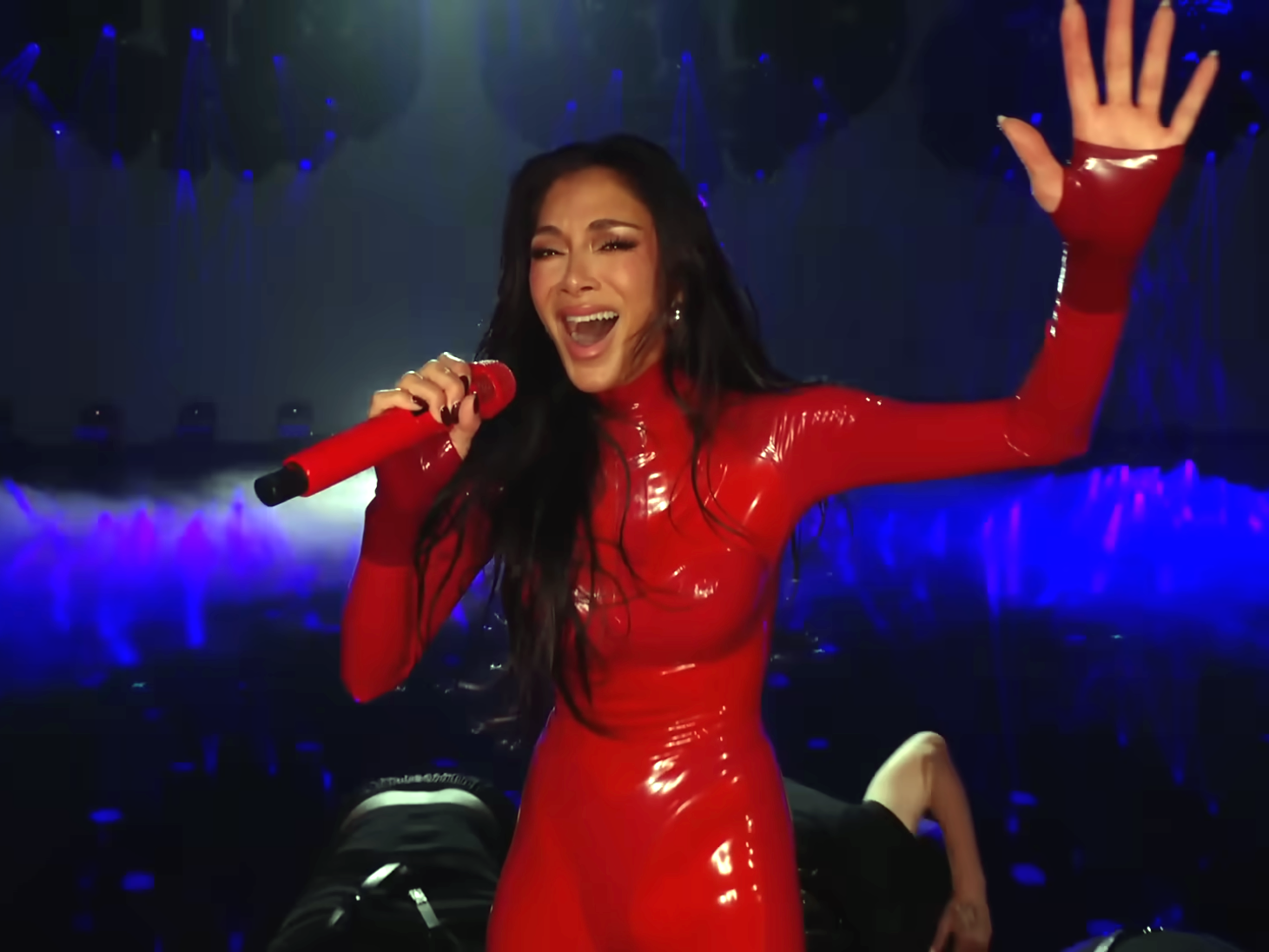
From the start, their brand was camp‑inflected, feline, playful, and hyper‑sexualised. “Pussycat” was about teasing dominance, not domesticity. Yet, Ms Scherzinger was dressed as if she was auditioning for Cats (ironically, a musical she did star in). It wasn’t about becoming something new rather than showing she had the body and could still play the Pussycat role, convincingly. The long‑sleeved, full‑length jumpsuit with mock‑neck collar was more overwhelming red than her two companions’ abbreviated looks. No designer or brand was attributed to the costumes. Ms Scherzinger was probably less concerned about couture credibility—as Madonna might be—than spectacle as branding. She was styled to look like a gloved, aerodynamic thumbs-up—a veteran star unable to free herself from an ego trap: she is the only Pussycat that matters. If it was a comeback at all, it was the return of Nicole Scherzinger, not Pussycat Dolls collectively. As one observer told us, “The Pussycat Dolls didn’t make a comeback. Nicole Scherzinger just hired her old scenery back.” And the scenery did not require a screaming solo.
The camera during the performance panned across the audience. Many stars, such as Tinashe and Gabriel Iglesias, were seen jiving and clapping to the trio on stage, whether out of genuine appreciation or sheer, unadulterated pity remained a polite mystery. After her performance, Ms Scherzinger told the press that it was all “hope, joy, empowerment” although what she was hopeful for, joyful about, or empowered by, she did not bother to say. Perhaps it was a form of public-facing self-consolation; the performance a rigorous kinetic exercise to dull the lingering sting of a tour suddenly called off so very recently. However, the cancellation wasn’t presented as a collective decision. It was Ms Scherzinger herself who announced it on 4 May, via the group’s official Instagram account. The other members reportedly learned about it at the same time as fans—through social media posts and subsequent press coverage. It was entirely Ms Scherzinger’s own public silhouette that required emergency repairs, not those of her strategically chosen, deemed-unremarkable sidekicks.
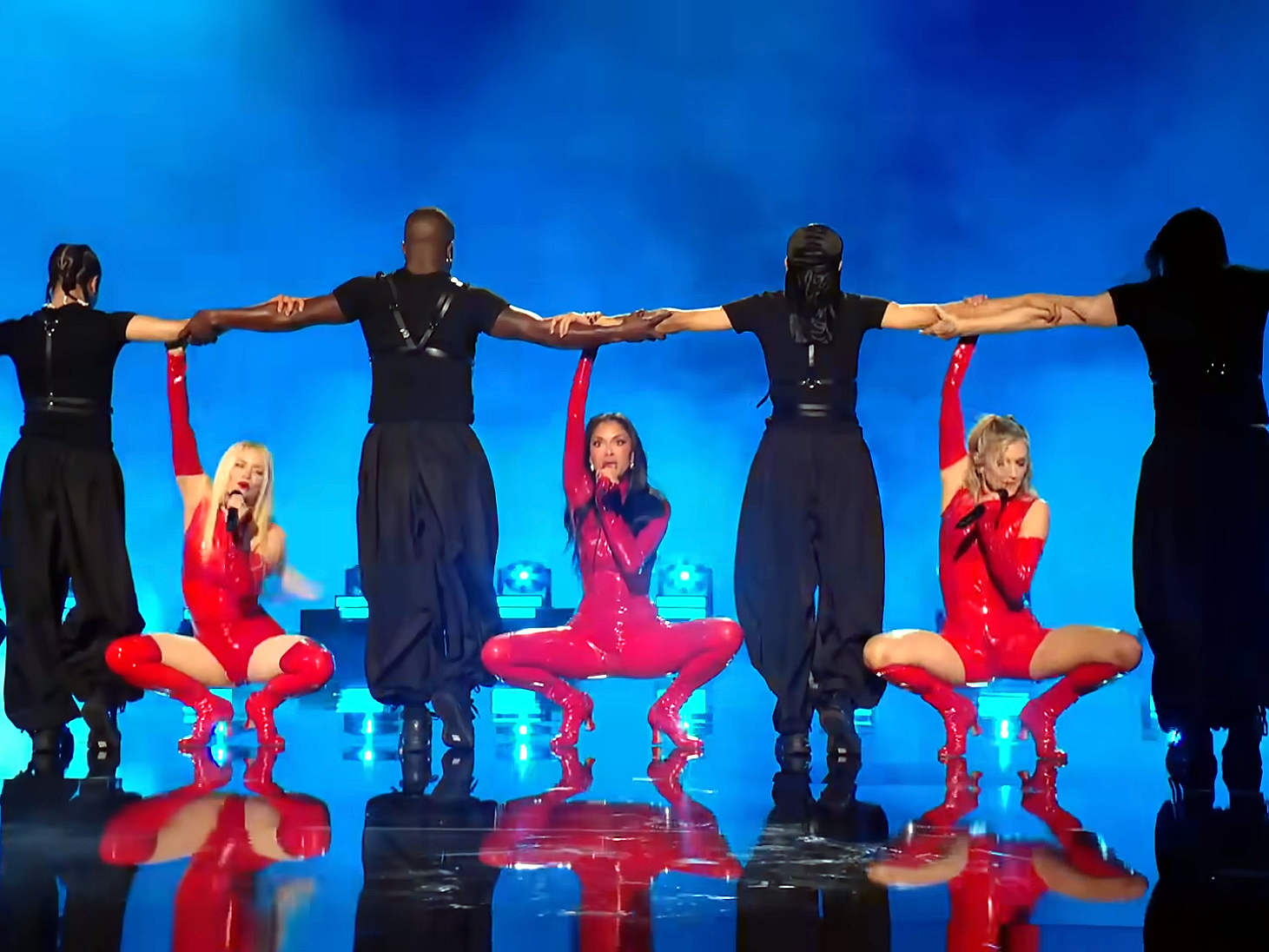
Pussycat Dolls were formed, post-Girl Power, in California in 1995 by the choreographer Robin Antin (she later created Girlicious, Paradiso Girls, and G.R.L., all now faded to obscurity) as a “burlesque dance troupe”, as the popular description goes. The group was rebranded into a recording sextet in 2003, with Nicole Scherzinger as lead singer, joined by Carmit Bachar, Ashley Roberts, Kimberly Wyatt, Jessica Sutta, and Melody Thornton. And with the debut album PCD, they became a massive pop entity of the 2000s. But this arrangement was always visual by numbers, not audible by power. From the very beginning, it was the lead singer as the only singer. The others contributed minimal backing lines, but never shared equal vocal space. The vocal distribution was so asymmetrical that even Diana Ross would have looked at that massive AMA stage and suggested to Ms Scherzinger that they share the microphone a bit more.
The entire American Music Awards performance was, at its core, a dazzling multimillion-dollar smoke screen—an exercise in theatrical camouflage in patina of red, designed solely to prevent anyone from looking too closely at a catastrophic spreadsheet that resulted from a cancelled national tour. When it was gutted weeks ago, the official narrative blamed “unforeseen scheduling conflicts”—the standard, lazy euphemism for empty arenas. Fans, however, recognised it as poor sales. One Doll badly misjudged their draw. The PCD Forever tour was announced with ove 50 dates across North America, Europe, and beyond, but the scale assumed they still had arena‑level popularity. In reality, their peak was 2005 to 2008. Now, nostalgia alone couldn’t fill arenas, less so with only three members returning. Watching them blast through the choreography on that AMA stage, we had to admire the unmitigated gall. It takes a truly special level of delusion to perform as a group that has structurally shrunk down to a single vocal identity, stuffed into the aesthetic of a nineteen-year-old Britney Spears, trying to pretend the empire has not crumbled. Blackpink looks to be forever. Pussycat Dolls not.
Screen shots: americanmusicawards/YouTube

