Those who have an inordinate love for queuing so as to buy to resell are the new performance artists with incredible patience and a softness for hard floors
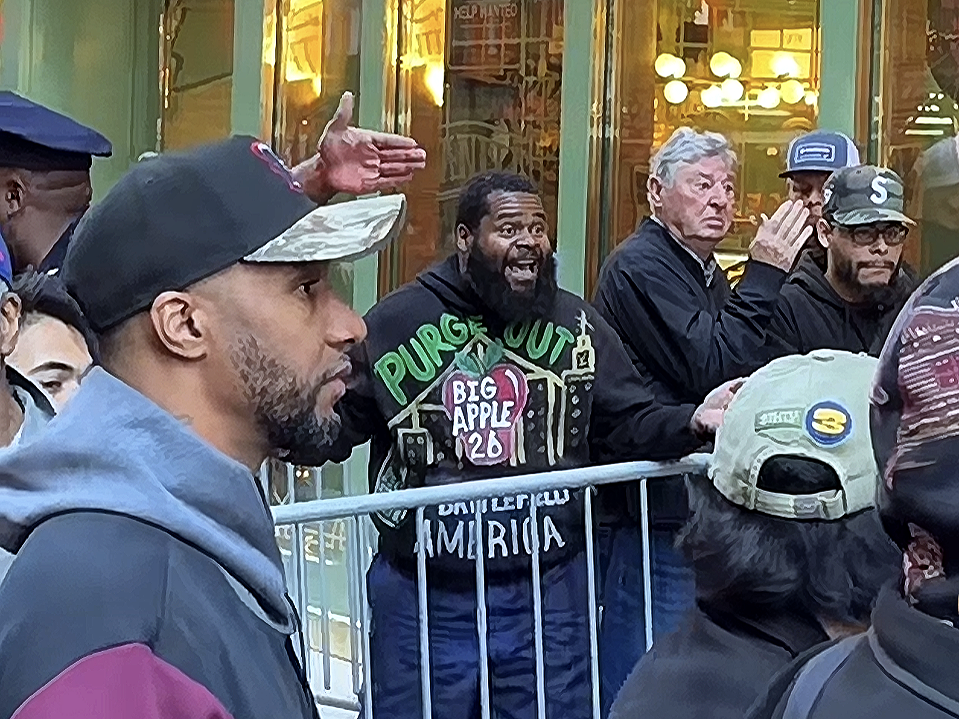
A disgruntled shopper at the New York launch of Audemars Piguet X Swatch launch. Screen shot: eden.from.li/YouTube
In a video that has been doing its obligatory rounds on social media, the New York launch of the Audemars Piguet X Swatch was shown to be especially garrulous among those who waited in the queue. When a police officer tried to organise the crowd, a disgruntled Black guy shouted at him: “I make more money than you, bro.” Netizens were in no doubt how he made his money and why he was there: to fund his existence by the noble art of buy low, add nothing, sell high. We can’t deny that this is the modern definition of sidewalk trade. No one is actually hawking, but there is commercial vibrancy and the creative vision of a vending machine. We know of their existence, but we are finally acquainted with them in numbers large enough at the Swatch event worldwide to note their unmistakable presence. That moneyed man in a black hoodie—with text that read “Purge Out Battlefield America”stood—stood behind the barricade, defeated. To be uncharitably blunt, he did not look like a watch collector, let alone an enthusiast.
If he was none of those, then, who could he be? Much of the current reporting on the AP X Swatch fiasco centres on the messy execution itself. Swatch even shifted the blame to mall operators rather than those who “rushed” up, such as that man and his tight community of “flippers”. In the sneaker scene, they are the “resellers” and among concert goers, they are the “scalpers”, dreaded and welcomed in equal measure. And for the fancy pants who have the means to use their convenient services, the “retail arbitrageurs”. These are the professional endurance artists whose primary asset is a high tolerance for public boredom (and bathrooms) and a softness for hard floors. He is not your friend’s little brother who flips because there is a new Nike Air Force One he is desperate to buy. Reselling, as we have learned, has become a massive, highly professionalised industry. Hardcore resellers treat what they do as a serious, real job.
Reselling, as we have learned, has become a massive, highly professionalised industry
In fact, flippers often operate like full-time businessmen, rather than casual hobbyists, using advanced tools and high-volume strategies. They invest in a “cook group” (a private, subscription-based online community—usually hosted on Discord or Telegram—where members get real-time insider information and automated alerts to help them buy highly profitable items before they sell out). Not everyone camps out in malls or shopping streets to ”cook” (the term used to “flip”). The savvy flipper’s weapon of choice is “botting”—specialised checkout automation software, known as Bots (such as All-In-One or AIO bots), to execute transactions at superhuman speeds. To get around one-per-customer rules, flippers use profile generation tools to create dozens of fake personas. There are many ways to beat the guileless and it would require another piece altogether to paint a clearer picture. The thing is, flippers are as omnipresent as influencers. But at least the flipper is holding an actual, tangible asset, even if plastic—the influencer is just encased in a gifted cocktail dress against a view of a sunset.
The flipper is born from a dramatic shift in how people buy and build habits. In the mid-19th century in the U.S., train ticket “scalpers” used speculative tactics that expanded into theatre and sports box offices. The advent of eBay and the rise of streetwear “drops” in the late 1990s (think Supreme) shifted this hustle toward consumer goods, creating a highly organised, frighteningly globalised retail arbitrage market driven by manufactured scarcity. Today, we are dependent on people doing errands for us. We have those who do grocery shopping for us, and they deliver the food, too. People are then asking, why can’t we pay someone to do all that horrible queueing for us? At the Ion Orchard queue last Saturday, at about 9.15, a young, spiffily dressed chap asked, at the head of the queue, if anyone was willing to do the buying for him and be rewarded for a service fee of S$400. This is exactly how the hype economy validates itself. We live in a highly commodified world where we outsource the friction of everyday life to the gig economy all the time. However, hiring a delivery rider to fetch your mee pok tah and bubble tea merely subsidises your laziness. Deploying a line-standing syndicate means you’ve outsourced the existential dread of waiting in a queue to a specialist.
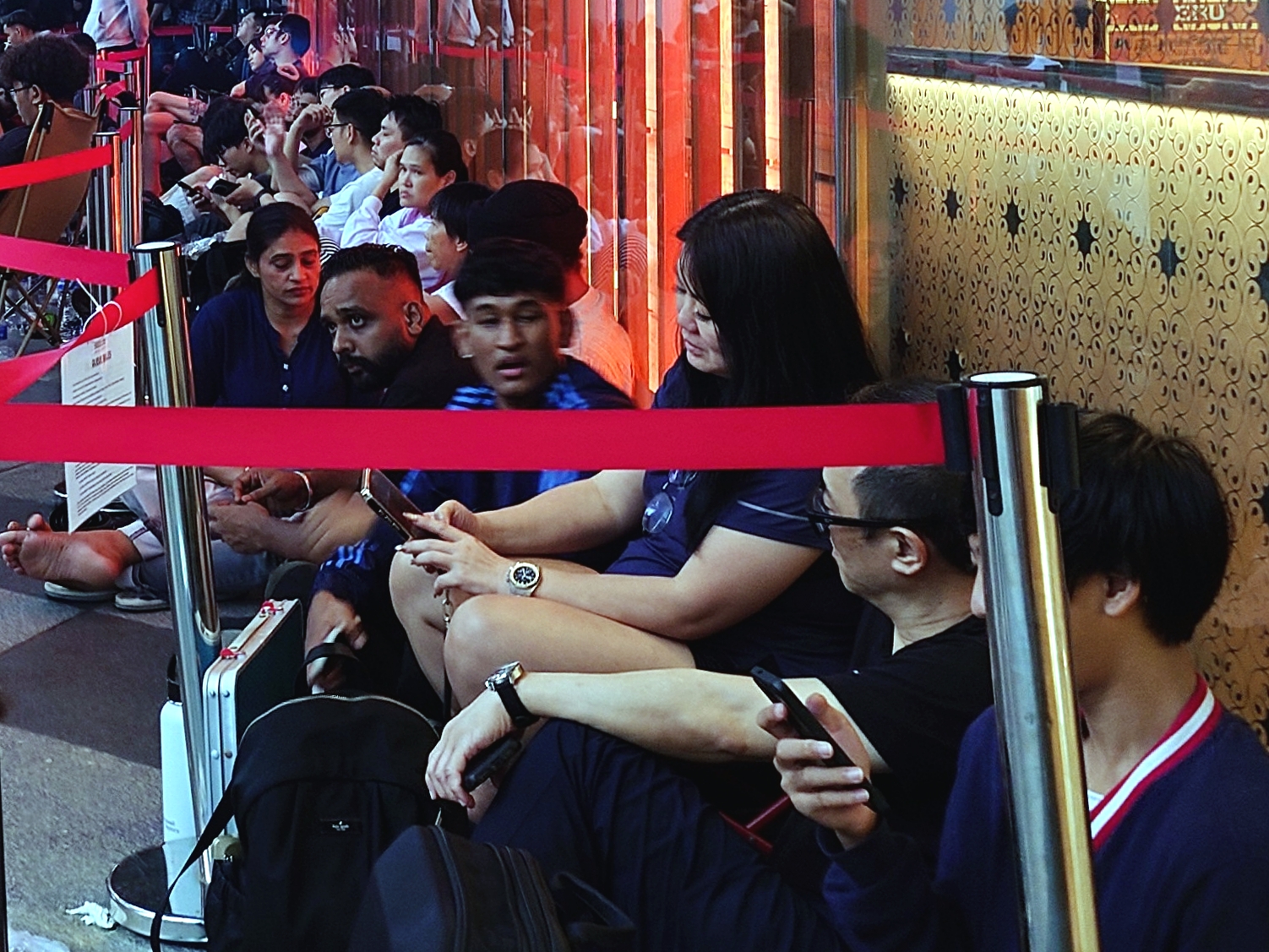
The queue at Ion Orchard for the Audemars Piguet X Swatch Royal Pop. File photo: Chin Boh Kay for SOTD
When we use, say, the Grab Food app, we are essentially paying for logistics and labour. The hawker or restaurant has adequate food, the kitchen can handle the orders, and the delivery rider is simply solving a distance problem for those who placed the orders (whether to their liking or not, that’s another quarrel altogether). The transaction doesn’t prevent the other customers within the selling space from getting their meal or requires the stall or shop to close for the day. It’s a value-added service. The AP x Swatch queue is a completely different beast. It is, as the experts call it, a “zero-sum” bottleneck. When a syndicate hires 15 proxies to lock down the front of the line (interestingly, at every queue at the three locations in Singapore, the majority at the top of the line looked like foreign workers), they aren’t “saving time” for 15 busy collectors. They are actively removing 15 opportunities from the open market. They aren’t delivering a product that was already yours; they are holding a public slot hostage and charging you a ransom to clear the hurdle they helped create. And to make matters more interesting, some of the Royal Pops were already offered as secured products on Carousell the night before the launch. We aren’t customers; we are just paying a premium to subscribe to our own exclusion.
In truth, we do outsource everything we do not like to do. We buy self-lacing sneakers, self-cleaning ovens, and even self-stirring coffee mugs. And they are appreciated as “modern conveniences”. We have reached a point where the act of picking up a metal teaspoon, dropping it into a ceramic vessel, and rotating the wrist for five seconds is deemed an unacceptable expenditure of human energy. Perhaps it is the absolute logical conclusion of an economy designed to facilitate the conservation of the precious caloric energy required to sit perfectly still. Flipping hasn’t just grown in parallel with modern life; it is a direct, logical offshoot of our obsession with outsourcing effort. When we let everything be done by others, down to the manual rotation of a coffee spoon, we lose our immunity to friction. We become a quivering bowl of fragility in our capacity to consume. The thriving resale market for the Royal Pop isn’t a testament to the brilliance of the SISTEM51 movement or the aesthetic genius of a plastic pocket watch. It is a monument to our collective impatience. Flippers can only exist because the modern consumer has been systematically untrained from waiting. There is wonder in being taxed for a dependency we custom-built, gift-wrapped, and handed over on a silver platter. And then, for the convenience, not even a “thank you”.

