A cornerstone of Malaysian retail, balancing accessible high-street trends with essential everyday staples, Padini is now investigated by the MACC
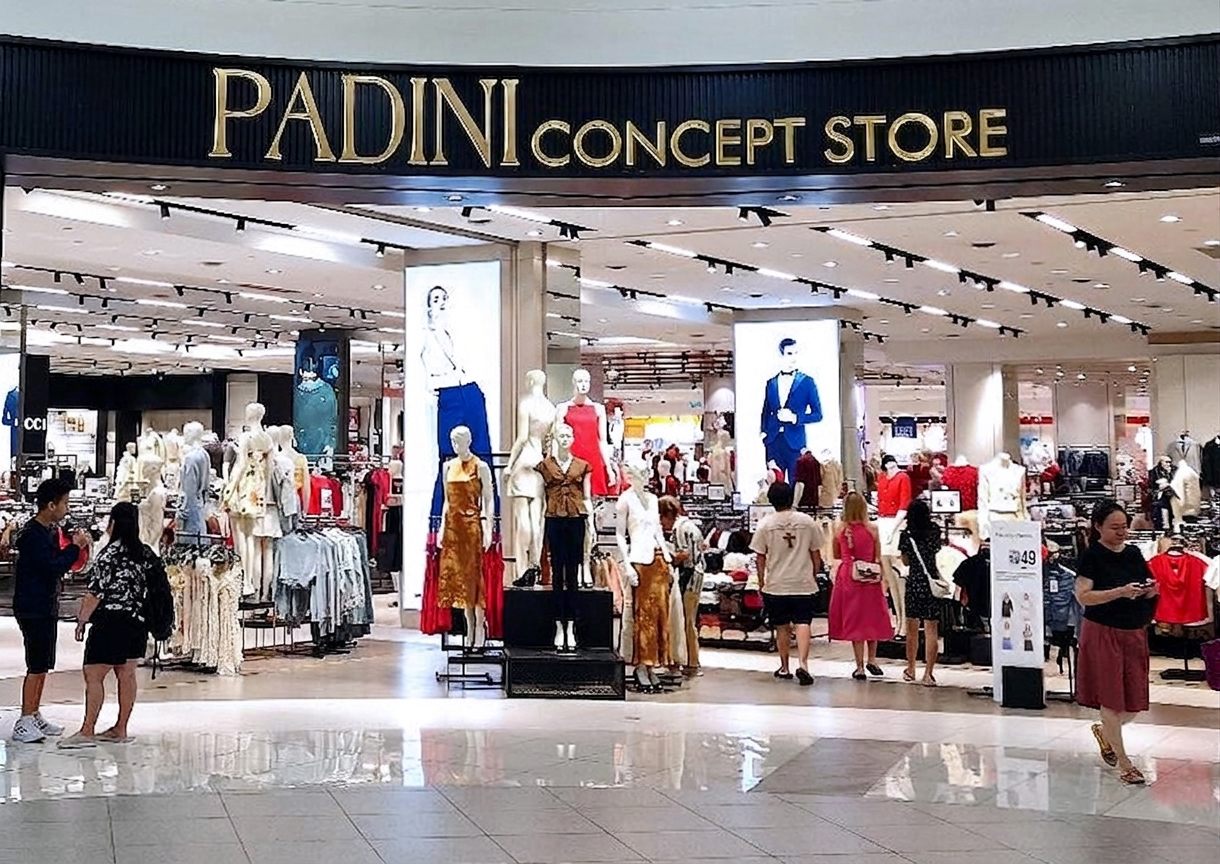
Padini store at Aeon Mall Tebrau. File photo: 麻坡仔 for SOTD
Padini stores peninsula-wide are currently not out of stock, but they are somewhat out of luck. It’s been a turbulent 24 hours for the brand as the company is facing a significant legal and financial hurdle that has sent its share price southwards. The biggest news, breaking today, is that Padini is undergoing an unsolicited fiscal puasa. According to Bernama, “the Malaysian Anti-Corruption Commission (MACC) has frozen certain bank accounts of Padini Holdings Bhd and its subsidiaries.” Other reports suggested that this sudden and severe move from the anti-corruption unit is part of a “money-laundering” investigation. The MACC has not released a charge sheet, so details are still sketchy. The Padini accounts were frozen specifically under Section 44(1) of the Anti-Money Laundering, Anti-Terrorism Financing and Proceeds of Unlawful Activities Act 2001. Critically, it is often used when authorities believe funds are about to be moved or dissipated. The fact that the freeze hit both the parent holding company and its subsidiaries suggests a wholesale audit of the internal plumbing, looking at how capital migrates between the holding company’s head and its retail limbs. It is a family reunion, if you will, except instead of sharing memories, they’re sharing frozen bank accounts and paper trails.
Across the Causeway in Johor Bahru, Padini stores in The Mall, Mid Valley Southkey and AEON Mall Tebrau are must-stops for many lured by what has been described as “high-value, accessible prices” and seeming variety. On Lemon 8 , one user ‘Rach’ was unambiguous about her adoration for the brand: “Will never miss this clothing shop in JB. My only inspiration to go to JB is literally just to visit my favourite clothing shop aka Padini Concept.” What is rather unusual about Padini is this collation of brands under one roof. The massive Padini Concept Store is less of a retail reinvention than an aggregation—a bundling of their brands, Padini Authentics, PDI, Seed, and Vincci (footwear) in a single space, and not necessarily in individual zones redolent of brand identity. This is not quite the multi-label store of the now-defunct-here Lowrys Farm from Japan that similarly sold their varied house brands in a single shop. That slowly evolved to a true multi-label store Collect Point. Padini’s “concept”, if evident, is really about scale and convenience, presenting its staggering product volume in one accessible environment. It’s effective, but not transformative in the way, say, Uniqlo’s immersive brand temples are.
Padini’s “concept”, if evident, is really about scale and convenience, presenting its staggering product volume in one accessible environment
The parent company of Lowrys Farm and Collect Point, Adastria, has, in fact, perfected the retailing of a headline house brand boosted by other sub-brands within the company. Adastria had other successful ‘concept’ stores that were indeed proof of concept, but regrettably they did not make it in or to Southeast Asia, such as Global Work (once at Westgate Mall) and Niko and… (they are in the city nearest to us, Hong Kong), known in Japan as a “style editorial brand”, essentially a style magazine come alive, best exemplified in their former basement store in Tsum Sha Tsui’s Mira Mall. There are brands that treat their retail as theatre and those that sell warehousing. Padini’s convenient collation is an amenable service to its regulars, but it is does little to augment the brand’s positioning as a fashion store with design cred. As one regular to Malaysia said to us, “it is sometimes hard to tell the difference between Padini Concept Store and Brands Outlet”, which is itself a Padini-owned business that, contrary to its name, is not a discounter. Both stores are primarily value-driven operations also banking on both breadth and depth to drive sales. This inventory-heavy inertia ensures affordability and ubiquity, but it also ties the brand to the criticisms of fast fashion: environmental impact, overproduction, and being perceived as disposable rather than aspirational. As it is said in certain political circles, it’s about the deal.
Padini’s history is as layered as a good kueh lapis, and with a Singaporean twist. The brand was conceived in 1971 as Hwayo Garment Manufacturers Company by Yong Pang Chaun (杨邦骏, Yang Bangjun) when he was just 20 years old. There is virtually no information available about Mr Yong’s early years (including the city or town of his birth) other than that his professional history really began in Singapore, where he made his way to, after completing secondary education, presumably Form 5. Mr Yong was looking for vocational training and he found it in what has been reported to be a “textile merchant”. It is not known if he actively sought this line of work or if he stumbled upon it by chance. As the newly-independent city-state embarked on its economic transformation in the 1960s, industrialisation became the cornerstone of development; however, while garment manufacturing flourished, the textile industry remained largely in the shadows (few today would know it existed) One of those noted by the then Economic Development Board was the Pelican Textile Factory in Jurong. It has never been made known where Mr Yong received this training.
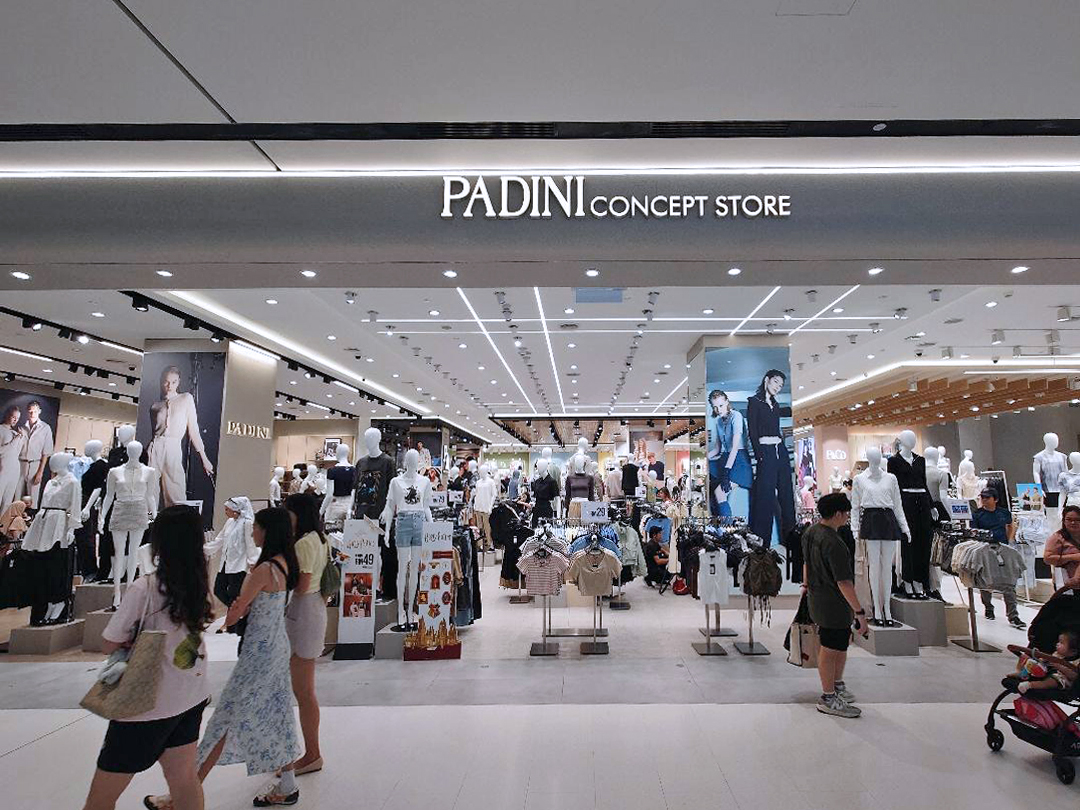
Padini Concept Store at The Exchange TRX . File photo: Dan Lim for SOTD
Embracing the textile industry, rather than garment manufacturing worked to Mr Yong’s advantage. Padini, as we can discern, isn’t a brand founded on mood boards and vibes, but on the fundamental understanding of a textile old bird—someone who knows the cost of a yard, the yardage required for a shirt, the hand of the fabric, and, equally vital, the tension of a weave. This is crucial to Padini’s success as the brand is sold on what had been lauded as affordable. The knowledge of cost structures, supply chains, and how to keep margins tight while producing at volume is the underlying strength of Padini’s business, rather than an intimacy with what is truly trending. The visual rhetoric of Padini merchandise—primarily those of Padini and later, Padini Authentics—was so clean and technically passable that when it was available through wholesale in Bangkok in the 1990s in department stores such as Central, shoppers thought that they were garments of Thai manufacturers. Padini’s affordability isn’t accidental. It’s the direct result of Mr Yong’s manufacturing discipline and retail pragmatism. By keeping production costs low and scaling distribution, Padini can flood the market with volume and appeal to budget-conscious consumers. But as the market evolves, low-cost isn’t enough to keep the brand relevant.
More might be merrier for merchandising, but not quite for a brand’s reputational lineage. While Padini insists operations remain unaffected and stresses that the MACC probe involves external parties, the optics of the bank freeze inevitably shake consumer and investor confidence. Their share price dropped by roughly 14% following the news of the MACC investigation. This came after their 2QFY26 results, reported in late February, that showed a 36% drop in net profit. If these were not enough to cause a dent to their standing as Malaysia’s reliable clothing behemoth, in October last year, there was the total lack of digital tailoring when in a post on X in October last year, a staffer, wearing a lanyard and what appears to be an employee I.D. tag, making his thoughts viewable. The text read: “Maca mana nak bagitahu customer, yang serbenarnya bukam baju Padini yang kecil tapi akak yang kena diet.” How do I tell the customer that it’s not our clothes that are small, but that they need to go on a diet? The brand’s pivot from authenticity to performance is obvious, but you can’t forget decorum just to be part of the now. Although the offensive post was quickly removed and an apology issued (so remorseful they were that they used “deeply” twice!), the stain of forced relevance is famously difficult to launder. A brand can survive a bad collection, but it takes considerably more than reputation to survive a bad take. Trends expire; trust does not.

