Maria Grazia Chiuri’s debut at Dior Fendi was a marvelous return to form, exposed granny panties and slogans (now on the floor) beautifully intact
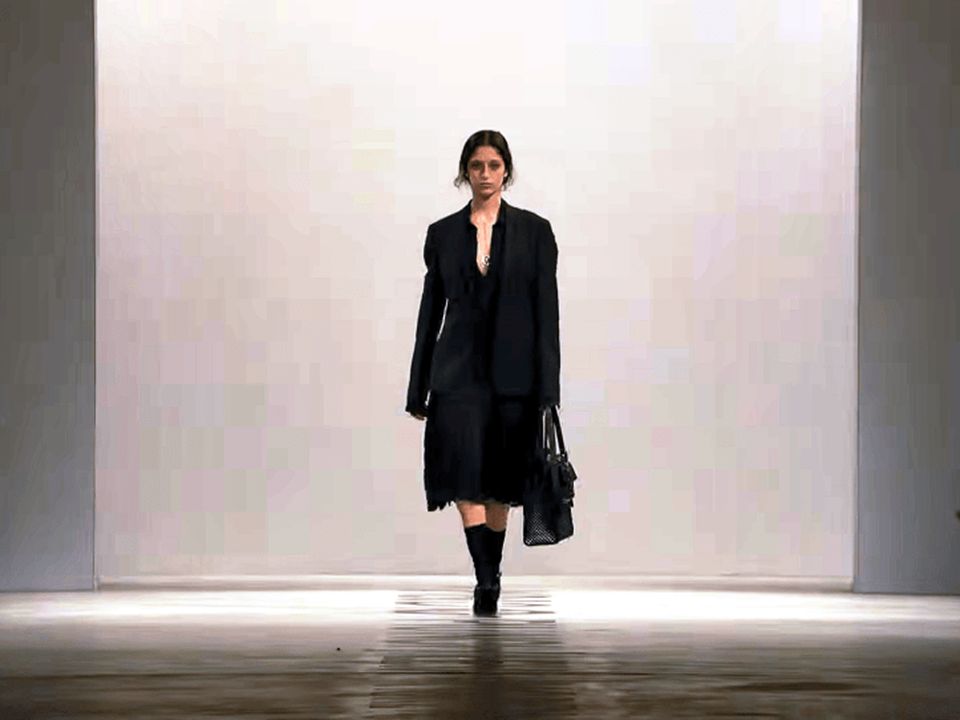
On the runway of Maria Grazia Chiuri’s Fendi debut, the slogan was back, but not on T-shirts. It was now on the floor: a terse “Less I, More Us”, to be trampled on. Irony is always on trend and Ms Chiuri knew where to place her bet—selling a dissolution of the self while her initials were visible from space. By putting the words on the floor instead of on a T-shirt, she’s making the models (and the viewers) walk all over her marvelous manifesto. A floor decal becomes a flat pedestal, showing that even her humility is a door-mat designed to be enamoured. But, initial snatches to the media revealed that what she was really promoting was clothing not for the individual, but for him and her, which might be a problem because it is doubtful that enough men would want to wear see-through skirts that reveal their Y-fronts. By designing gender -neutral looks that only she could adore—and only a mannequin could survive—she has proven that her “Less I” was actually just More Me.
Yes, the sheer skirt is back, just as Madam mantra is too. It’s like 2016 all over again, the year of her ho-hum Dior debut. Back then, she leaned on slogans (“We Should All Be Feminists”, to share one) and sheer romanticism to stake her claim as the maison’s first female creative director. At Fendi, founded by five sisters, she has no such edge. So the strategy was not to evolve, but to migrate it. At Dior, sheer skirts were served as empowerment through showing your undergarments. Now, they’re rebranded (but she kept the shape) as inclusivity through shared silhouettes. Although she is not picky about her pronouns, she did not actually put men in skirts, which was a pity because that could have allowed her to show a smidgen of subversion. That, or realise that gender-neutral shouldn’t mean equally humiliating for everyone involved. Perhaps Ms Chiuri simply enjoys bringing sand to the beach.
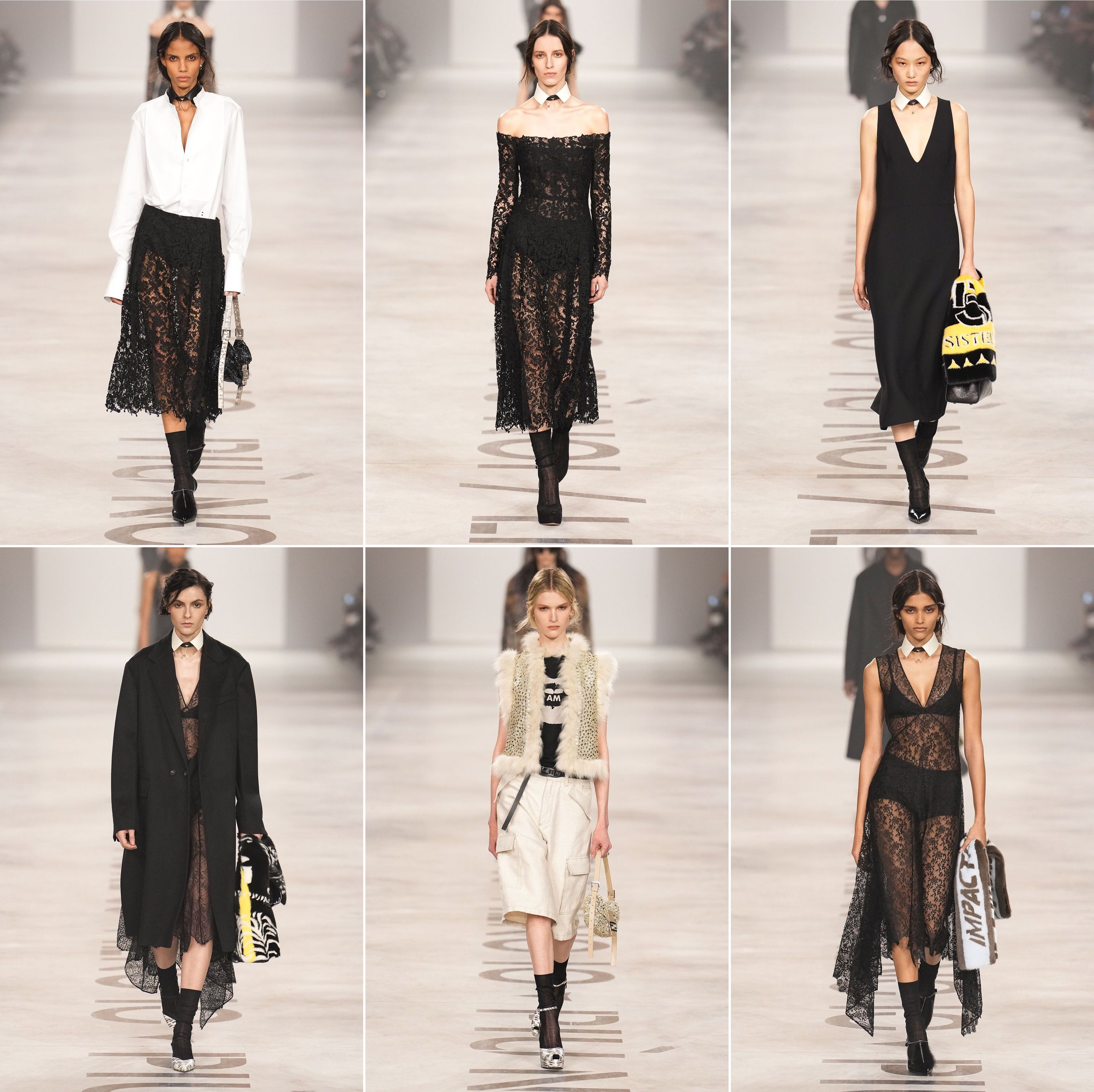
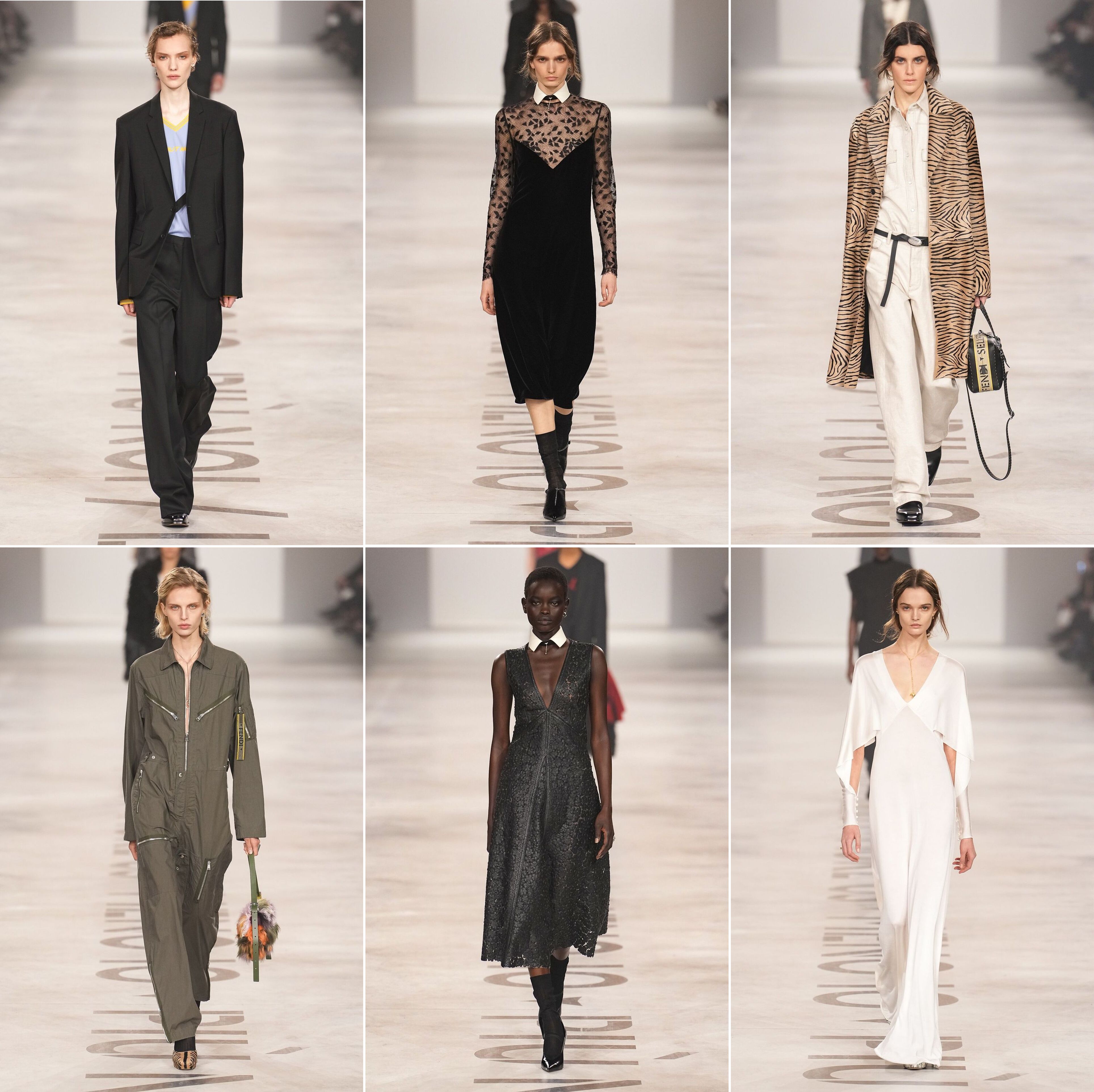
But it wasn’t just warmer climes and the ‘airiness’ expected of them that she Book-toted along to Rome. She also happily reminded us of the same monochromatic desert she’s been wandering since 2016, still trapped in a relentless cycle of obituary black to funereal black, military green cargo shorts to olive boiler suits. You really can bill for the same service in a different city. Oh, there was the burning bush of a red gown. Just one. But it was not a holy encounter, just a blotch of no compelling reason. Or was she missing her Valentino days? Drab colours (or let’s be pedantic, “MGC neutrals”) had been extremely saleable for her at Dior, making her rather wealthy. This could be her offering of gratefulness to the LVMH gods for re-employing her, for allowing her to be back in Rome. It assured them that her glory days at Dior could be reprised. Commercial is, of course, not necessarily a bad thing, but dull is the first sin her ego hasn’t figured out how to repent for.
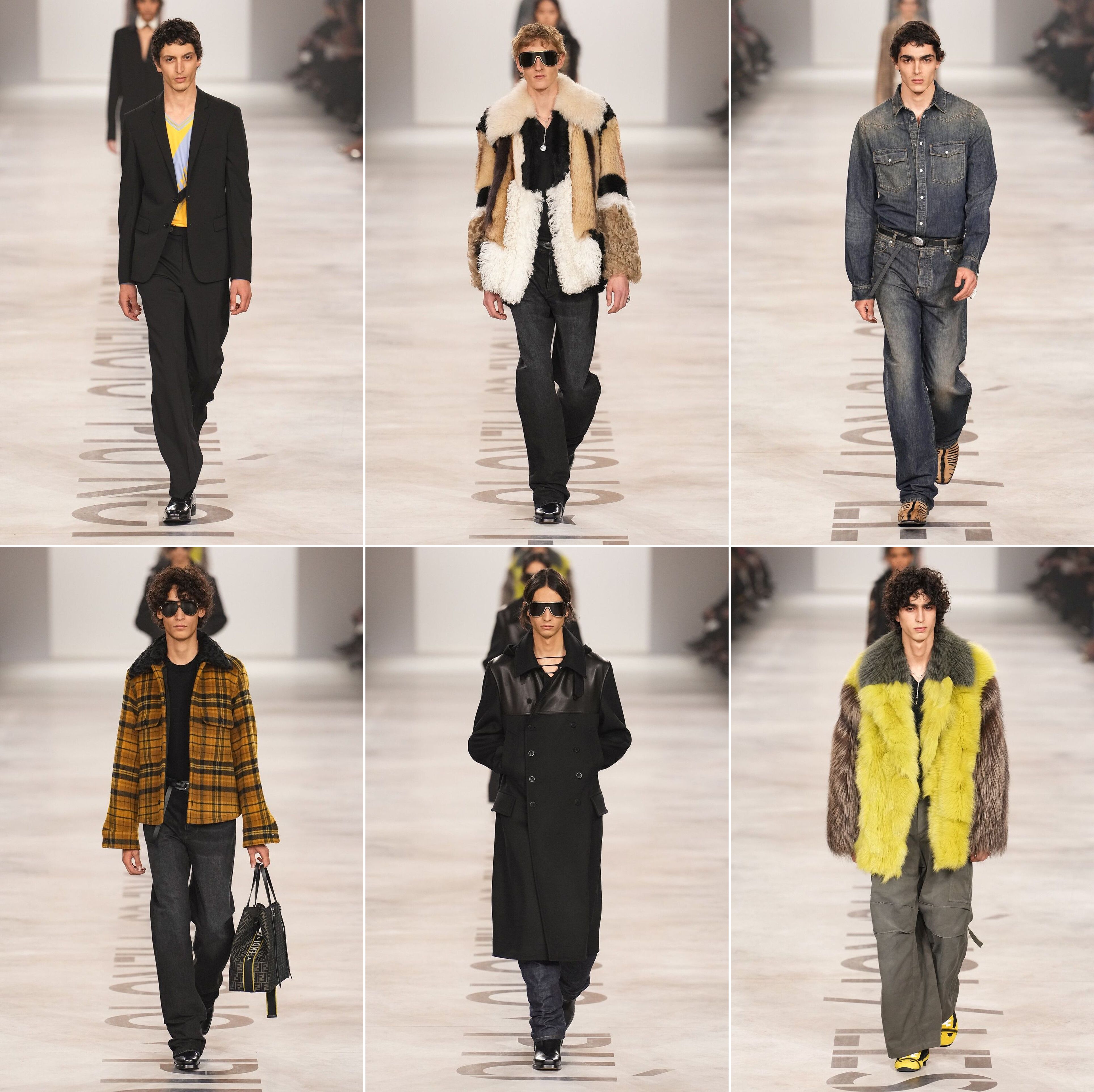
This was the first time Ms Chiuri presented a co-ed collection. She had never shown menswear during her long career at Valentino or Dior—her focus was exclusively on womenswear. And it showed, proving that “a shared wardrobe”, as she described her collection to the media backstage, was just her preferred synonym for strictly my own reflection. Silvia Venturini Fendi had been steering menswear at Fendi for over 30 years with a deft hand, balancing heritage craft with modern ease. Ms Chiuri’s debut feels like a crash of that momentum as she catered to the clichéd luxury menswear customer, likely American, from tech bros to hip-hop moguls to those who have a weakness for carpet remnants sales. Anticlimax in sharp relief. And to make things truly uncomfortable, Maria Grazia Chiuri decided to bring back Fendi’s old core business: real fur. She absolutely need not go back that far. If the sheer skirts won’t finish her, the fur surely will. Welcome to Fendi-or.
 Style on the Dot
This is one of the most yawn-inducing shows…
LikeLike