To Donald Trump, the incursion into Venezuela and the capture of Nicolás Maduro was pure entertainment. It must have been a very happy start to 2026 for him
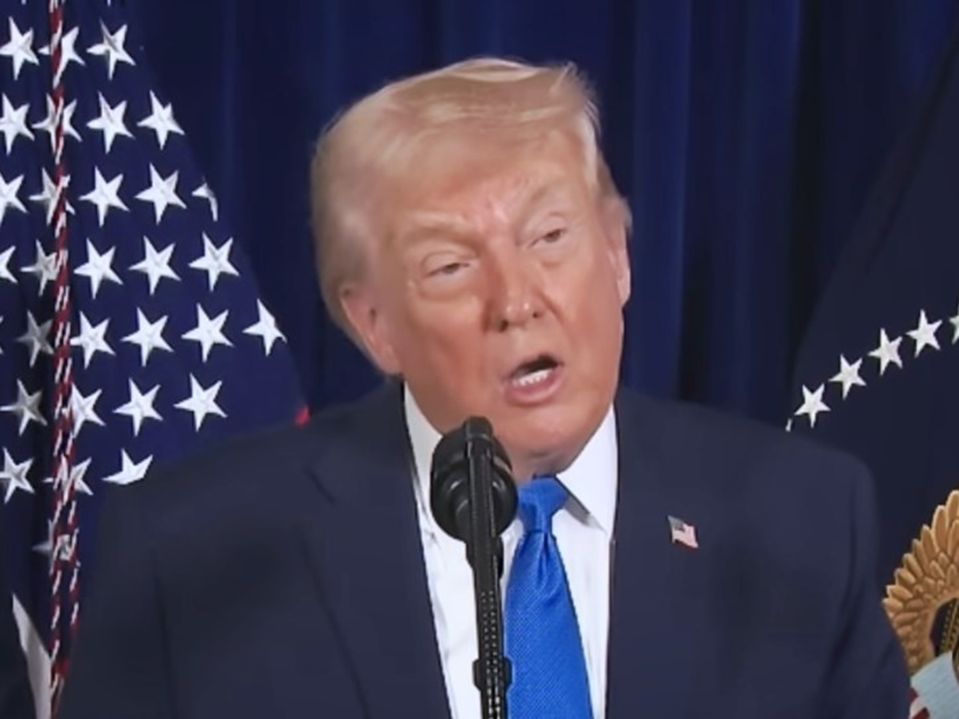
Donald Trump speaking to the media about the attack on Venezuela. Scree shot: CNN/YouTube
It’s a new year, but it’s an old suit. Or what looks like an old suit, one that we’ve seen before and was unimpressed by. This time, just two days after the New Year’s eve celebrations in bedecked Mar-a-Largo, Donald Trump appeared in post-festivity frumpiness before the media and announced that the U.S. attacked Venezuela and deposed its president Nicolás Maduro. This was part of a highly controversial and alarming military move codenamed Operation Absolute Resolve. Instead of his usual limp, red tie, he wore one in blue, a colour that generally represents calm and peace. But in the wee hours of last Saturday morning, the opposite was true: airstrikes and the raid by U.S. special forces in Caracas, capital of Venezuela. About seven hours after the attack. Mr Trump spoke to Fox and Friends by phone, and gleefully said, “I watched it, literally, like I was watching a television show.”
An ex-reality TV star speaking the way he did was hardly surprising. Mr Trump increasingly describes geopolitical events in the language of television, with dramatic reveals, and, now, with descriptive words such as “speed” and “violence” in the same breath to emphasise the very American dopamine hit of shock and awe of the incursion. Military attack—and it was one, no doubt about that—became proof of dominance, rather than a potential humanitarian crisis. By saying he “watched it like a show”, he positions himself as an audience member, not an accountable actor. Citizens or his supporters were invited to consume war as entertainment, normalising militarism as part of his political theatre. And to make sure that this was performative, the two prisoners (including Mr Maduro’s wife Cilia Flores) moving to their final destination were videotaped and the reels shared on social media, including Mr Trump’s own account. Foreign policy as binge-watch culture.
Citizens or his supporters were invited to consume war as entertainment, normalising militarism as part of his political theatre
Mr Trump’s description of what happened at his end during Operation Absolute Resolve sounded like he was watching someone play Counter Strike for the first time. “I’ve never seen anything like this,” he told Fox and Friends. “I was able to watch it in real-time, and I watched every aspect of it. It was amazing.” It was also hard not to see that between the live-streamed nature of the attack and the tactical specifics, the U.S. president essentially framed the operation as a high-stakes, first-person tactical simulation. He even marveled at how the military “actually built a house which was identical to the one they went into” to arrest the Venezuelan president and his wife. Like a gamer watching a Twitch stream, Trump monitored the raid live from Mar-a-Lago, surrounded by the same gilding and luxury that hosted a festive bash just two days prior. While the world was still recovering from New Year’s celebrations, Mr Trump was at his private club, not the White House Situation Room, monitoring a sovereign invasion bomb dump as if it were a high-definition Time Square Ball Drop.
But this was no Hallmark special. Or an RTS (real-time strategy) session of atWar (without, of course, the diplomacy component). Another sanctions move it was not either, but a direct military intervention that toppled a sitting head of state. By abducting Mr Maduro under the pretext of “narco-terrorism”, Mr Trump has instantly set a precedent that totally smudges the line between counter-narcotics enforcement and outright regime change. What can stop America from repeating the unilateral aggression elsewhere? Mr Trump’s Venezuela strike has expanded the realm of possibility for U.S. action, but practical constraints—nuclear deterrence, economics, alliances—make repeating it against giants like China far less likely, even when Mr Trump has accused China of fueling America’s deeply-entrenched fentanyl crisis. Still, the threat itself is destabilising. It signals that Washington may act outside traditional limits when it feels cornered, or disrespected.
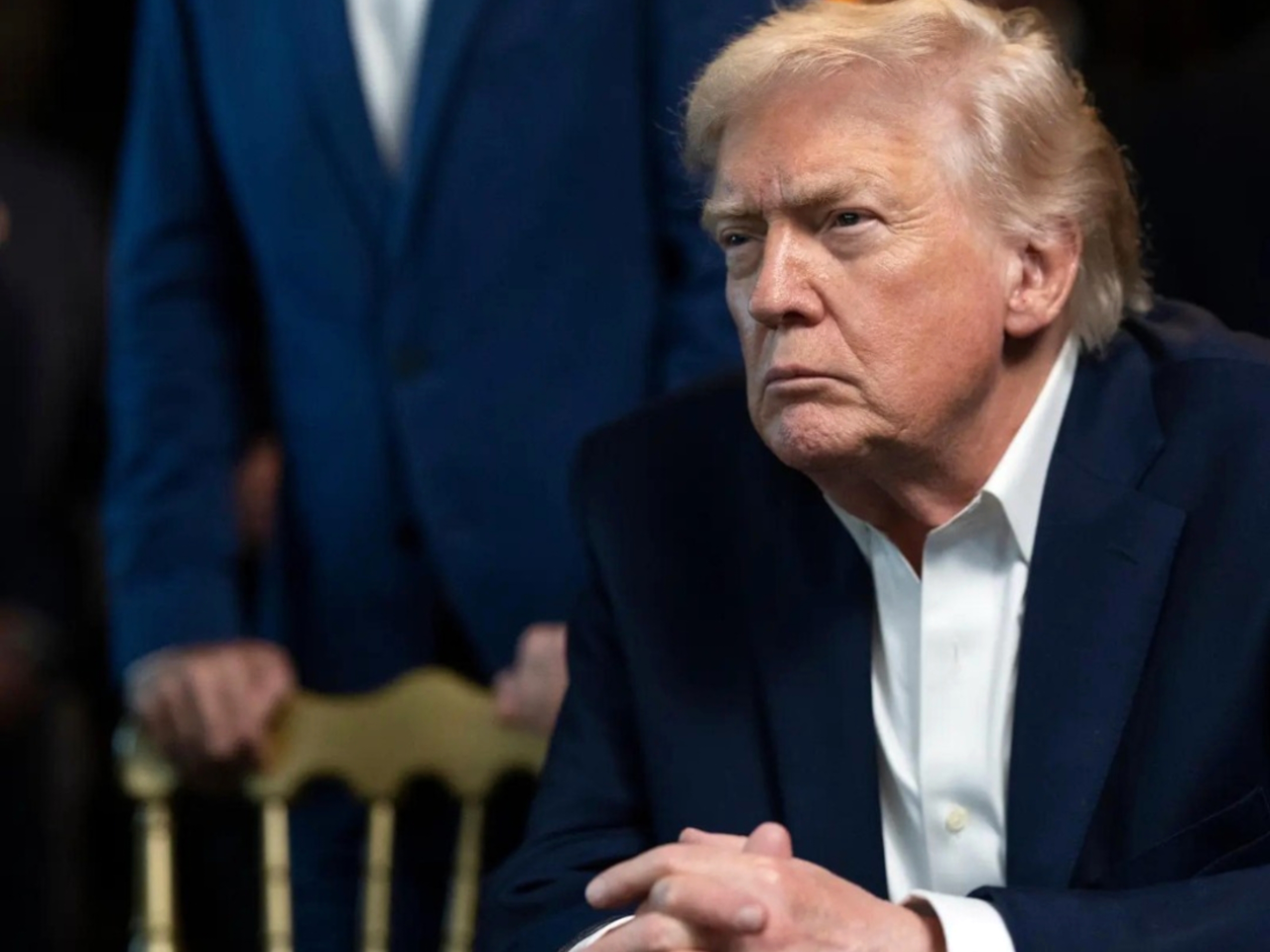
Donald Trump concentrating on the “amazing” attack on Venezuela live. Photo: whitehouse/X
By now, we’re used to Mr Trump’s political exhibitionism, but what happened in Venezuela was ostensibly an imperialistic move. Not long after guesting on Fox and Friends, he hosted an astounding press conference in Mar-a-Lago and announced that the U.S. is “going to run Venezuela for a time”. Even if he framed it as temporary or “until such time as we can do a safe, proper and judicious transition”, it was, as we said, effectively an invasion. The duration doesn’t change the nature of the act. And it’s easy to confuse a solution with a crime. There is a clear irony here: Mr Trump’s style has been anything but safe, proper, or judicious. He thrives on disruption, spectacle, and the breaking away from norms. He does not follow the herd. Heck, he’s not even in the same pasture.
To be sure, Nicolás Maduro is no angel. A former bus driver and protégé of Hugo Chávez, he has maintained a decade-long grip on power through military loyalty and the systematic suppression of political opposition. His legitimacy is challenged by much of the international community following a series of contentious and widely criticized elections. Whatever one thinks of Mr Maduro’s record, whether corrupt, authoritarian, or deeply unpopular, the principle of sovereignty is central to international law. A foreign power does not have the legal right to abduct a sitting head of state on his own soil. When the plane securing Nicolás Maduro touched down in New York, the operation had already been won in the digital arena. The trial in a Manhattan courtroom will be the sequel, but the premiere at Mar-a-Lago has already set the narrative: justice is not a process; it is a broadcast, whether the blond leading man wears a red tie, or blue.
 Style on the Dot