For Johnson Wen, the Australian nuisance-making content creator, annoyance wins, not talent. But in Singapore, he was wrecked by a now world-famous, disruptive prank
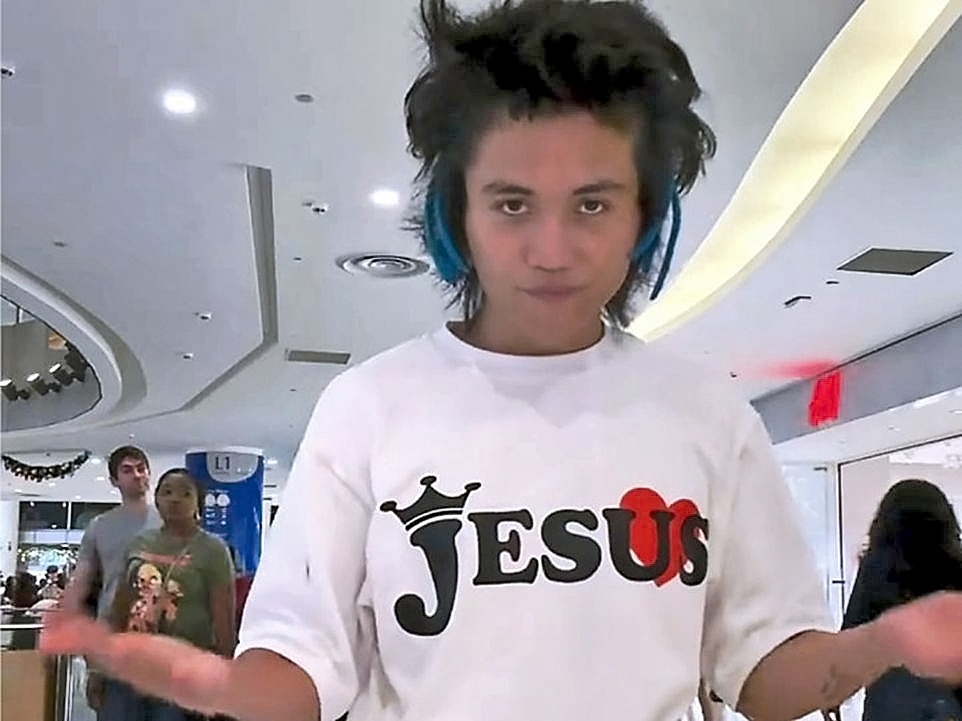
A triumphant Johnson Wen after his Sentosa stunt. Photo: TikTok
By now, the world knows what happened that Thursday. The real story, however, isn’t the stunt itself, which, to be sure, is deplorable, but the shockwaves afterwards. When Australian Johnson Wen managed to surmount crowd-control barriers and the people behind them at Resorts World Sentosa to accost his idol Ariana Grande, here to promote the movie Wicked: For Good, he was not trailing a spotlight on himself, he was letting the world see that our secure island has a weakest link. The self-styled “content creator” and serial event crasher’s breach of a tightly-controlled and choreographed event in Singapore shattered the illusion of our impenetrable security. In many ways, he reminded us of a cyber hacker, except that he was proving that physical barriers, rather than a firewall, wasn’t airtight.
Frankly, Mr Wen himself is irrelevant. His act was egregious, yes. But the real story is what followed: the media amplification (both the BBC and The New York Times covered it), the smug Instagram post (“I’m free”), the nine-day jail sentence that will likely become his next content arc. Sure, we jailed him, but that’s like giving an arsonist a lifetime achievement award in fire safety. When Taylor Swift and Lady Gaga performed here, everything went smoothly, reinforcing the city’s reputation for flawless event management. Mr Wen broke that pattern, and the ripple effect is psychological as much as practical. His intrusion wasn’t catastrophic, but it punctured the illusion of perfection. It’s like finding gum on the floor of Changi Airport.
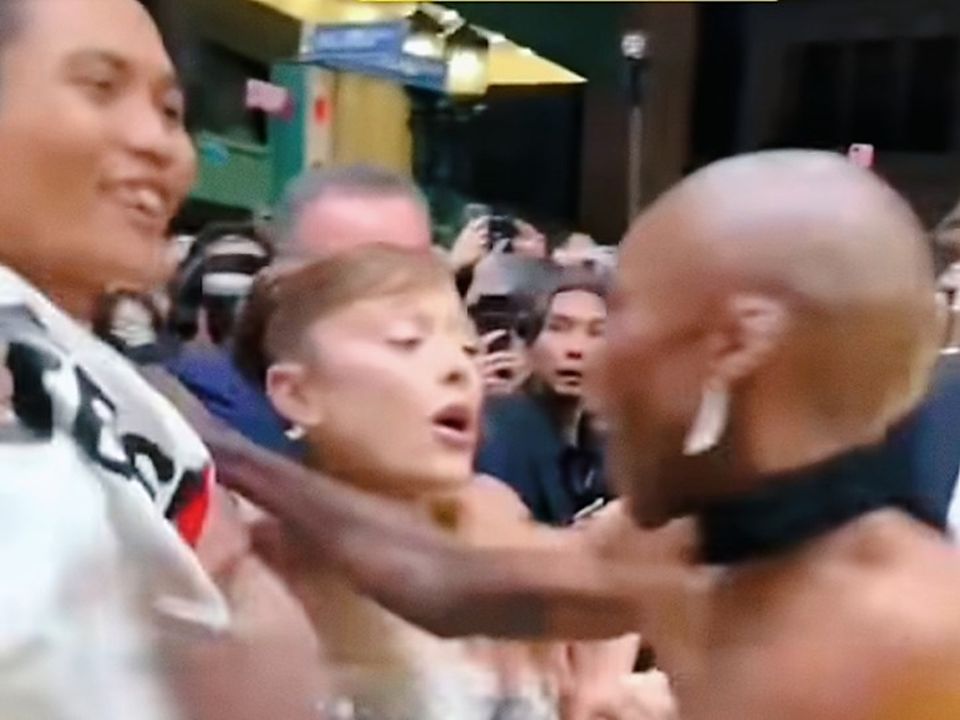
Johnson Wen, triumphantly hugged Ariana Grande while Cynthia Erivo forcibly pulled him away. Screen shot: TikTok
This isn’t about whether Singapore can secure events—it can, and usually does. It’s about how one breach changes perception. Just as a single cyber attack makes people doubt an organisation’s defenses, Mr Wen’s stunt made people doubt Singapore’s event security, even though the system is still robust. In court, the judge’s sentencing rationale was to “send a signal to like-minded individuals… that we will not condone any act that potentially undermines the reputation of Singapore as a safe country.” Nuisance for content, which is Mr Wen’s brand of manufacturing bespoke nonsense, often fails to capture the full scope of the harm and the underlying motivations involved. He is recalcitrant and seems entirely satisfied with the spectacular debris field he created, even boasting his achievements.
Johnson Wen is not an outlier. He is the logical endpoint of a platform culture that rewards visibility over value. In this economy, attention is currency, and nuisance is strategy. The serial event crasher’s stunt was a hostile takeover of a moment built by artists, organizers, and fans. Mr Wen contributed nothing, yet he extracted everything. The judge’s decision to impose a jail sentence, rather than just a fine, was a direct legal response to this extractive behavior. It aimed to impose a real, painful consequence that could not be simply crowdfunded (as Mr Wen’s financial woes have been and has been solved by his followers) or laughed off. It was a rejection of the idea that this kind of self-serving exploitation is a minor cost of doing business in the digital age. To us, Mr Wen’s bespoke hogwash tailored for an audience of one is not—and must never be— the price we pay for progress.
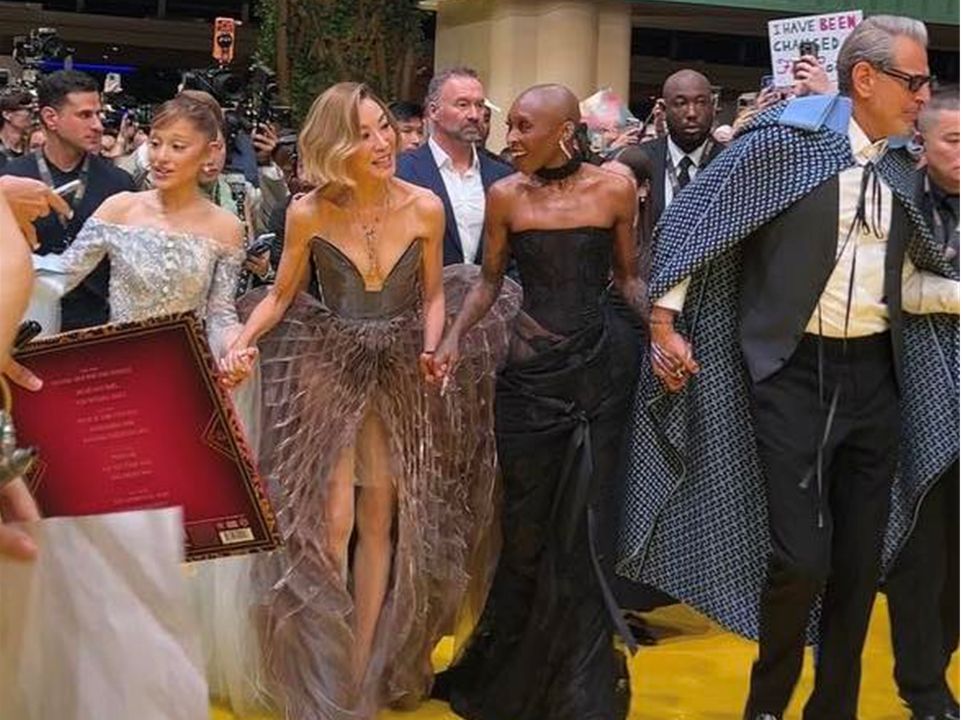
Before the breach: (from left) Ariana Grande, Michelle Yeoh, Cynthia Erivo, and Jeff Goldblum. Photo: philstarlife/Facebook
Johnson Wen did not just crash a promotional event, he also defiled a fashion moment, which to many was a rare cultural crescendo in our city. Dressed to the nine, the stars in attendance, including Michelle Yeoh and Jeff Goldblum, were a visual symphony of movie world glamour, poise and custom fashion. By contrast, Mr Wen executed his stunt in a grungy white T-shirt with the word ‘Jesus’ emblazoned across the chest and a crown atop the ‘J’ and a heart shape behind the ‘U’ and the ‘S’—presumably meaning King Jesus Loves—that was likely bought online than at a church yard sale, for around US$25 (or S$35,50). Amid Ms Grande’s Thom Browne, Ms Yeoh’s Iris van Herpen, Ms Erivo’s in Vivienne Westwood, and Mr Goldblum’s Dior, Mr Wen inserted himself in T-shirt with a biblical name that was crowned and hearted like a bootleg sermon. Did he think the son of god loved the grabbing of Ariana Grande mid-carpet?
By deploying a T-shirt that is either irreverent or potentially blasphemous, he managed to engineer a moment of maximum shock and controversy—an effort so precisely calibrated, you could almost admire his dedication to being thoroughly irritating. Mr Wen’s fashion choice, always badly offbeat, was a calculated provocation, designed to rupture the visual smoothness of the event and inject a jarring note of pseudo-spiritual chaos. Regrettably, there is a sad irony to this. His T-shirt and slouchy demeanor didn’t just clash with the Wicked: For Good premiere—they mirrored a stereotype: Singaporean mall-going style. And in doing so, he inadvertently implicated a nation that had nothing to do with his stunt. In early reporting after the incident, many outlets failed to identify his nationality. Singapore, the host, the victim, the stage was mistaken for the perpetrator. Mr Wen hijacked a moment and concurrently blurred the blame.
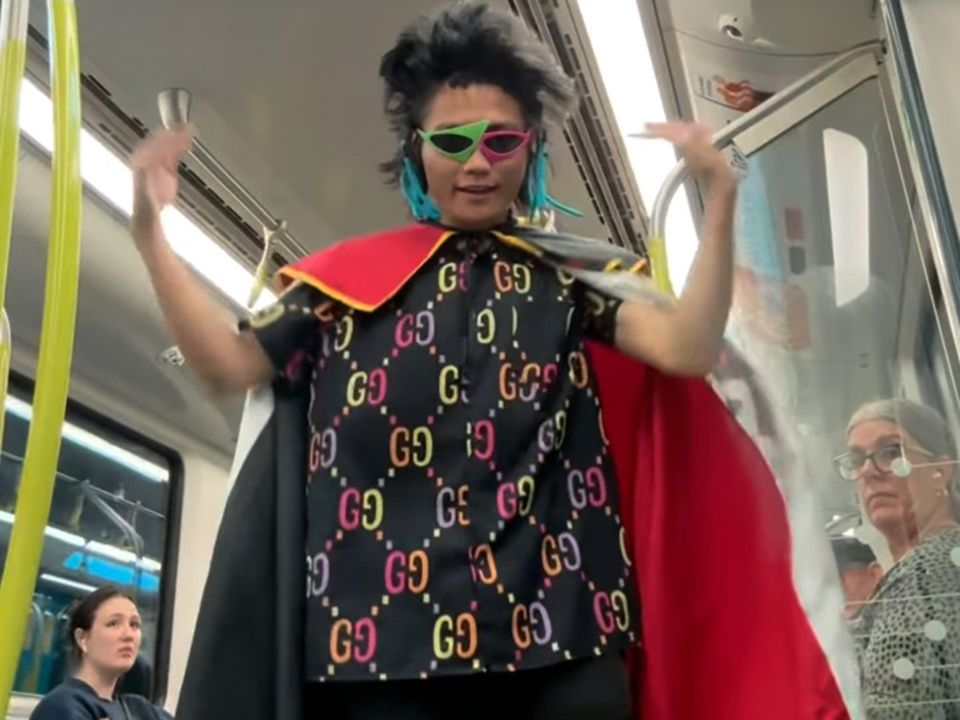
Johnson Wen in an odd get-up that includes what looks like a fake Gucci T-shirt during one of his stunts, this time in public transport. Photo: pyjamamann/Instagram
From the many videos of the fiasco circulating online, we noticed something else. Cynthia Erivo’s instinctive leap to Ariana Grande’s defense was a flash of real-world heroism, a kind of kinetic sisterhood. But Michelle Yeoh’s lame protective embrace of Ms Grande? That was something else entirely: a rupture between cinematic myth and human reality. We’re used to seeing her play the tough cookie, from a police inspector in Yes, Madam to a Bond girl in Tomorrow Never Dies to a pugilist in Crouching Tiger, Hidden Dragon—in all, always eager to kick ass. But in the presence of a real-life baddie, she seemed to have forgotten her martial arts. This isn’t a critique of Ms Yeoh’s courage, but a reminder that cinematic power is not the same as situational readiness. In the movies, Ms Yeoh dispatches villains with balletic precision. In real life, she was just frightened.
In the spectacle economy, punishment becomes promotion. Jail time isn’t a deterrent when it can be rebranded as “content.” For a virtuoso of vexation, incarceration isn’t a consequence, it’s a plot twist. Jail did not affect Dee Kosh, it unlikely will impact Johnson Wen. He did not just crash a movie event with top-billing stars (among them an Oscar winner); he crashed the illusion that spectacle is harmless, that clout is consequence-free, and that fashion is frivolous. He came dressed in spiritual cosplay and left behind a trail of anti-tourism litter. In the spectacle economy, even bad taste can be savoured as content. If Singapore was the stage, Johnson Wen was the stain. And no amount of algorithmic applause can scrub that out.
 Style on the Dot