Once the epitome of cool, American fashion is impacted by the demands of influencer culture and overshadowed by a very real crisis: national identity
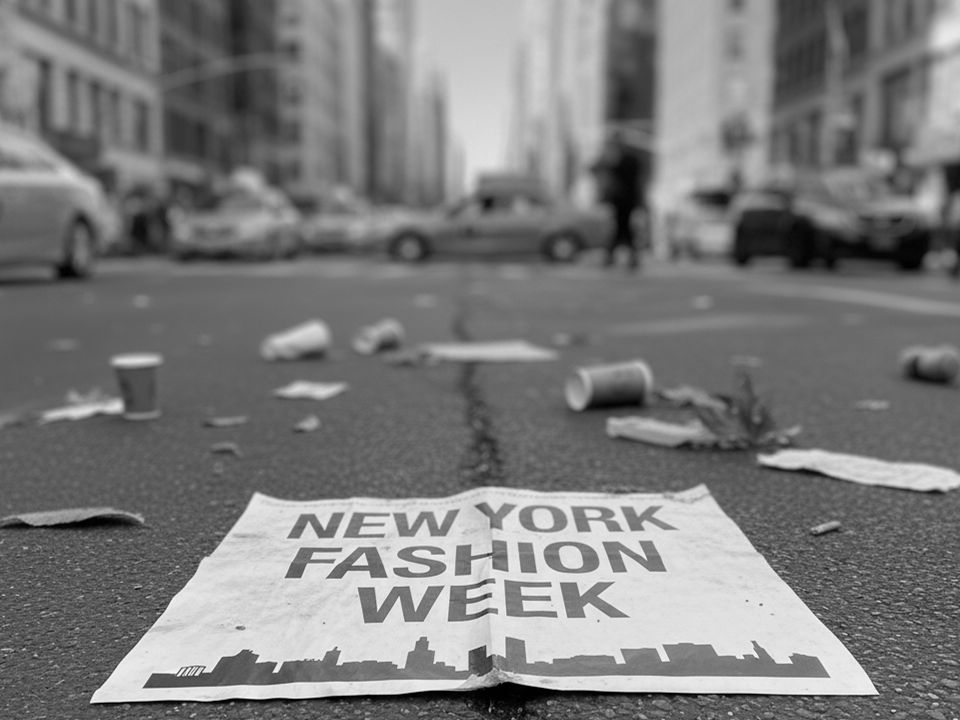
This season’s New York Fashion Week (NYFW) opened on 11 September, with Michael Kors kicking off the event. Just a day earlier, right-wing conservative political activist Charlie Kirk was fatally shot while delivering a speech on the campus of Utah Valley University in his usual provocative style. That evening, Ralph Lauren showed his collection at an unspecified “an intimate space” on Madison Avenue, cloistered from the rest of the country. The brazen assassination and the subsequent inability of police to apprehend the assailant until 33 hours after the murder dominated headline news. NYFW, as Reuters suggested, “opened under scrutiny of its relevance and reach”. But the importance and scope took a backseat as a very public murder drove the contentious conversation about political violence.
The fashion industry has always been a form of expression that both reflects and refracts the uncertain world around it. At its best, it serves as a thermometer for the cultural heat, translating social shifts, anxieties, and aspirations into runway narratives. NYFW, despite its declining prestige, has been a bellwether for American mood—from the wartime practicality of its origins to the exuberant, post-COVID pandemic defiance seen in recent years. But this season, as the runway lights came on, something else was turned on, too: The full weight of a nation’s despair falling upon the catwalk. In the wake of Charlie Kirk’s assassination, what mood is American fashion in? Expectedly, dismal. And what does the spotlight on his death say? Disturbingly, nothing new.
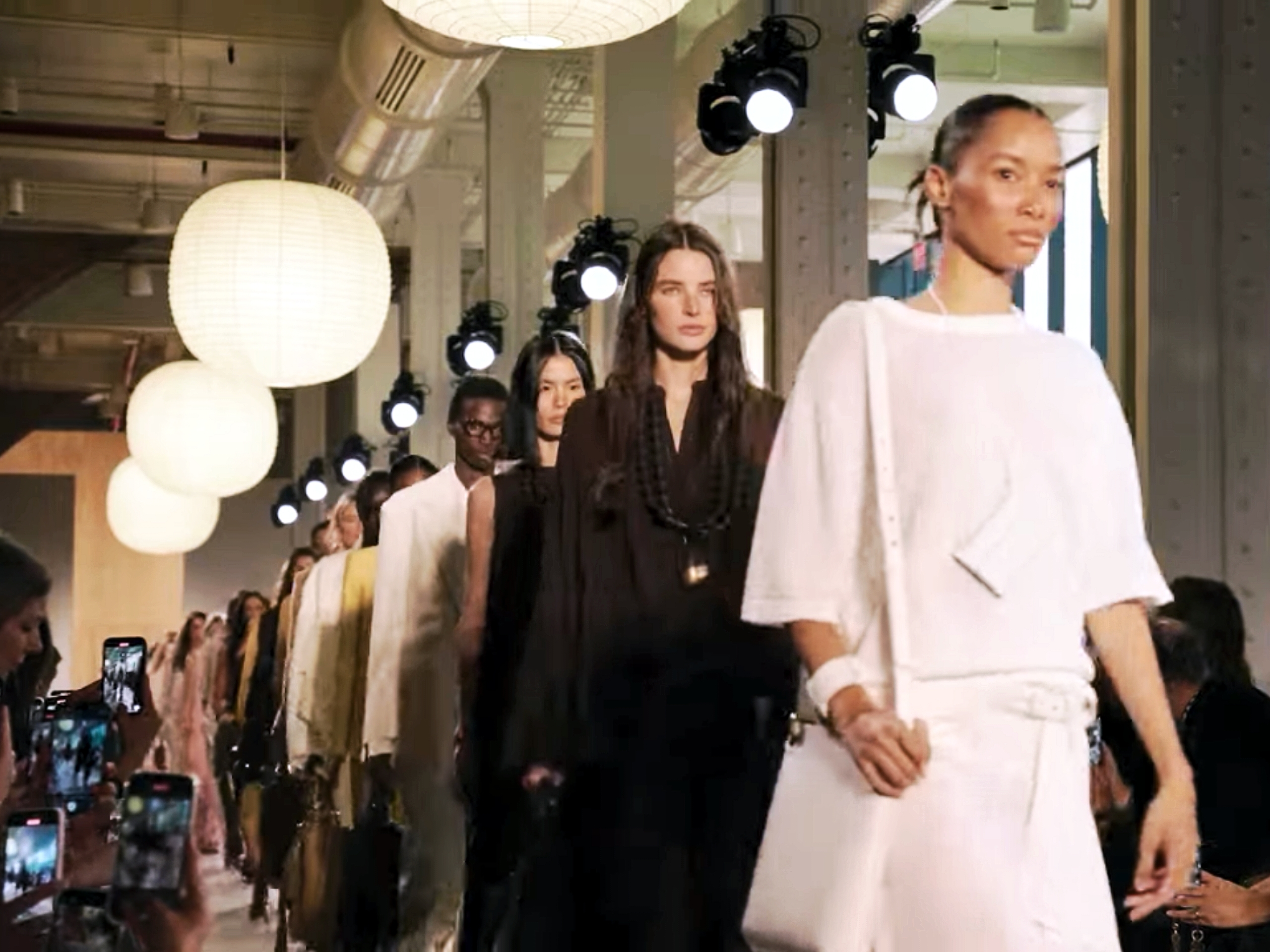
The Michael Kors collection for spring/summer 2026 that kick-started New York Fashion Week
What America is exporting—or communicating to the outside world—these days has very little to do with its once-appreciable soft power. Increasingly, what it clearly shows the world is far less innocuous. From the lurid details of the Sean Combs saga to Sydney Sweeney’s questionable American Eagle ad, we are increasingly offered an undisguised parade of degeneracy, while the Kirk killing reveals frightening political turpitude. The stark and disturbing reality is that videos of a very public assassination are now more frequently viewed and shared than the livestreams of a major fashion event. How such a shocking public murder can become palatable viewing and instinctive sharing defy our common understanding of what is repugnant.
The timing of these two events creates a powerful narrative. It suggests that despite its outward display of ostensible cultural vibrancy and economic strength, America is a nation preoccupied with its own internal conflicts, often violent. We see an image of a country that is not unified, but fractured, like distressed jeans. It wrestles with a spin cycle of political violence that cannot be ignored, even amidst its biggest fashion distractions of the nation. The murder of Charlie Kirk is a symptom of a deeply polarised and volatile political environment in the U.S. This climate, along with other political and economic factors, contributes to an unfavorable international perception of brand U.S.A. Yet, this season’s NYFW carried on as if the world outside its dressed-to-the-hilt venues had not been irrevocably altered.
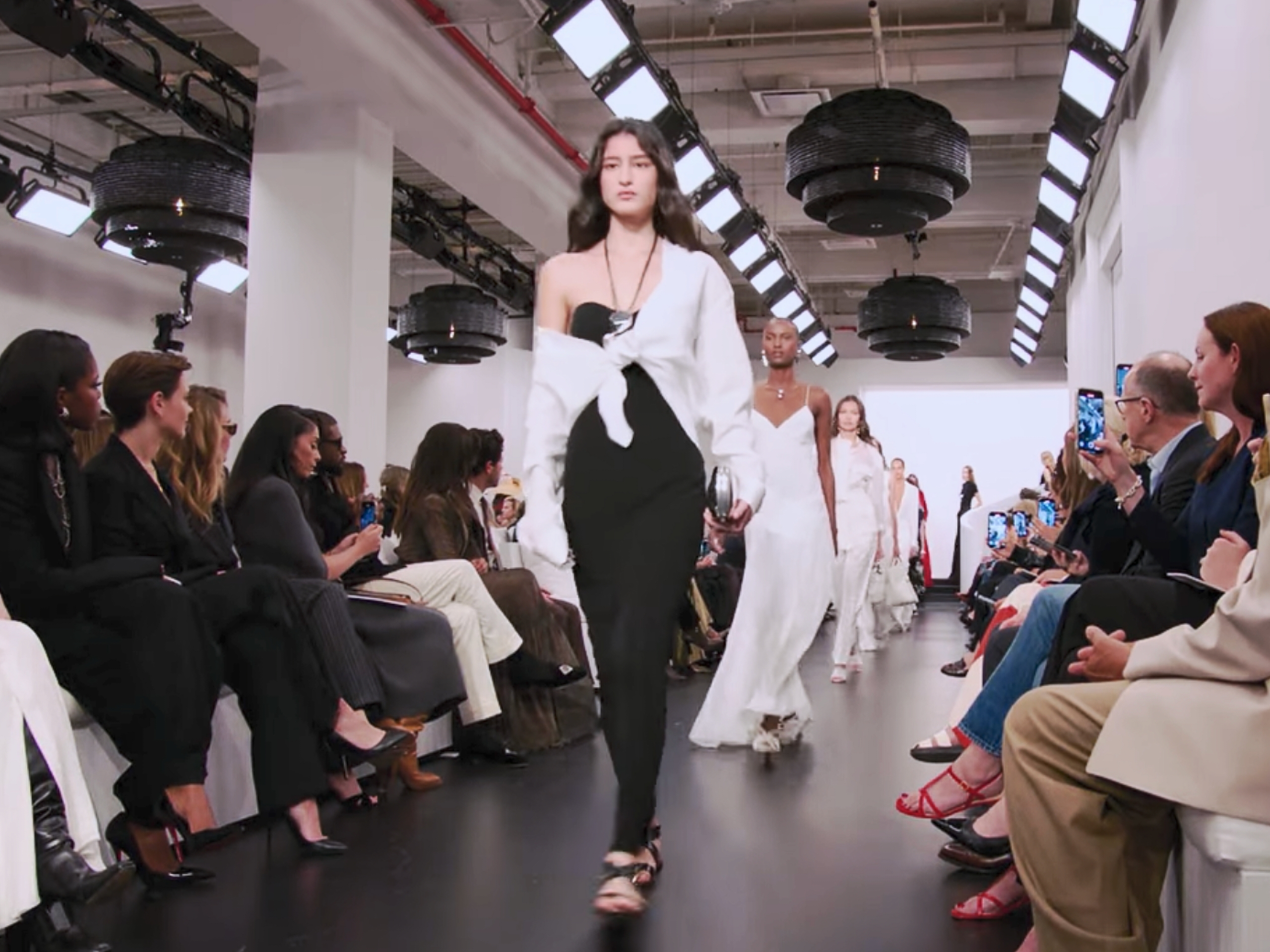
Ralph Lauren’s “intimate” showing on the evening of the Charlie Kirk murder. Screen shot: Ralph Lauren/YouTube
That quiet detachment is understandable if NYFW rises above the political din, but it has not. Although American designers are making their way into Europe (the Proenza Schouler boys’ Jack McCollough and Lazaro Hernandez, for example, are due to show their first Loewe collection in Paris soon), much of what is being offered back in New York, are either numbingly classic or inexplicably barely-there. Anything between is an article of faith. The perceived lack of innovation has the receipts to back it up. The dominant American aesthetic is often perceived as safe, casual, and the focus on “tech casuals”, Normcore, and Americana have not evolved significantly since the late 2010s. In her 2020 memoir Uncanny Valley, Anna Wiener described the fashion of 2010s San Francisco: “Bars were overrun with men in their twenties wearing corporate-branded T-shirts. Men who wore stability running shoes to nightclubs.” Fifteen years later, things have not changed, nor the offerings of fashion brands.
The American style that once defined the country’s fashion has been criticised for being out of touch with contemporary global tastes. Ralph Lauren’s Western Americana and Michael Kor’s jet-set American urban are both camps pitched on the grounds of the cemetery of fashion past. Even the astute Raf Simons was unable, during his time at Calvin Klein, to revive Americana, a self-love that still informs the merchandising of labels such as American Eagle today. But Americana does not travel outside the U.S. well. In 2025, fashion features director for Dazed Digital, Emma Davidson, told The Guardian, “It felt really out of step with what’s going on in the world.” It still does. Political assassination, too.
Photo ilustration (top) Just So
 Style on the Dot