For many, Dr Anjani Sinha was previously an unknown, but that changed dramatically at his recent Senate confirmation hearing, the footage of which quickly went viral. As the session unfolded, however, it became clear that beneath the tailored exterior lurked a startling lack of preparation and understanding for the role he aspired to take up: the U.S. ambassador to Singapore
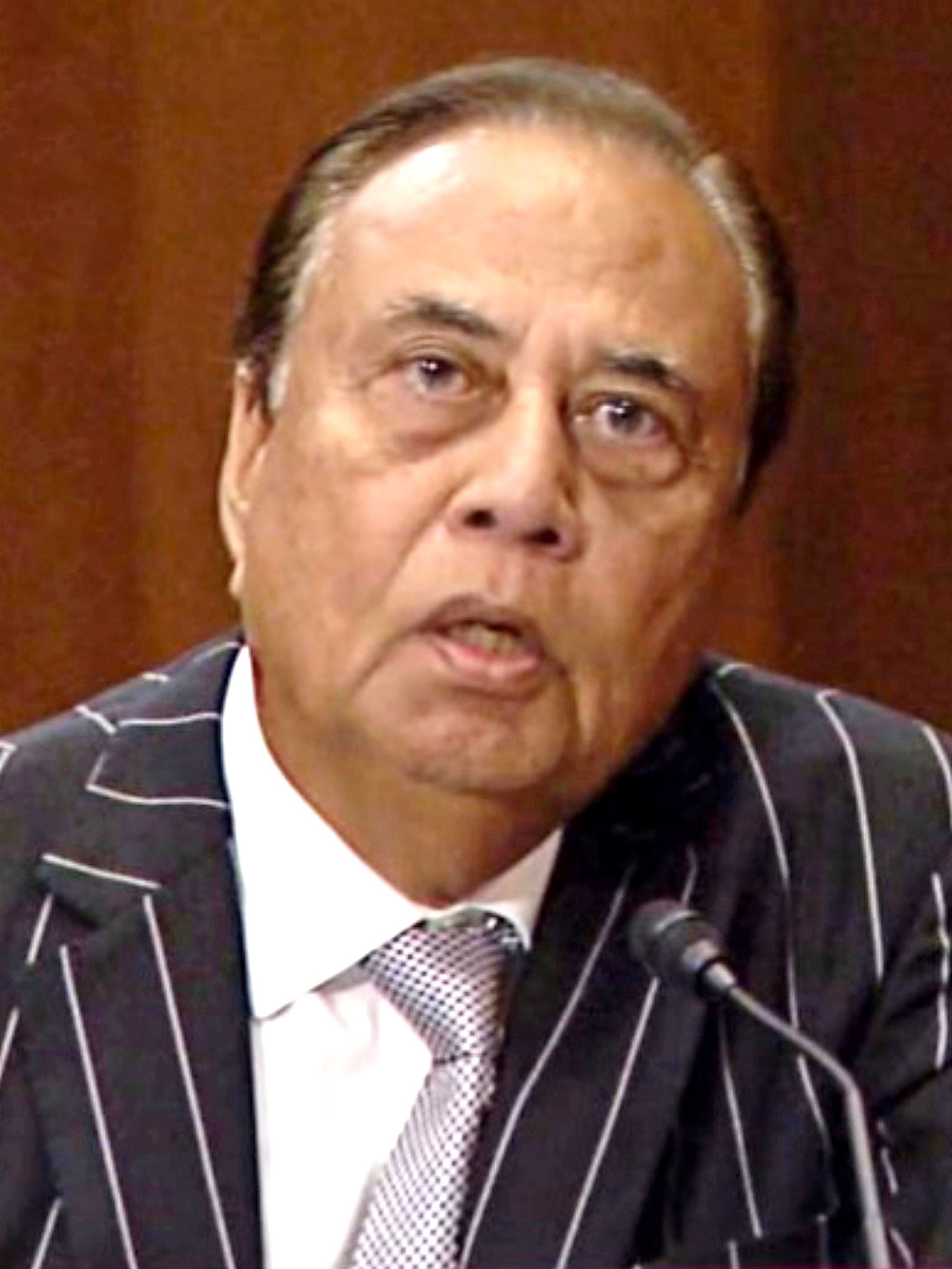
Dr Anjani Sinha at the recent Senate hearing. Screen shot: cna/YouTube
At the U.S. Senate hearing two days ago, the nominee for the ambassador to Singapore, Dr. Anjani Sinha, was mostly seen from the chest up. His average frame was clad in a pinstriped blazer with notched lapels (presumably part of a suit), beneath which a white shirt with a spread collar held a silver tie of black, repeated micro-dots, secured with a four-in-hand knot. The look was pulled-together, even carefully coordinated, and the white pinstripes on the anthracite blazer were a clear departure from the solid-coloured suits political appointees endorsed by Donald Trump typically wear to show sartorial alignment with the president and to endear themselves to him. Dr Sinha’s choice was more evocative of a Black dandy’s than that of an orthopaedic doctor, now aspiring to be an ambassador who could be posted to our sun-baked island.
It was not just the pinstriped suit that was unusual, it was the parallel lines themselves too. The stripes were far wider than pin-thin, and the distance between them was not as narrow as those considered typical. This created a significantly less-than-subtle overall effect. According to bespoke tailors we spoke to, “true” pinstripes are “really narrow”, and each stripe is typically the “width of a pinhead” or no broader than about 0.85 mm, formed by one or two yarns. While overall spacing can vary, the most traditional and subtle pinstripes are relatively close together, typically at the narrower end of the 2.54mm to 25.4mm range. In contrast, Dr Sinha’s pinstripes seemed to be at least three times the average broadness, with considerable gulf between them. They inherently drew the eye. Subtlety was not part of the equation. Adding to the overall flashiness, when seated, the pinstripes appeared diagonal rather than vertical. While still formal, his suit sat on a different part of the formality spectrum than a solid navy or charcoal suit, or a very subtle pinstripe. Those are the most conservative and universally accepted choices for high-stakes formal hearings.
Subtlety was not part of the equation. While the pinstripe suit has evolved over time, Dr Sinha’s leaned towards the flashy side of formalwear
That he chose pinstripes was, perhaps, no accident. Traditionally, they were associated with power, expecially financial might. In the ’20s and ’30s, when pinstripes gained significant popularity in the U.S., they became strongly associated with influential tycoons and bankers of Wall Street. The pinstriped suit was also linked to dubious professions, famously adopted by Prohibition-era gangsters and mobsters, such as Al Capone. Even today, when a pinstripe suit is less frequently seen, it exudes confidence and a commanding presence. It is, therefore, considered a “power suit” and is especially favored by those in business and finance who want to project an image of authority, as well as success. Interestingly, they are no longer associated with celebrity style. The last Hollywood stars to wear them were really Clark Gable and Cary Grant. This enduring connection to wealth, influence, and sometimes illicit activities inherently imbued the pinstripe suit with a “bold” or “audacious” image, reflecting a wearer’s desire to stand out and exert authority.
Ironically, for all the pinstripes’ traditional associations, Dr Sinha himself did not fit the mold. The good doctor had been something of an enigma when his nomination was first announced last March. Back then, scant information about him was available other than that he was an immigrant from India, practicing orthopaedic medicine in Flushing, New York, and Boca Raton, Florida. Mr. Trump’s announcement on Truth Social offered little more: “I am happy to announce that Dr Anji Sinha will be the next United States ambassador to Singapore. Anji is a highly respected entrepreneur, with an incredible family.” An “entrepreneur” revealed nothing; those selling fake luxury bags on social media are also entrepreneurs. Nor would a “respected family” automatically make an ambassador. Still, some held high hopes that he was the right selection. All that changed, however, at his recent Senate hearing, where he was flayed by Illinois Democratic Senator Tammy Duckworth—a veteran legislator who had previously questioned Pete Hegseth at his Defense Secretary hearing, demonstrating how he, too, was unsuited for the job.
An “entrepreneur” revealed nothing. Those selling fake luxury bags on social media are also entrepreneurs
The relatively short exchange quickly clarified Dr Sinha’s struggle, revealing how utterly ill-prepared he was. Most alarming was his glaring lack of knowledge concerning our region, particularly Singapore. He badly misstated the U.S. trade surplus with the city-state for 2024, initially claiming US$80 billion, then US$18 billion. Senator Duckworth promptly corrected him: the actual figure was US$2.8 billion, a discrepancy she rubbed in by stating he was “off by a huge factor”. When asked when Singapore would next hold the ASEAN chairmanship, he erroneously mentioned Malaysia as the current chair. When pressed, he admitted he did not know (Singapore is slated for the role in 2027). The questioning inevitably moved to tariffs. “Do you support increasing tariffs on Singapore, seeing how… they buy more of our stuff than we buy up theirs,” Senator Duckworth inquired. Dr Sinha’s reply, a word-rojak of deference, further exposed his unfamiliarity: “I believe in president’s decision of a free trade with any nation in the world and he’s resetting the trade numbers with each country and he’s open for discussion and dialogue with these countries.”
Many of us know that Donald Trump is not a proponent of free trade. His ‘America First’ policies are clear on that. They are, above all else, interests that often lead to unilateral actions and a willingness to challenge existing trade agreements and norms. For him, there’s only one kind of tariff: reciprocal. Mr Trump famously stated: “Tariff is the most beautiful word in the dictionary.” Indeed, can a potential ambassador be so fluid with his facts? Or does he, like so many other sycophantic lackeys of the president, prefer the “alternative”? A core responsibility of an ambassador is to accurately represent his country’s policies, even if those policies are complex or controversial. Misrepresenting the president’s fundamental trade philosophy is a significant issue. Such a mis-statement, especially when easily verifiable, will no doubt undermine the ambassador’s credibility with the host nation.
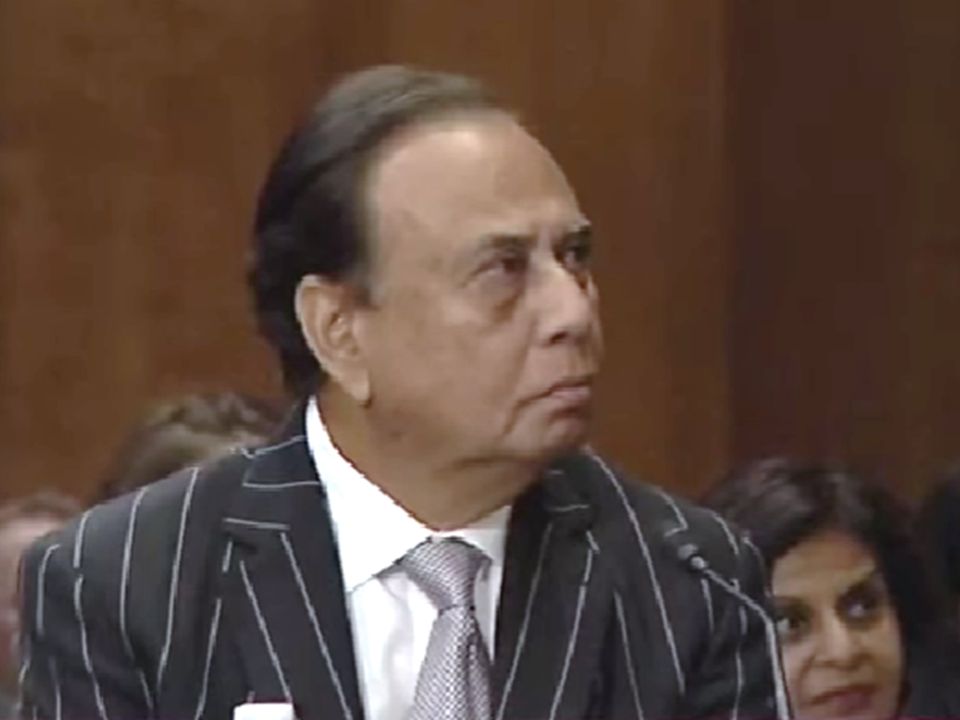
Dr Sinha looking at senator Tammy Duckworth helplessly. Screen shot: cna/YouTube
Our officials are highly sophisticated and well-informed, and our people too. We would immediately recognise that “a free trade with any nation in the world” does not accurately describe the current U.S. trade policy. Amazingly, he had the cheek to compare himself to Singapore’s minister of foreign affairs, Dr Vivian Balakrishnan, a seasoned diplomat. During the hearing, Dr Sinha shamelessly drew a parallel with Dr Balakrishnan by citing superficial similarities: “He went to school and became an eye surgeon. I went to school and became an orthopaedic surgeon. His wife is a physician who became a neurologist. My wife is an anaesthesiologist, and his kids are lawyers. Our kids are lawyers and doctors. So we have a strong connection already.” Was that not comparing gold to silver, even when both are metals?
He has, no doubt, the cheek. In Dr Sinha’s comparison lies not just the superficiality of the shared medical background, but in the blatant disregard for the years of dedicated service, continuous learning, and specialized skill development that define a career diplomat or a seasoned foreign minister like Dr Balakrishnan—in fact, more rare earth than gold. It suggests a fundamental misunderstanding of what makes someone, even if an entrepreneurial individual, qualified for such a critical diplomatic role. It’s not just about being a metal, but about being the right kind of metal—properly forged, for the immense responsibilities of representing a nation on the global stage. One with mettle. That was not evident in Dr Sinha in the presence of senators such as Ms Duckworth.
Our officials are highly sophisticated and well-informed, and our people too. We would immediately recognise that “a free trade with any nation in the world” does not accurately describe the current U.S. trade policy
Some say that as a personal friend of the president, as a political contributor (he donated US$4,500 to the Trump campaign), as a Mar-a-Largo member, and as his golf buddy, Dr Sinha is already advantaged. Transgressions through teeing-off. But he has shown to the world that chumminess, even if it grants presidential access, does not translate into policy expertise or accurate articulation of policy. If appointed, and he brings his flawed understanding of policy to our island, it would be hard to take Dr Sinha seriously since he would not be an effective and convincing advocate for U.S. interests or explainer of U.S. positions. Senator Duckworth could be right; Dr Sinha might have truly believed it to be a “glamour posting,“’” or simply that “Singapore is a great place to live”.
Just like his flashy suit, Dr Anjani Sinha’s performance at the Senate hearing was turn-out, but slip-shod. He came dressed to kill, but was slayed instead, utterly undone by his own lack of preparation. Donald Trump probably assumed that because his chosen man is Asian, he is a wealth of knowledge about Asia. In an era when genuine substance and understated confidence are increasingly valued, his overly bold pinstripes signaled a desperate attempt to project importance by obscuring his own inadequacies. This suit choice, perhaps a culturally-influenced one, far from conveying authority, paradoxically highlighted his eagerness to appear competent rather than truly being so. It ultimately undermines the very gravitas it seemingly aimed to project. Senator Tammy Duckworth’s effective dismantling of his testimony and stern rebuke served as a stark reminder: no amount of outward polish can compensate for an empty brief when it comes to serious diplomatic responsibilities.
 Style on the Dot
Just to add to this sorry excuse of diplomat-wannabe’s bag of lies: Dr Balakrishnan’s wife isn’t even a doctor, according to CNA.
https://www.channelnewsasia.com/singapore/ambassador-anjani-sinha-trump-pick-question-struggle-answer-senate-hearing-5230381
LikeLike