Via Air Jordan, Nike joins the hybrid loafer-sneaker trend considerably late. Will the strangely bad-looking shoe help the Swoosh get back on track?
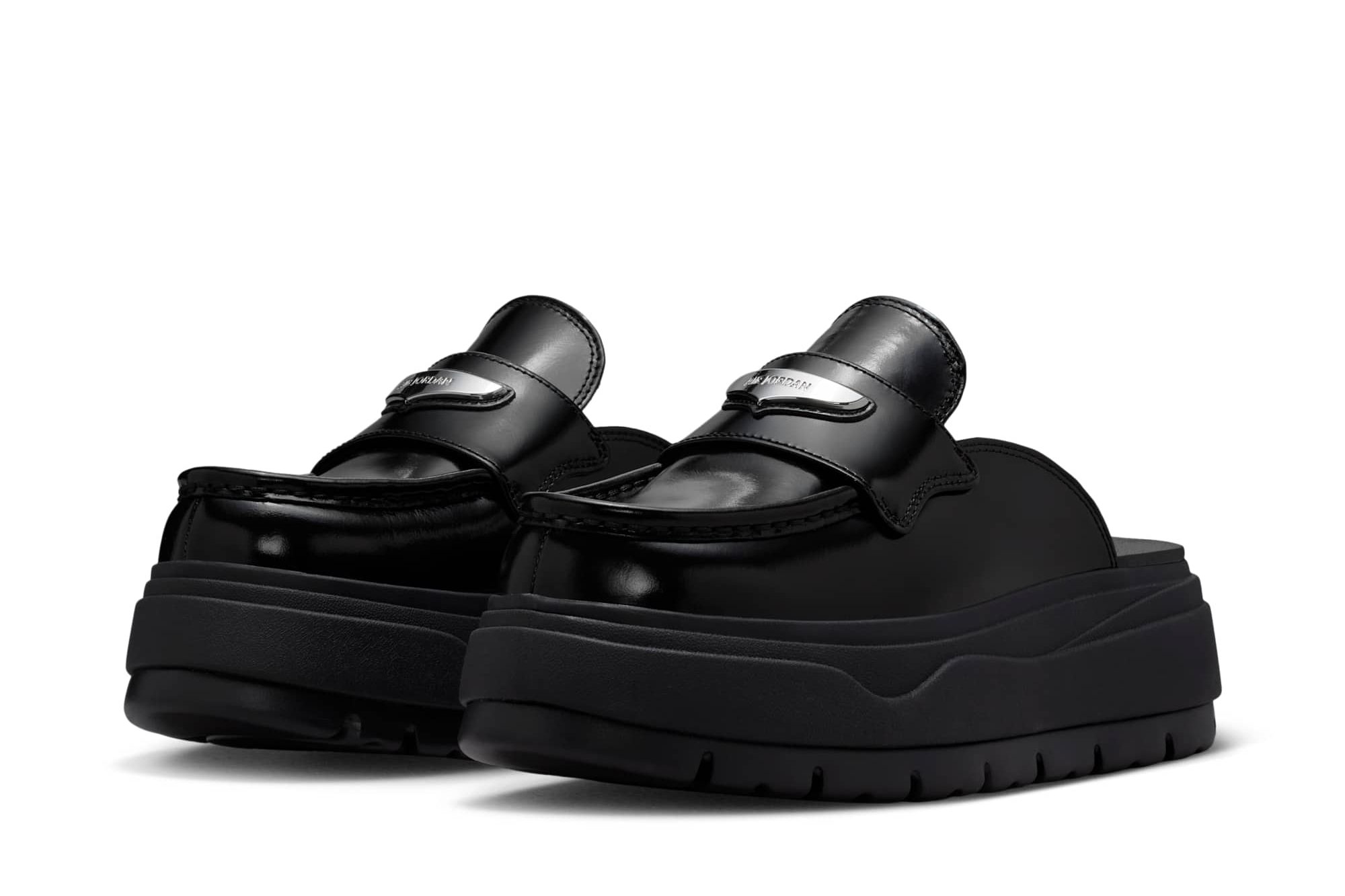
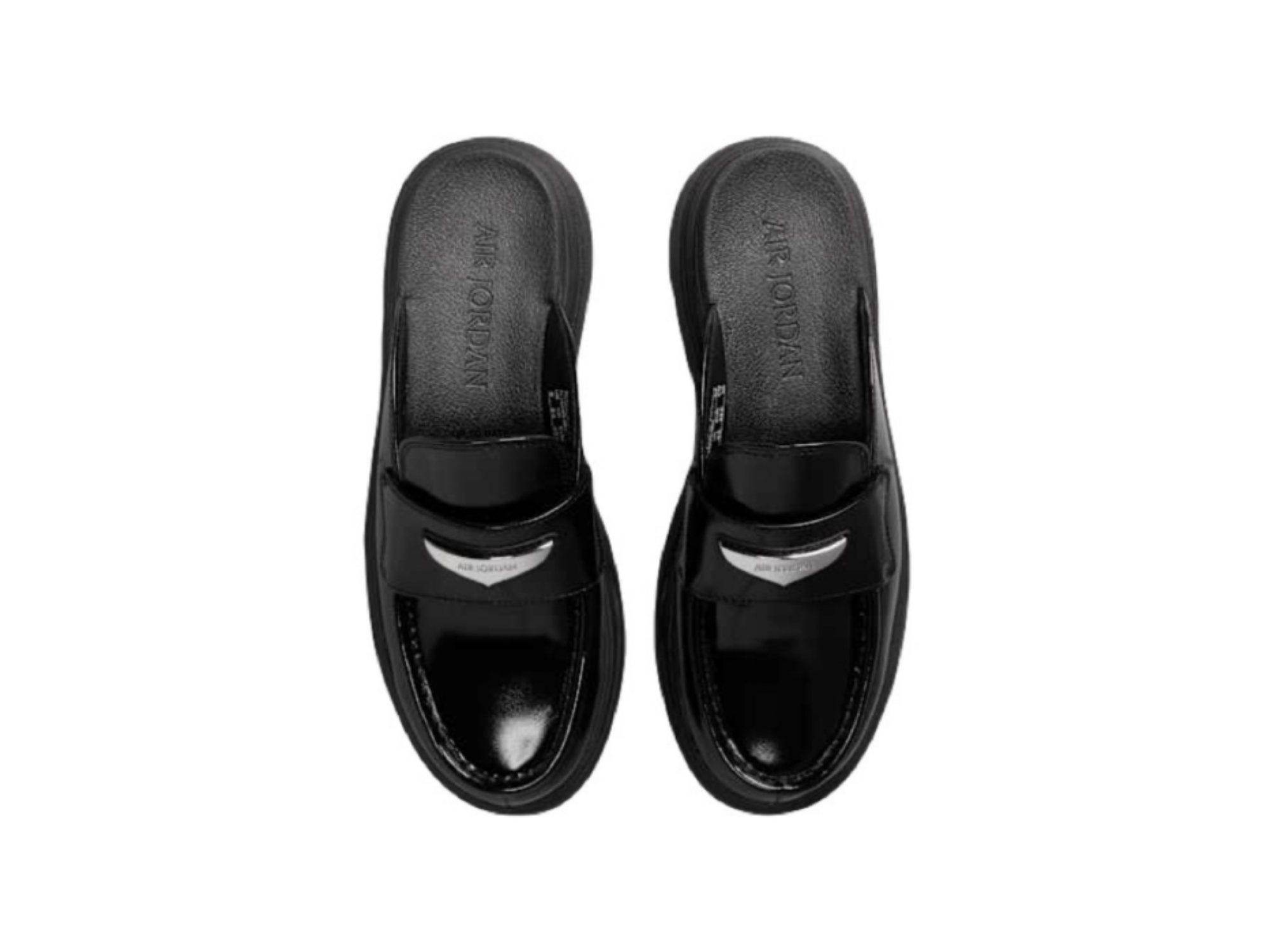
Nike’s latest hybrid sneakers, through its sub-brand Air Jordan, appear destined to be a brand blunder. According to reports emerging in the United States, there will soon be an Air Jordan ‘Loafer Mule’ for women. No official release date has been offered, although some reports claim the shoes will be launched by the year’s end. Nike has not officially made any announcements. Images of the shoe has emerged online and are believed to be authentic. What can be discerned is a pair of rather clunky loafer-mules, with shinny black uppers and metallic Air Jordan branding is seen in the saddle, where a penny would traditionally be. The thick soles beneath recall those commonly seen on creepers. In sum, a pair of strangely unalluring shoes.
If the Air Jordan ‘Loafer Mule’ is indeed on the brand’s release calendar of this year, then its would-be appearance is rather curious to us. In the past two years at least, Nike had not exactly charged ahead with love-at-first-sight kicks. There has been over-reliance on older, established models from Air Force 1s, Dunks, and Jordans. Inventory accumulation reportedly became a major issue, leading to increased markdowns and pressure on profit margins. This could explain why there have been almost non-stop sales on the Nike App. In March, Reuters reported that the Swoosh posted the “worst revenue fall in 5 years”. The company itself has acknowledged “softer consumer demand” and “uneven” trends globally. The Swoosh’s performance was so dismal that there was a CEO change—Nike veteran Elliott Hill replaced Jonathon Donahue in October 2024.
In the past two years at least, Nike had not exactly charged ahead with love-at-first-sight kicks
It is hard not to see the parallel between the new Nike mules and the America we are witnessing today: absorbed by its own depressing darkness, bloated with self-importance, characterised by unnecessary loftiness, that are, quite frankly, ugly. Given what is happening on so many fronts in America—immigration policies, travel ban, attacks against tertiary education, the overall economic policy mess, and how the Trump administration treats others, a pattern of policies and rhetoric that led to a less open, less empathetic, and even less intellectually vibrant society has emerged. And Donald Trump’s treatment of others, with his thick-soled disdain and disrespect for them has mounted to what is arguably ugly.
The connections we have drawn between immigration policies, tertiary education, economic conditions, and the president’s personal conduct point to a profound sense of disillusionment with what is happening in the U.S. now. While these are strong subjective interpretations, they align with public sentiment, especially in this part of the world, regarding these issues. There is a connection between these different phenomena, pointing to a pervasive negative trend. To be sure, the ‘ugliness’ is not about physical appearance (although the Trump administration has no qualms about calling out what they perceive as inappropriate dress of heads of states visiting the White House), but about the character of the political discourse and the impact of policies on people and institutions, and, without doubt, the world.
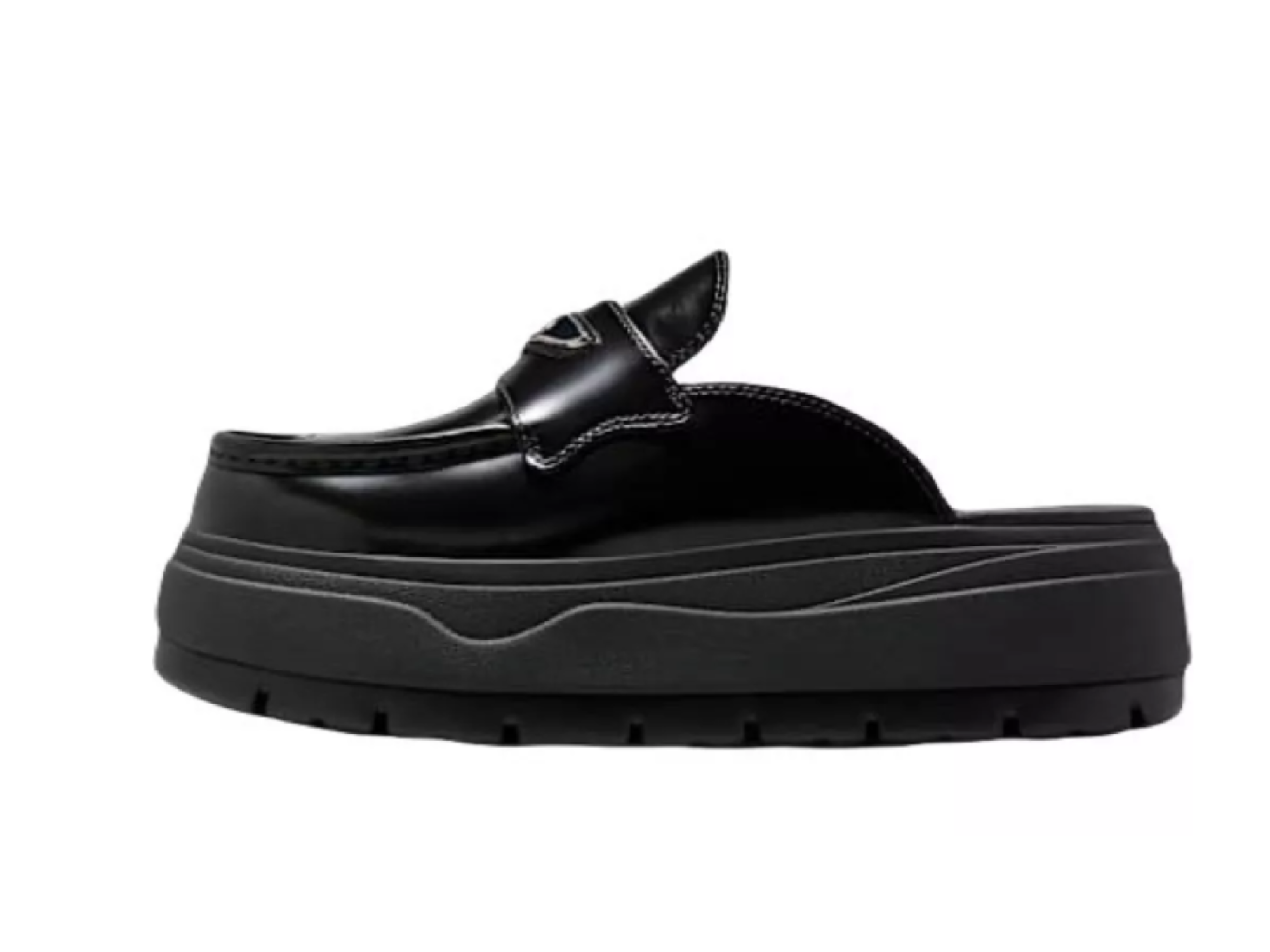
While fashion is essentially subjective when discussing aesthetical strengths, what is disconcerting to us is that Nike has not pulled away from the ugly sneaker aesthetic, even when many brands have. Sure, they have, concurrently, jumped onto the hybrid loafer-sneaker bandwagon, but it’s late. New Balance debuted their loafer-sneaker 1906L together with Junya Watanabe during the latter’s autumn/winter 2024 presentation in Paris in January 2024. So did others shortly after, even the less celebrated Converse. Additionally, the thick-soled ugly shoe has largely given way to the flat “ballet sneaker”, also called the “sneakerina”. Nike is playing catch-up, not leading. The introduction of the Air Jordan loafer mules similarly says how the brand, like the U.S., isn’t moving in tandem with the rest of the world.
Late to a style and potentially clinging to an aesthetic trend that is receding, Nike appears to losing foresight and their once looked-up-to sense of what is contemporary. Now they seem a tad out of touch with global fashion, and only now obviously attempting to what is termed as the “Sports Style” category, especially by the Japanese. The ugly sneaker trend, while incredibly pervasive for a time, has pulled back from its peak. Nike’s continued reliance on chunkier, more maximalist designs (which, to be sure, is characteristic of Air Jordan) seems to us a ‘ugly’ hangover. For a brand that built its empire on innovation, performance, and setting trends, the Air Jordan Loafer Mule is an oddity for the highly engaged sneakerhead and fashion folk. As a backless shoe, it pales in geeky-coolness to Miu Miu’s reimagining of New Balance’s 530 SL.
Has Nike become somewhat reactive rather than proactive, just as America is? Are we not seeing both grappling with a shift from a pole position of leading and shaping their respective landscapes to one of responding to existing conditions or trends set by others (or, according to the Trump Administration, afflicted by)? For Nike, this means being late to fashion trends and struggling with inventory. For the U.S., it translates to policy decisions that are often responses to immediate problems rather than comprehensive, forward-thinking strategies that aim to proactively shape global events or, if America First is crucial, domestic well-being. As Nike plays catch-up, so is America. We see it in the U.S.’s desperate desire to reshore manufacturing with scant understanding of the present global supply chan. In the case of the fashion industry, it was America that seeked better margins abroad when they walked away (and did not turn back) from domestic production in the ’70s/’80s, which is true of Nike.
The new Air Jordan Mule Loafer, while a trending hybrid, is also tired, as seen in Nike lastest round of collaboration with Sacai, such as the Zegamadome. Frankly, ware rather tired of those Frankenstein kicks, however technically intriguing they are. Hybridizing but still laden with the baggage of the ugly aesthetic is not generating compelling newness, even freshness. Many are waiting for the next big thing from the Swoosh, but the wait has been in vain. They have not seen a fresh vision, a clean break, or an entirely novel aesthetic direction that feels genuinely exciting and forward-looking. And that too speaks of America’s socio-political and cultural landscape. It is a nation clinging to the ‘ugly’—the outdated, the divisive, the self-important, failing to generate truly fresh, compelling, or universally appealing solutions or directions for its challenges. Brand and country are in a rut.
Photos: Nike/@EldenMonitors
 Style on the Dot