The fast fashion retailer proved once more that ‘forever’ is a tough aspiration
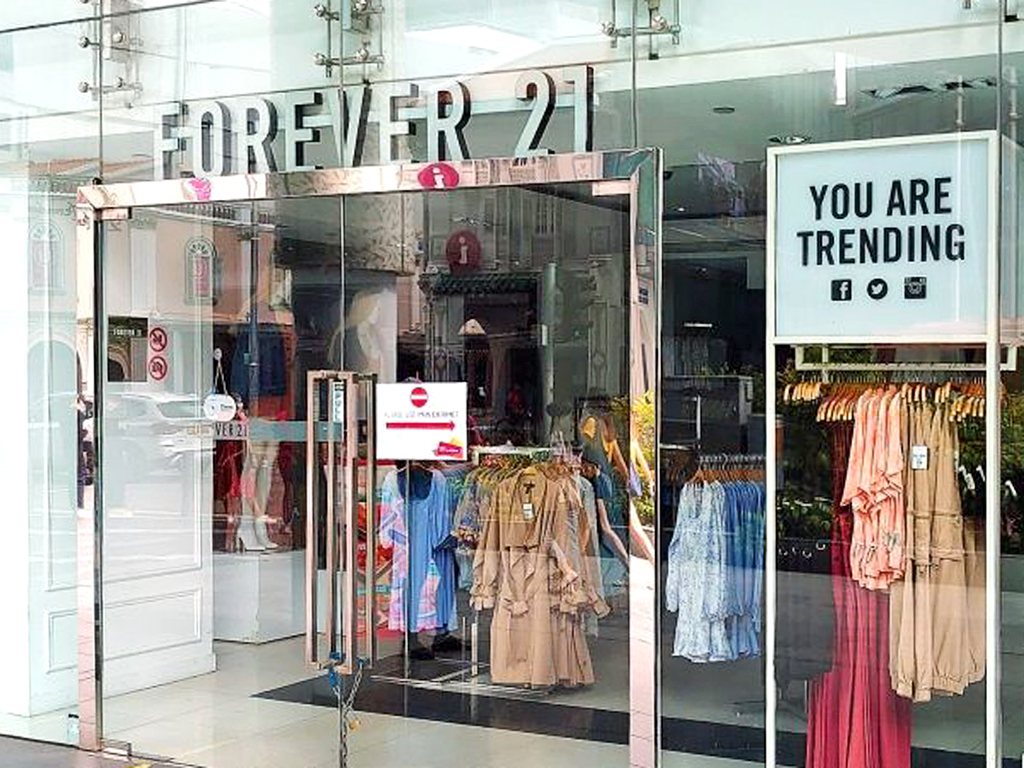
Our island’s last Froever 21 store in 2021. File photo: Chin Boh Kay for SOTD
The last Forever 21 store in Singapore closed in June 2021. Its fate was sealed when two years earlier, before the start of the COVID 19 pandemic, the retailer filed for bankruptcy protection in the U.S., signalling what observers then thought was underlying “financial distress”. And then, it was announced yesterday that Forever 21, operating as F21 OpCo, have filed for bankruptcy, again. In 2020, rescue of the brand was thought to have arrived when Authentic Brands Group (ABG, with a brand portfolio that includes Aéropostale and Nine West) and Simon Property Group (an American real estate investment trust) acquired the retail chain. But that was not adequate in the face of mounting challenges that have been ailing the brand, such as the rise of ultra-fast fashion online platforms, including Shein and Temu. And, in the U.S., dismal mall traffic and an indifferent-to-fashion teen consumer base. While two bankruptcy filings within six years may not indicate a pattern, it does suggest entrenched struggles too deep to untangle, or even poor management.
According to Reuters, Forever 21 “blamed the situation on higher costs and companies taking advantage of duty-free treatment of low-cost packages from China to undermine its pricing power.” Those pesky on-line Chinese brands again. The retailer will start winding down their business by commencing liquidation sales and then closing down an estimated 350 store in the U.S., while reportedly retaining their web store (overseas businesses are apparently unaffected as they have different business and licencing agreements). At the moment, there is an “up to 80% Off Storewide” sale, announced on the brand’s homepage. The merchandise—heavy on sexiness—remain unchanged from six years ago and now seemingly compete with the likes of Shein in terms of price. A pair of black cotton hot-pants, for example, is sold for US$4.99 (or about S$6.60), before the markdown.

New merchandise for the Japanese incarnation of Forever 21. Photo: Forever 21 Japan
There was what we thought to be a glimmer of hope for Forever 21 when it was announced in February 2023 that the brand would make a comeback in Tokyo, where it exited more than three years earlier. A pop-up store opened in Shibuya, featuring products designed in Japan, in the hopes of wooing customers with what Nikkei described as “more upscale image”. But the short-term store’s retail model was similar to Shein’s own pop-up: see and touch the merchandise, but make purchases online. The revamp was managed by Japanese firm Adastria (the 4th largest apparel and fashion company in Japan by revenue)—known for price-friendly local labels such as Lowry’s Farm, Global Work, Niko And…, as well as the more fashion-centric Hare and Rage Blue—through its subsidiary, Gate Win Co. It also operates the Forever 21 e-commerce platform in Japan and runs the site independently from the U.S. version.
It appears that the bankruptcy filings in the States have not affected the Japanese business. It is not certain if Forever 21 came to other business arrangements with Adastria other than product planning, sales, and product development for the Japanese market. A month after its return to Tokyo, Forever 21 opened its first freestanding store in LaLaPort shopping park in Kadoma, Osaka Prefecture. Local media at the time reported that Adastria aimed to open 15 stores in Japan and hit 10 billion yen (about S$90 million) in sales in the fiscal year that ends in February 2028. According to Forever 21’s Japanese website, there are presently seven stores nationwide. Despite the siutation in the U.S., it is likely that the brand will continue to operate in Japan with Adastria, through a sub-licensing agreement with trading company Itochu Corporation. It is unclear how many stores, if any, remain in Asia.


The brand is already lucky it lasted this long. time to shut down. Frankly, I wouldn’t invest in the brand.
LikeLike
They’ve lost their appeal a long time ago. The young today don’t know this brand.
LikeLike