Singapore’s Paris-based star designer, Andrew Gn, whose clothes have never really been sold here, is lavishly celebrated at the Asian Civilisations Museum
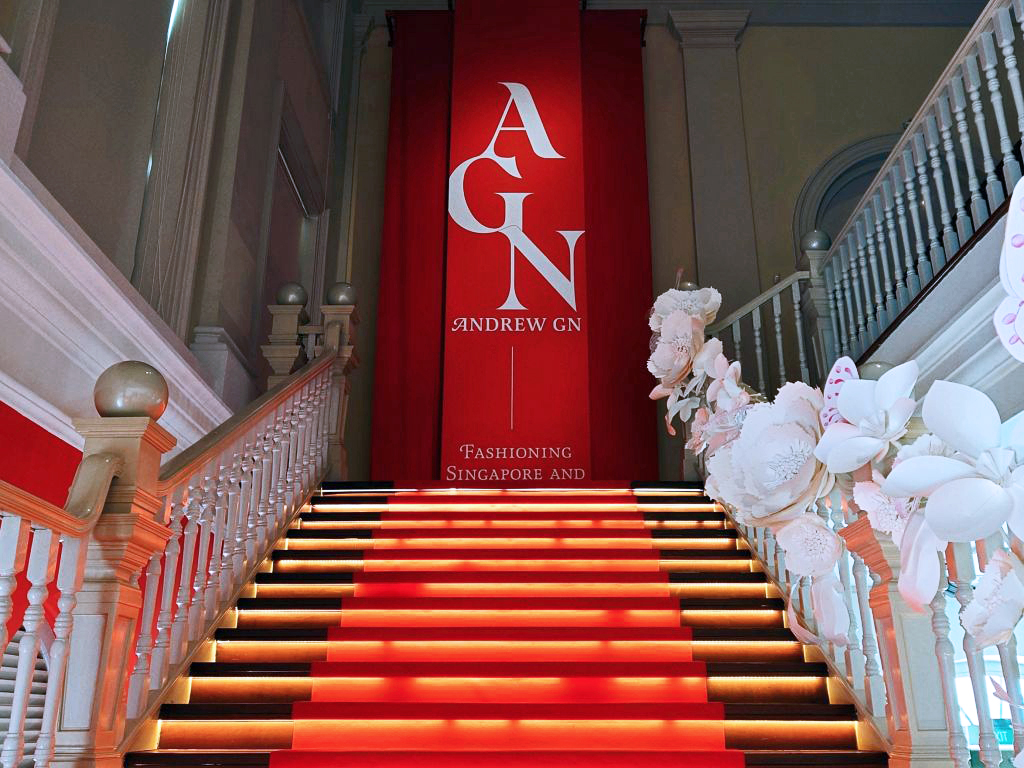
Suitably glamorous. The red-carpeted stairway to the main exhibition on level two of ACM

Unsurprisingly, the exhibition opens with red-carpet looks, even if some of the dresses are short

Andrew Gn with ACM’s Kennie Ting on opening night
In the world of French luxury fashion, Andrew Gn Chiang Tiew (鄞昌涛, Yin Changtao) is rather a standout. He is the only Singaporean with an eponymous label based in Paris. Unlike many of those not originally from France, who chose to show in the capital city, Mr Gn (pronounced ‘gen’ as in hen, with a hard ‘g’) has never sold his designs back home. The designer may be an “international name”, but not many here were able to easily buy his clothes or be deeply acquainted with his work. That could change. The Asian Civilisations Museum (ACM) has unveiled Andrew Gn: Fashioning Singapore and the World, a retrospective of 28 years of his overseas career, featuring a reported 160 pieces (out of an archive of more than 10,000 pieces), including those worn on red carpets by recognisable stars. And as we understand it, Andrew Gn the label, now abbreviated to AGN (pronounced ‘A-gen’ or again) for social media oomph, will be available at the evening dress and special occasion wear store, Pois, soon (purportedly from the autumn/winter 2023 season onwards). It is definitely a homecoming of sort for the Singapore son, who has been designing in Paris since 1995, when the brand was birthed.
Mr Gn is the most famous Singaporean designer practically unknown on his home turf, and without a single point of sale yet (to be accurate, in 1997, two years after the founding of his label, there was a very short selling season of his clothes, reportedly 45 pieces, at the long-gone Glamourette. A source told us that the store had to drop the line as the prices were “very, very high and shoppers were not willing to pay”.) But he does have a body of prêt-à-porter that easily fills the smallish ACM. So restricted the museum space is that the exhibition has to be sectioned and sited at the opposite ends of ACM, across two floors. In fact, there are more pieces on display here than at the Costume Institute of Metropolitan Museum’s ongoing tribute, Karl Lagerfeld: In the Line of Beauty exhibition (150, according to the Met). The AGN retrospective charts Mr Gn’s design progress throughout his 30 years in Paris, and his embrace of Western aesthetical tradition, and his love for Asian decorative arts. This is, as former MediaCorp TV host, current Paris resident Sharon Au enthusiastically touted on Instagram, “when traditional designs and contemporary fashion merge.” It is, however, hard to come to the conclusion that the twain met in an impressive union.
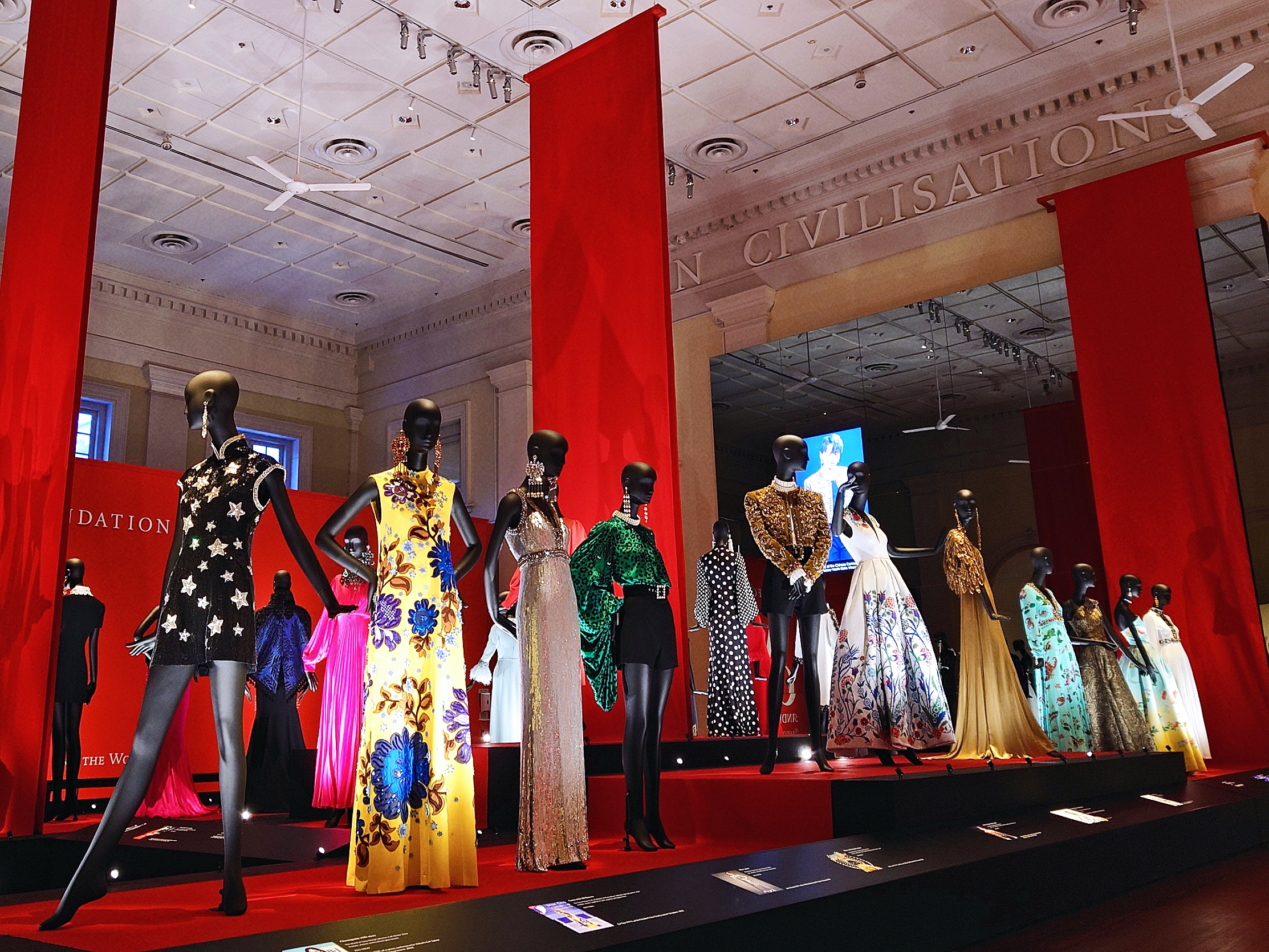
More red-carpet fashion worn by celebrities
The general public’s first close look at an Andrew Gn dress was at the debut #SGFASHIONNOW exhibition—also at ACM—in 2021. Mr Gn donated to the museum a white, caped/fringed gown of startling simplicity, perhaps to serve as a clean-canvas of the foretaste of things to come—which would be a visual contradiction to that dress. The house of Gn is known for its uninhibited use of colours and prints, as well as not shying away from showy embellishments. In 2007, when he won the President’s Design Award for Designer of the Year, Design Singapore Council was clear that Mr Gn is “not a designer who withholds on extravagance.” ACM’s static pageant examines that lavishness, or “what Singapore has never seen before”—someone at the opening night was heard saying. Indeed Andrew Gn: Fashioning Singapore and the World has been described as the “exhibition of the century”. It may not be an exaggeration: Our social media feeds have not stopped buzzing with posts and stories about it. Even Dick Lee, who attended the opening in a coral shirt as homage to the designer’s own tribute to undersea calcareous skeletons, urged his followers on Facebook to “please visit” the retrospective. The whole island, it appears, is riveted.
The exhibition is a highlight of ACM’s 25th anniversary line-up of entry-chargeable shows. The museum heralds it as the “largest showcase celebrating a contemporary Singapore fashion designer”, even when they have not staged a retrospective of a single Singaporean fashion name—living or dead—to be able to effect an accurate comparison. Or were they saying that it is unlikely that there would be another on this scale? Or bigger? Although spread out and in five sections, the entire display can easily be viewed in less than 30 minutes. The most popular section is likely the ‘gala gowns’ in the Shaw Foundation Foyer, now a patina of scarlet to give the impression of an evening of a red carpet event. Here, you will be able to see the dresses—mostly dresses (24 out of 27 looks)—that were worn by the stars who matter (and do not), and if you cannot visualise them in the shown frock, even if considerable media coverage were accorded them, accompanying photographs of the wearer in the outfits are able to free you from jolting your memory.

Looks from the ‘East Asian Art and Fashion’ segment of the exhibition
The more arousing designs are in the opposite end of the museum, in what is the Special Exhibitions Gallery. Here, the clothes are not necessarily conceived for the red carpet, but represent those that are more able to satisfy the viewers’ aesthetic curiosity, that embody what has been touted as “cross-cultural expressions of Asian and Western art”—both not necessarily paired, although Asian motifs and details do appear in unmistakably Western dress silhouettes. It could, perhaps, be more fascinating if ‘European Baroque’ meets, say, Heian splendour. But, while he enjoys clashing patterns, like his maternal grandmother did (according to a Lianhe Zhaobao report last week), Mr Gn is more controlled in his visual mashups. He is no doubt a lover of artistic expression in forms that are not garmented; he has been able to incorporate what is visually stimulating to him in decorative ways. These are eye-catching clothes, yet it is possible that more could be gleaned when viewing those very things that Mr Gn has said inspire him: ceramics, corals, or coromandel screens.
Among the 160 pieces that have been selected for the exhibition, director of ACM Kennie Ting (陈威仁) identified, in a Facebook post, a “coromandel dress” from autumn/winter 2021 as his favourite. The black, floor-length silk number, with longer-at-the-back bishop sleeves is one among nine outfits that ACM has highlighted in an A5-sized brochure introducing the exhibition (it appears on the cover, as well as the commemorative catalogue’s). The gown is inspired by a coromandel screen of unspecified provenance. Coromandel screens are lacquered, ebony folding screens—known as pingfeng (屏风) in China—that often depicts mythological figures, landscapes, or scenes of court life. Elaborately decorated with a technique known as kuancai (款彩 or sectionalised/incised colours), they first appeared during the late mingchao (明朝) or Ming dynasty. Despite their origin, they owe the name to India’s Coromandel Coast in the southeast of the subcontinent, where they were sent to and re-exported to Europe in the 17th and 18th centuries. The coromandel screen was especially popular in France, but in their final destination, the screens were not always employed as such. They were cut up and used in cabinetry or as panelling on walls.
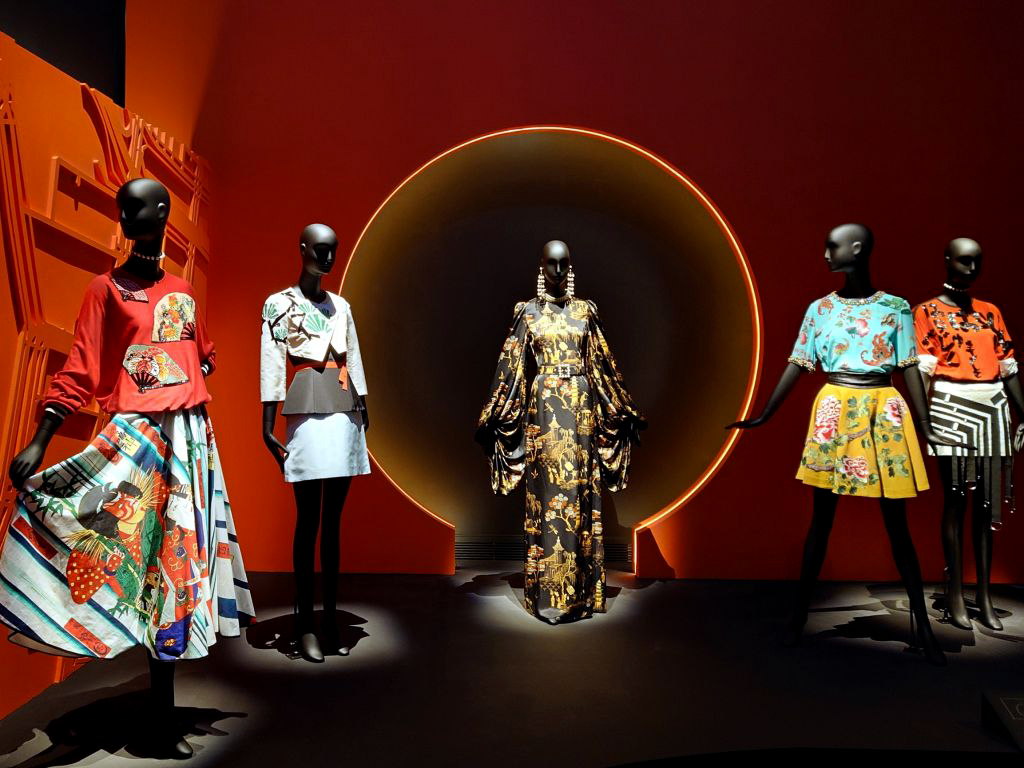
One of the ‘highlights’ of the exhibition, the ‘coromandel dress’ (middle)
In the Paris of the ‘20s and ’30s, one of the most ardent collectors of the coromandel screen was Coco Chanel. According to the maison, she had 32 of them during her lifetime, of which eight were used in her apartment at rue Cambon in Paris. She once said, sounding like Diana Vreeland: “I’ve loved Chinese screens since I was eighteen years old. I nearly fainted with joy when, entering a Chinese shop, I saw a Coromandel for the first time. Screens were the first thing I bought.” So synonymous her dwelling was with those folding screens that Karl Lagerfeld created three coats inspired by them in the Chanel couture collection of the autumn/winter season of 1996/1997, all embroidered by the house of Lesage, with buttons by Desrues, and with transparent lining so that the intricate embroidery could also be appreciated on the underside of the fabric. It was the year the Andrew Gn label was founded. And coromandel, like camélia, has been so much a part of the Chanel lexicon that there is even the fragrance Chanel Coromandel.
There is no denying the decorative quality of the kuancai on the mingchao pingfeng. Collectors acquire the screens to adorn interiors. In similar vein, the ACM retrospective appears to show Mr Gn as an ornamentalist, even when there is more than one approach to design. Mr Gn has endeared himself to certain visual consistencies and a somewhat narrow range of silhouettes: The shapes of his clothes have remained largely similar in the past 28 years, only the surface treatments vary. A marketing consultant, after seeing the exhibition, told us that in the ’90s, he remembers reading in a magazine what an earlier son-of-the-soil-made-good-overseas (in London) Benny Ong, now an artist, had said: “Design does not mean having to change the sleeve every season”. It is possible, therefore, that Mr Gn has embraced a comparable spirit and largely adhered to those silhouettes, within which to place some of his favourite details, such as the zippable key hole that appears on the front-centre seam of the bodice, bishop (or sometimes puffed) sleeves, decorative treatments such as appliqué, embroidery, and beading, and accessories such as belts (some in surprisingly jarring leather, and with metal grommets) to define the natural waist. It isn’t that the approach is unfavourable if the main aim is to flaunt the intricate embellishments, such as the beaded corals that he adores.
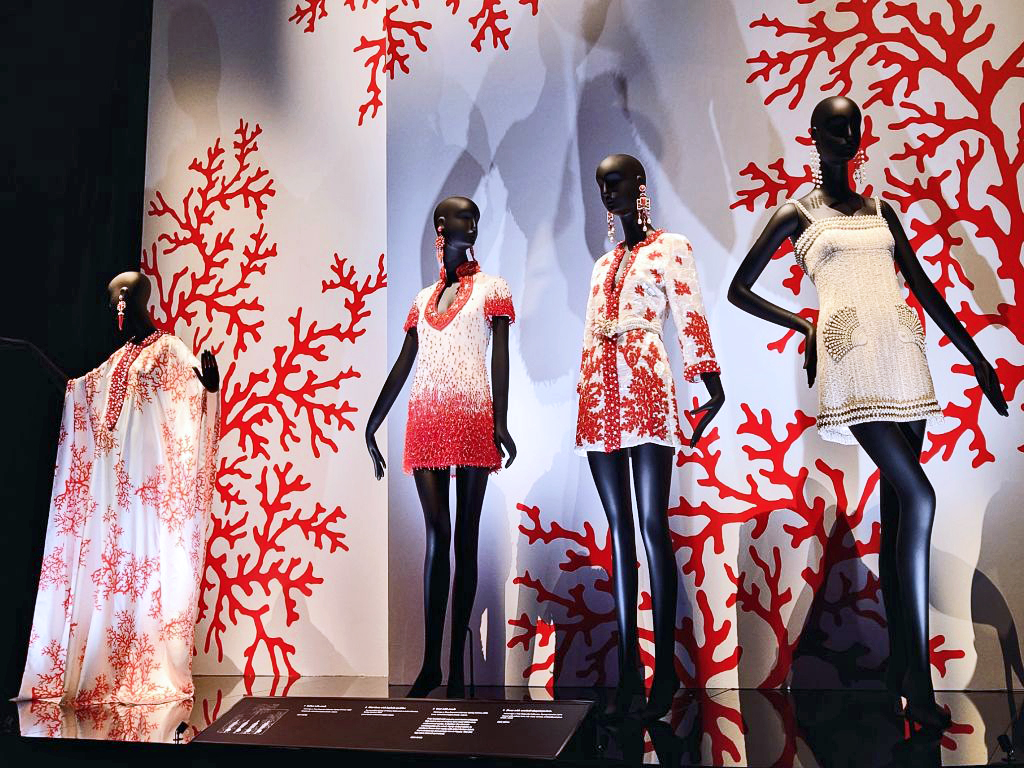
The renowned ‘coral’ dresses from spring/summer 2022, including (second from right) the piece worn by ex-president of Jimmy Choo, Tamara Mellon, on the cover of Vanity Fair
The decorative components that Andrew Gn employs are no doubt the handiwork of appreciable skill, all—as he is wont to say—“done in-house”: the needlework, beadwork, and all the detailed stitches that require a well of patience. In all their sumptuousness, a soupçon of the past is quickly sensed, as opposed to those seen at, say, Prada or Louis Vuitton (under Nicolas Ghesquière’s watch), where discernible is what the French might consider broderie moderne. It is understandable why the effects appear so undeviating on the AGN clothes. The motifs and patterns Mr Gn uses directly depict what he sees in the art he admires, in the images he draws from, or the underglaze of pottery and tableware that he finds attractive. Nature is pictured as naturally as possible, petals in their recognisable shapes, corals in their brittle beauty. No tweaking, such as Tom Ford’s Saint Laurent qipao (旗袍) from autumn/winter 2004, with the sequinned dragon—inspired by the longpao (龙袍) or emperor’s robe—that was pixelated! Those hoping to be intrigued might find the designs and the ACM curation a tad too vanilla. There is, surprisingly, no textile manipulation (except the pleating and one example of distressed denim), no reimagination of textural effects, no modification of the application of lace, to identify just three areas.
Mr Gn’s approach to dressmaking, as well as shapes, can also be described as conventional. ACM is more concise—they call it “classic cuts”. An SOTD reader exclaimed, “Oscar de la Renta!” In March, Mr Gn was quoted in a news post of the Fédération de la Haute Couture et de la Mode website: “my creative mind works à l’ancienne”. Viewers looking for technical and engineering flair might be astonished to find scant complexity of cut or a lack of unusual placements of seams. Even bust darts are pivoted the old-school way (there are mostly the standard and French darts, and princess seams). There is also a smaller-than-expected representation of the tailleur, and no hint of subversion, possibly a curatorial decision to better reflect the label’s synonymity with glamorous dresses and gowns—the core of the business. Mr Gn’s target audience basically falls into two groups: the wildly wealthy or privileged who require a certain soignée turnout that conforms to the beauty standards and sense of exotica of the upper crust. And, the women who admire these wearers with jaw-dropping envy. Experimentalism, vigorous or not, has virtually no part in this orthodox order.

Floral fantasies, with the butterfly as lead insect, are very much a part of Andrew Gn’s visual vocabulary
In almost all his collections, there is always a sense of correctness—visual, technical, decorative, cultural. Mr Gn, as has been frequently said, knows his international customers—queens and pop/movie stars, and those between—very well and is able to dream up exactly what they need for royal soirées, state dinners, high society weddings, opera seasons, movie premieres, and the always important red carpets. These occasions necessitate not only looking regal, fashionable, camera-ready, status-appropriate, wealth-confirming, but also projecting the comeliness that befits the magnified ravishment that is social media. Mr Gn has always been aware that his clothes must “look good on screen”, and this isn’t just on Net-A-Porter, but on also Instagram and the like. Which may explain the winsome motif, the butterfly.
It is tempting to imagine Mr Gn likening himself to the beautiful insect: (finally) emerging from perseverance to soar to prominence. But the butterfly does bring to mind Hanae Mori, a designer before his time. Ms Mori was one of the earliest Asian designers to show in Paris—in 1977, after Issey Miyake (1973), before Yohji Yamamoto and Comme des Garçon’s Rei Kawakubo (1981), and also the first Asian to be admitted as a member of the esteemed Chambre Syndicale de la Haute Couture Parisienne. Butterflies were nearly synonymous with her (the late Princess Grace of Monaco was a fan of her designs). After Ms Mori’s death last year, Nikkei Asia quoted her saying, “Butterflies appear to be quite fragile, but they have a surprisingly sturdy core.” Perhaps that, too, could be said about Andrew Gn—initial vulnerability that did not betray the steely resolve. Yet, it isn’t quite clear why the common die (蝶) or butterfly—his is vaguely Art Nouveau—is preferred, rather than, say, the chan (蝉) or cicada, also a revered insect, more prominent in Chinese art, conferred high status, and considered pure as they survive on dew. And there is also Diaochan (貂蝉), one of the sida meiren (四大美人), the four great beauties of ancient China.
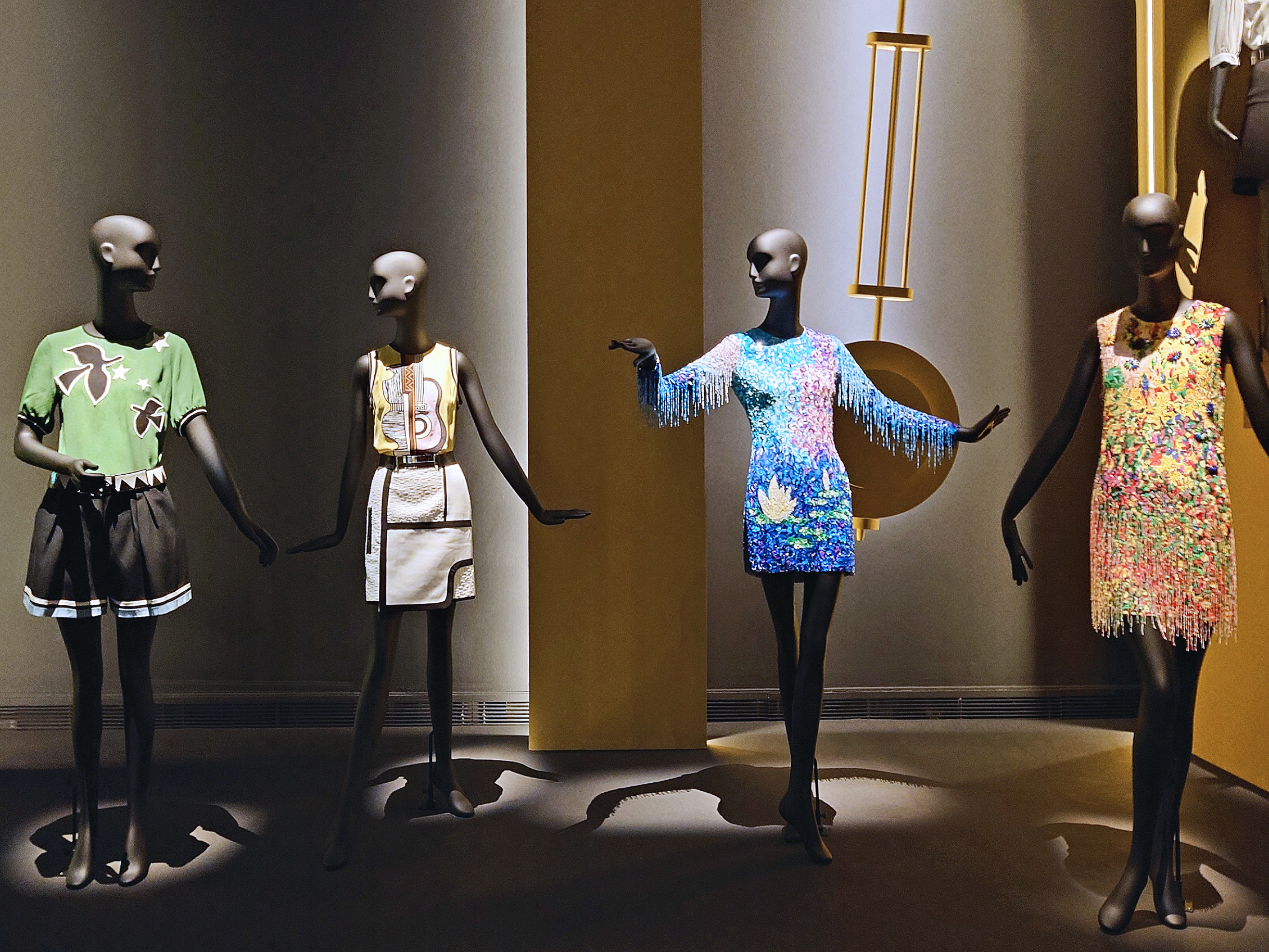
Quartet of looks inspired by European artists
In one of the several introductions that prefaces the commemorative catalogue of the exhibition, Anne Sophie von Claer, deputy editor-in-chief of Le Figaro, wrote that Andrew Gn “is also a great admirer of French designer Yves Saint Laurent”. This is not an unknown fact. As early as his national-service years in the mid-’80s, Mr Gn was enamoured with the romantic work of the man who popularised the le smoking. The sense of wonder and the admiration of the late Frenchman’s designs could have been two of the reasons for his choosing Paris as base, and the undisguised YSL tribute in 2014/15 spring/summer seasons, with two chosen pieces (above left) that are evocative of Mr Saint Laurent’s spring/summer 1988 couture collection Hommage à Braque, and another two (above right) that saluted Monet’s Water Lilies as his French idol did with Van Gogh’s Irises and Sunflowers. One follower of Singaporean fashion remembers seeing the Andrew Gn collection that was sold at Glamourette in 1997, two years before the boutique closed for good. He said, “I remember those silk georgette blouses with the ethnic trims—they looked to me a YSL reference.” Yves Saint Laurent, considered one of the design greats of the 20th century, is key influence in Mr Gn’s maturation as a designer, and the retrospective beautifully spotlights it.
Yet, it is Mr Gn’s east-meets-west aesthetical leaning that appears to enjoy the highest regard. One dress, highlight nine in the introductory flier, receives considerable attention among visitors: A long-sleeved coat from spring/summer 2003—embroidered with dragonflies and appliquéd (more like tagged) with butterflies—that could come close to a modern-day chaofu (朝服) or court dress, if such an article of clothing is ever needed in present times. Through this outfit, Mr Gn portrays himself to be a fascinating collagist. It is a spirited amalgamation of arts and crafts and appliquéd motifs usually considered Oriental, including suede cut-outs of lotuses emerging from ripples in ikat. The outer is crowned on both sides of the shoulders with epaulettes that ACM describes as “pagoda”, but could well be feiyan (飞檐) or flying eaves. In 1997, Mr Gn said to Suzy Menkes, formerly fashion editor of the now-defunct International Herald Tribune (and presently an octogenarian-influencer) that his clothes were parts (equal or not she did not say) “European chic, American comfort, Chinese depth”.
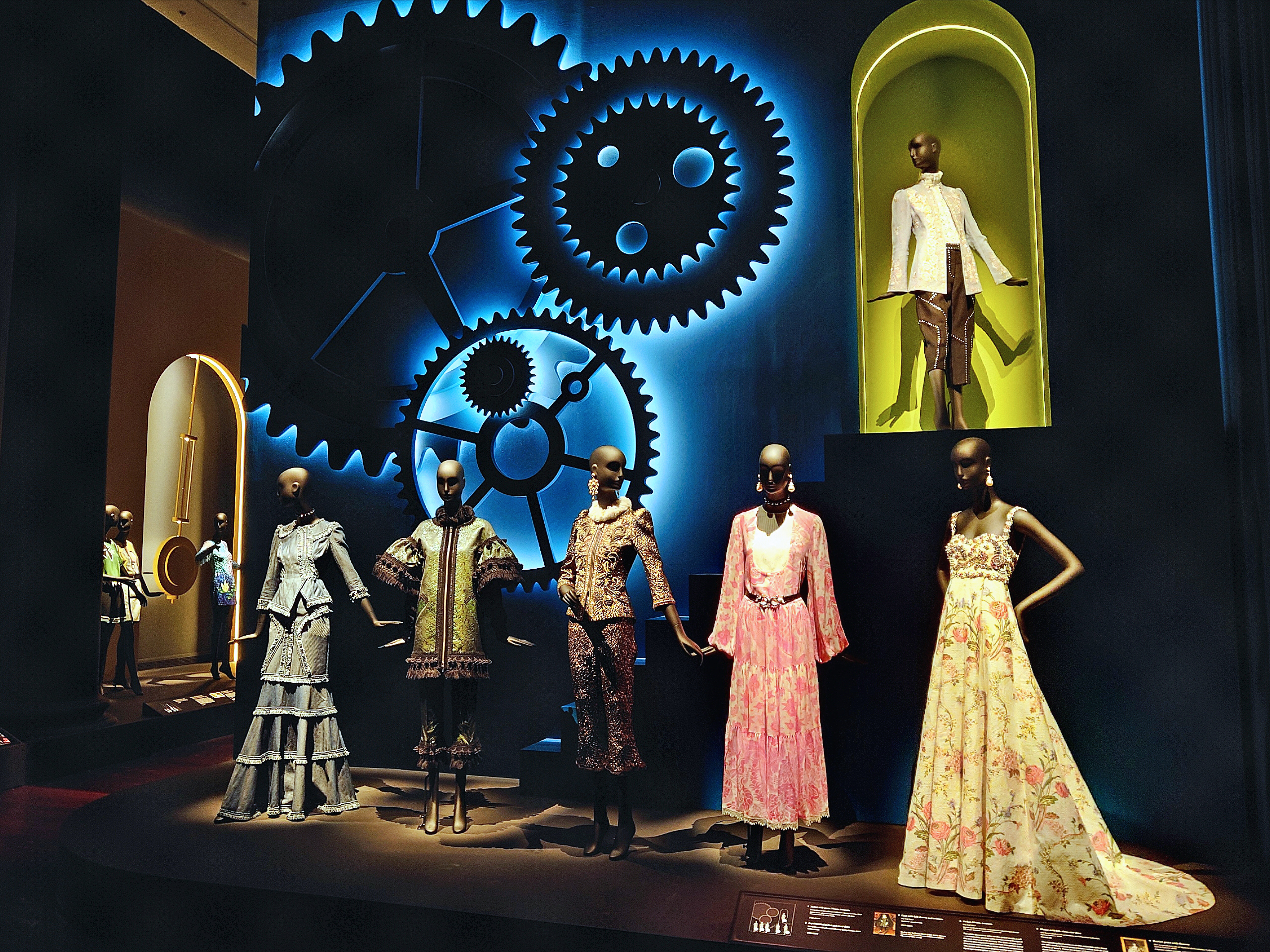
European history reinterpreted
Although the curation purports to illustrate his journey from the time he made Paris home to this retrospective-as-homecoming, it does not provide an insight into the designer’s very early years. Mr Gn has said that his first season in 1996 was a “micro collection”, as he told the South China Morning Post in 2006. Micro equated to six T-shirts, four cardigans, and two jumpers, he was happy to inform. “It’s grown into a collection of day, cocktail and evening wear, along with jewellery and shoes.” Unfortunately, that growth or how Mr Gn evolved as a designer is not immediately discernible. The clothes are arranged thematically, rather than chronologically, and heavy on event dressing. The earliest outfits displayed are a quartet of separates with identical silhouettes from 1999, presented as a store window display (of now-closed clothier Colette). One wool skirt with folksy leather appliqué stood out for its evocation of a blouse from Yves Saint Laurent’s 1981 autumn/winter collection that was the faithful realisation of an Henri Matisse 1940 painting La Blouse Romaine. At the end of the exhibition, back to level one, in the Contemporary Gallery, set up to look like the designer’s atelier, the “European chic” of Andrew Gn’s 28-year oeuvre is unmistakable.
Andrew Gn: Fashioning Singapore and the World does not lack verve. However, ACM’s enthusiasm in staging the retrospective of this scale may have overlooked their main man’s declaration: “My clothes are very couture without being couture,” as he said to the UAE e-paper The National in 2011. Fashion exhibitions draw not only the merely curious, but also those who are inclined to give the clothes careful study. The exhibits may not, technically, fall under couture, but they have been repeatedly touted for their craftsmanship—ACM’s favourite catchword. It is eye-opening enough that, despite the high prices the house of Andrew Gn is known to charge, the use of synthetic fabrics—acetate, polyester jacquard, and “silk-polyester”—is considerable. But more astonishing is how possible mishaps, as the retrospective took shape, are left unaddressed: a rear zip that threatens to burst (possibly because the dress is too small for the mannequin), hems that buckle or are not flat, skirts that are not properly pressed. In a museum, couture or not couture, craftsmanship applies.
Andrew Gn: Fashioning Singapore and the World runs from now to 17 September 2023 at the Asian Civilisations Museum. Admission fee is applicable. Photos: Chin Boh Kay
 Style on the Dot
[…] Andrew Gn : Fashioning Singapore and the World, the Asian Civilisations Museum’s (ACM) current special exhibition, shows the Singaporean designer at the height of his 28-year career. Welcoming visitors to the exhibition in part one of three are twenty seven outfits (excluding two gowns housed in a glassed cabinet under a stairway by the main entrance of the museum) worn by international celebrities such as Lady Gaga and Beyoncé, as well as royalty such as Princess Alessandra of Hanover and Crown Princess of Mette-Marit of Norway. Cut to May 2023: At the Buckingham Palace reception after the coronation of King Charles III, Crown Princess Mary of Denmark wore a dress from the maison of Andrew Gn. ACM opens the retrospective with the dresses that women of fame and fortune have worn, rather than those that have established Mr Gn as a designer of extraordinary technical finesse. In fact, his fame by association with these “influential woman”, as ACM calls them, is so widespread that a social media page imitating his own appeared recently. Ten days after the exhibition opened, the office of the brand announced that there is a fake Andrew Gn Instagram account online. Fans and followers beware. […]
LikeLike
[…] clear if Mr Gn feels that his dream has come true or if the household name status is achieved. In Andrew Gn: Fashioning Singapore and the World, the Asian Civilisations Museum (ACM) does not address those two aspirations. Rather, they position […]
LikeLike
[…] stylishly, in a tummy-baring floral-and-lace top with bell sleeves that Andrew Gn, as seen in the current museum exhibition, would approve. She appears to enjoy dressing for her posts—videos and stills—and seems to […]
LikeLike
[…] is “one of Singapore most successful export” to host. Asian Civilisation Museum (ACM) has, therefore, no space to stage this year’s #SGFASHIONNOW, […]
LikeLike