Sumiko Tan, Singapore’s favourite journalist, doesn’t just have a clean bill of health; she’s her own laudable case study, broadcasting on a metabolic loop
Ten years ago, in her chronically-loved ‘Sundays with Sumiko’ column in The Sunday Times, Sumiko Tan wrote about a body part—her breasts. Cut to the present (or five days ago), she chimes about another—the knee, but this time, it is her husband’s. He is no longer identified as ‘H’, the mononym everyone knows was a teenage crush of her Anglo Chinese Junior College days. In her latest report for ‘Sumiko at 62’, which began in mid-2023 with ‘Sumiko at 60’, the mysterious and ever-present ‘H’ is now simply known as “my husband”. He is the ultimate editorial asset: a man whose primary contribution to her reports is occupying a predetermined amount of space and successfully maintaining a pulse. Or, for her latest column, an old injury. Ms Tan introduced ‘H’ in her Sundays column on July 6, 1997 in a piece titled ‘When an old flame stays just a friend’. Over the years, he has been refined as the apex of the male species, calibrating the fineness of her womanhood, acting as a human highlighter that ensures her cis-female status and dogged hetrosexuality remain “best in Singapore, Johor Bahru, and some say Batam”, as Phua Chu Kang used to regale with such laughable glee.
‘H’ was duly christened by Ms Tan as Quek Suan Shiau when the couple married in 2010 (when she was 46), an unveiling made with the same nonchalance as the happy revelation of her cup size, back in 2016, twenty-two years after we started parting the polyester curtain to witness her exciting life (it became Singapore’s longest-running personal column—as long as the Harry Potter film franchise era). It marked the transition in her writing from the prosaic anxieties of singlehood, including a revelatory “bra fitting”, to the domestic realities of conjugal felicity, to borrow from Jane Austen. Pre- or post-marriage, ‘H’ is her ever-hero in a narrative that a former ST editor described as “trite”, to which we added, “painfully”. Opposed to the more predictable abbreviation Q, the choice of the letter ‘H’ is, admittedly, an inspired one. It stands for everything Ms Tan wanted in a man and her long wait for the fellow: him, handsome, hale, hearty, happy, heroic, honorable, honest, helpful, humorous, and, ultimately, husband-worthy. He was always portrayed as a paragon of rugged masculinity and athletic discipline, serving as a sweaty and butch rebuttal to the dangerous notion that a man might occasionally enjoy a chair or a Beard Papa’s fluffy cream puff, only to be, during his NS, a librarian. How very Henry DeTamble (2009’s The Time Traveler’s Wife).
There is a beautiful absurdity of her repeated need to frame him as a commando archetype, even when the topic is as mundane as knee pain. In her lastest piece for ‘Sumiko at 62’ (which continues her adoration for alliterative cross-heads characterised by their exceptionally modest flavor), she opened the service piece not with a medical urgency or the expertise of a specialist, but a domestic bearing: “My husband has a ritual whenever he comes home. He goes to the freezer and scoops up ice to fill a large ice bag, then wraps it over his right knee where it stays for the next hour.” (She spent four paragraphs on him!) It’s like watching a cooking show where the host lovingly describes stirring soup, then suddenly recites the chemical formula of sodium chloride. It is hard to determine a clinical purpose in the details. They are there to reinforce the Husband H brand: He, the admirably athletic figure who became an electrician when she reconnected with him, whose knee pain in middle age is framed as heroic relics of his National Service. The transition from the sentimentality of the “daily ice ritual”, like a nightly, serum-saturated tissue mask habit, to the dry clinical breakdown of the “femur, tibia, and patella” is jarring. It dramatises how lifestyle journalism tries to support two incompatible tones: the soft diary confessional and the hard clinical breakdown. The result is a strange, newspaper hybrid: a middle-aged 姐妹 (jiemei, sisterly) fan mag that doubles as standard operating procedures for vintage models.
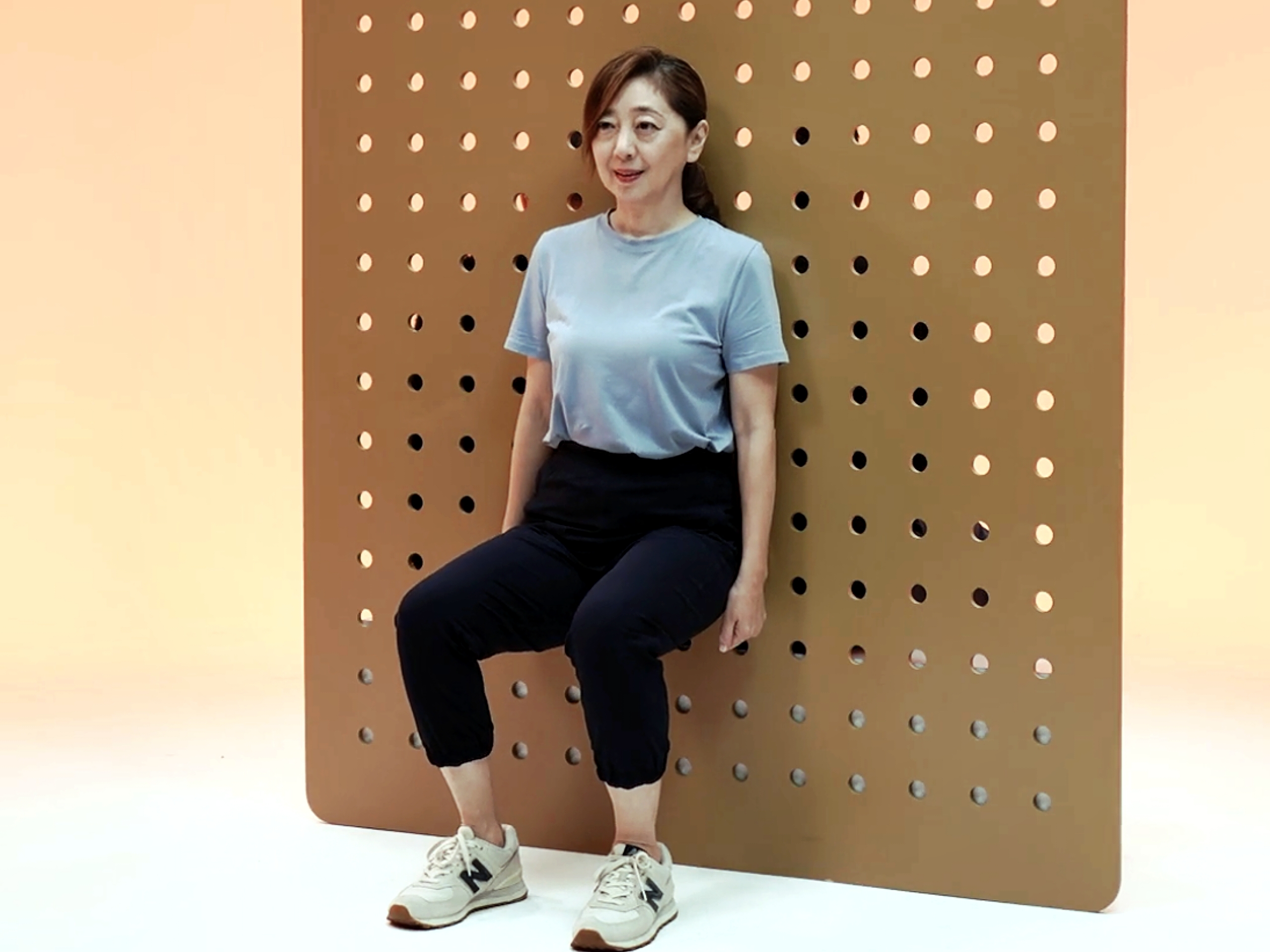
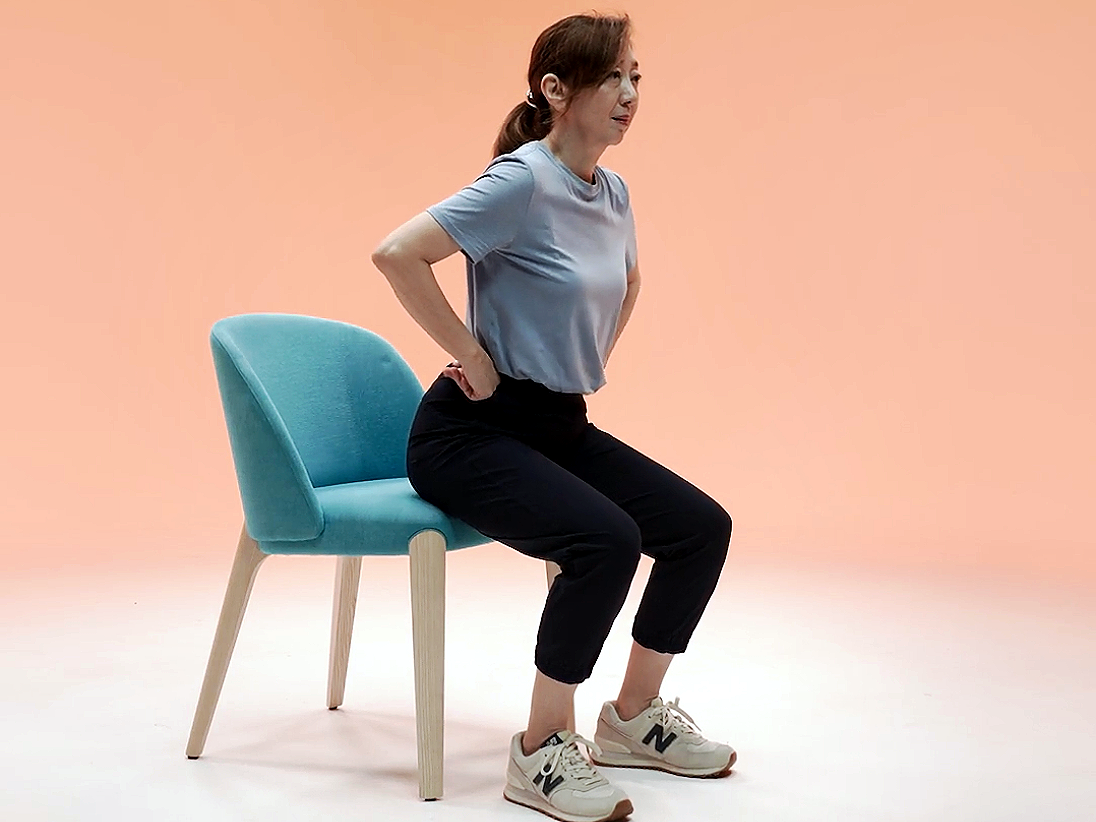
Having successfully colonised the Sunday breakfast table with the hardworking lore of ‘H’ and the weather report of her living room, our island’s favourite journalist has now successfully shifted from the traditional invisibility of the old guard to a more face/body-driven, multimedia approach to journalism. To ensure that her domestic vitality is not just read, she now appears as a model in the video illustrations of her articles. Sure, ‘editors’ such as Oprah Winfrey and Martha Stewart have appeared in their own respective magazines, but these are titles built around their respective personalities. The magazines are a curated extension of their lifestyles. There is a fundamental difference between a personality brand and an institutional record. We have not intently read The Straits Times for a very long time, and Sumiko Tan is a mere memory from a very different era. Thanks to our news feed, her entire body appears before our eyes, not because we insisted, but because the feed thought it deserving of an audience. In an era where readers increasingly trust individuals over faceless corporations, showing the person behind the prose helps foster a sense of intimacy and para-social reliability. The Sumiko-fication of the national broadsheet is inevitable. There is a reason why some are calling it “journalism in residency”. If you talk about your living room for 30 years, it becomes the padang.
Screen shot: straitstimes.com
 Style on the Dot