Maison Margiela’s elegy to the ghostly, seeking glamour in the faded is a solid triumph for the house
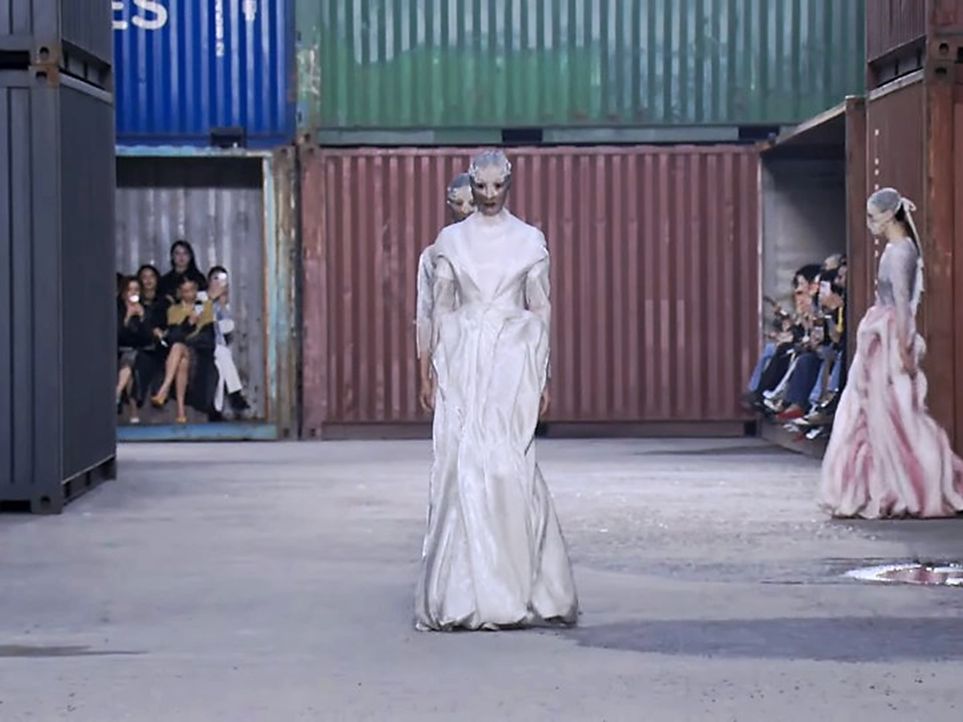
Maison Margiela closed Shanghai Fashion Week autumn/winter 2026 with its first-ever show outside Paris. China is no longer on the horizon; it’s underfoot. When the models drifted in one by one (sometimes in an ungainly manner that suggested a struggle with the clothes on them), we wondered if the Chinese audience thought what they saw was 三分似人,七分似鬼. Or, three parts humans, seven part ghosts. The show did take place before 清明节 (qingmingjie, Tomb Sweeping Day) this weekend. Sure, these were not the traditional Chinese 僵尸 (jiāngshī, reanimated corpse). They were closer to sheet ghosts old old Halloween or the one in 2017’s A Ghost Story, except now, the spectre knew her fashion. Under a gray, overcast sky, the models walked as if just awaken from an absolute stillness of the archive. Glenn Martens covered their faces with tailored face masks, echoing anonymity, but this was less the high-glam Swarovski encrustation of his debut couture show last July than head shrouds of revenants still in their burial wrappings, out to haunt the living. The chiffon-bonded faces could have come straight out of a slasher movie. Margiela’s spectral chic was both a mediation of the maison’s past and their present global transit and fashion as eerie, faceless cargo.
The stakes were raised considerably when Maison Margiela made the rather posh decision to stage the show at the Longhua Port area, near the West Bund Art Centre, where the house launched the Artisanal: Creative Laboratory exhibition tomorrow. We are unclear as to why European houses have a weakness for the port aesthetic. In 2021, Louis Vuitton’s spring/summer men’s collection was also presented in a similar riverine setting: the Shanghai Shipyard Repair Docks (part of the 1862 Shipyard area) in Pudong, a site that’s easily geographic cousin of Longhua, staring back from the opposite bank of the Huangpu River. It’s interesting that both houses leaned on the shipping container as a motif. LV used it as a vessel for a voyage, whereas Margiela used it to represent a storage unit for the house’s collective memory. One was about the journey; the other was about the “folders”—as Margiela described the latest collections, comprising, for the first time, the RTW and the Artisanal lines—of the brand’s singular, incomparable identity. Both shows reminded us that fashion today is inseparable from the machinery of global trade and that China, as both behemoth and host, is the unspoken backdrop of these container scrim while the U.S. is in war mode. As they say in Hollywood, the show must go on. And to that we’ll add: the trade, too.
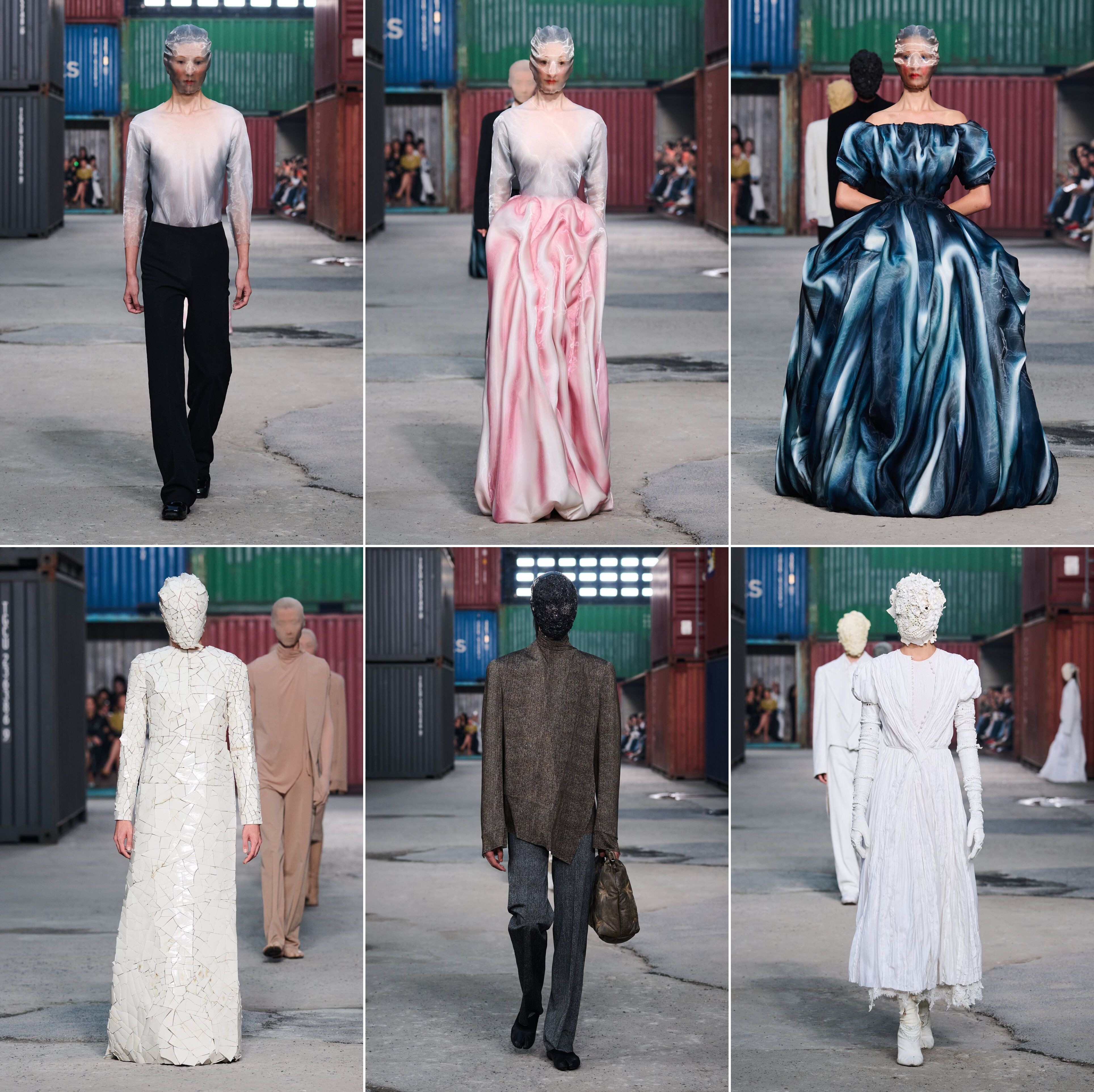
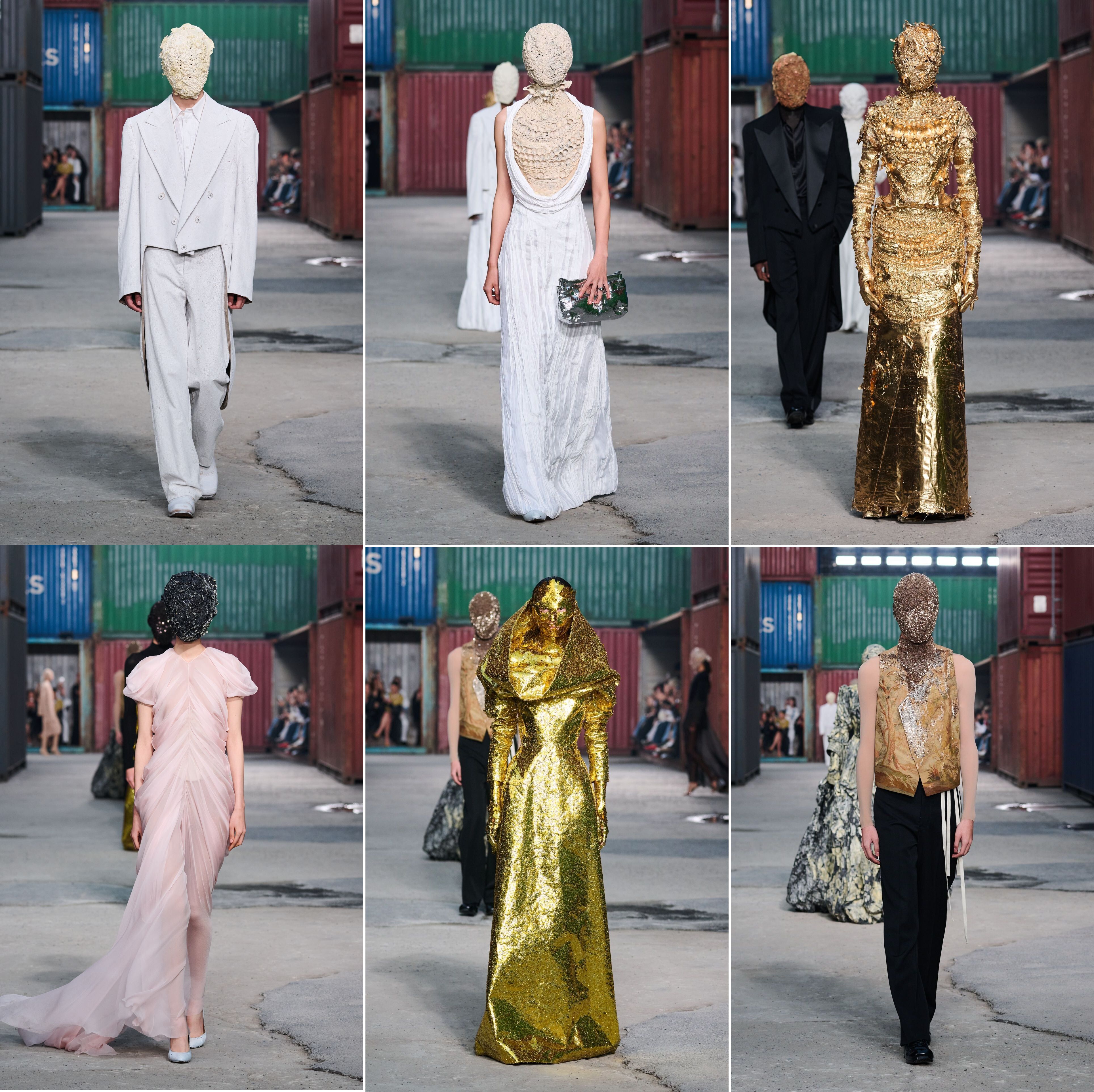
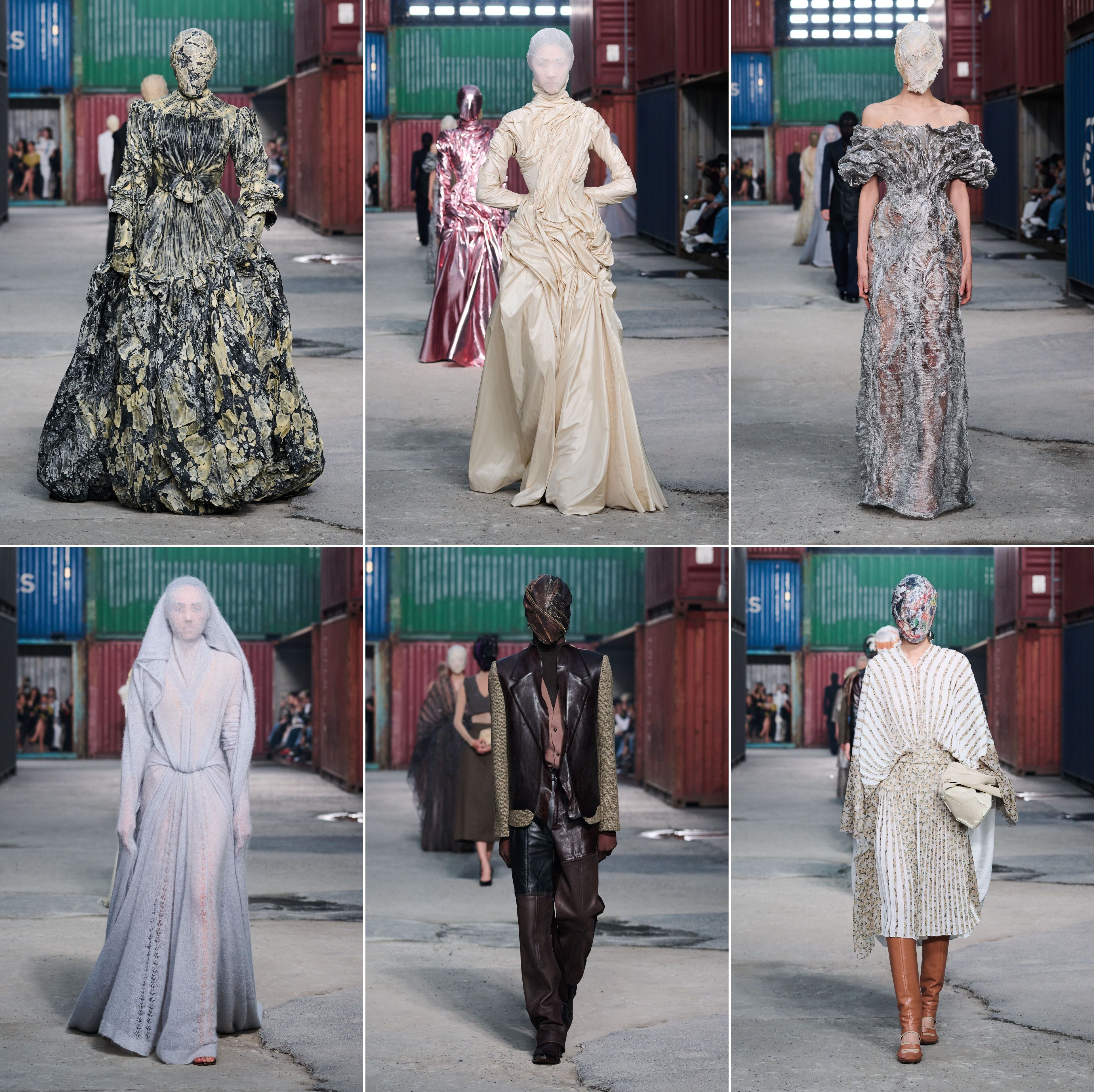
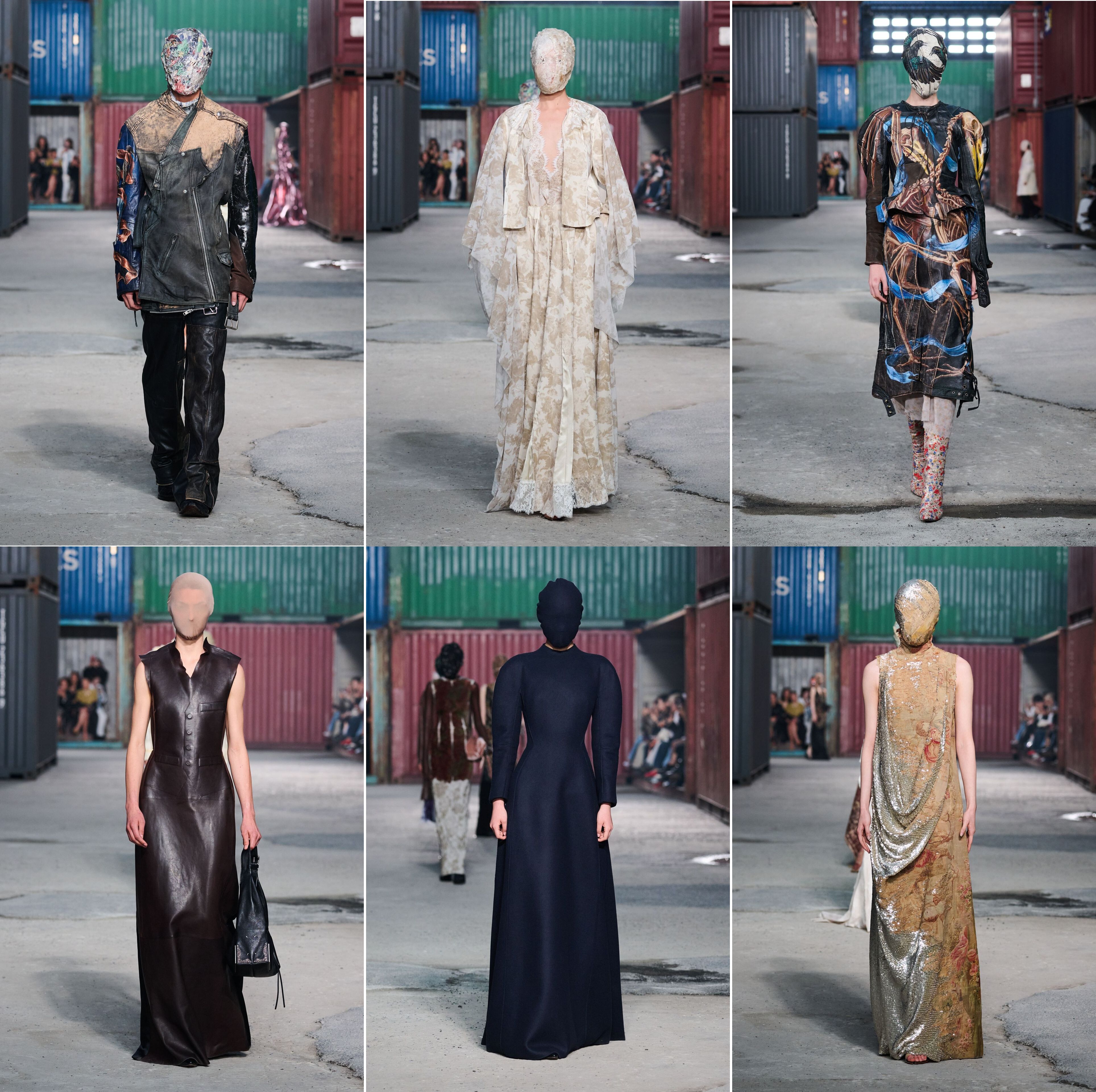
And what those folders revealed was the sublimation of the decaying and the decrepit. The defining astonishment was the textures, not just on the masks, but on the clothes as well. They demanded a forensic level of focus, arresting (to us, surrendering) the senses entirely. What could have been Edwardian mourning dresses were dipped in or painted with beeswax to create a rigid and cracked surface that felt vitally poetic. In what appeared to be garmental flashbacks, vintage silhouettes were surrendered to an adhesive grip, only to be forcibly extruded, leaving behind a spectral residue of thread and memory upon the base. Or a snapshot of an old Shanghai hotel, abandoned, but in glorious rot. To achieve the phantasmal, chiffon looked wind-bonded, with draping that was textile in a state of rigor mortis, as if caught in a permanent, icy gust from the Huangpu River. Some of the lacework could have been calcification on ancient breastplates, like geological art. There was a gilded dress of star-shaped gold leaf, spared the passage of time that had weathered the rest of the archive. The use of porcelain, Chinese invention, to be sure, was astonishing—actual shattered shards integrated into dresses, keeping the silhouette familiar, structural, but not like the “wearable art” of 李晓峰 (Li xiaofeng), and without the dappled Ming blue, just the house signature, Bianchetto white. A storied house is never relieved of its DNA.
Against the background of the rectangular vessels of the show, Glenn Martens sent out what could have been freshly unpacked from those containers. But, amid the brittle splendour and gleaming decay, we could not spot the difference between the artisanal and the RTW, in a good way. The lack of immediate distinction set the maison apart from the other houses in Paris, where the two lines have been increasingly hard to tell apart. At Margiela, however, it was the RTW that was indistinguishable from couture, not the other way round. This inversion was what made the show so affecting: RTW pushed upward—treated, layered, masked, distressed—so that it carried the same couture aura as the Artisanal, which at its core has been about “found” objects, fabrics, and garments, all not necessarily with couture providence. The RTW became indistinguishable from the artisanal, not because it was watered down, but because it was corroded and elevated into the same mysterious shipment of anonymous cargo.
Screen shot (top): maisonmargiela/YouTube. Photos: Maison Margiela
 Style on the Dot