Chanel’s latest ad is a high-gloss recruitment video for Mattel
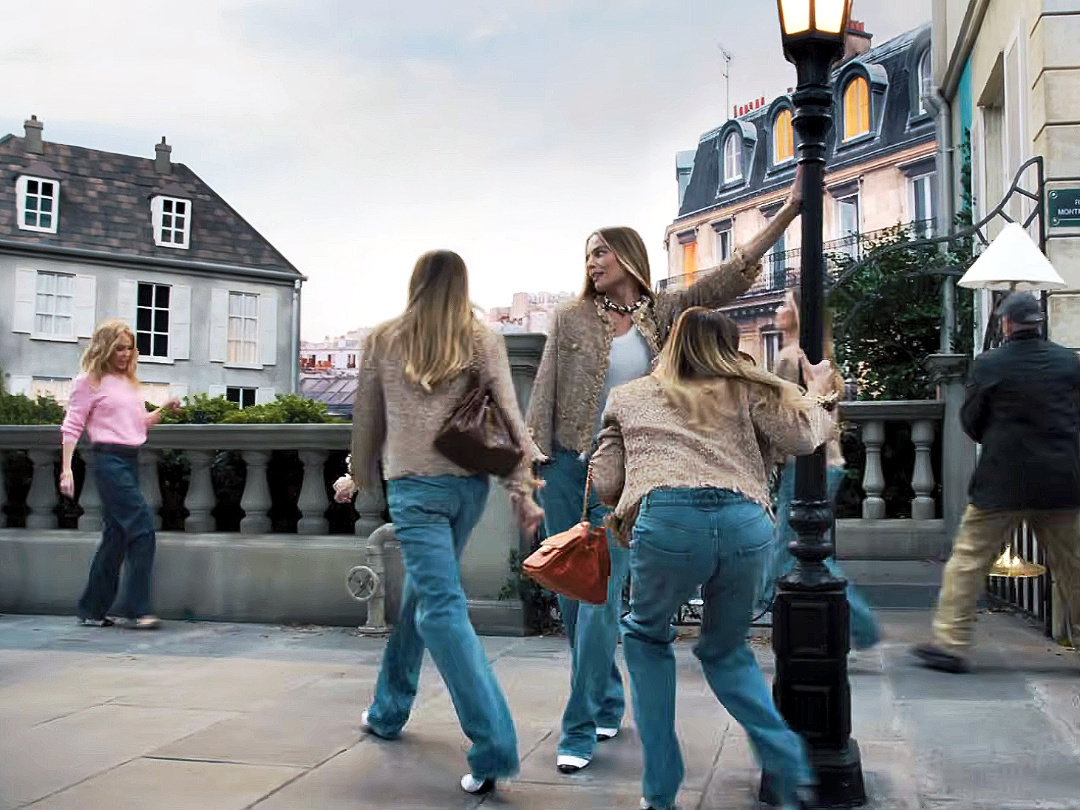
Margot Robbie everywhere. And Kylie Minogue (in pink) participating discreetly. Screen shot: chanel/YouTube
Bags are always the star at Chanel. And the Chanel 25 has been given the attendant treatment in the brand’s latest commercial, starring the dream creation known as Margot Robbie. The ad, shot by French director Michel Gondry, an Oscar winner for co-writing Eternal Sunshine of the Spotless Mind (2004) and for his quirky music videos, including many with Björk, is inspired by or a take on his visualisation of Kylie Minogue’s 2001 dance track Come Into My World from the Fever album. In the filmlet, Ms Robbie plays herself over and over again, but not in quite the loop of the original MV of the song. Interestingly, Ms Minogue made a cameo, but you could have missed her if you were not attentive or paid too much attention to Ms Robbie trying to appear cool, and unable to erase the doll-ness (or droll-ness) of her very being after playing Barbie in the eponymous movie of 2024. She was less an actress, even less a model than a replicable doll. Perhaps fashion has come to this—a woman who could be unboxed, posed, made to run, and then returned to the shelf without a single hair out of place.
The video leans on the idea of the ‘uncanny valley’ that we see in aesthetics and robotics today. It’s that eerie, unsettled feeling reserved for things that mimic life so well they almost make you forget to breathe, until you see that the eyes are like Annabelle’s. However hard we try, we can’t block out Ms Robbie’s tenacious Barbie residue. Because she is so inextricably linked to the doll archetype now, seeing her in a repetitive, looped environment reinforces that sense of manufactured perfection. The assembly line of calculated grace; the valley of one doll. In the original Come Into My World video, the multiplication of Ms Minogue felt like a celebration of the chaotic energy of a real corner of a city as she dodged actual pedestrians, vehicular crashes, and city grime—it was messy, rhythmic, and human. But in the Chanel ad, the Barbie-everywhere effect does not just create clones, it creates obedient doubles, even quadruples, all very Stepford Wives—uniformity disguised as choice. The clones didn’t rebel. They glided, synchronised, and did not look into the camera. The audience stared at a mirror with no reflection.
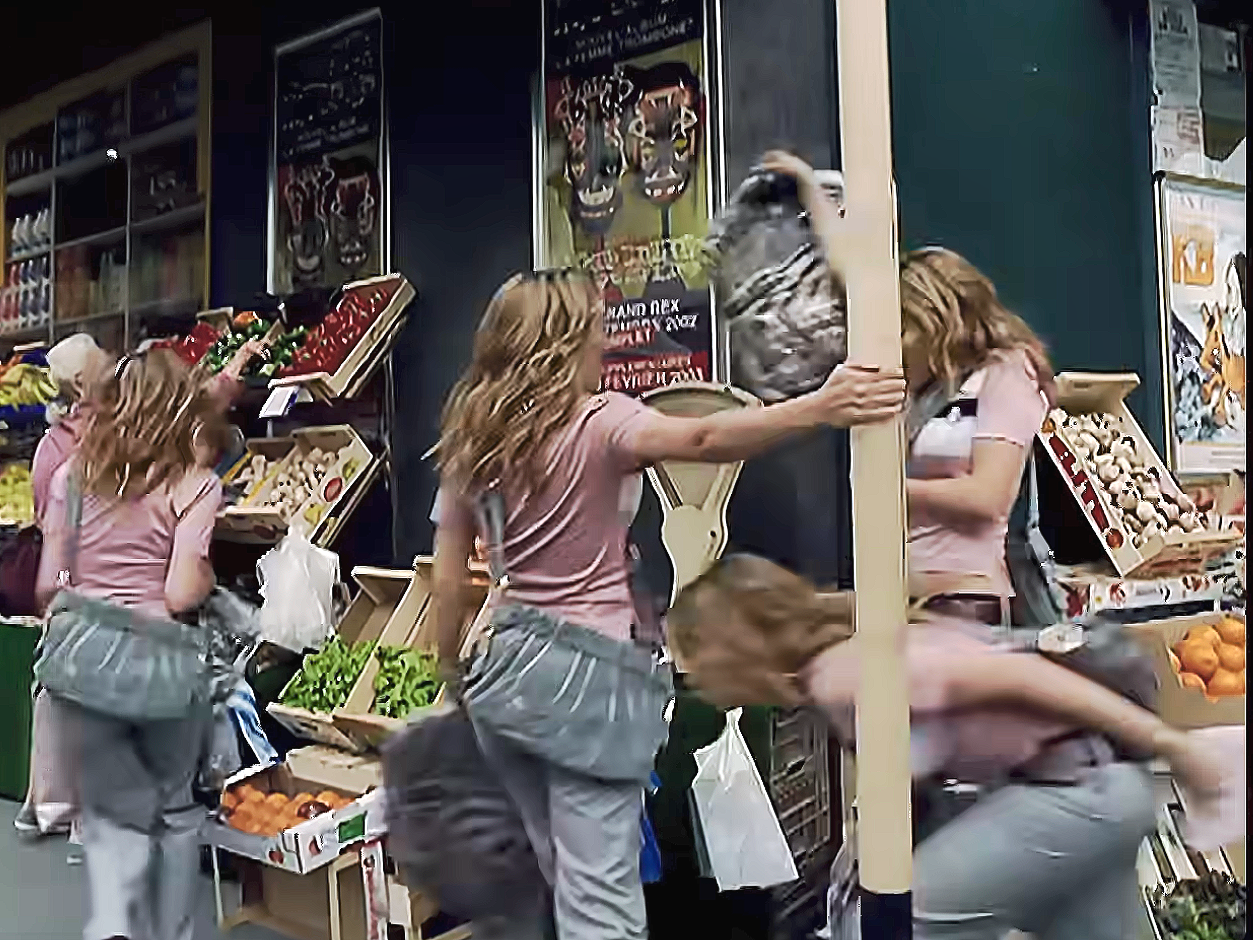
Kylie Minogue in the MV for Come Into My World. Screen shot: kylieminogue/YouTube
Chanel wants to sell their bags. So it is not one style and one colour in the ad. It is all the Chanel 25s you’d want: big, small, black, and not. Each Barbie carries a different one, but the doll remains the same. Is it not so in Barbieland? Barbie has a stupendously huge wardrobe, but she is always the same self who wears the same smile. Unlike the Come Into My World original, this set feels like a Barbie Dreamhouse version of an urban sprawl. It’s Michele Gondry’s idea of a charming neighborhood, where people are curiously prone to dropping things. It’s sanitised urbanism that feels as convincing as the accessories it’s trying to sell. Ms Robbie tries to do normal things—jump from a window to the roof of a car to get to the street, fix her makeup by looking into the vehicle’s side-view mirror, and have a Singin’ In The Rain moment—minus the shower—with a street lamp, but it was all really Barbie making belief. Casting Ms Robbie doesn’t automatically confer élan to the bags. Mr Gondry’s multiplication trick drains her of spontaneity; she isn’t carrying the bags with flair, she’s carrying them as a programmed mannequin. It does not distinguish between video art and a fancy stock-take.
Ms Robbie is dressed in a loose-fit Chanel jacket with frayed hems and no buttons over a fitted white slip-top that could have come from Uniqlo. The jacket is paired with a pair of denim mom-jeans, with a cut that does nothing for the wearer’s derriere. It’s no longer about the fit; it’s about the vibe. Karl Lagerfeld was, in fact, the first who brought the Chanel jacket and denim jeans together to puncture the pomposity of the haute couture world. In Mr Lagerfeld’s hands, jacket-and-jeans was a provocation—couture meeting street, scarcity meeting accessibility. In Margot Robbie’s cloned multiplicity, it becomes uniform—another iteration among many in the dollhouse. The styling no longer shocks; it repeats. We have been told often enough now that the new Chanel is meant to be relatable. Bringing the action to the street is marketing metric. By using a look that Zara has already commodified into global accessibility and Shein made affordable, Chanel isn’t leading, it’s following its own shadow. It is a look that once suggested liberation, but here, it’s staged and repeated as something far more pedestrian.
 Style on the Dot