For autumn/winter 2026, Nicolas Ghesquière positioned Louis Vuitton at its off-beat best, on hilly lands, joyfully
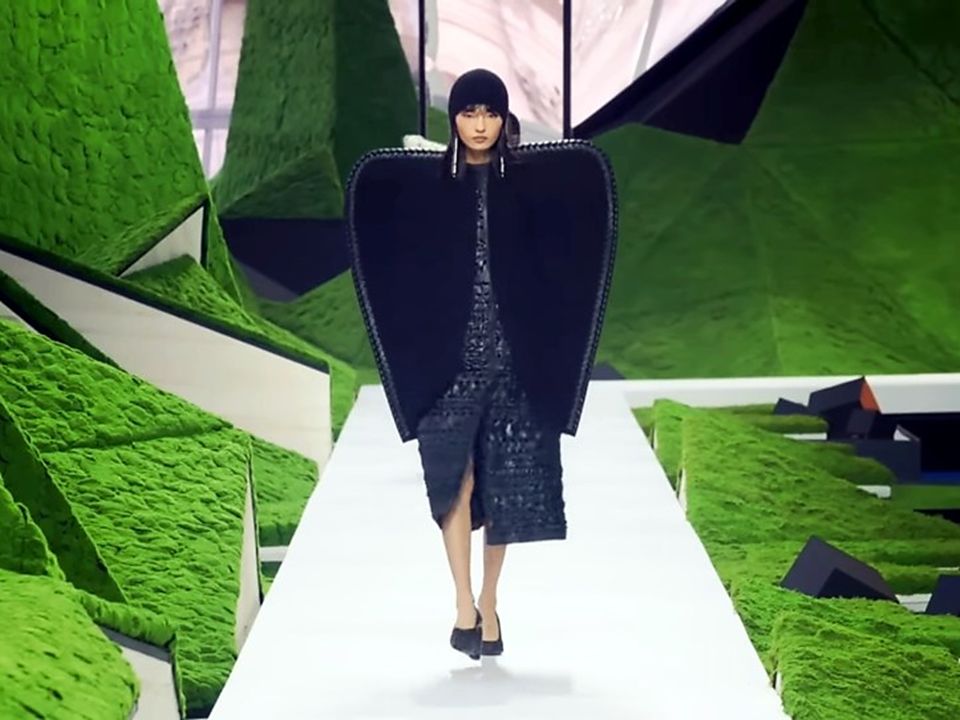
We were almost not impressed with the set, something that looked like an undulatingly angular field that would be inhabited by Minecraft characters. But it was the first four looks of the collection that made sense of the landscape to us. The first, a black cape that looked like clipped wings of a Victoria’s Secret Angel (Maleficent might consider minimalism for a change). Three others followed, all seemingly styled after Turkish kepeneks (felted shepherd coats), but looked like smoothed-out ancient Chinese 蓑衣 (suoyi), made deliberately flat and stiff. The looks were vaguely tribal, and, although, according to the show note, were about the highlands, they could be about the grasslands too, a 大草原 (dacaoyuan) or prairie, such as the Mongolian Steppes. Conceived by production designer Jeremy Hindle (of Severance fame), the fake-moss-covered set was hyper-jagged, perhaps to better contrast with the clothes’ more organic and, later, more fluid shapes. What was Nicolas Ghesquière really up to? We learned soon enough that the collection was titled Super Nature, but it was not to be a reference to French disco drummer Cerrone’s 1977 hit, Supernature. Louis Vuitton certainly did not have to “feed the hungry fields”, except the show’s fashion-ravished guests.
But the collection was in no way starved of what we’ve come to expect of Mr Ghesquière—extreme creativity and industrial-strength whimsy. While Cerrone sang about a rebellion of nature, Mr Ghesquière presented nature as something to be domesticated and decoded, and dramatised—he was slyly building the terrain. As only the second artistic director in the house’s history to helm the women’s collections—a rarity that grants him a hard-to-dent gravity—he always does his homework (or should that be fieldwork?), but he refuses to show the results of his considerable efforts in a pedestrian way. Post-show, people were calling his designs “future folklore”. We are not so sure about the futuristic component (since it can’t be a lore if it’s yet to come), but the designs were deeply furrowed with a rustic edge, even agrarian, especially with those massive bowl-like hats that could have been the Vietnamese basket boats thung chai, but instead of floating down the Thu Bon River, were given a new, wearable purpose. If Mr Ghesquière’s tenure has occasionally felt like a high-resolution digital render (such as last season’s romp atop stacked trunks), this season was when he invited us to reach out and touch the screen (we sure did!). These were clothes designed to be admired and studied, and caressed. A tactile wet dream.
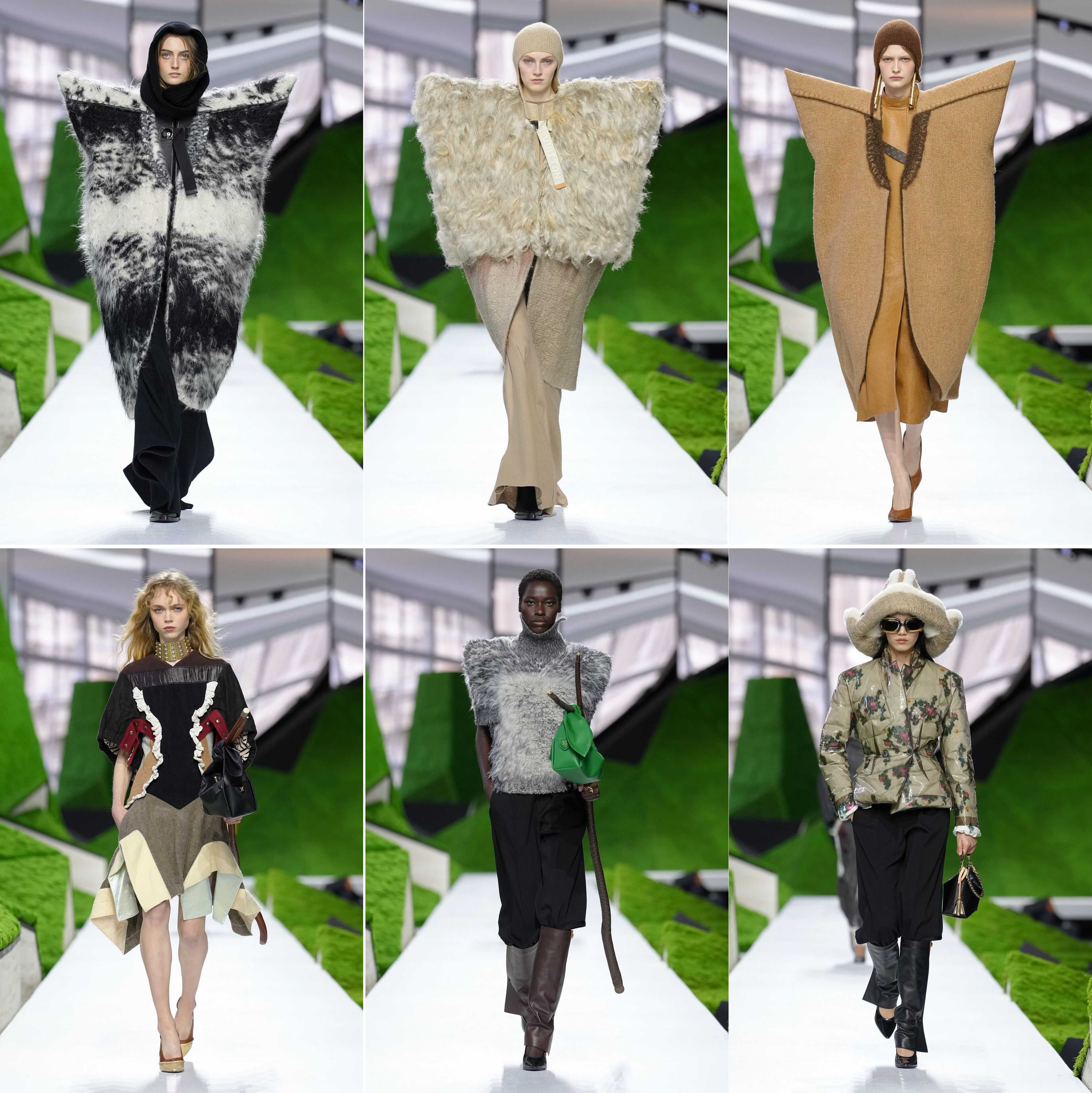
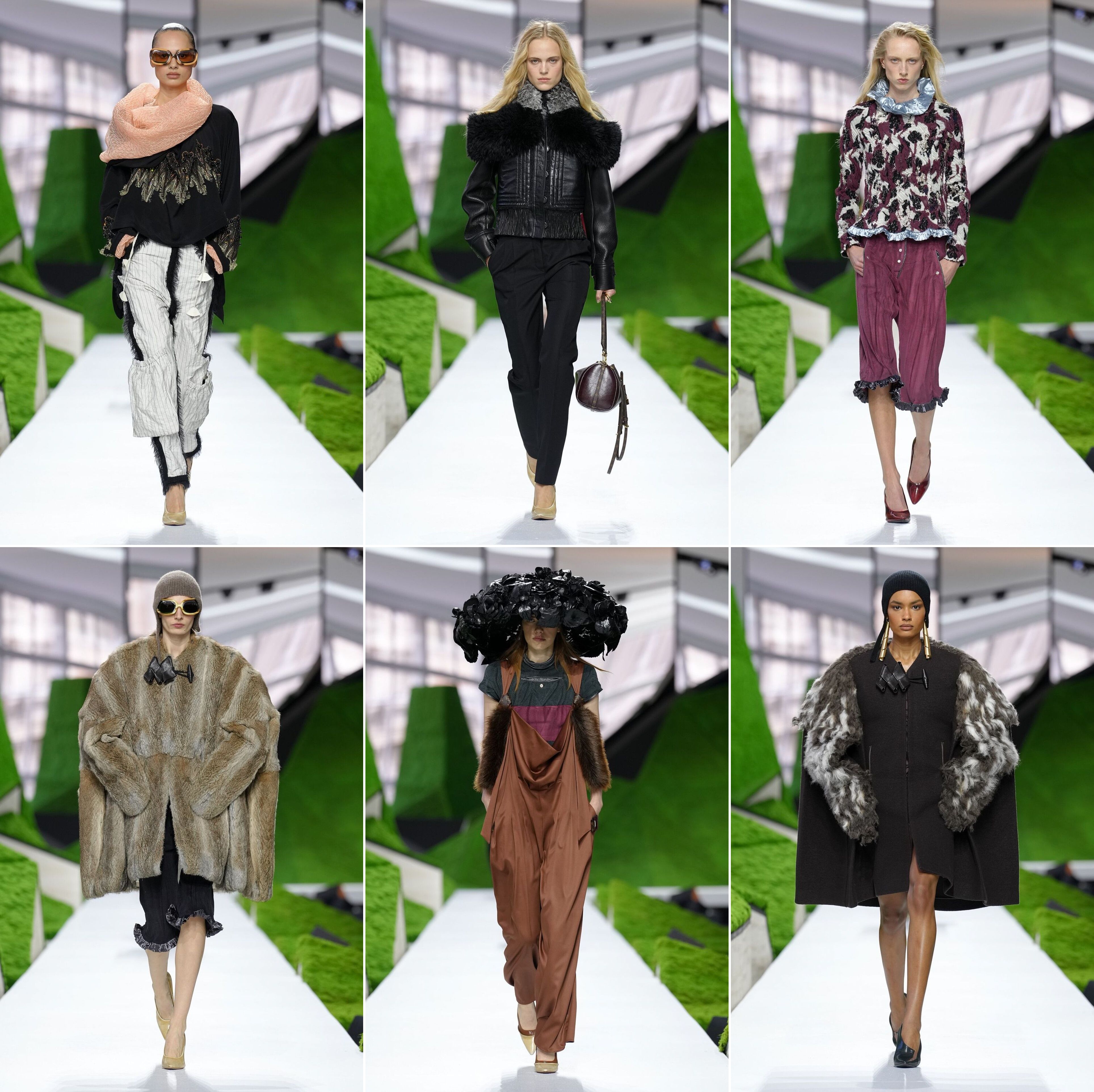
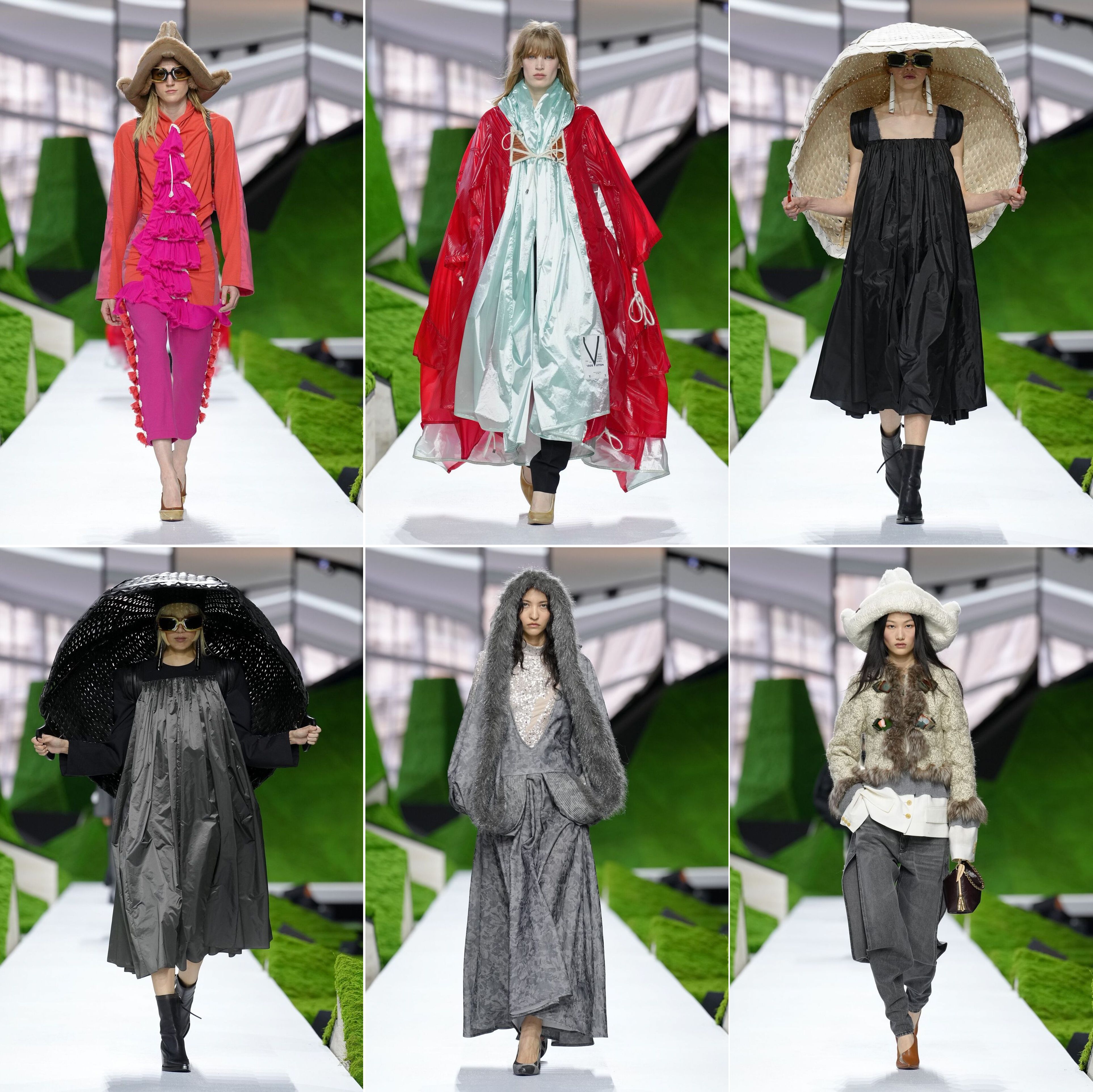
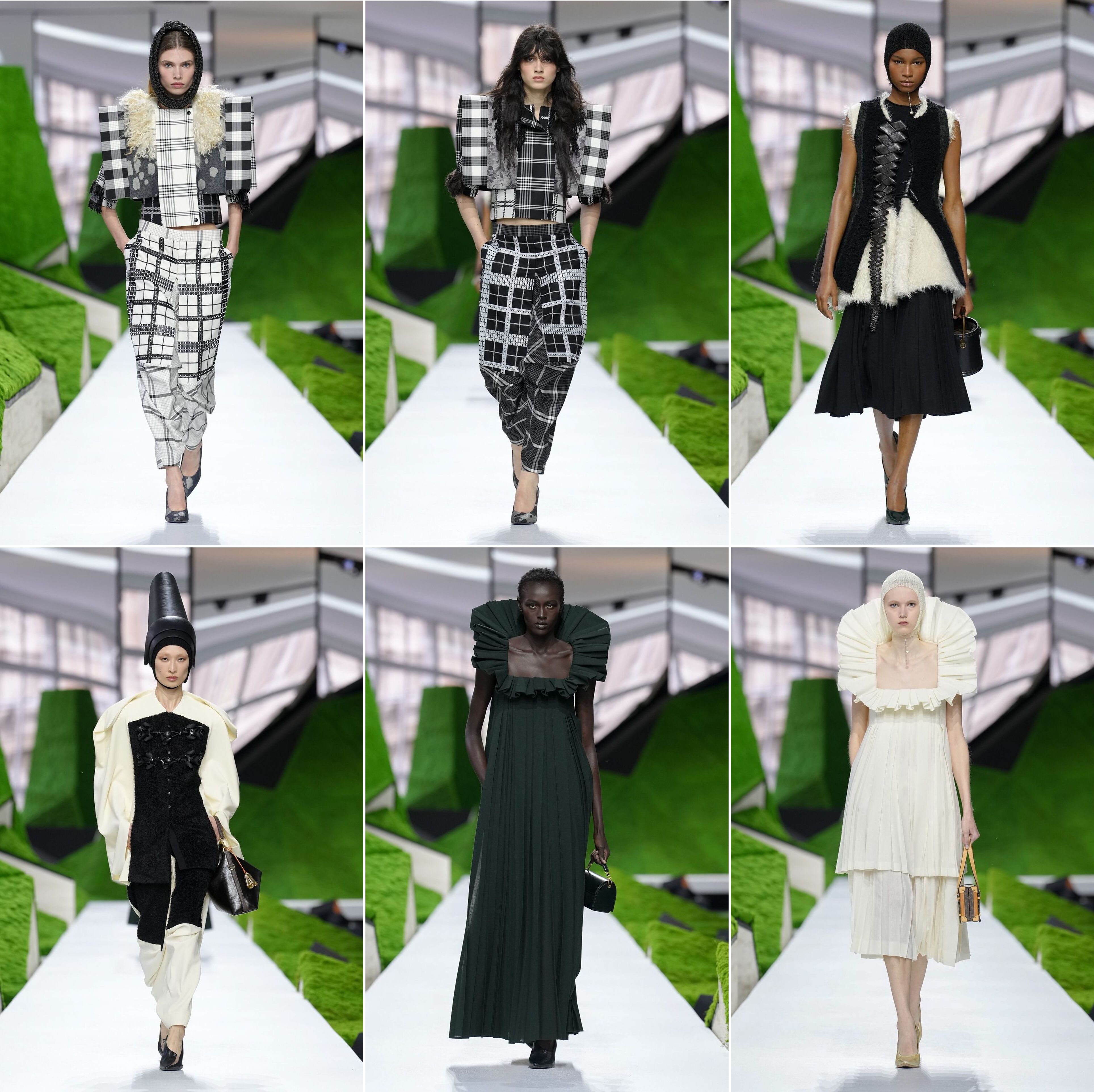
We had the urge to trace the laser-etched ridges of the leather and to weigh the obsidian shards of 3D-printed resin buttons against the compressed gravity of the felted wool. And the toggle fastening with the ketupat weave on one side! It was, to be certain, technical, but it is precisely this technical audacity that drew us to the collection so immediately. Every touch, we imagine, seduces with a story. That, and the depth of the material experimentation and research. Mr Ghesquière has always worked with unconventional shapes and silhouettes, but it was the composite captured within that truly enthralled. The sum of the many parts was not outer exaggeration alone, it was the inner innovations too. No garment was left to stand on its own without a colliding composition of techniques and textures. The first dress said it all: was it even a single garment or a two-piece pt maybe a two-fer? The V-neck number comprised so many parts that they probably tortured the pattern maker. There was a gathered leather panel, sleeves with snap-button opening on the underside (which made the top look like a cape!) and ruffled trims to trace the princess line. Even the lining of the sleeves ( in stripes) provided additional graphical interest. All in all, eight colours were used. And that was only the top half!
We’ve said it before and we’ll say it again: Mr Ghesquière’s true flair since his Balenciaga days has been capturing attention with structure, as well as letting the manipulation of surface details within stand out. It does not only excite shoppers, it thrills dressmakers too. This isn’t just fashion. At the risk of sounding pedantic, it’s applied artistry, where tactility, technology, and storytelling intersect. Fashion show reviewers often say how important storytelling is. But not all storytelling is the same. Some are merely backdrops for influencers, some are woven into the very seams of the garment. Maria Grazia Chiuri is often cited as one of the most effective story tellers of her trite slogan blasts. But here, in the Cour Carrée of the Louvre, a repository of stories, Mr Ghesquière delivered a creative heartbeat that was both compelling and eye-popping. Every outfit begged for an examination, to be touched, or a plan to rush to the store when the collection drops later this year. In a season (many seasons, in fact) of thin narratives, Louis Vuitton was a detailed, almost forensic, study of a Super Nature they dreamed up. The brushed vegetal hair, the layered leather and wool, the tactile embellishments—they allowed Nicolas Ghesquière to create an amalgamate-world and a thrilling story. If PFW saved the best for last, Louis Vuitton truly stole the show with the rare melange of immediate visual impact, conceptual depth, and for fashion folks, wearable drama. Is that too much to ask for in a fashion show?
Screen shot (top): Louis Vuitton/YouTube. Photos: Louis Vuitton
 Style on the Dot