Matthieu Blazy continues to annoy the dogged customers of old Chanel by sticking to the resolutely relaxed
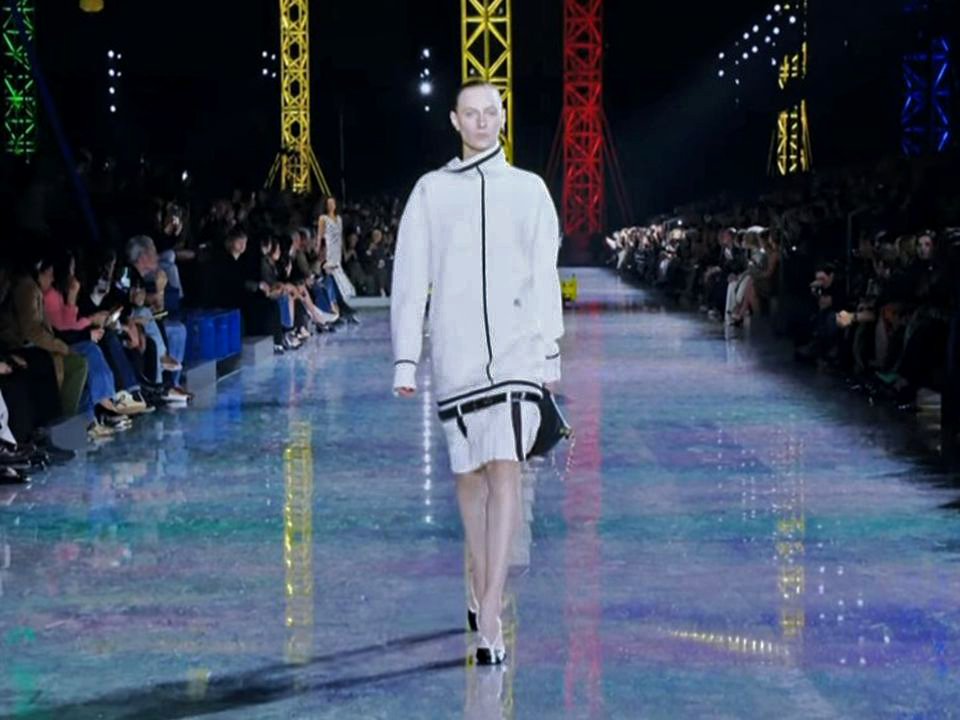
The work-in-progress messaging couldn’t be clearer. But it’s not Carhartt, it’s Chanel. For his sophomore RTW collection, Matthieu Blazy turned fashion’s most historic temple—the Grand Palais —into a pristine, high-gloss construction site, featuring towering cranes, but inoperable, in cheerful primary colours, as if borrowed from a Disney theme park, and curiously accompanied by searchlights. It effectively stripped the machinery of its grit and replaced it with a sense of Mickey-friendly industrial levity. Some people read the scenography as “rebuilding” the Chanel legacy. But could Chanel, the century-old institution, be a worksite? Or charm as if the house were a half-finished condo? The most transgressive it had tried to pretend to be was sell its show grounds as a supermarket. After the couture’s manifestation of magic mushrooms, this was perhaps back to neon reality.
Perhaps Mr Blazy was suggesting that his reconstitution of the house was really an act of joy rather than a chore. There sure was an ease stitched into the clothes. Much to the outrage of those Chanel die-hards, he unabashedly stayed clear of the Chanel that Bunny MacDougal loved or the Karl Laferfeld’s house-code-rich interpretations that Anna Winter had assiduously championed. The tailoring didn’t exclaim; it exhaled. Jackets softened calmy into fluid lines, dresses slipped from day into night without fuss, and even the iridescent finishes felt less like meritorious fill-ins than like a shrug of confidence. You could not call the classic jackets “cute”, as many did in days of yore, neat little pieces that were once encouraged to be worn with denim jeans. But now, resolutely classic, as in ’20s-classic—supple, languid, with a put-it-on-and-forget-about-it nonchalance. Here’s where Mr Blazy’s paradox deepens: He erected cranes to suggest Chanel was in his hands “under construction,” yet the jackets themselves were finished in the most uncompromising way—echoes of the past, when Chanel first defined modernity. The ease was not casualness but clothes that didn’t need to prove themselves because their lineage already had.
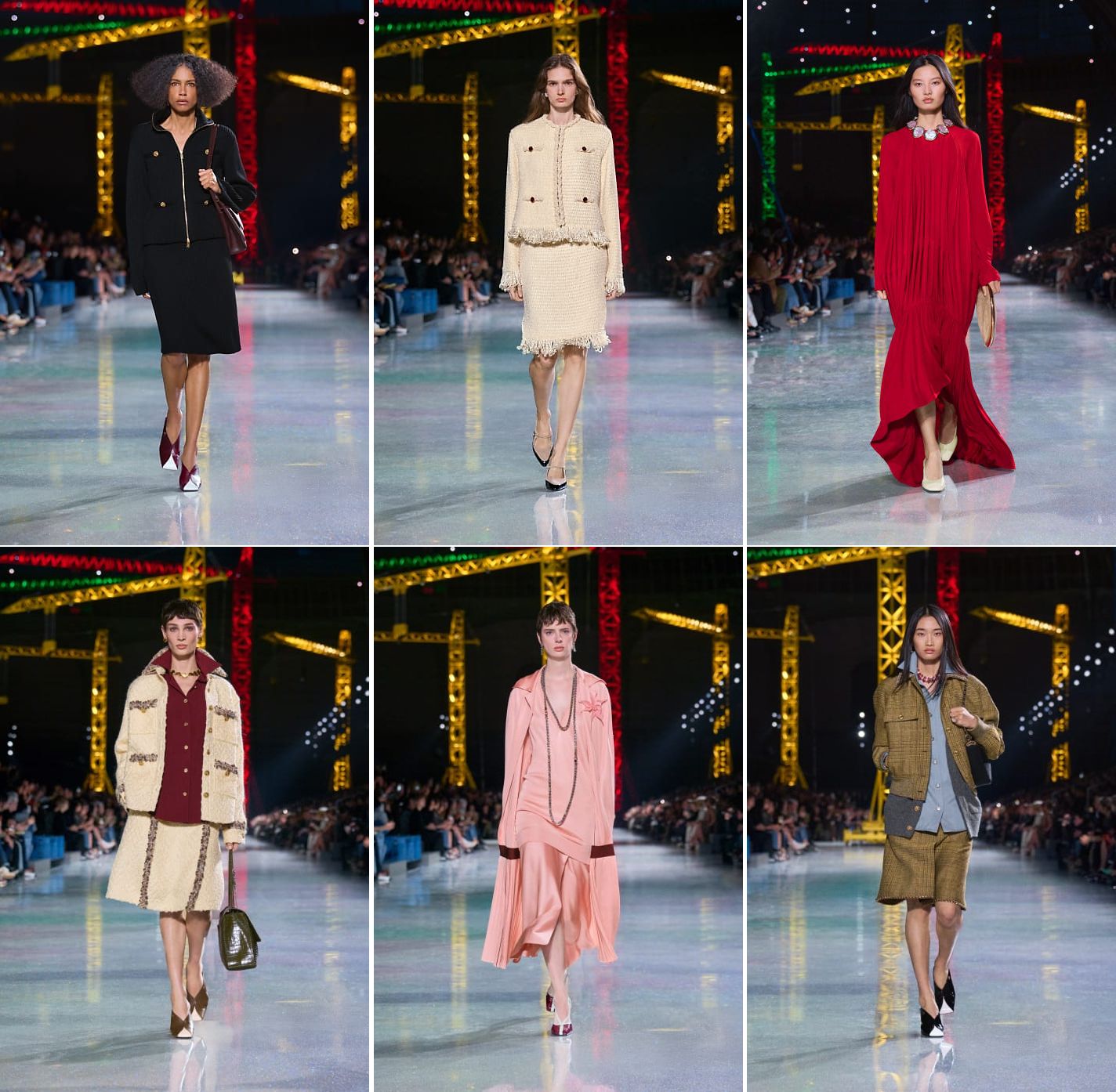
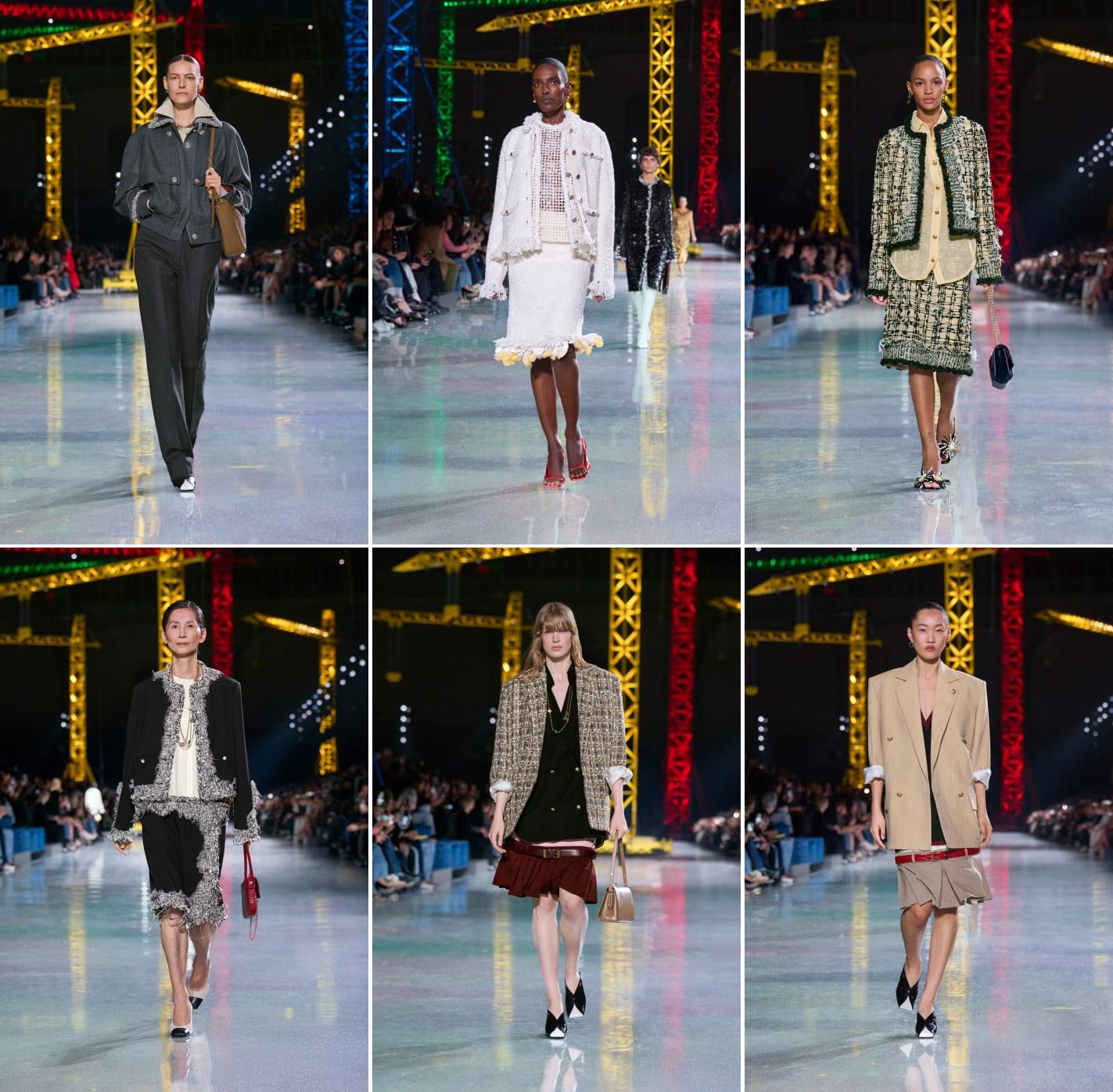
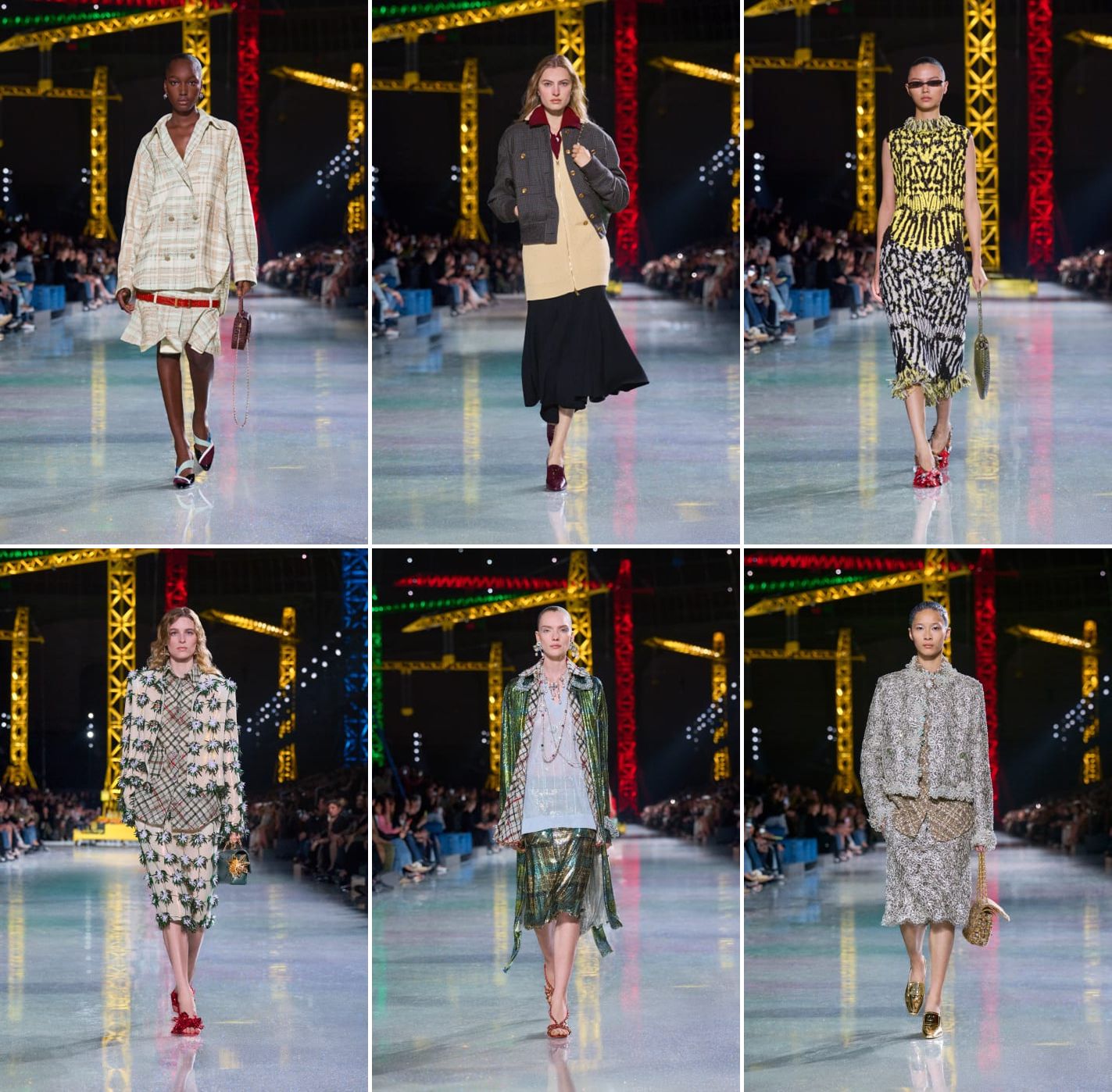
What was most striking was the nerve to move the waist towards the knee, but not in the flapper tradition that It girl Clara Bow would squeal for. Mr Blazy sat it aggressively low on the hips, elongating the torso, flattening the silhouette. He emphasised the off-off-waist with a belt, as if repurposing a vintage Miu Miu mini-skirt by joining it to another garment. The sum was positively more refreshing than any past attempt anywhere at reviving the drop waist. It gave the models a certain lumbering elegance that felt very modern. Curiously, the same approach applied to evening dresses seemed to resuscitate, even if just a hint, the hobble skirts that Coco Chanel herself stayed clear off. Seemingly, it was the memory of constraint without fully enacting it, as if Mr Blazy wanted to dramatise the tension between heritage and progress: hang loose with the jackets, a whisper of restriction in the gowns. What was clearly his favourite item to graft onto the Chanel codes was the workman vesture, primarily the shirt. This came in both business opaque, date-night sheer, and fan-acceptable bouclé, many worn untucked (!) under those calculatingly casual jackets. A refrain that could itself become code. Chanel’s vocabulary has always been built on repetition: the tweed jacket, the camellia, the chain strap. By inserting the shirt again and again, Mr Blazy was testing whether utility could be canonised.
Things clearly loosen up at Chanel for Mr Blazy’s first Chanel collection last October. The resultant lightness is best exemplified in the brand’s latest ad for the current season. Models were running up and down stairs, jumping with delight at the landing, and even perched confidently on tree branches outside. That exuberant airiness and freedom continue to characteristise Mr Blazy’s latest presentation. To us, it is in RTW that he seems most fluent: he can balance heritage and progress without over‑theatricalizing either (minus the almost Disney-esque pomegranate minaudière or such cuties). By contrast, the couture debut felt over-thought and not distinctively separate enough from the RTW, and the cruise, well, the commuter‑chic was a misstep, collapsing into concept rather than conviction. To be sure, the looks don’t always translate well on the red carpet: even on Tilda Swinton, her tuxedo jacket refused to sit beautifully on the neck at the Baftas. But the clothes of the second RTW carried the pluses we’ve been circling: relaxed jackets, un-fussy tweeds, and a way of wearing that did not appear annoyingly precious. In some ways, the strategy might work. Chanel look-a-likes are everywhere, but not this way. Matthieu Blazy built Chanel like a worksite, but it’s in ready‑to‑wear that the scaffolding holds.
 Style on the Dot