At last. A French house saluted the Samsui woman. Or did they?
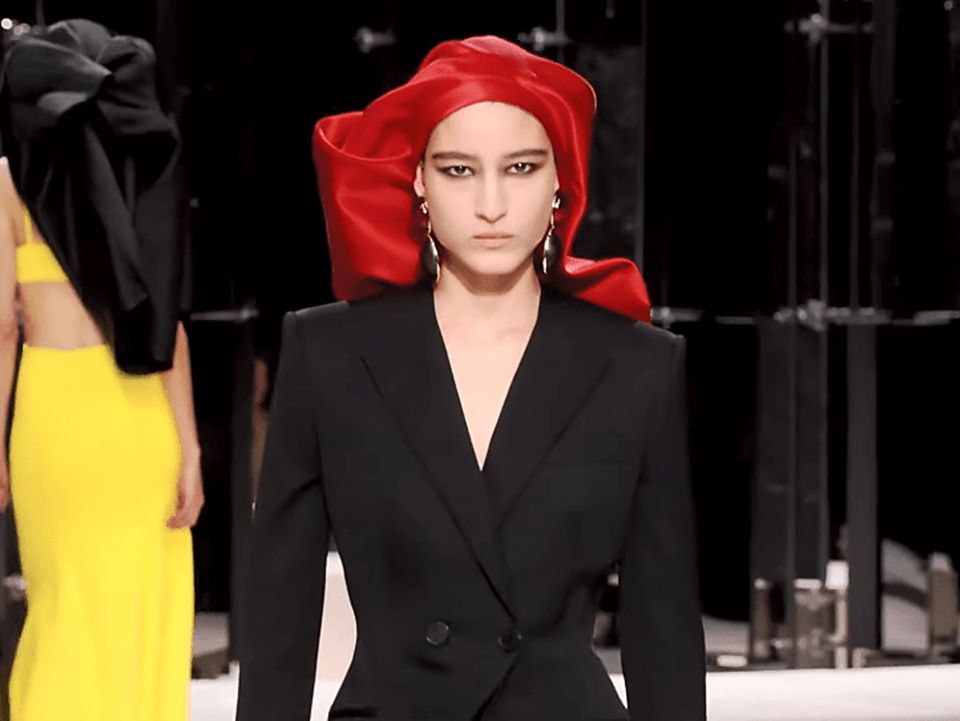
At Givenchy, Sarah Burton styled her models with a Stephen Jones-designed tubular headscarf, described by the milliner as “the most natural hair coverings there are. Just a T-shirt. Just a twist. But it’s the right T-shirt, with the right twist”. It could be nod to the Medieval wimple, but when the model with the red version of the tee-as-head-wrap appeared, the thing that came immediately to our mind was 红头巾 (hongtoujin) or red headscarf (for American tourists, they’re also called a “bandana”). These were worn by the icons of physical endurance and indomitable resilience, female labourers of the 19th to the mid-20th centuries, the 三水妇女 (sansui funu), commonly known in Singapore and Malaysia, where most of them were employed, as the Samsui woman. To be sure, Mr Jones’s “right twist” is not the same as those worn by these manual workers. His was missing the Samsui women’s distinctive shape, formed with a rigidly-starched red cotton and then folded into the squarish headpiece. Unlike Givenchy’s, there is nothing “natural” about that.
But, as the show was staged during the month of Ramadan, it is tempting to consider that Givenchy’s tubular scarf could be a nod to the hijab or Muslim women’s modesty traditions. There’s no evidence that Ms Burton explicitly framed the Givenchy headscarf as solidarity with Muslim women, but during a PFW season happening in the midst of war in the Middle East, the possibility would be welcome. In Iran, now battered, the headscarf is politically charged, both as a state-imposed requirement and as a site of resistance. It is heartening to read Burton’s headwraps as symbolic solidarity with women navigating that paradox. But, in France, the headscarf is contested in public life, often restricted in schools and workplaces. Showing it on Givenchy’s runway could be seen as quietly defying those bans, or, conversely, simply aestheticising a fraught symbol. Or, is this how we can “we put ourselves back together in the world we’re living in”, as Ms Burton declared in the somewhat airy show notes? What might the world she mentioned be that required a mad hatter moment? If the world is truly this fraught, Ms Burton’s responding with a twist of jersey is woefully inadequate or, worse, merely decorative.
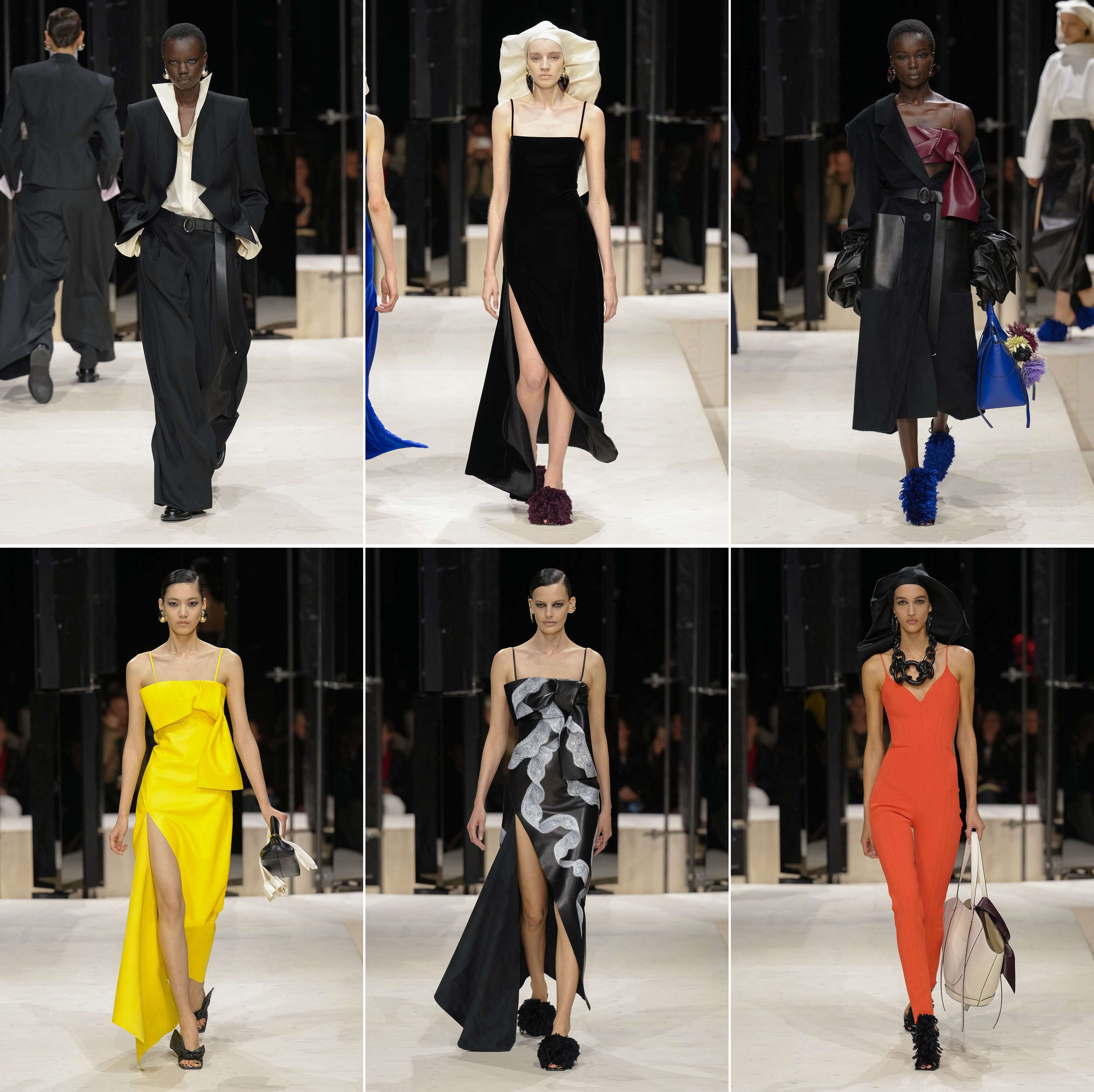
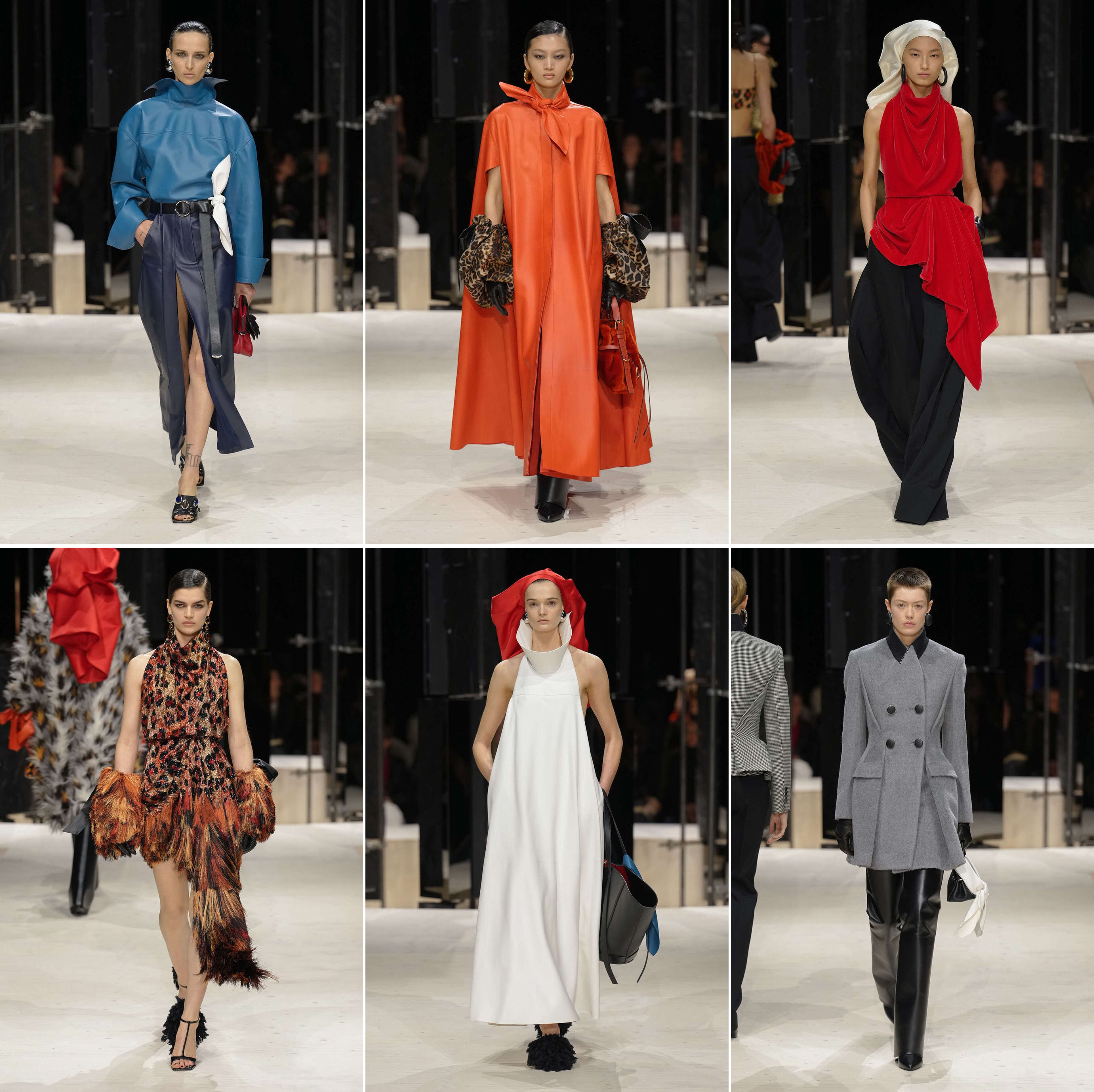
When the millinery has to do the heavy lifting, it usually suggests that the sum underneath has gone limp. If you have to send out enervated spaghetti-strapped dresses with a slash up the right leg to thrill the rump, unprepossessing coats that mumbled or tented halter-necked house-dresses that weep, you might need headwear that threatened swallow the head, whole. Ms Burton’s technical competence is undeniable: her tailoring is precise and her orchestration of fabrics, well, disciplined. But flair—the kind of clear voice that electrifies a house—hasn’t been her hallmark at Givenchy so far. Ms Burton’s problem isn’t her competence—it’s that she frames competence as flair through gendered empathy—“a woman designing for women”. This is a rhetorical crutch. It shields her from critique, but it doesn’t deliver the voltage of true innovation that turns fashion into a craving.
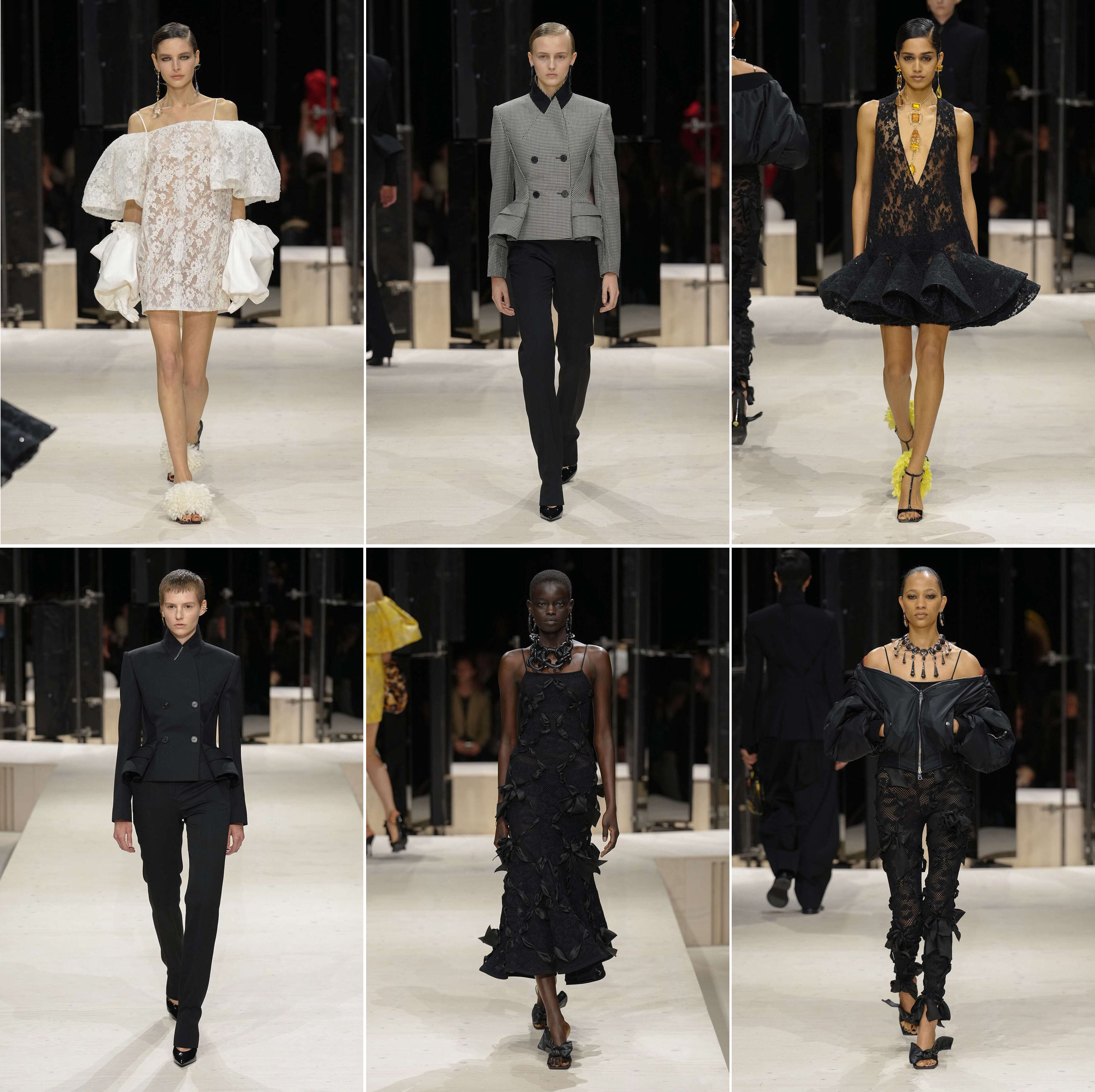
Curiously, she decided to make a chunk of the collection an homage to menswear. It looked to us to be corporate camouflage. If the tailoring were truly compelling, she wouldn’t have to hide behind this drag, complete with short, boyish hair. Instead of subverting masculine tailoring, as her previous boss Alexander McQueen did with womenswear, she reproduces it. Regrettably, it was discipline without disruption. Double-breasted suits, Spencer jackets, peplum blazers, and slim trousers were framed as resilience, but are white-collar uniforms trying to project empowerment. A collection that looked like strength but spoke like it really had nothing to say, the state of the world be damned. Menswear could have also been used ironically—mocking corporate uniformity, perhaps. Instead, Sarah Burton drained it of wit. This is not a critique of the office, it’s just that it was a bad day at the atelier.
Screen shop (top): givenchy/YouTube. Photos: Kendam
 Style on the Dot