Dolce and Gabbana had the misfortune to show their latest collection as the news of the death of the Supreme Leader of Iran appeared on news feeds throughout the show grounds, surprising no one, except that it was this soon. It was a predominantly black collection. A touch of clairvoyance?
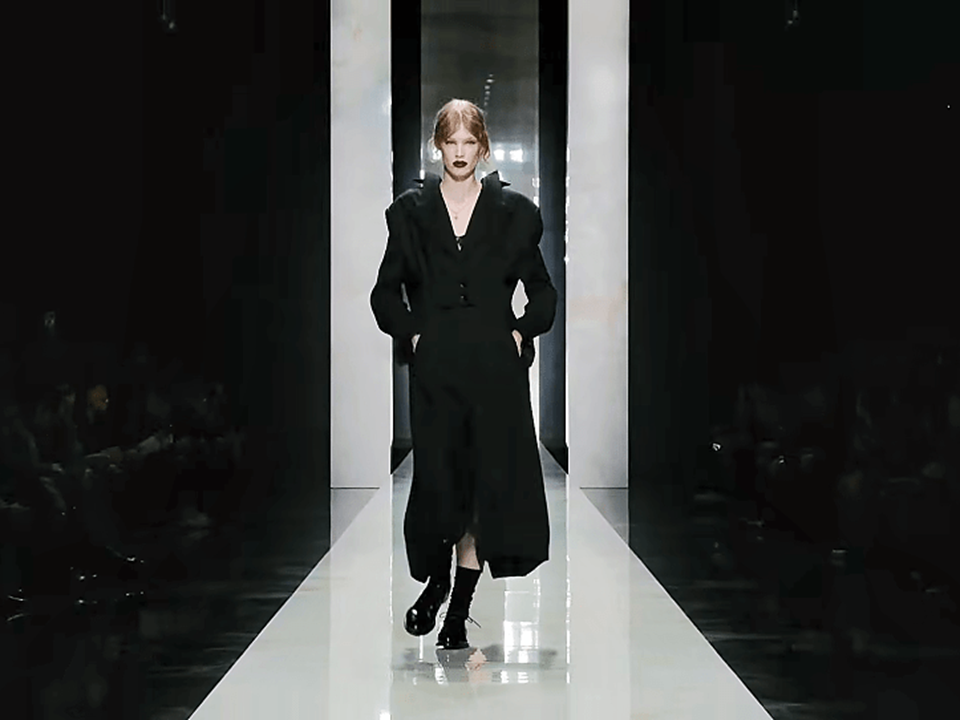
While editors and influencers in Milan were heading to the Dolce & Gabbana show, the news of the death of Iran’s Supreme Leader began scrolling on their phones. Just as the collection, heavy with mourning lace, was hitting the runway, the major confirmation came through—the ayatollah was murdered. America and Israel teamed up for major strikes on Iran on Saturday morning (Iran local time). As it has been announced across media headlines, “the war has begun”. On the front row of the D&G presentation, Madonna was in attendance, dressed in what was described as “liturgical” attire that hinted at bondage wear (except for her bright turquoise glove, the only thing in the room that wasn’t coded in mourning or war). She was seated next to Anna Wintour, who was in a black and white dress of micro-prints, over which a black blazer was draped. The seating was so low, the women looked like they were squatting. Both were dressed by Dolce & Gabbana, both wore very, very black sunglasses. You could not see if they were affected by the information emerging from the Middle East. Even if the news had pierced their Botoxed bubble—and between the 45-minute broadcast delay and the press room’s collective nervous digestion of the news of war, it surely had—their brand is built on a specific brand of high-gloss vacancy that no tragedy can dent.
There was a certain triumphal air to the event. Between the late-striding American star and the presence of the global editorial director of an American magazine, the fatal war felt like a distant, irrelevant noise. It certainly did not impact the presentation that, according to a voiced introduction, was about “identity”. Star-powered tardiness was a brilliant show of identity—the whole world waits for America, even while America is busy dropping bombs. And on the runway, the models performed a scripted affirmation of identity, scantily clad, as if OnlyFans stars have gathered to pay homage to lace in all its various dress forms, except actual clothes that can be worn outside the bedroom or away from performing for an audience in front of a screen. The sultry female voice-over described “identity” as the “ultimate luxury”, but in that space in Palazzo delle Scintille, a former sports hall, the real luxury was the ability to ignore the part of the world going up in flames. And the enjoyment of “tailoring as authority” while the only authority on display was America’s tenacious habit of meddling in the Middle East while its icons kept Milan waiting.
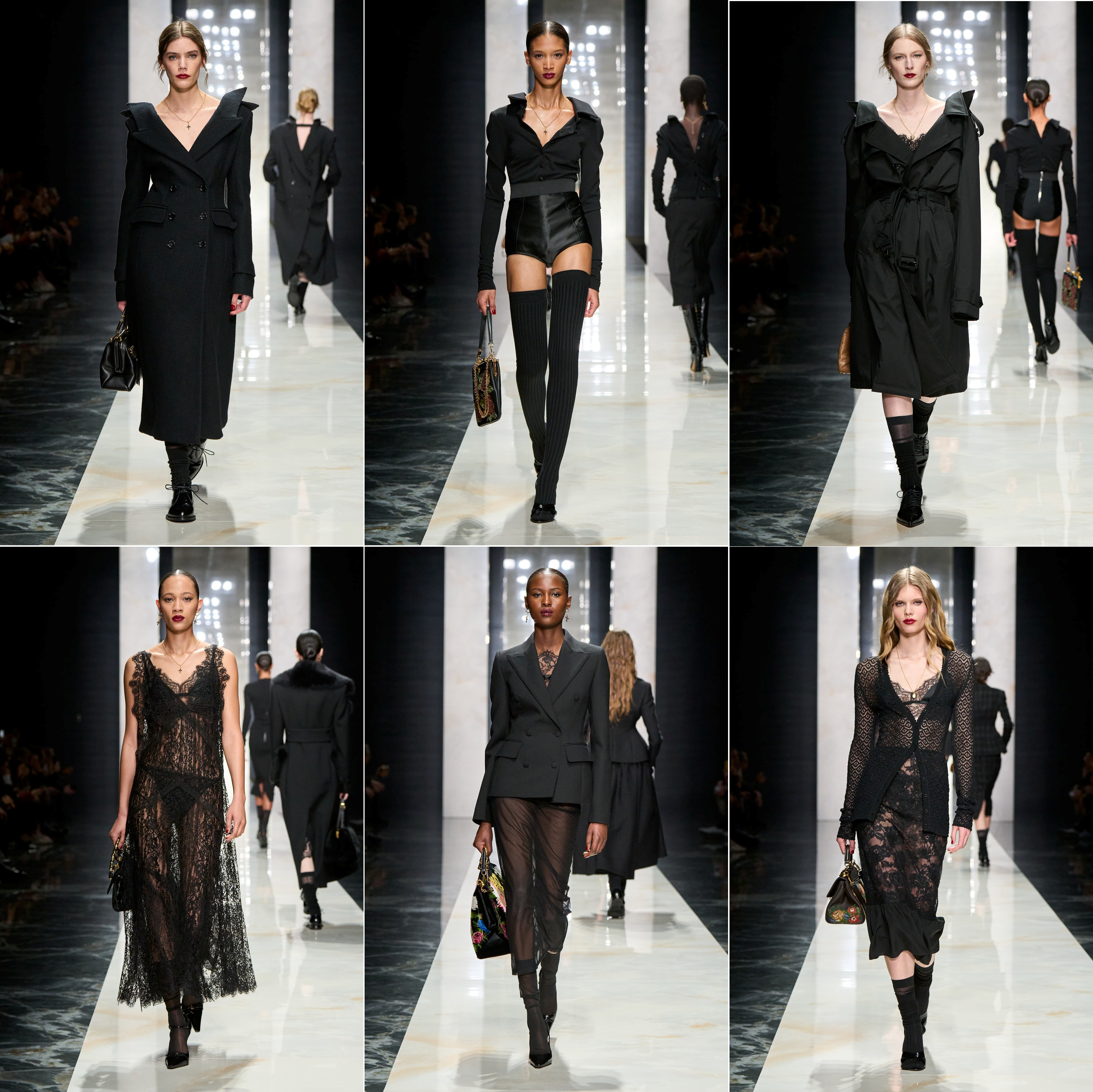
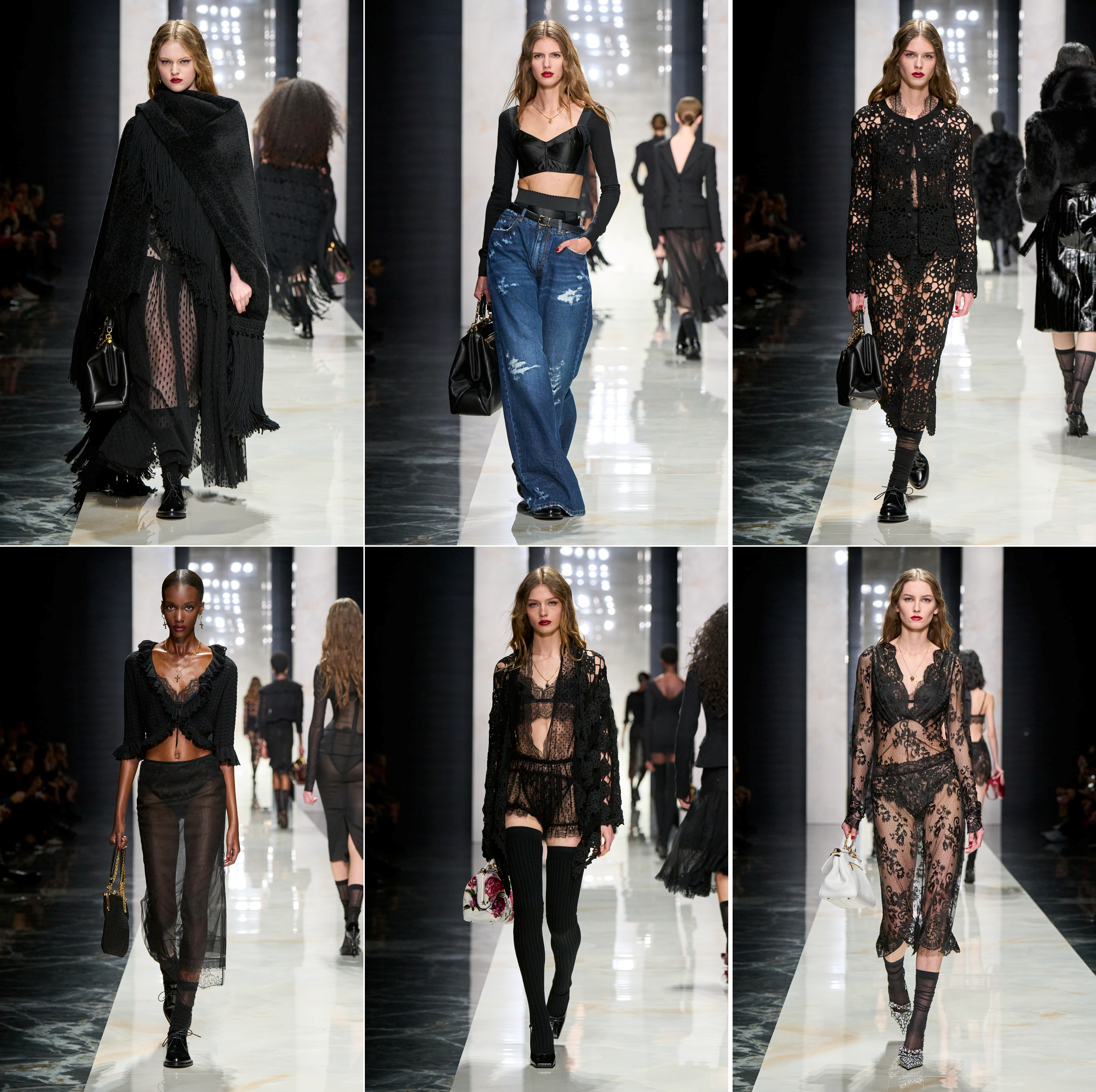
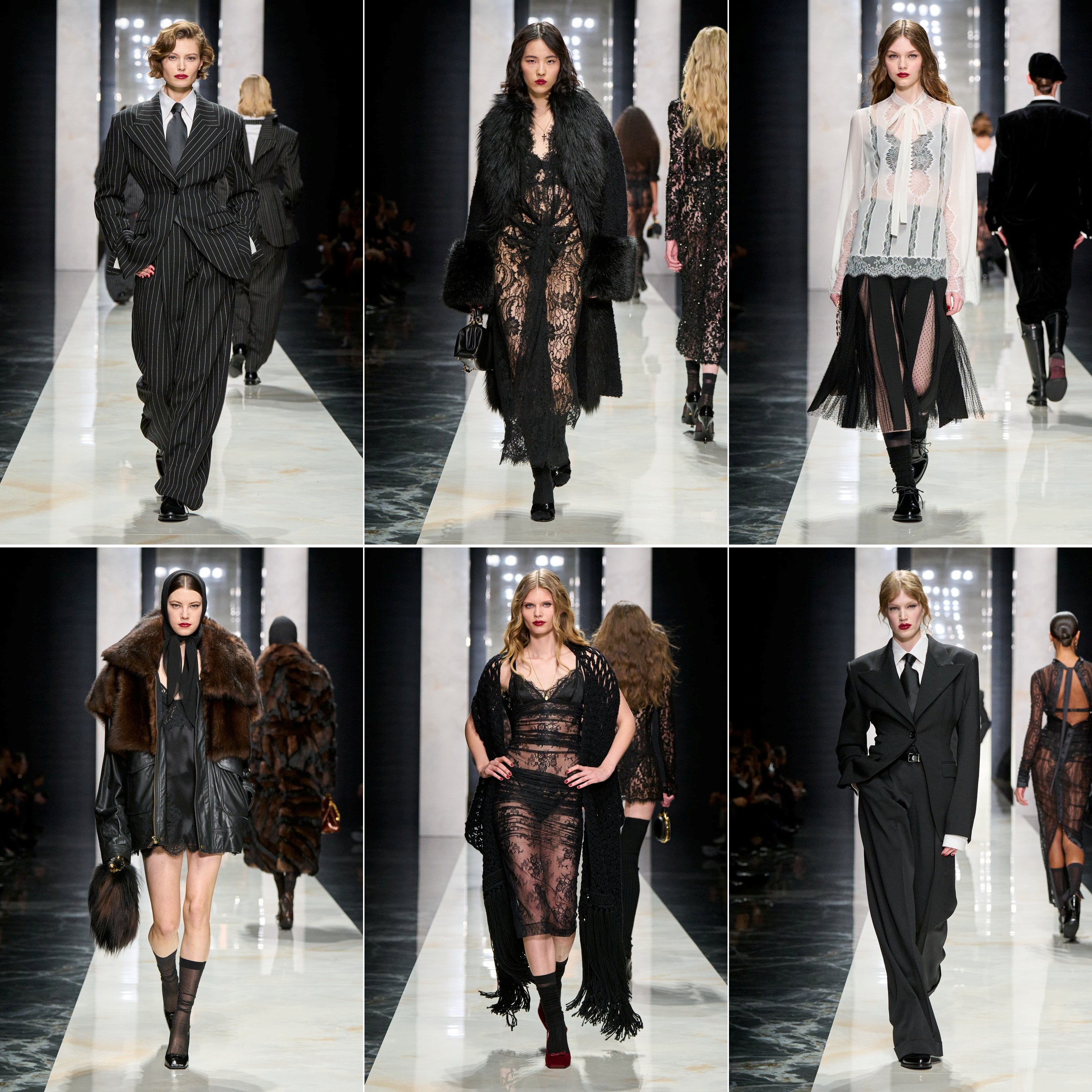
Domenico Dolce and Stefano Gabbana basically hit copy-paste on their greatest hits—pinstripes, lace, and those early 2000s distressed jeans with blazers or tiny tops—even when they were insistent that “this is not nostalgia”. It was, as we were expected to believe, collectively “Sicily as emotion, black as strength, lace as intimacy” and, as we mentioned earlier, “tailoring as authority”. The show opened with clothes that could really be worn to a funerale, more of the house’s theatrical Catholic mourning that turned grief into glamour. The widow became not just a costume, but a grotesque echo of real-world mourning. Insisting on stylised bereavement suddenly feels hollow, almost parodic, when contrasted with the immediacy of deaths from war. In Italy, the widow is an icon of dignity, but to D&G, she is a worshiped heroine. On one hand, she represents resilience and matriarchal strength; on the other, she reduces Sicilian culture to a theatrical cliché and, now, an on-going war to a minor inconvenience that luckily provided the perfect somber chiaroscuro lighting, as identified by the house, a Renaissance-style light setup, for her pleased profile.
Like with Fendi, there were transparent skirts galore, but to make sure the wearers did not look too obviously online entertainers, a blazer was sometimes worn to effect ineffectual modesty. Mostly, it was a happy, symmetrical use of lace, as if to convey theological concepts of divine order, strict balance, and the harmony of heaven. “Black as strength” was not necessarily strength of opacity. The lingerie logic of the show exposed how fashion can normalise near-nudity and fetishise mourning, even as the world outside burns. The sheer looks distract from the lack of new silhouettes or technical innovation. Lace slips and visible lingerie are easier to put together than reinventing tailoring. Dolce & Gabbana brought back the pin-striped suit, but now featuring a silhouette hulkier than when Madonna wore one by Jean-Paul Gaultier in the early ’90s. To paraphrase a famous fictional magazine editor: Pin-stripes and lace at Dolce & Gabbana. Genius.
 Style on the Dot