Burberry leaned into the famous British rain for their autumn/winter 2026. That can mean only one thing: the trenchcoat
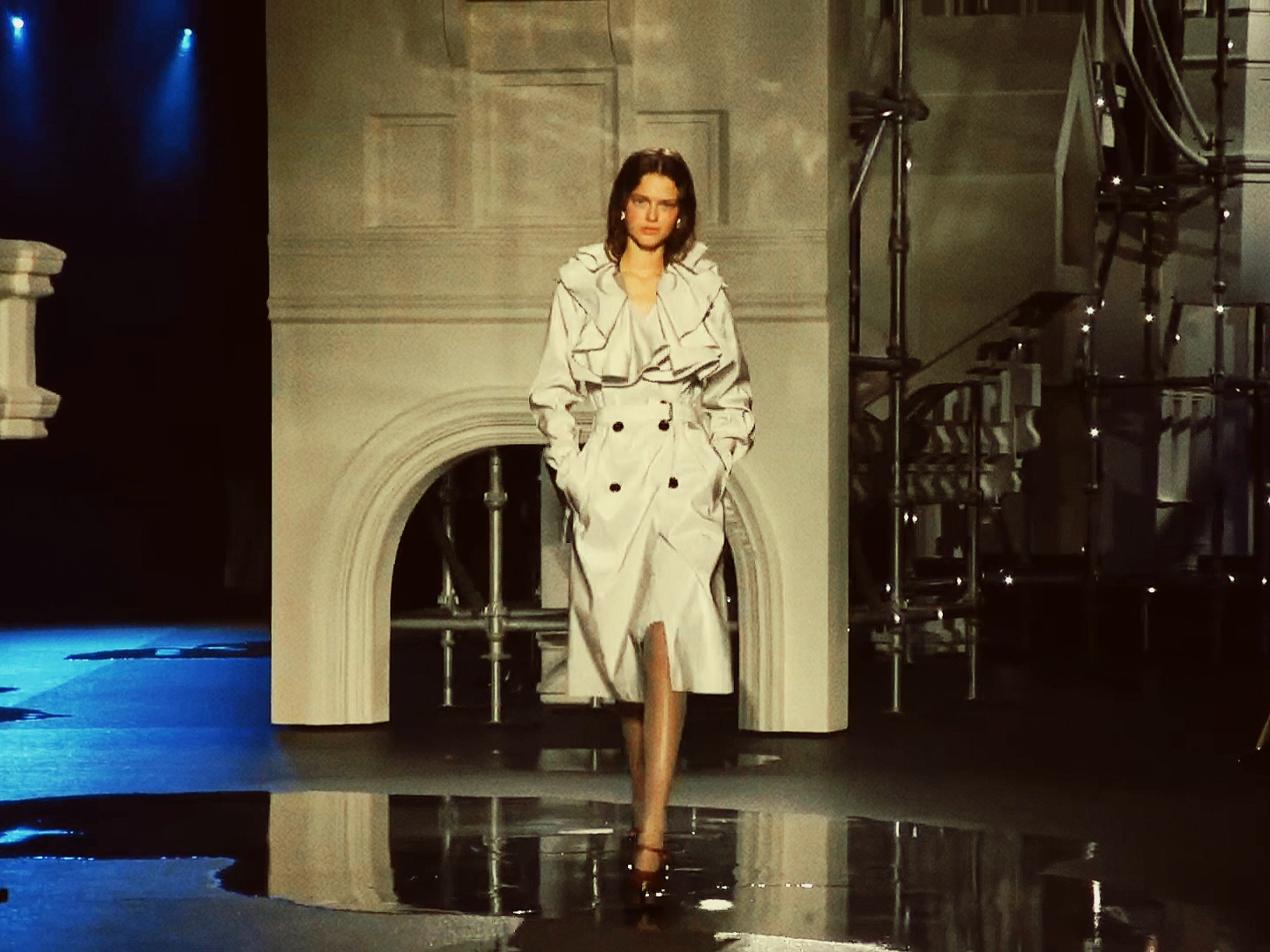
What would Miranda Priestly have said about using the weather for fall? Raincoats? For autumn? Revolutionary. Yes, you know her famous takedown line about bringing out the flowers in spring. Daniel Lee would have a hard time selling inevitability as innovation to her. Using weather as a theme for fall/winter is almost tautological. Miranda Priestly’s line reminds us that the true challenge is not acknowledging the season, but transcending it, making the familiar strange, or the practical sublime. To satisfy her, a designer must perform a kind of alchemy—taking something as mundane as a raincoat and making it feel like a revelation. To a small degree, Mr Lee did. And it was not just acknowledging the weather; he attempted to mythologise it.
The show tried to capture good ’ol London at its most unenticing: dark and wet, and a tad menacing. It was held at Old Billingsgate Market, a historic Victorian fish centre right on the Thames. The runway was a rain-slicked London street, with Tower Bridge in the middle, looking deliberately toy-like, as if assembled by an ex-Lego-employer with a 3-D printer, and a grudge. To be certain that you do not see, instead, clement weather, there were, on the runway, even puddles of water, made of resin. This was reportedly a tableau of the capital city before late clubbing hours, and night birds and diehard ravers are on their way to their favourite nightspots. But do they get themselves into the mood with FKA Twigs, as heard on the show’s languid soundtrack?
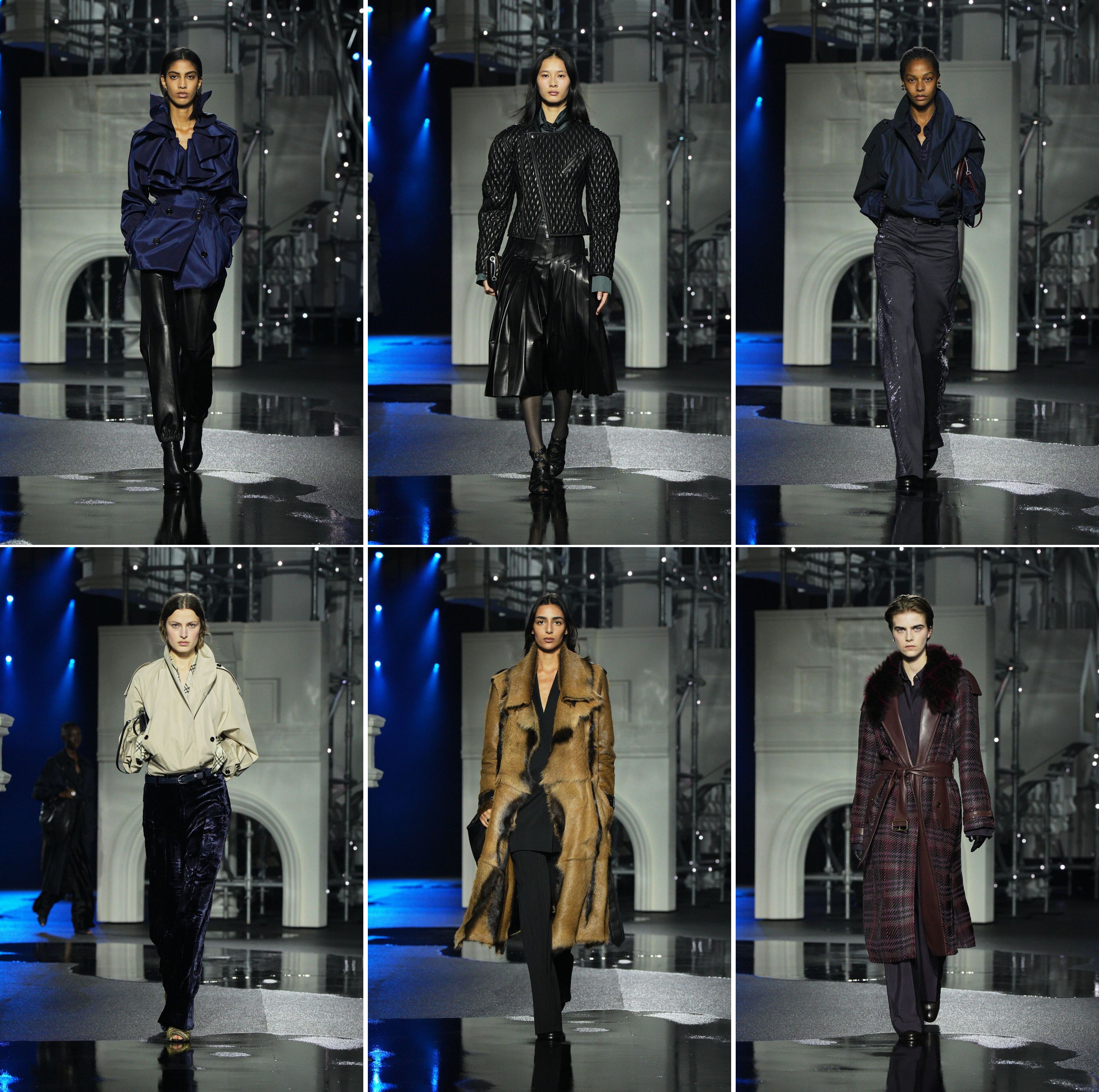
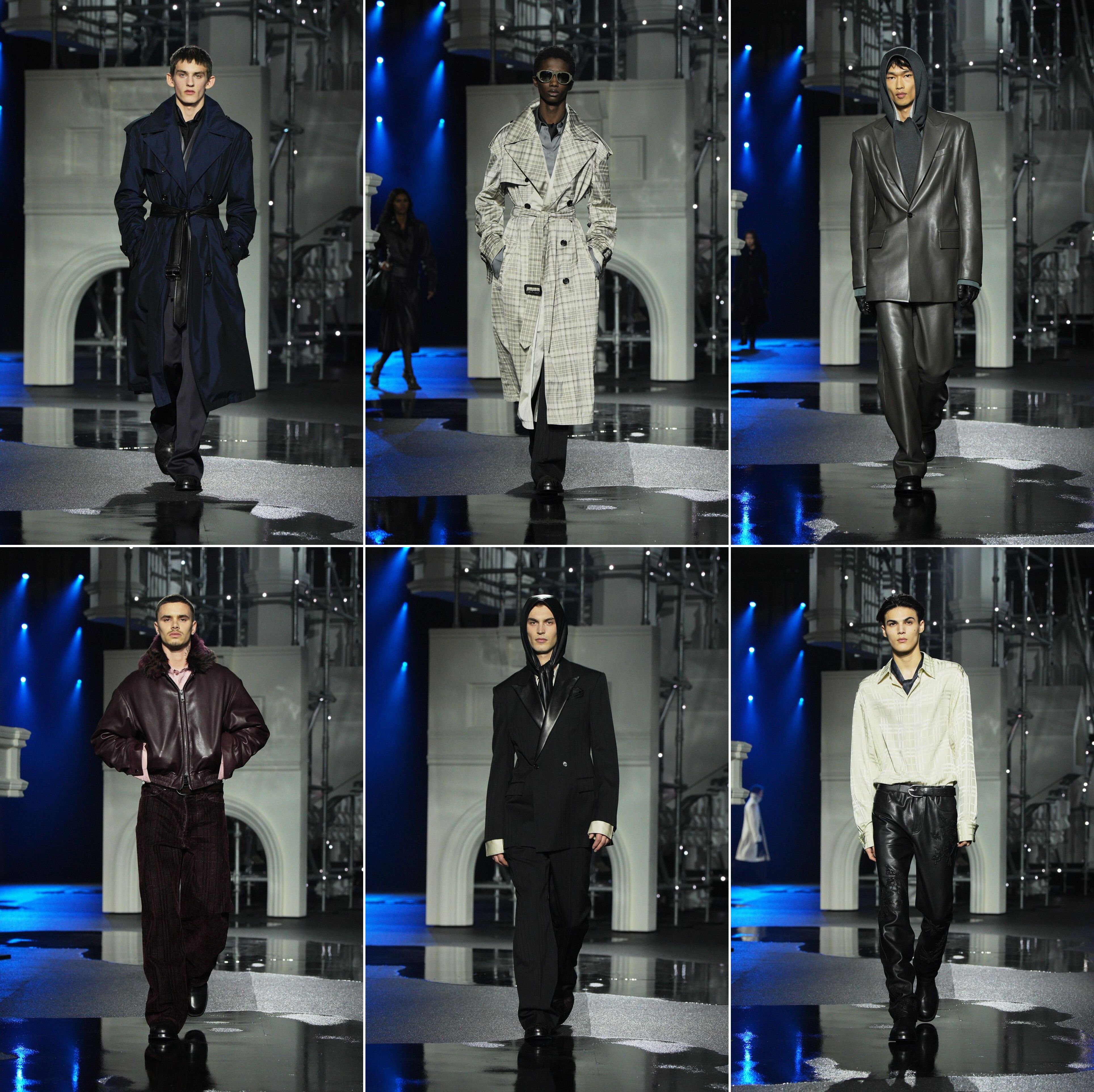
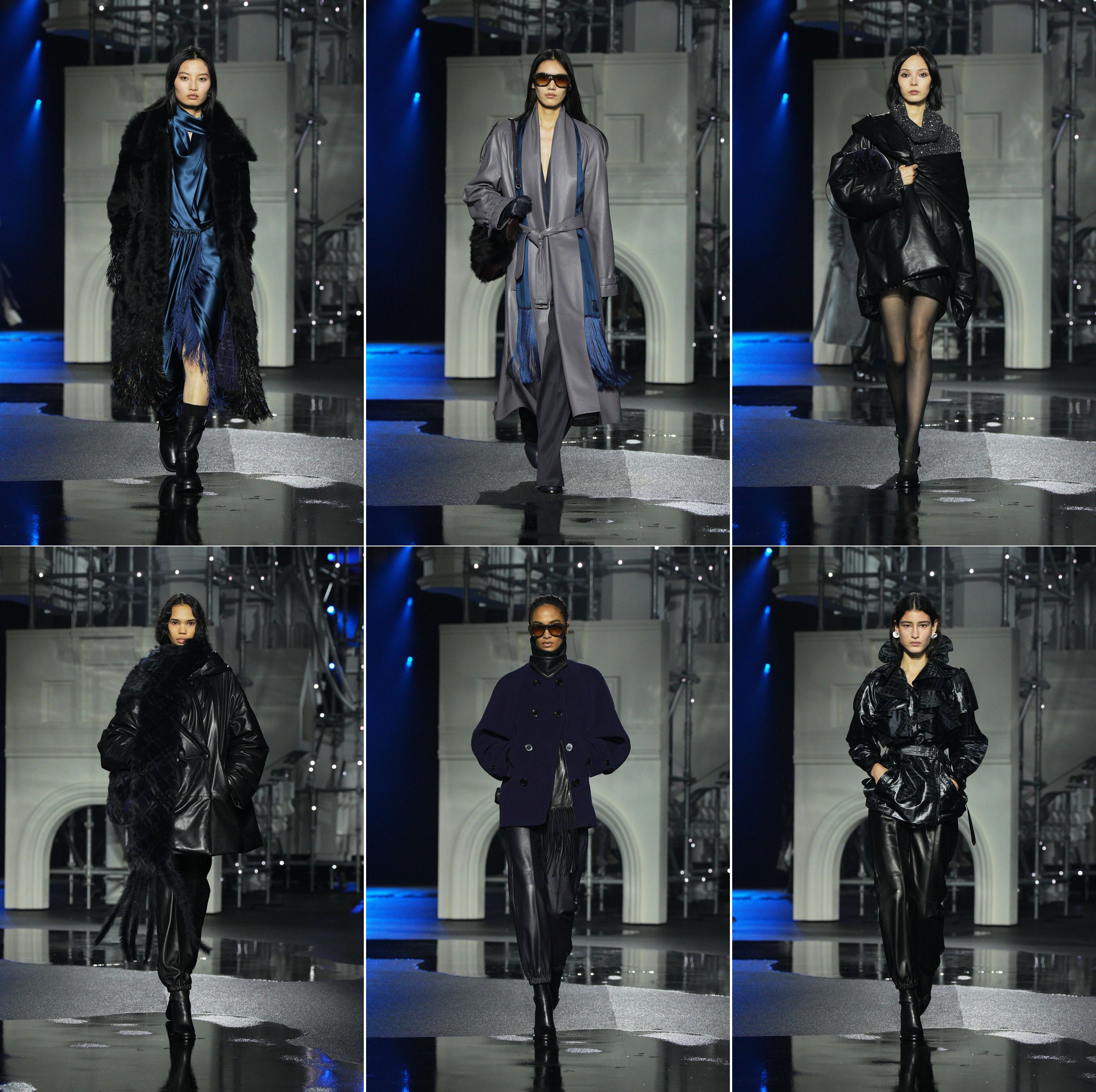
Was there the alchemy or was it the old standby: styling? Nearly all the looks came with outerwear. Unsurprisingly, the starring role went to the trenchcoat, the Burberry staple. But this time, there was an alchemic version. It came with a fetching ruffled collar, sort of a wilted platter of petals for the face. It was applied to full-length coats and shorter ones. Either way, they looked fresh, which was rather odd in the face of supposedly foul weather. With those coats, including one shearling beauty, you hardly got to see what was worn beneath (including beading mimicking rain—an idea that Nicolas Ghesquière had drizzled Louis Vuitton with), until they, presumably, ended in the cloak room. Surely, London night life isn’t mostly outdoor affairs. You caught sight of a petrol-blue dress gleaming with possibilities, but you also spied a check shirt and leather pants. And you immediately thought of the chavs Burberry once disapproved.
When almost every silhouette was topped with a trench or coat, the garment became uniform rather than transformative. The commercial logic showing through was consistent with Burberry’s new direction. Daniel Lee was not chasing couture-level alchemy; he was going after market share. Outerwear saturation makes sense if your goal is to sell coats, not to reinvent them. They have been the mainstay at Burberry and, presumably, they must always be. The trench was once Burberry’s sorcerous streetwear; its place in all collections couldn’t be downplayed, nor, for that matter, could the rest of the outerwear. Hail the most profitable icon! The thing is, the fake puddles were amusing, but they meant nothing if you could not make a splash.
Screen shot (top) burberry/YouTube. Photos: Burberry
 Style on the Dot