Matthieu Blazy’s sugar-coated fever dream
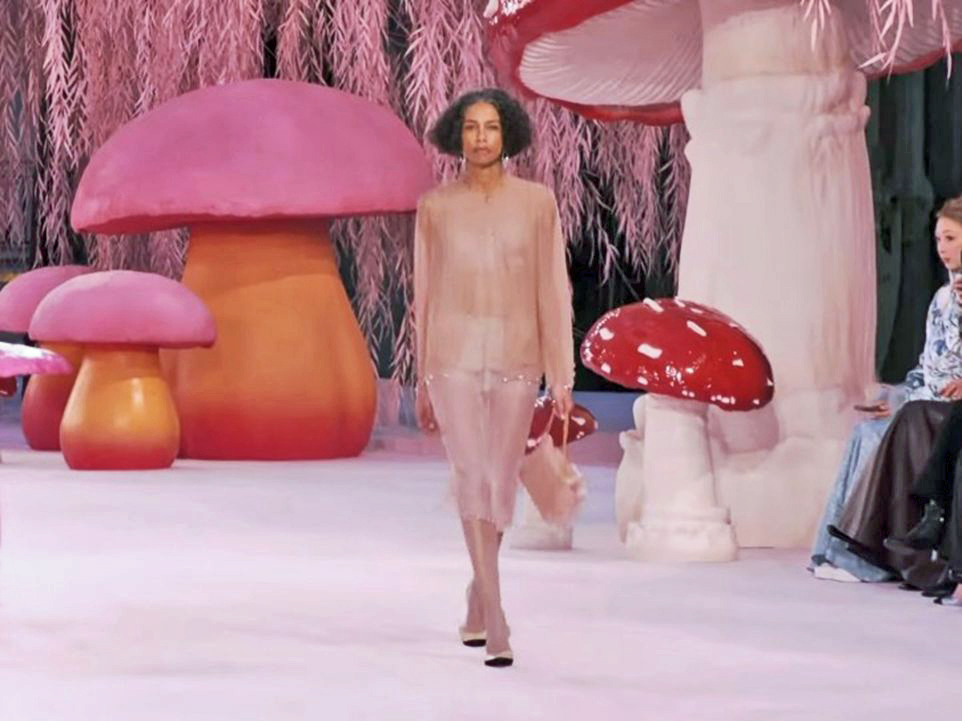
Who’d have thought Chanel would be inspired by the House of Mouse? But it was. Not, however, a squeaky-voiced rodent, but the human-friendly, always chirpy birds and squirrels that, for reasons unknown, love to flock to Disney princesses, such as Sleeping Beauty. In fact, before the spring/summer 2026 show, Chanel released online and on social media a filmlet that was reminiscent of what the late Virgil Abloh conceived for Louis Vuitton in 2010’s The Adventures of Zooom as preface to their Shanghai show. Chanel had those amiable creatures frolic in their couture atelier, playing with the fabrics and cutting tools. This was not the ‘cute’ usually associated with Chanel, although in the brand’s autumn/winter 2011–2012 advertising campaign, Karl Laferfeld did shoot Freja Beha Erichsen as avatar of Minnie Mouse, complete with camellia blooms on a knit balaclava as mouse ears. It was the opening track of the show that signalled how far Matthieu Blazy was willing to go with the adorable. He chose I Wonder from the Sleeping Beauty soundtrack of 1959, with the original saccharine shrill of the opera singer Mary Costa. Fine for a fairy tale; rather baffling for a couture show. Even two Joan Baez tracks later could not reverse the trajectory of no incline of the show.
Under the glass roof of the Grand Palais, Chanel built an enchanted woodland for Sleeping Beauty’s treble to pierce the cavernous space. Bandung-coloured weeping willows hung dramatically down like beards of very old trees. On the ground, “towering mushrooms” in shades of further pink sprouted as if the fungi were dusted with the excess Chanel blush after the models’ make-up was done. But the more beguiling mushrooms are, the more likely they are to be as poisonous as Disney’s most famous apple. Chanel is not alien to “towering” sets, especially during Mr Lagerfeld’s reign. But his, such as the rocket ship or the supermarket, were massive, felt like engineering marvels. Mr Blazy’s fungal explosion and deciduous drapes, by contrast, appeared more like the diorama of a theme ride. Evoking the cinema aurally and visually was rather odd since Coco Chanel herself hated Hollywood. Her relationship with the movie town was famously described as “clash of civilisations”. She was known to be unsentimental. She designed for the modern, active, slightly cynical woman. Hearing a Disney princess croon about “wondering” if her heart’s dream will come true is the antithesis of the Chanel woman, who was a doer, not a dreamer.
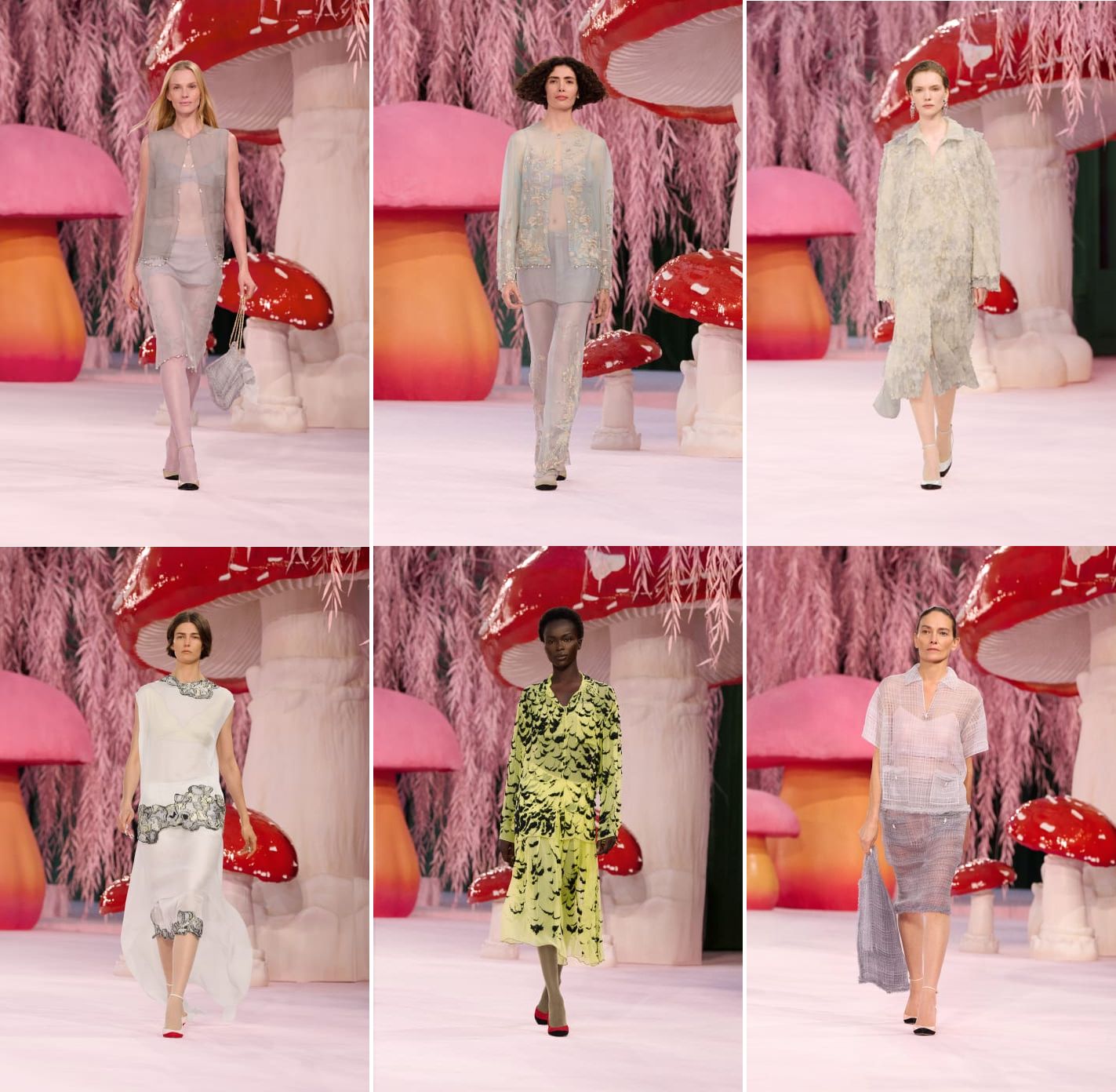
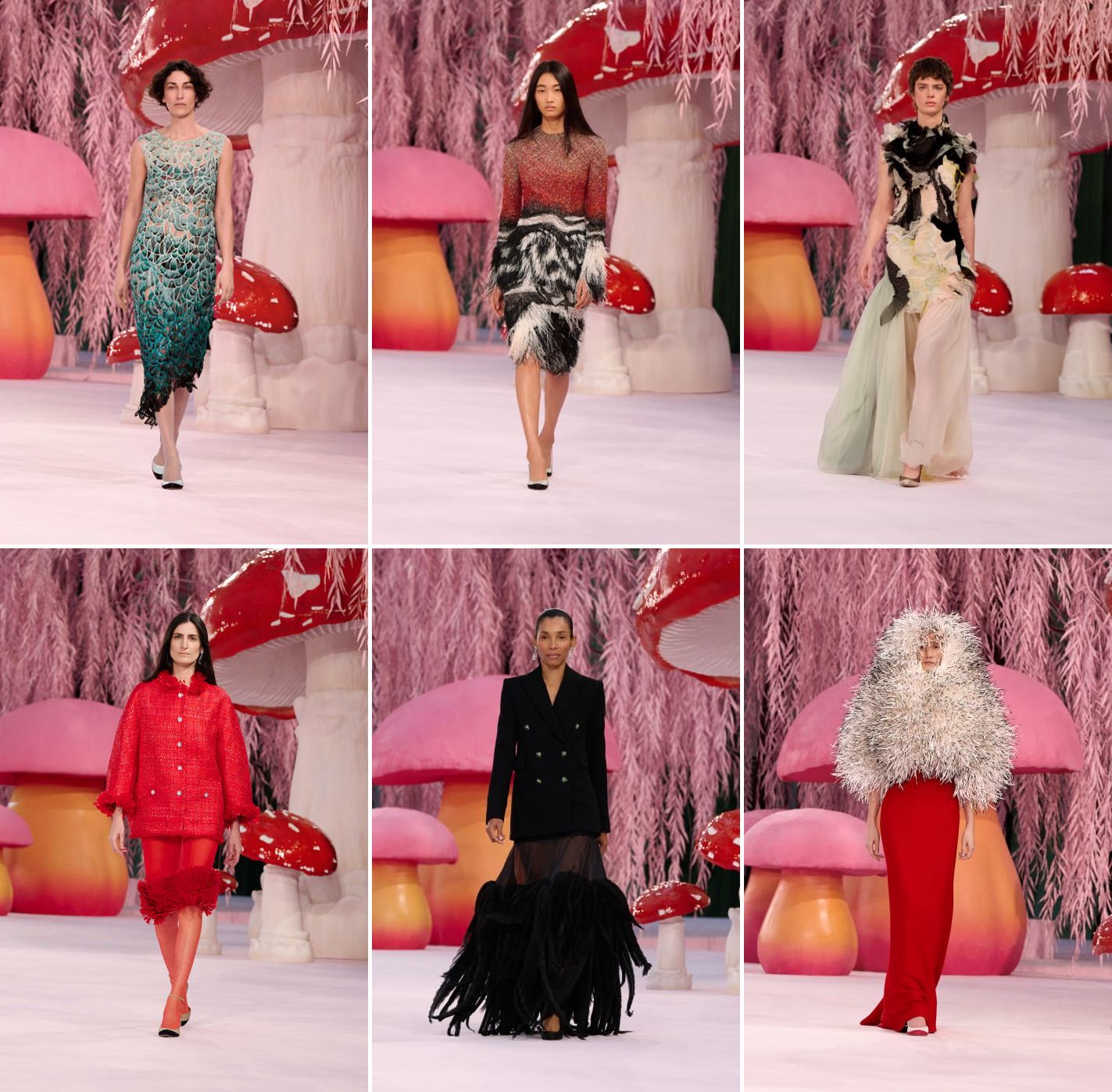
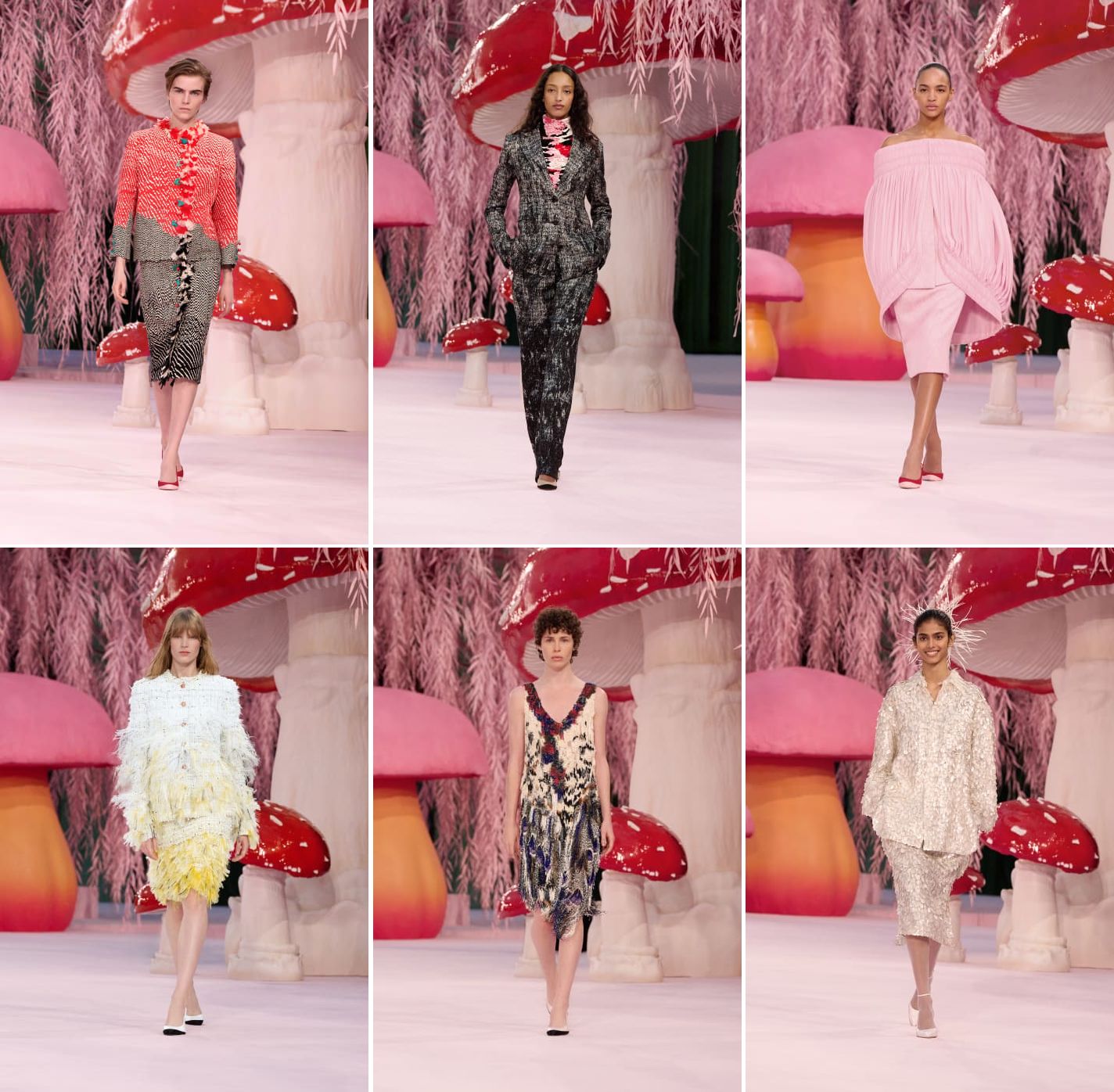
But the Chanel woman then is not the Chanel woman now. The opener signaled this shift—she finally stepped out from behind the bulk of the bouclé. Mr Blazy decided that the classic Chanel jacket, with which the house made its fortune, needed to shed its opacity. His skirt suit was a diaphanous shell, a wisp of the original garment, facilitating the show of underclothes. If bouclé coats could shed like geckos, this would be it. The suit is now a cast skin. Perhaps the Chanel woman of today does not need to invest in structure and timelessness, but would she desire something that seemed to be the result of molting? Who’s reminiscing about Mr Lagerfeld’s architectural rigour with a punk-rock pulse except the women who buy actually buy Chanel? Mr Blazy’s remake of the couture was so intense that it was basically the near-identical relaxing of the silhouettes seen in his fresh-at–the-start ready-to-wear. In many of the outfits, the generous proportions crossed the line from relaxed to dowdy. Curiously, of the 54 looks, less than five were conceived to impress (and they barely) at movie premiers and award nights. It’s a ballsy strategy to design a collection that gives the red carpet the cold shoulder.
If the first look was thin on vision, the final outfit was a logical conclusion: it came in the form of glorified loungewear—sequinned sloth, shimmying and untucked, radiating the high-octane energy of a parent-teacher meeting. In place of the traditional mariée, the high-drama couture bride that serves as the house’s triumphant final word, Mr Blazy chose muted impact. It is a profound downer as one kept wondering if women truly want to look this relaxed in Chanel if they aren’t actually heading to bed. There is a surfeit of insistence that these clothes are exquisitely “crafted”, but massive is the gap between technical skill and brand spirit. Chanel isn’t just a craft house; it’s an attitude. By pairing a Disney soundtrack with giant pink mushrooms, Aurora and her cohorts made it to the atelier. It felt jarringly juvenile for a brand built on the grit and sharp wit of Coco Chanel. In trying to find the “wonder” in the house, Matthieu Blazy seems to have forgotten that the Chanel woman doesn’t need a fairytale of somnolence—she is far too busy to waste time sleeping through it.
Screen shot (top): chanel/YouTube. Photos: Chanel
 Style on the Dot