When a creative director has to be a viral officer too, couture has to be designed to the hilt. Jonathan Anderson’s Dior debut is throwing everything at the collection except the kitchen sink. This was the “laboratories of ideas” as nursery of content
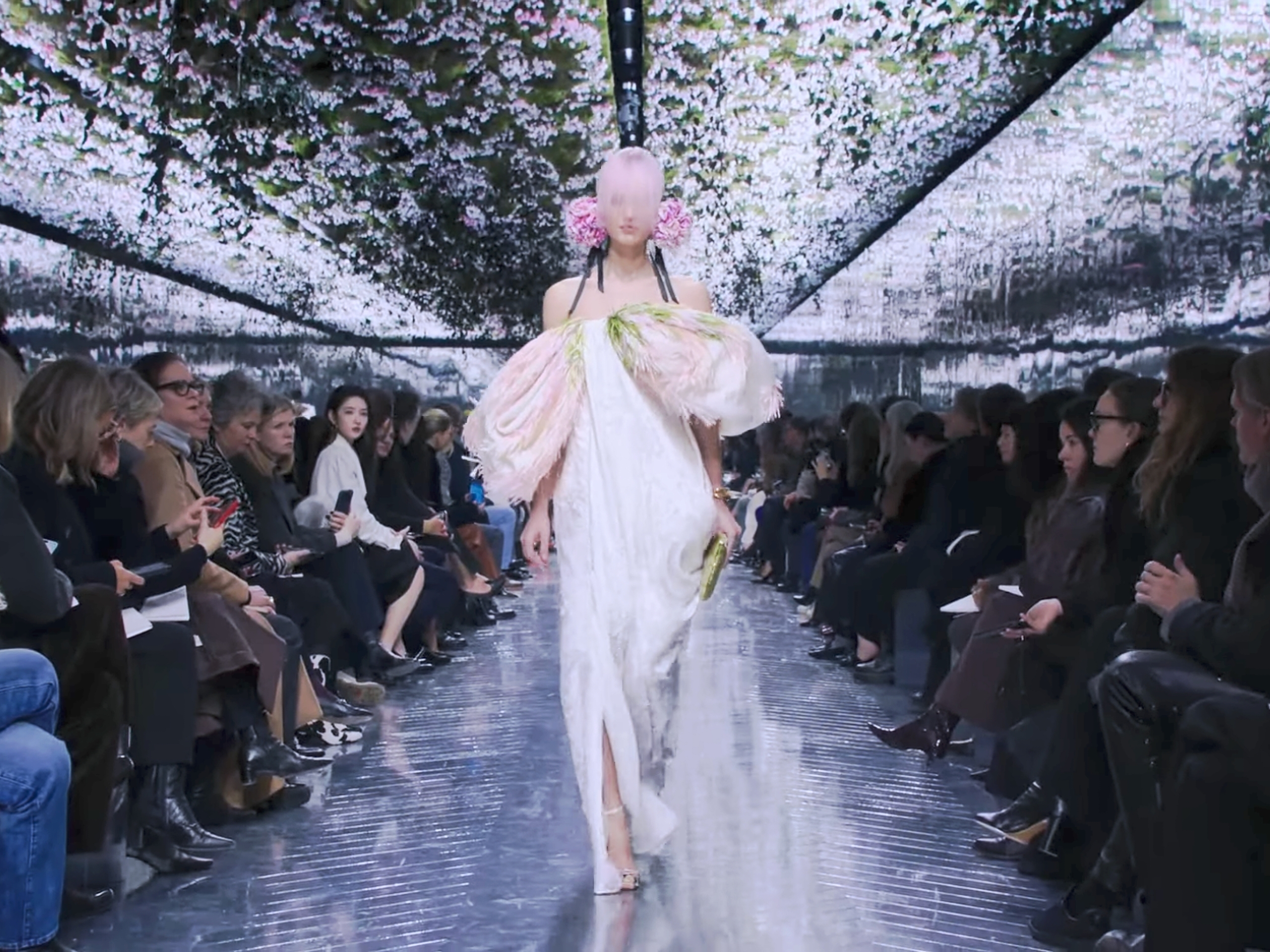
Jonathan Anderson had to share the spotlight at his own Dior debut, thanks to Rihanna who arrived with her show-stalling tardiness and a rare front-row sighting of John Galliano. The now maison-less designer, considered one of the most important living couturiers, was once the bane of Dior. His presence was major news as it marked the first time he has returned to the house since his dismissal in 2011, when his tenure as creative director ended abruptly after a shocking scandal (LVMH still owns his namesake brand). There was talk in 2024 that he might return to Dior after he did not extend his contract with OTB for his tenure at Maison Margiela. Although he did not go back as an employee, he did now revisit as an oracle. For over a decade, Galliano was persona non grata at Dior, despite being the architect of some of the most legendary couture shows in modern fashion history. And then, he sat front row with the Arnaults. Was all forgiven?
Dior inviting him back was institutional memory and the politics of legacy. It did also appear to signal a reconciliation of sorts, even suggesting that the world’s largest luxury conglomerate publicly acknowledged that his legacy is central to Dior’s modern identity, rather than a chapter to be negated. With Mr Galliano gracing the presentation, Mr Anderson did what neither the regrettably short-termed Raf Simons nor the dogged Maria Grazia Chiuri before him could (or would) do: he embraced the theatrical era of Dior. Its attendant swagger too. As such, he was probably signaling that he was not fearful of Galliano’s tenacious ghost. Rather, he was actually using it to haunt the collection in a way that feels forward again. Mr Anderson’s debut was already a high-stakes moment. Mr Galliano’s attendance amplified the spectacle, placing the current CD’s work in direct dialogue with Dior’s most influentially period of the showman. For Dior to move on after the lull of Ms Chiuri’s tenure, the house has to stop regretting its most flamboyant decade.
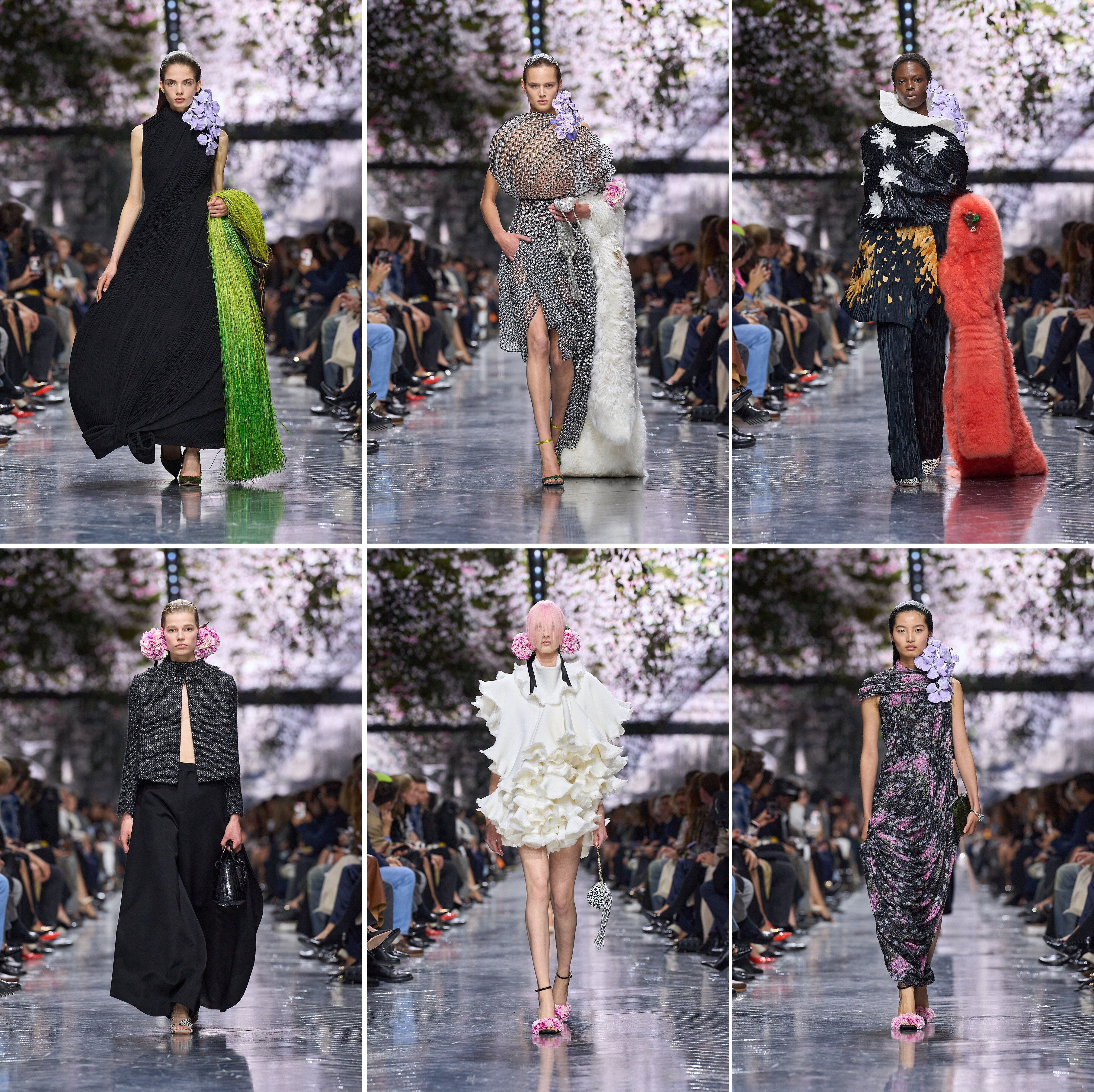
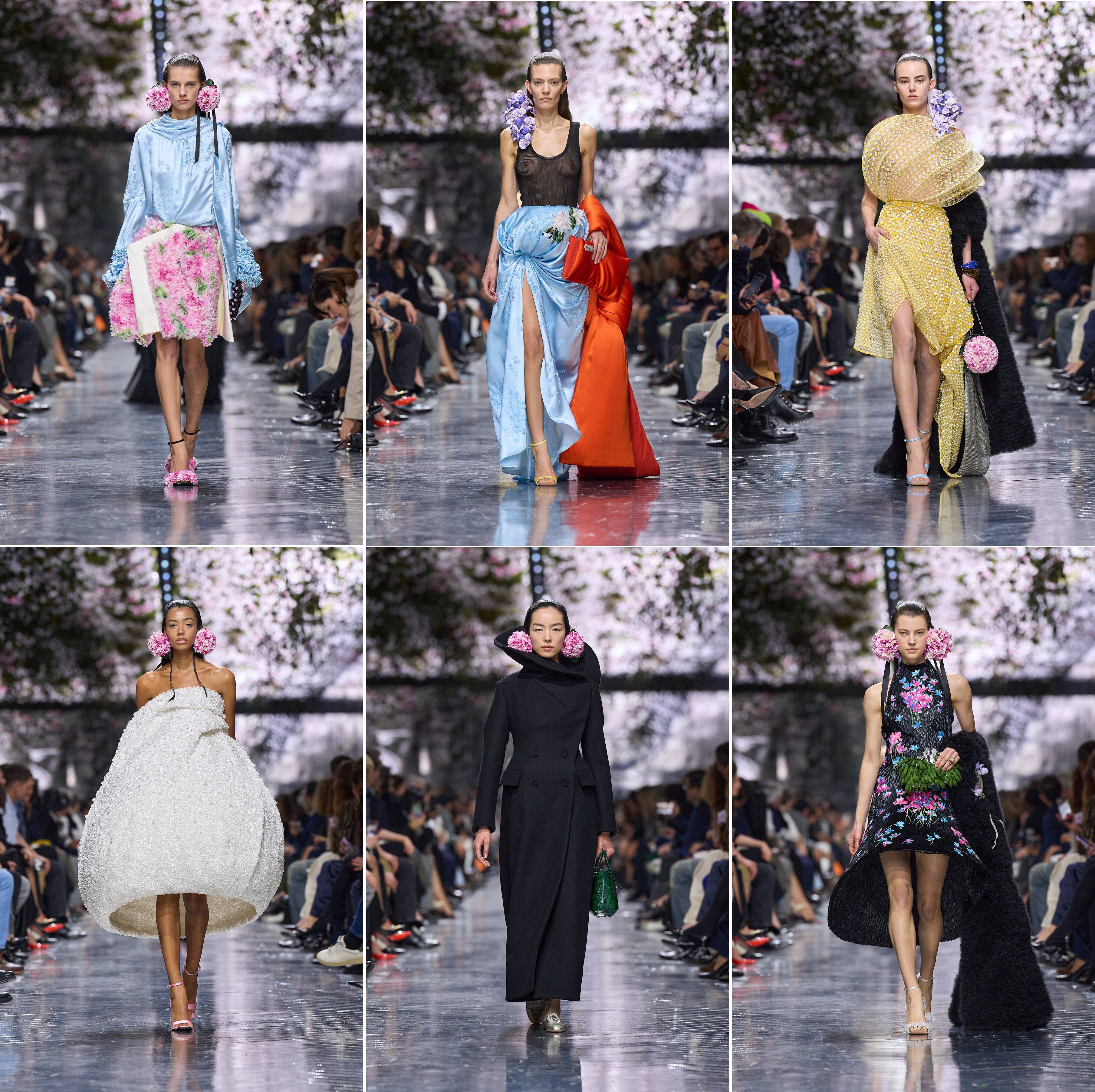
Mr Anderson revealed to the media that Mr Galliano had, in fact, visited him at the atelier towards the end of last year. During that call, he gifted Mr Anderson two posies of cyclamens from the elder designer’s own garden. The blooms wilted three days later. Unwilling to let the floral gift become a mere memory, he asked the atelier to produce the flowers artificially to keep it on his mental mood board. He told Suzy Menkes: “It was a gift from John that I then gift to everyone else.” Cyclamens are delicate flowers, often symbolising sincerity, tenderness, and emotional connection. They became key to the botanically-biased collection from the start. It even hung luxuriantly from the ceiling of the Musée Rodin, the only decoration of the show. Garden-powered ideas are not new to Mr Anderson, as seen in his Loewe years, but this time, there was a question of seasonal dysfunction. Couture traditionally mirrors seasonal cycles. The cyclamen ceiling for a show staged during winter is not an oddity, but a spring/summer collection that is decorated with these flowers seemed like wearing a parka to the beach: daring, slightly confused, making the rules look optional.
If the ceiling was an upside-down cyclamen farm, the runway was a parade of botanical oddities. It was not just switching things up. We sensed an anthology of ‘why not’. Dior’s media release describing the collection was littered with unexpected cliches: “a laboratory of ideas”, “time-honoured techniques”, “old welcomes the new”, “grammar of form”, and the most hackneyed of all, “cabinet of wonders”, a rehash of cabinet of curiosities, from the German wunderkammer (or chamber of wonders). When a term becomes a marketing buzzword, it loses its intellectual teeth. Mr Anderson may wish to suggest that he shared the organised chaos of a 17th-century polymath, but using the historical reference was glamorising not quite a judicious use of the resources available to him. The words did the heavy lifting because the clothes did not? Sadly, we were not invited to wonder.
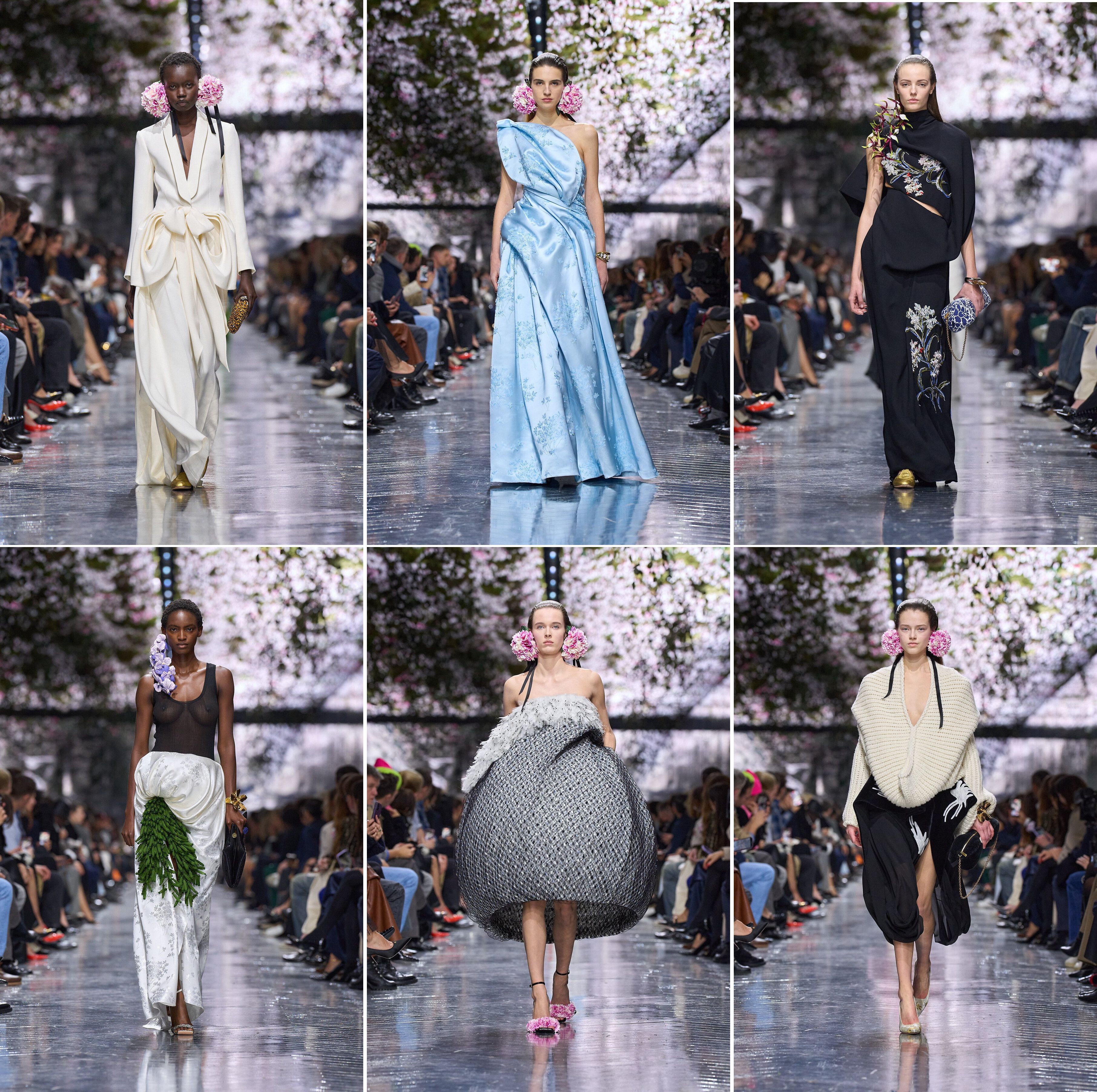
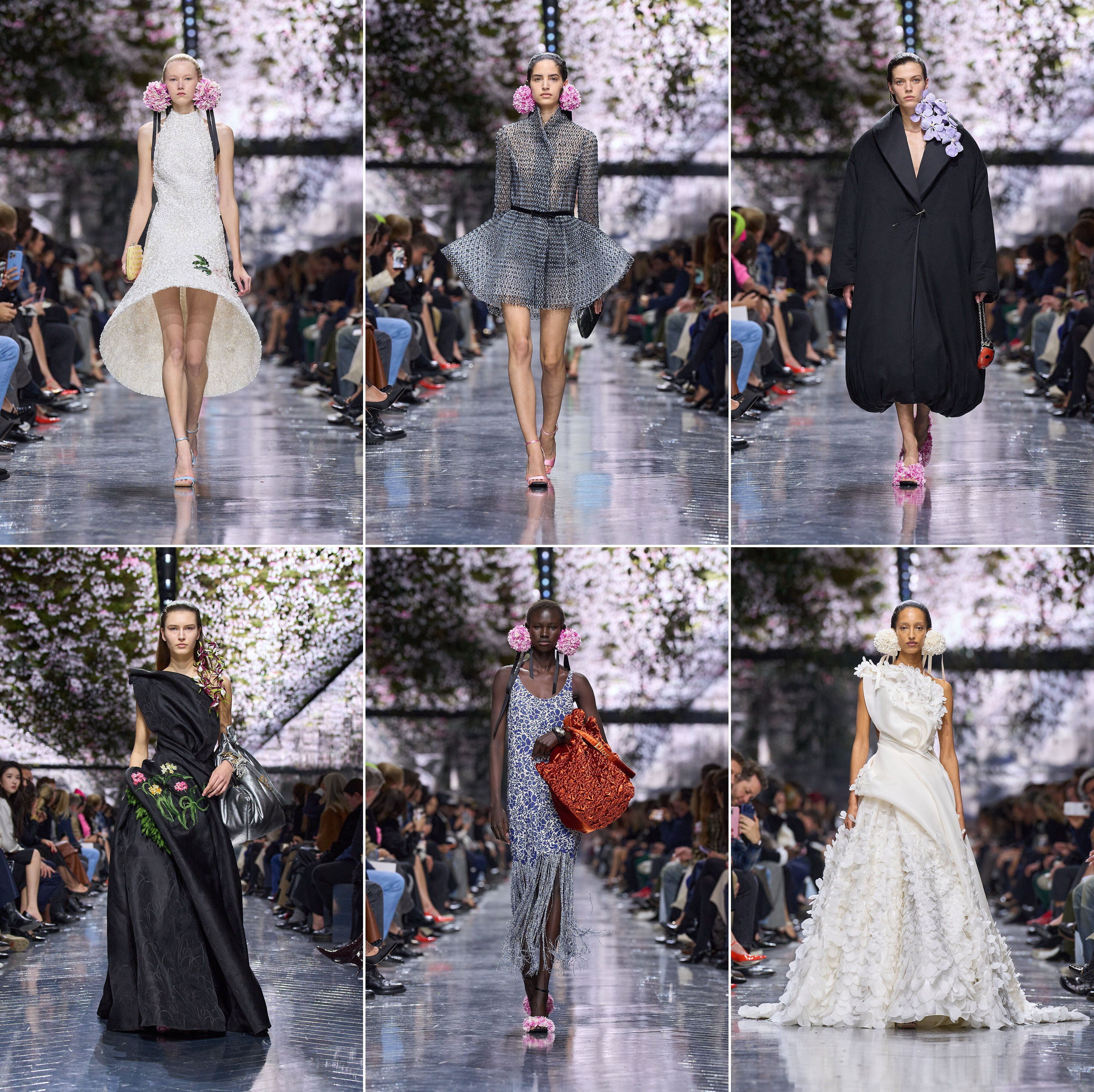
The show started promising enough—three gowns with hobble skirts in the shape of water-filled balloons, a bow, off-centre, on the hem. These were inspired by the ceramics of Kenyan-born British studio potter Magdalene Odundo, and delighted those for whom couture is volume. But as others emerged, we saw a miscellany of silhouettes, from the lean to the curvilinear. Mr Anderson wanted you to know that no shape was a challenge to him, but just because a shape can be rendered does not mean it should be inflicted. He also needed to impress upon us that he can drape and pleat, even asymmetrically, but capability is not finesse, and his insistence on doing everything for his first show has resulted in garments that looked like they were actively trying to escape their own seams. A bustier top looked towel-wrapped in a haste, a pair of elongated off-shoulder puffed sleeves could be a pair of discarded lungs that had long since given up on the prospect of glamour. Some of the styling did not even look Dior. There was a cropped tuxedo jacket worn with a (scaly) skirt over slacks that could have come from the archive of Armani Privé. Or a fully embroidered halter dress with the 前短后长 (qianduan houchang or front short back long) skirt that looked like it decamped from Guo Pei’s Rose Studio. This isn’t Dior; it’s a mood board in search of a maison.
Coiled, curled, and curved, the collection was curiously cumbered with capricious cordage and such. One odd waist-wide appendage that could be mistaken for a fabric 包子 (baozi or steamed bun) sprouted strands of what was similar to cocktail avocados (they could be kangaroo paw). Was this testing how much aesthetical absurdity the front row could witness before someone finally dared to laugh? Sure, it was a wink at the weirdness of his Loewe days, but have we not already left the port? And what’s with the strange gait of the models—something wrong with the shoes? Or was it inspired by the Maison Margiela models trained by Pat Boguslawski for Mr Galliano’s final Maison Margiela Artisanal show? One could argue that Jonathan Anderson used John Galliano as a shield. If you were going to present marsupial bumps for the not-expecting, having the master of beautifully weird couture sitting there made it much harder for critics to dismiss the collection as unconvincing. It reframed the off-kilter as avant-garde lineage. But if Galliano’s theatre was born of a mad, bias-cut romance, Anderson’s was a laboratory of clickable curiosities. There was no New Look, just New Hooks. In his quest to make Dior sing for the algorithm, Mr Anderson might have accidentally muted the woman likely to wear the clothes. We were left with a museum of ideas where the only thing missing was a pulse, and a pair of shoes that you can actually walk in.
Screen shot (top): dior/YouTube. Photos: Dior
 Style on the Dot