The centerpiece of the Louis Vuitton presentation is a glass house; a transparent attempt to hide the fact that the clothes have, stunningly, nothing to say
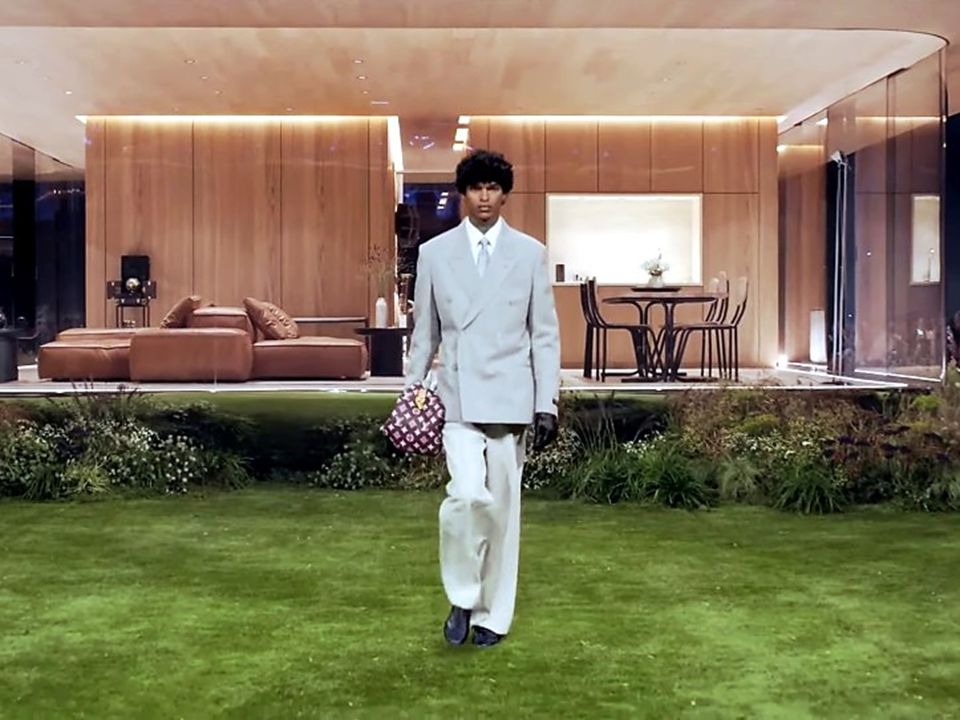
At the Louis Vuitton autumn/winter 2026 show, the main attraction was a functional glass house sitting in the middle of the show space of the Fondation Louis Vuitton, complete with a grass lawn. Called Drophaus, it was conceived by the brand’s creative director, Pharrell Williams, and designed in collaboration with the Japanese architecture and design firm Not a Hotel, led by architect Shinji Hamauzu. Drophaus, despite its name, is aesthetically Japandi, as if the Muji House has gone upmarket. At the start of the show, three models appeared, dressed in varying degrees of ‘formality’, and entered the usable house (unclear if the plumbing is functional), and proceeded to use the space as they pleased, even when they navigated the space without the familiarity of ownership. This was a show-off habitat because if Louis Vuitton can take over Pont Neuf to stage a show, it can build a house in its parent’s property as it pleases. As architectural ambition, it was a massive flex.
The totally exposed interior of the Drophaus isn’t about domestic privacy; it’s about the performance of living. It was the Big Brother approach to life made observable, and, like the reality game show, involved more than one occupant. Everything in the house seemed bespoke and designed to be the centre of attention. It’s the ultimate main character architecture. Drophaus hinted at the Zen and the pure—as some have suggested—but the high-energy worship music enveloping the compound house and accompanying the show was ebullient and inexhaustible, exalting “Jesus is the One”. Gospel choirs carry a deep emotional resonance. By staging one, LV borrowed the spiritual intensity of religion to elevate its brand narrative. Think Kanye West and his travelling Sunday Service (it has appeared in Paris too). But if we insist on the separation of church and state, why do we tolerate the union of church and couture? LV is proving not just wealth, but spiritual authority: positioning itself as a cultural church. The question is whether consumers want their fashion houses to play priest.
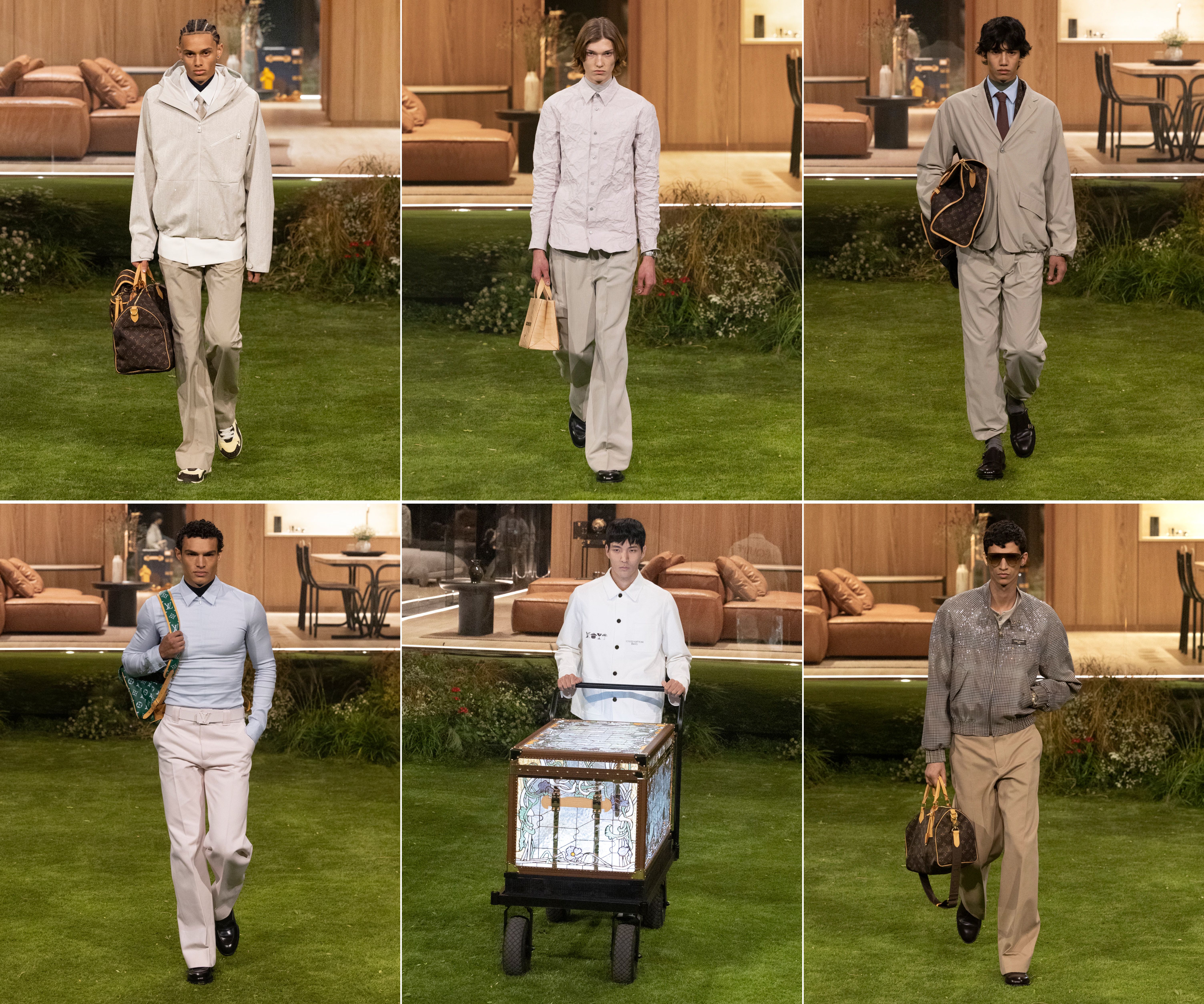
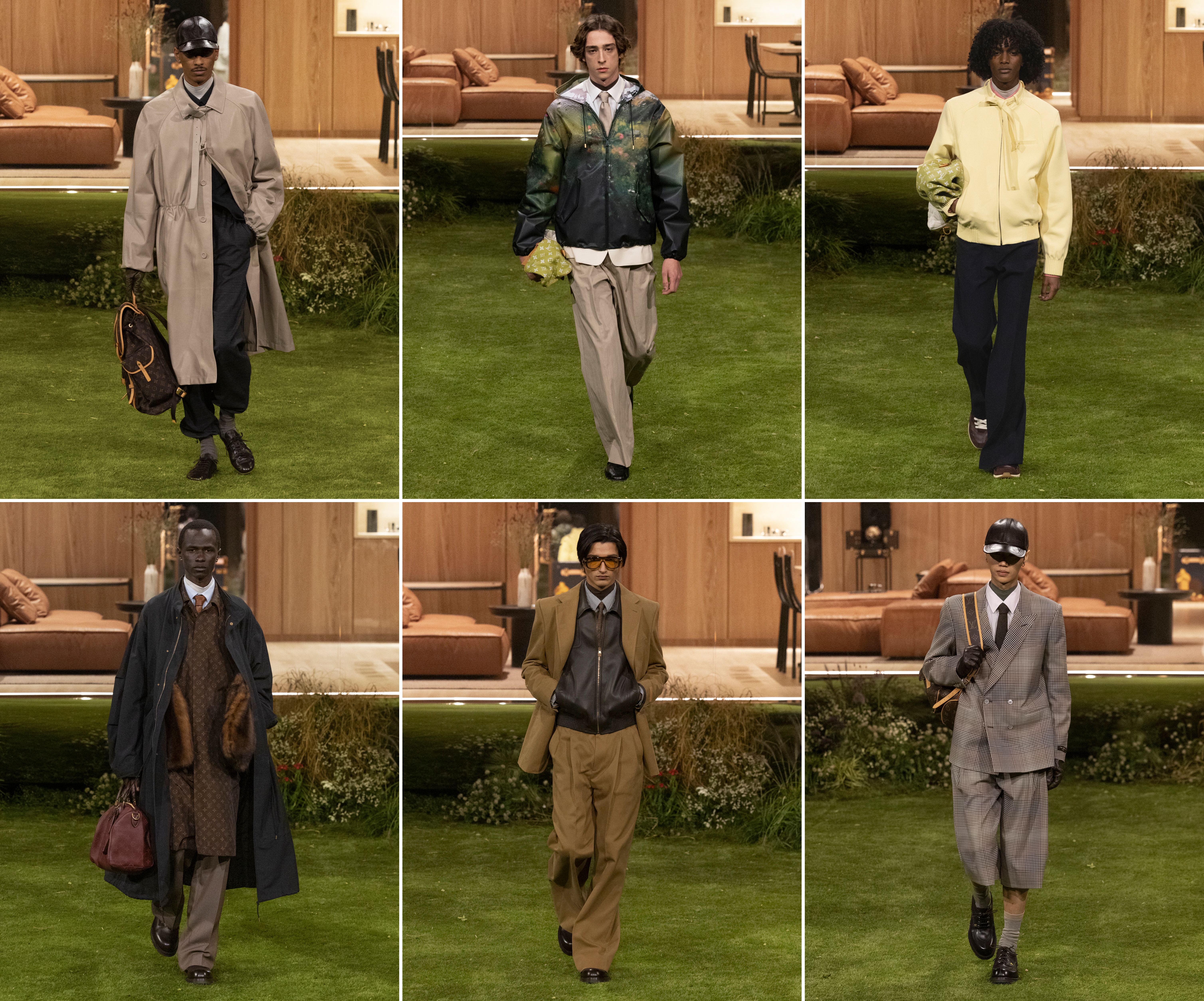
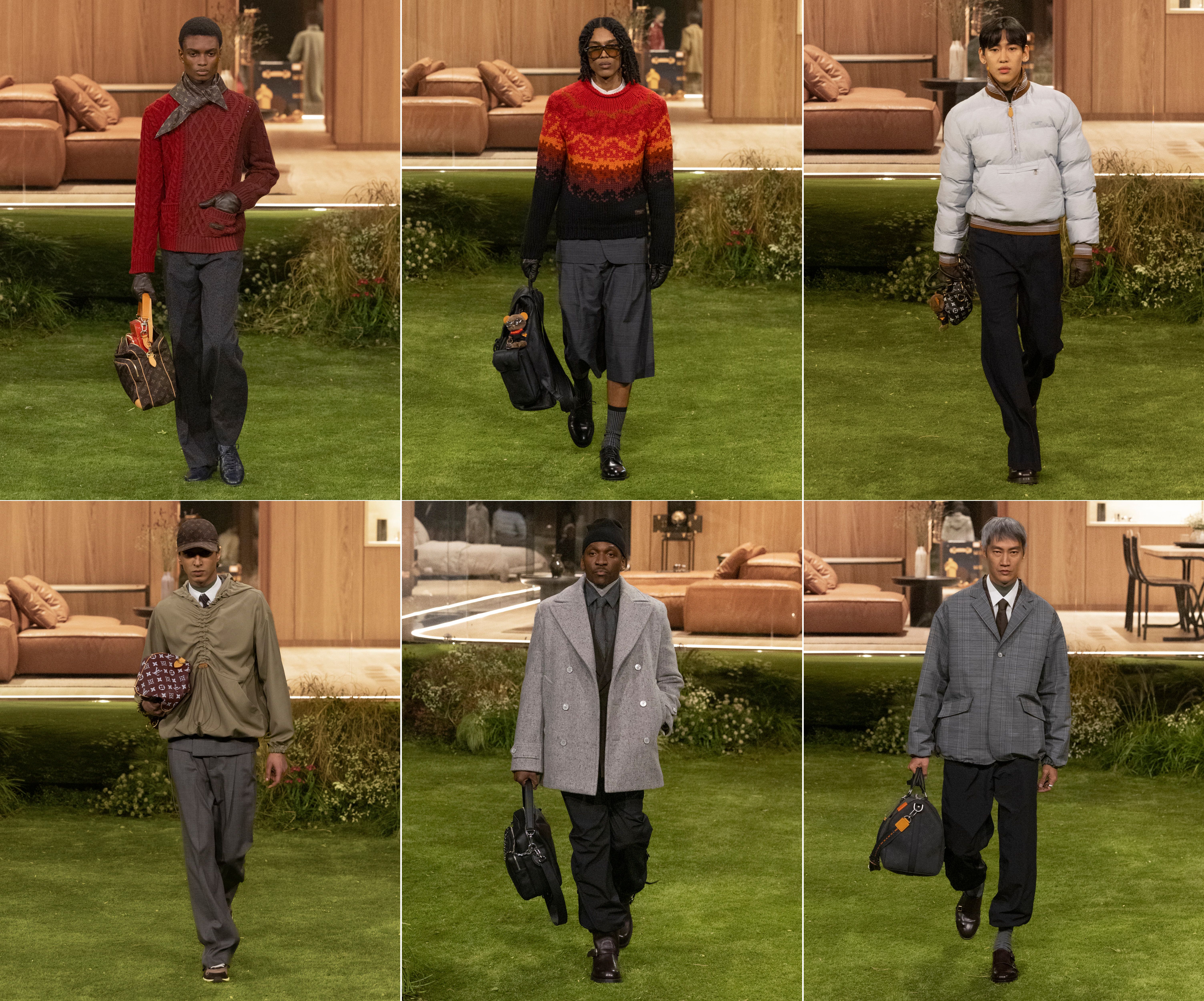
But what about the clothes? Well, if you needed a house and many porters carrying trunks with exteriors that seemed to mimic stained-glass windows and thus throw more light to the church connection, perhaps the collection was not the main point. The coats, knitwear, and tailoring were, as expected of LV, competent, but not revolutionary. They functioned almost like vestments within a larger liturgy of luxury that Mr Williams seemed enamoured with. The act of porters carrying trunks was less about showcasing design than it was about dramatising LV’s heritage as objects of worship. The all-white clothes they wore were secondary to the ritual of carrying. If the monogram was now replaced by stained-glass images, it spotlighted LV’s heritage as sacred relics. Mr Williams deliberately subordinated the clothes to the spectacle. The point was to prove LV’s cultural dominance, rather than push striking silhouettes. In the clear-walled cathedral of LV luxury, the clothes were the incense—nice to have, but was not the focus.
But he did try. The irony is that the clothes themselves—wrinkled shirts, trim tailoring, pussy bows with long tails—were superficial touches—the parsley, not the fillet. Or, keeping to the house theme, the wiring, not the furniture. A large part of it could have been mistaken as a Dolce & Gabbana show that magnifies maleness. Take a classic, such as a Harrington jacket, add some sparkles to it, and call it a day. Or put a print on a parka, and let it shout ‘work done’. Give an unconstructed blazer a drawstring hem (inspired by his admiration of Sacai?) and rejoice the newness. And there is the croco-textures and exposed furry pocket bags, the inevitable fall-back whenever Pharrell Williams feels the Serengeti vibe? If the glowing LV trunks hinted at bringing the church to the fashion congregation, these looks are the flashy ensembles in the front-row-as-front-pew, more interested in being seen than being saved.
Screen shot (top): louisvuitton/YouTube. Photos: Louis Vuitton
 Style on the Dot