Prada’s autumn/winter 2026 collection is rather prim, but, as always, with a little twist. No exotic footwear, though
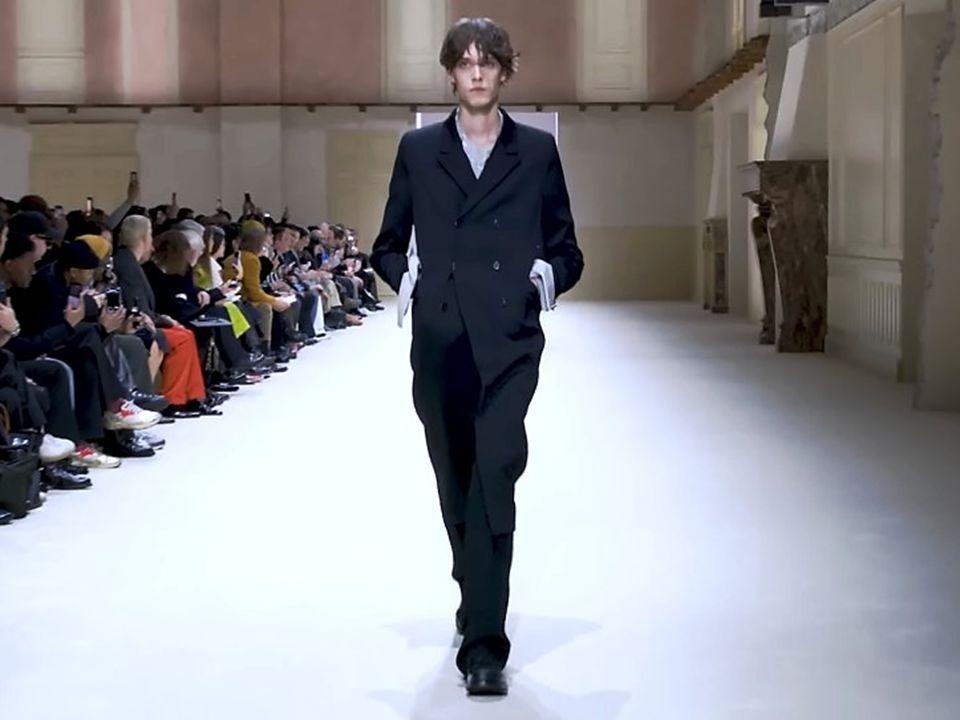
After last spring/summer season’s footwear controversy—also referred to as “Kolhapuri-gate”—Prada shifted the attention of the latest collection, away from the feet and further up the body. This time, it was all about the wrist, or, to be more specific, the cuff. But not any barrel cuff you’d see in Raffles Place. Prada has chosen the more atas French cuff (also known as the double cuff), worn on the runway not folded back on itself, probably to challenge the traditional formality of the turn-back end of the sleeve. A wholly European tradition that won’t be an affront to any trade guild. Some of the cuffs were not pressed, some were scorched, as if to suggest the shirts to which they belong can be worn to tame an inferno. Naturally, links were required. Prada’s included dangly ones that could double as drop earrings. And to be sure that the seated front-row deities were aware of the details, the models strutted the runway with their hands tucked into the pockets of their coats, allowing the cuffs, with their contrasting colours, some easily mistaken for welts of coat pockets, to be seen at eye level. In retail, they call it “buy level”—accessible, relatable, and for them VVIPs.
Titled Before and Next, the collection was a thesis on what Miuccia Prada and Raf Simons call the “archaeology of thought.” The Fondazione Prada was transformed not into a dig site, but a minimalist contemplation of architectural ghost-logic—a montage of walls stripped back to reveal panel moldings and wainscoting. Protruding from the walls at varying heights were what appeared to be mantels; yet, unlike what the scorched cuffs suggested on the runway, there were no fires behind them. The opening track of the Dublin band Virgin Prunes’ Theme for Thought, with its post-punk industrial grind, seemed to drown out the lingering noise of the previous season’s chappal hoo-ha. The grungy grit of the music belied the collection’s rigorous, covered-up layers and its Victorian-inflected tailoring that Emily Brontë’s brooding Heathcliff would approve. It was a decisive move away from the boxy, oversized shapes of recent seasons in favor of a razor-sharp, but somewhat bucolic silhouette—one that still felt as intimate as a familiar wardrobe, yet remained punctuated by the uncanny.
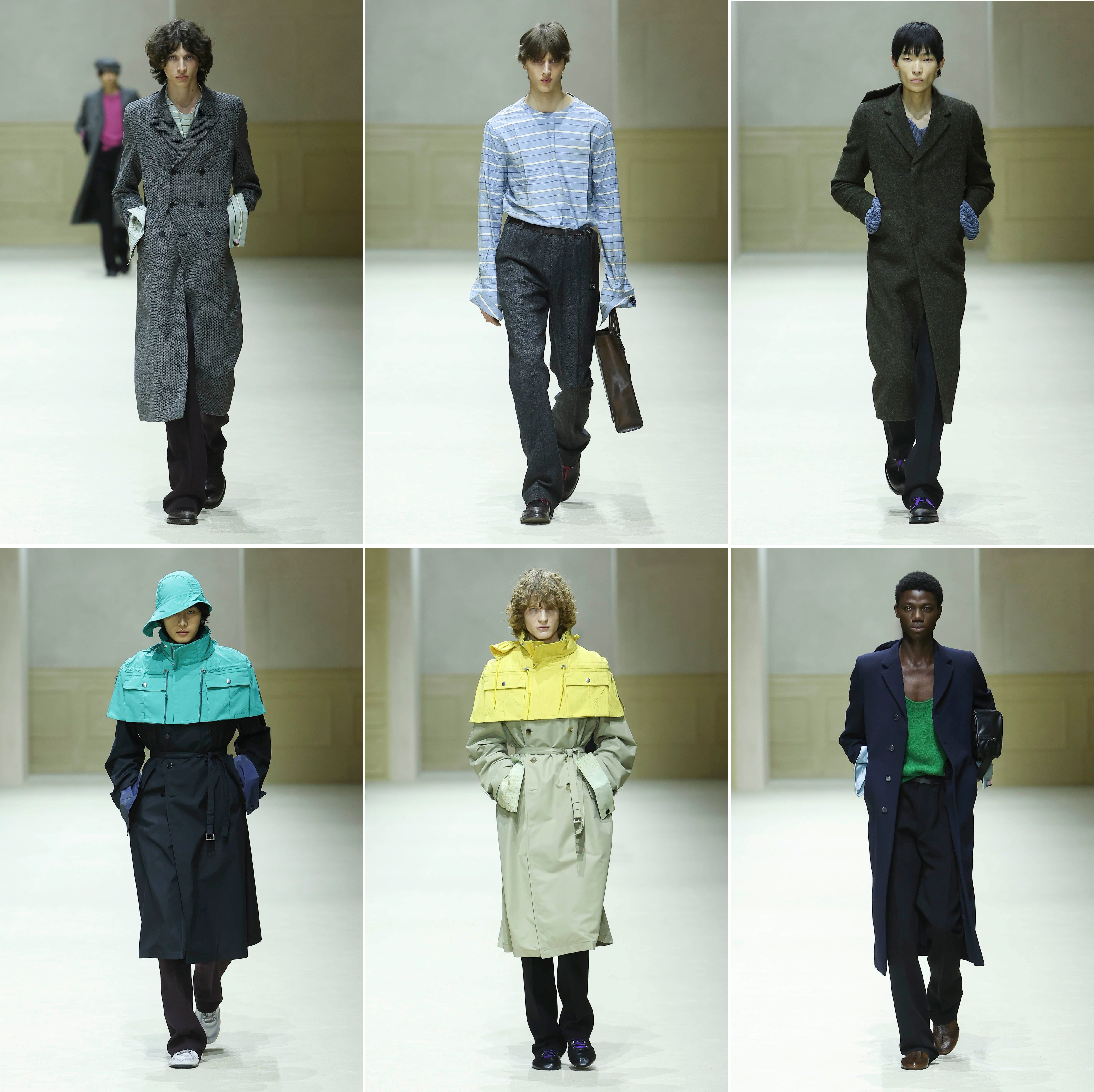
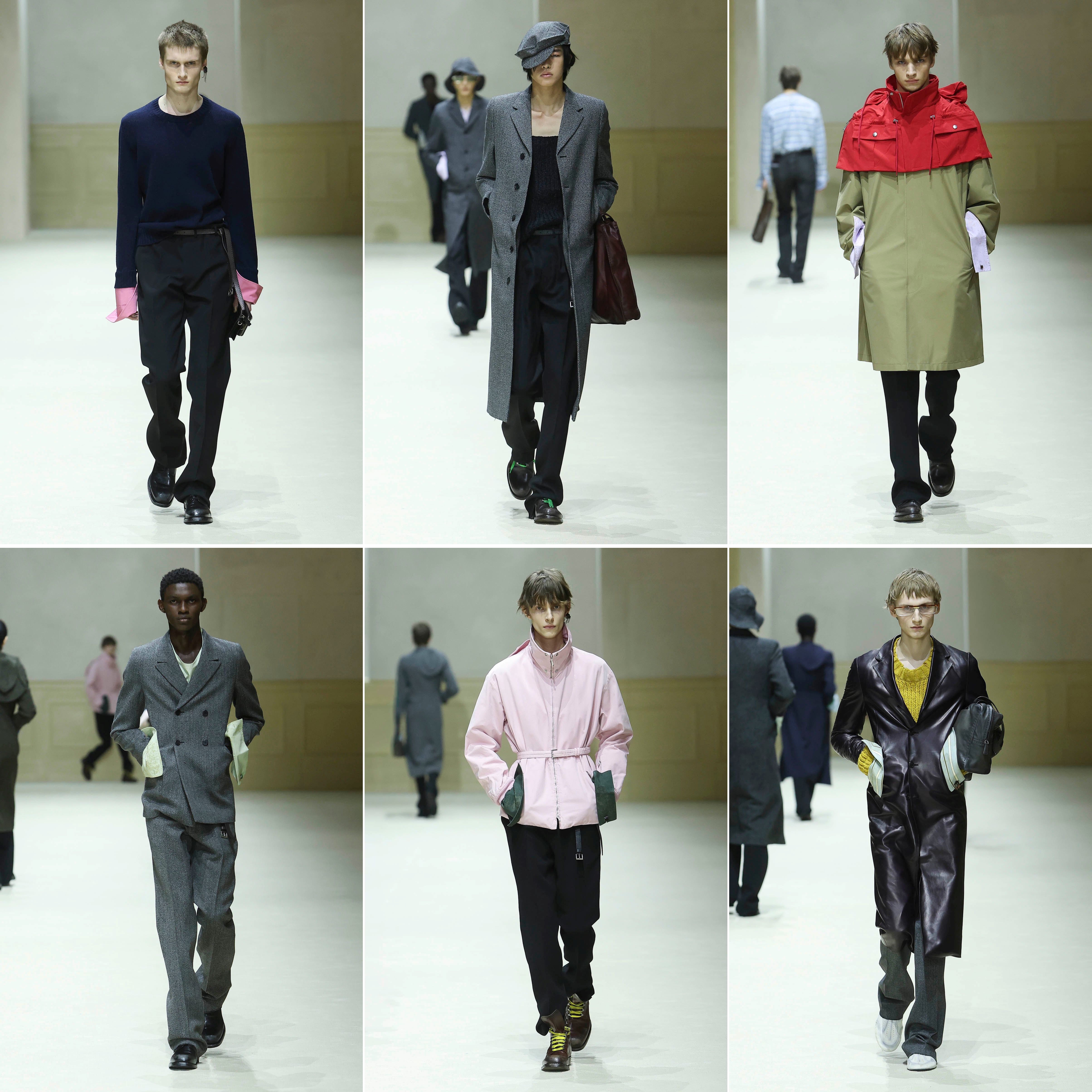
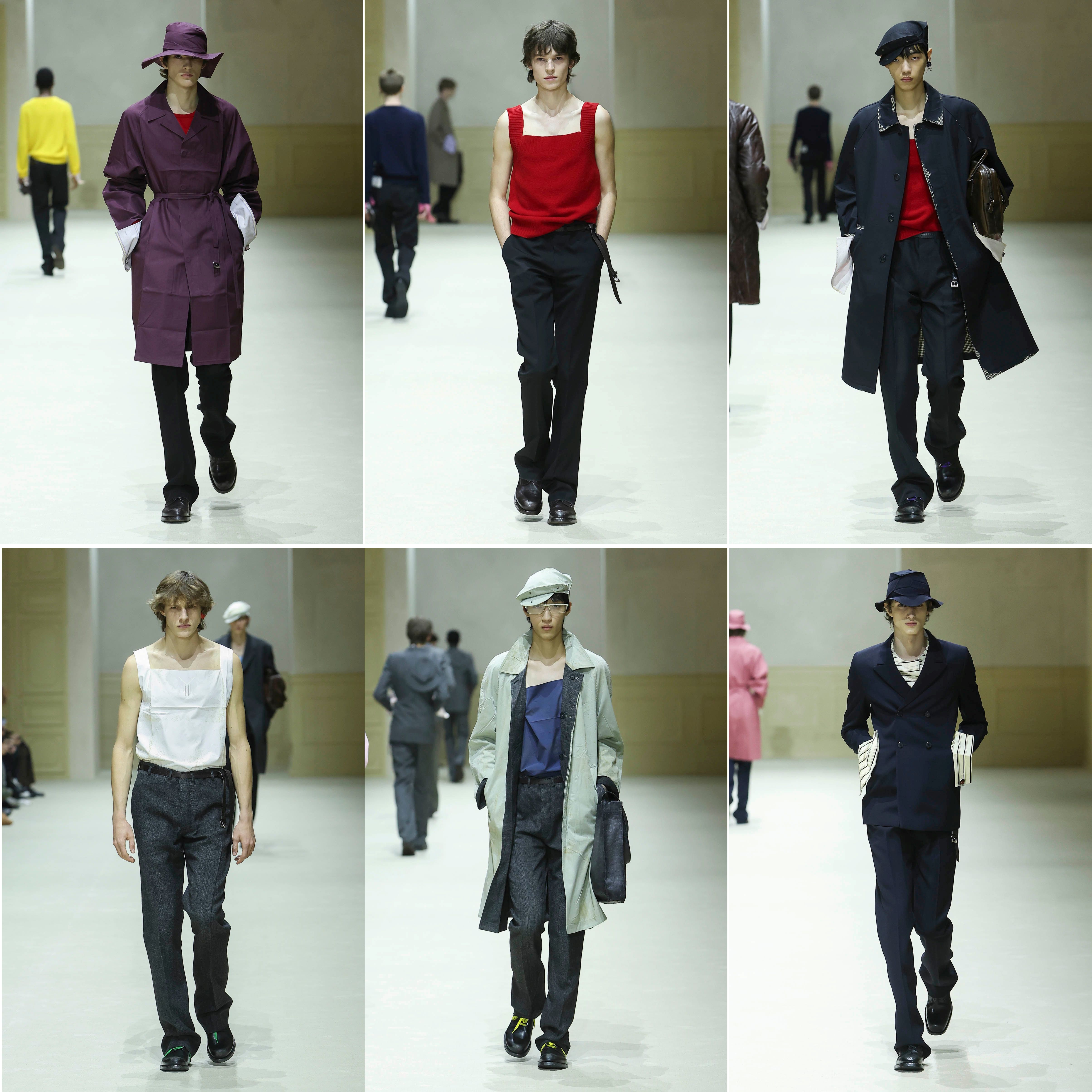
There was a smidgen of an Inspector Gadget vibe that, for regular blokes, probably served as a subtle flex of pure functionality. There were trench coats—thankfully not inflatable—and floppy hats, minus the ability to sprout contraptions or appliances. Finally, a way to wear a trench without people waiting for you to launch a weather balloon from your forehead. And they were not just trench coats. Many of them came with a shortened cape/topper, with utility pockets, some even zipped gussets. They were brightly coloured to puncture a grey, rainy day. The collection was, in fact, exceptionally strong on outers: lean coats, some distressed peripherally so that you get abraded seams and worn elbows. And under them, sleeveless, square-neck knit or woven tops that recall what Thai grandmothers love to wear, the suea kor kra choot, or basket-neck shirt. In the show, some were even sent down with heavy folded creases, as if pulled fresh from an armoire drawer. A look that said: I can survive open grasslands and rugged crags, but still appreciate a well-ventilated neckline.
This could be the “archeology” of Prada: digging to unearth gems from vintage Sunday morning cartoons to southeast Asian heirlooms, thankfully without references so direct that they could be immediately called unthinking appropriation. Prada remained the master of the high-low, global-local synthesis. But perhaps the most charming this season was the headwear, especially the flattened charter or bucket hats attached (velcro-ed?) to the right side of the back, where the shoulder blade was or where The North Face frequently positions its three-line logotype. To us, this brought to mind the evocative womenswear of spring/summer 2011’s Baroque show, when massive sombreros were worn like nagas protecting the cheerfully togged models. Sure, for the guys now, the hats were smaller (not larger than a face) and quirkily pancaked. Like the sombreros from fifteen years ago, the styling had them still positioned in the rear, but off-center, as if wearing a brooch. Could this be some kind of oversized back boutonniere? A visual signature as potent as Prada’s own inverted triangle? Whatever the case, hats never needed to be on the head alone. Prada, of course, knew that.
Screen shot (top): Prada/YouTube. Photos: Prada
 Style on the Dot