What’s so unspectacular about the front of this outfit that you get to see only the rear?
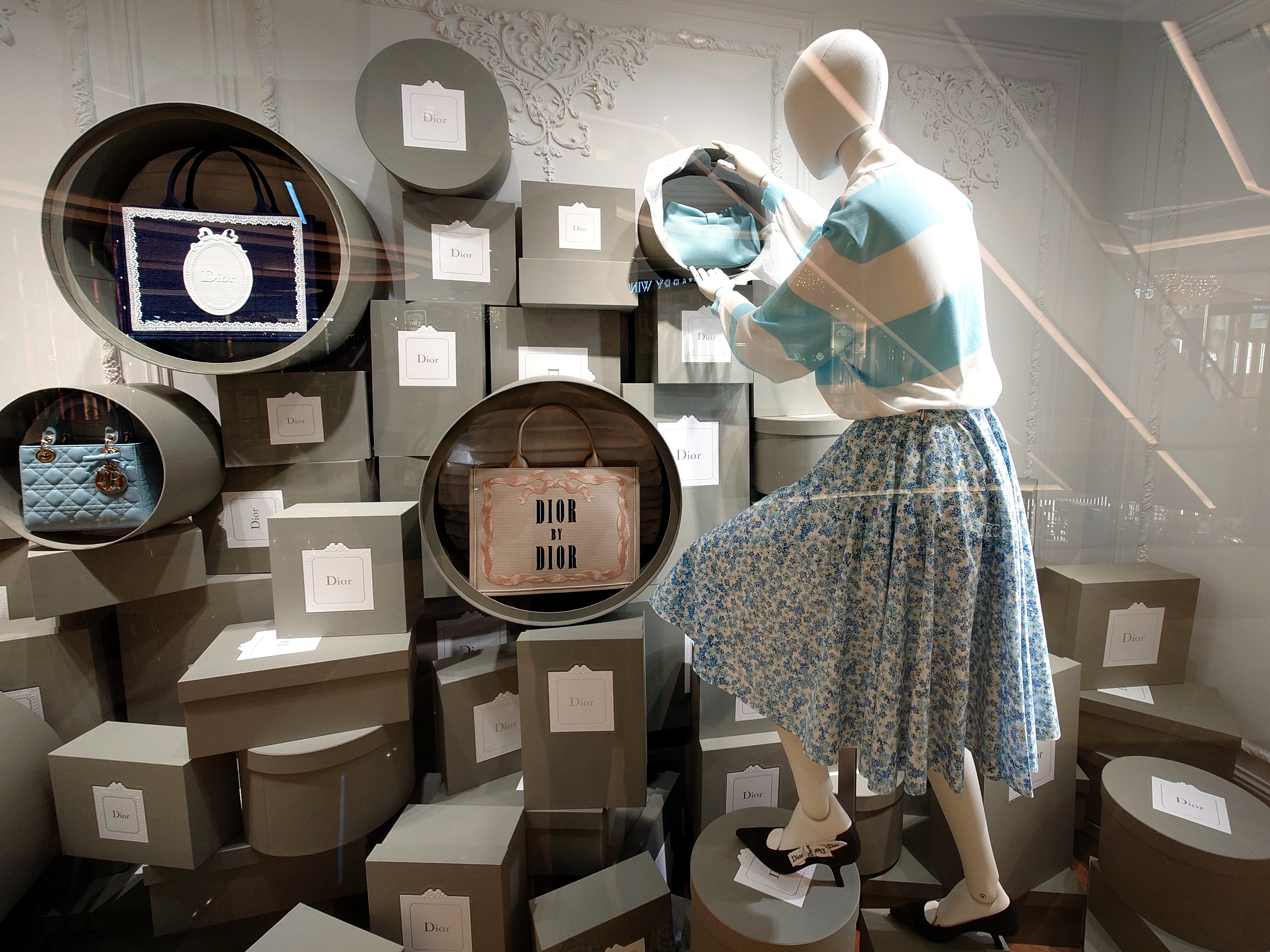
It is a dioramic version of the unboxing video. But there is no climax, just a few of the boxes with their lids off, exposing their contents: Dior goods, of course, including the Book tote that should have been, by now, a closed chapter. For Dior’s spring/summer 2026 season, the mannequin inexplicably had her back to the window-shopping traffic, except that there was no one admiring the messy display. The set-up could have been Becca Bloom (aka Rebecca Ma) on a relentless unboxing spree, as she seeks peak self-improvement. Why a mountain of Dior boxes that necessitate the mannequin to step up onto one to reach a bag at the top of the profligate pile is unclear. Was this a commentary on archival obsession that somehow became acute senior-citizen hoarding?
For a major overhaul, it is hard to pinpoint what Dior’s fashion message under Jonathan Anderson is with this window (to be sure, some others in different stores do show mannequins facing front, but they provide little extra clarity on the brand’s direction). The dummy, in what could be a Degas moment, was dressed in the maison’s ‘Marinière’ cotton-knit top that had less a nautical vibe than that associated with the rugby polo shirt and a micro-floral cotton muslin skirt that could have come straight out of Liberty’s department store. She is shod in a pair of J’Adior pumps, with the ribbons that looked like part of the brand’s gift wrapping service. There is a surprisingly aggressive vacuity to the look. It is not clear which matters more: hemline or bottom line. Might this be for those who find the Gap too avant-garde?
A S$2,950 polo top, a S$3,700 skirt, and a pair of S$1,490 pumps against a cardboard monument to consumption is not necessarily the height of fashion. But because it fronts a Dior store, we are expected to believe that the nothingness should be granted residency in our wardrobe. This is consumption as mise-en-scène, encouraging consumers to worship the brand than the clothes (or even the bags). Dior’s identity, historically rooted in couture formality, is being deliberately relaxed by Mr Anderson, allowing the house to negotiate between accessibility and prestige. Ordinariness, as we see, can be masked as couture drag. If this ensemble in the window is the look du jour, it’s not hard to mimick it with far cheaper alternatives. It takes an inspired talent to pay this much to look this uninspired.
Photo: Chin Boh Kay
 Style on the Dot