“Singapore Isn’t a Chinese Nation. So Why Do Some Food Chains Act Like It”, went a Rice Media headline. A sentence that forgot a verb, but found a grievance buffet
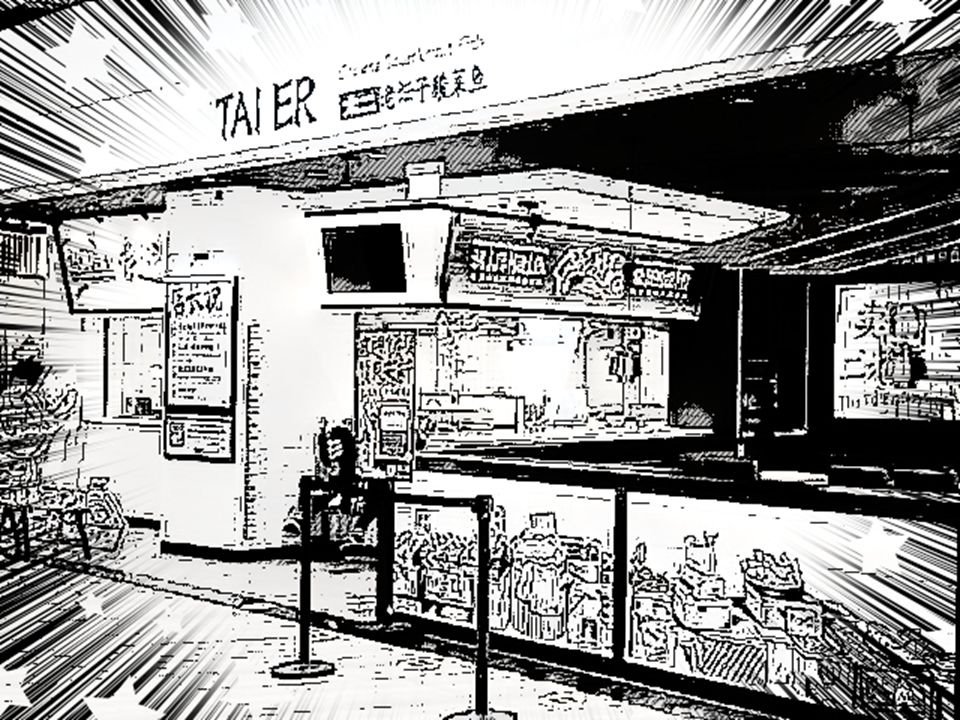
Tai Er Suancai Yu at Pasir Ris Mall
Over the last three years, a steady stream of Chinese fashion retailers has established a presence on our shores. In fact, it started back in 2017, when Urban Revivo debuted with its first international outlet at Raffles City. Since that first spark, a chorus of newcomers has joined the fray, such as Goelia, Meilleur Moment, Neiwai, Duo Zou Lu (sneakers) and the latest, Edition. That’s not including brands in DSMS—Clot, ShuShu/Tong, or Sankuanz. The arrival of these Chinese labels has been met with considerable acclaim. If you compare fashion to food, the venn diagram is two separate circles, at least according to a report in Rice Media, a digital lifestyle brand for the linguistically displaced that finds the heartlands too choked up with “food chains”, specifically those from China, and in need of English tuition teachers to civilise the service staff until they can conjugate their verbs as smoothly as they poach their 乌鳢 (wuli), snakehead fish.
The article appeared in our news feed this morning, but with a headline that forgot how to write, but remembered how to whine, we did not bother to read what followed. Later, a friend texted: “I thought of you when it popped up on my feed.” It’s a solid friendship that sees a headline written in a tantrum and immediately thinks of our aesthetic. We had to read the evocative article. To make it as compact as 便当 (biandang or bento), a fellow walks into a Sichuan restaurant and is shocked to find it isn’t a British tea room. He then spends 1,500 words arguing that having to point at a picture to order, like a common tourist, is an act of “cultural imperialism” and a threat to the national fabric (who knew ours is fraying?). We need more boutique revolutionaries like him—citizens who understand that the true path to a multicultural Singapore is demanding everyone else speak the language he finds most convenient. 井底之蛙 (jingdi zhiwa), a frog at the bottom of a well.
We need more boutique revolutionaries like him—citizens who understand that the true path to a multicultural Singapore is demanding everyone else speak the language he finds most convenient
The writer recounts going to 连城街 (lainchengjie) or Liang Seah Street—“packed with neon signboards and menus written in Chinese characters (squint to find the English translation!) and perfumed with the spicy pungent aromas of Sichuan, Hunan, and Chongqing classics”—and realised that it wasn’t the spice that drew his blood, but the realisation that his linguistic limitations had left his pride reduction-thick and boiling over into a particularly salty soup of resentment. But the bitter bouillon of pride is not the only point of contention. Singapore simply do not have enough halal-certified restaurants to appease his Muslim brethren. As he says, “It seems like a deliberate business decision, considering Muslims make up 15.6 percent of Singapore’s resident population.” In one fell swoop, he turned it into “who’s welcome to sit at the table of Singapore’s latest culinary wave”.
It’s not just weaponising numbers to moralise a niche market reality. He states: “Not every homegrown business in Singapore is halal either, and that has never been the expectation.” In fact, he is not “demanding every restaurant or chain from China contort itself to cater to everyone.” Contort? Isn’t he the one doing the contorting? The word choice falls into a category that is now called ‘ragebait’. This is not reporting; this is painting a horror story to justify outrage. He deliberately chose to dramatise a neutral reality (restaurants serving their own cuisine) into a grotesque image of twisting and deforming. That’s how the piece manufactures grievance: by loading ordinary situations with violent or exaggerated verbs. “Contort” suggests pain, distortion, and unnatural effort. In reality, the menus were just written in Chinese because they’re Chinese restaurants. No contortion required. And there’s the glaring contradiction that local F&B is not expected to be halal, but many Chinese chains should.
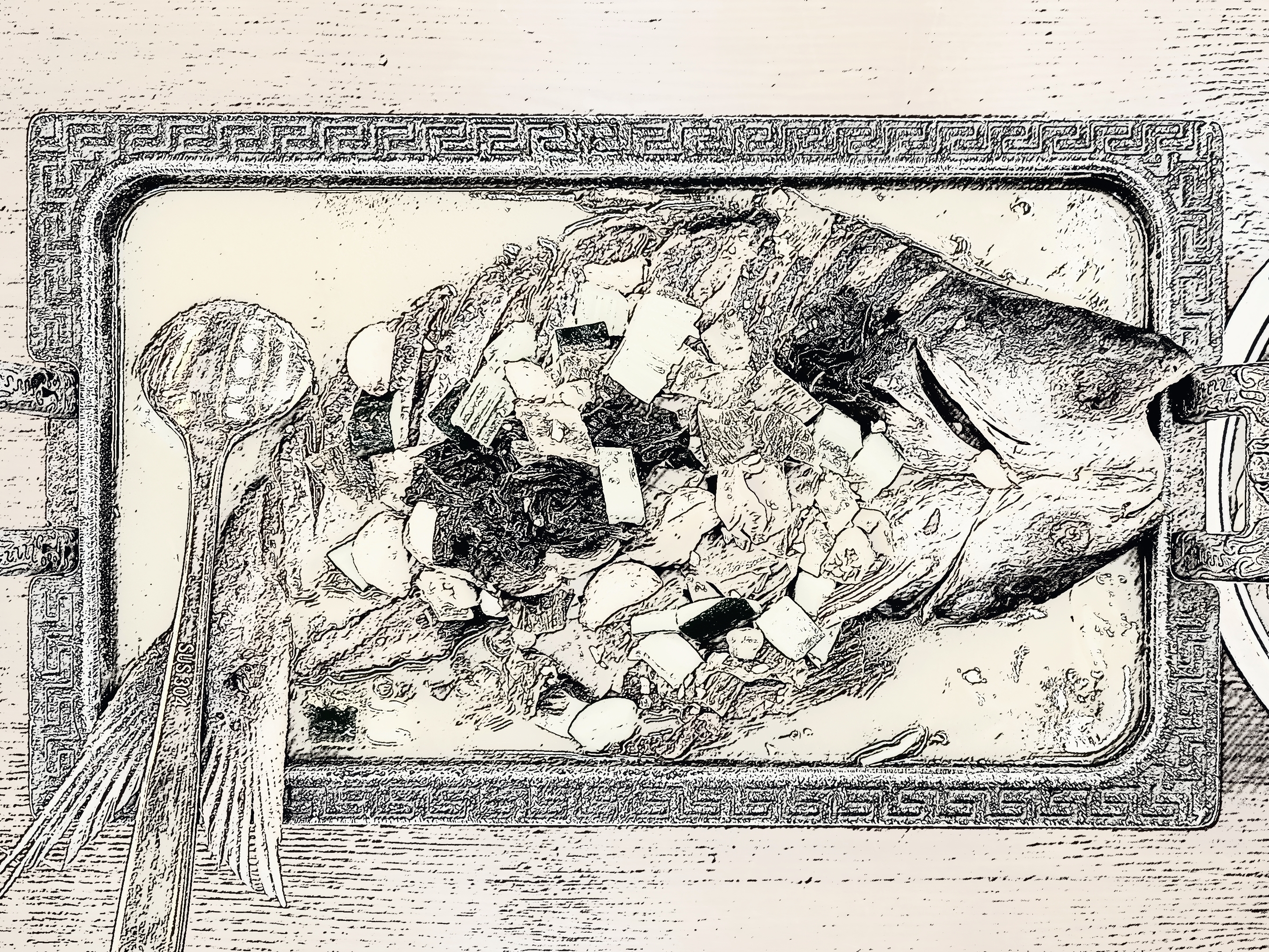
Scrumptious suancaiyu at 57 Mala Xiangguo & Grilled fish. No squinting required when the order was made
He continues to describe “an overwhelming;y Chinese foodscape” and “streets and menus [that] are literally filled to the brim with Chinese characters, with little to no translation for our non-Chinese-speaking friends”, leading to the “problem where the simple act of ordering food is complicated by a language barrier”. Is he referring to Hong Kong? “Overwhelmingly Chinese foodscape” is a tautology. Liang Seah Street is known for Chinese food, especially hotpot. To describe it as “overwhelmingly Chinese” is like saying Orchard Road is overwhelmingly retail. His own lack of 华语 (huayu) or Mandarin proficiency is staged as a collective grievance for “non‑Chinese‑speaking friends.” Apart from sympathising with the non-Chinese-speaking, he also draws attention to another group: “The language barrier has even hindered food delivery riders from doing their jobs, as they struggle to read restaurant and food stall names.” They’re delivering food, not looking for a saviour.
The most delicious irony, however, is saved for the 食物(food) itself. For a man so aggressively protective of our “multicultural fabric,” his own cultural literacy has all the complexity of tap water. He gazes upon a serving of 酸菜鱼烤鱼 (suancai kaoyu) or what he calls “sauerkraut grilled fish” and sees foreign invasion. How Trumpian! While some Chinese restaurants do translate suancai (literally sour vegetable) to “sauerkraut”, it is a leftover from the early years of Google Translate. And many can’t even spell it. To the refined palate, suancai and xiancai (咸菜 or salted vegetable) are clearly variations on a theme—a theme that sauerkraut, in all its Western estrangement, fails to even hum. Inviting sauerkraut to a kaoyu meal is like bringing a saltine cracker to a 点心 (dim sum) feast.
The prose itself reads like a bored teen’s diary entry, if he had just discovered a thesaurus and a persecution complex. He describes the ominous glow of neon signs as if he were dodging searchlights in a dystopian thriller, rather than looking for a place to sit and eat. It is a style of writing that is perpetually exhausted by the mere existence of others—a high-drama chronicle of a man braving the horrors of a popular dining district. It barely critiques; it sighs, groans, and inflates. One can almost see him, brow furrowed in a performative pout, typing out sentences that treat a missing English translation as a calculated erasure of his very soul. It is a discourse that mistakes petulance for profundity, and social awkwardness for a brave stand against the tide of culinary evolution. It’s not about anyone or restaurant; it’s about him. Eat on.
Illustration: Just So
 Style on the Dot