When cultural depth meets generational shrug, even Samson’s hair loses its power. Timothée Chalamet knows every brand in the latest drop, but scant biblical lore (or so he claimed). A cultural phenomenon that’s easy to call the American Beng
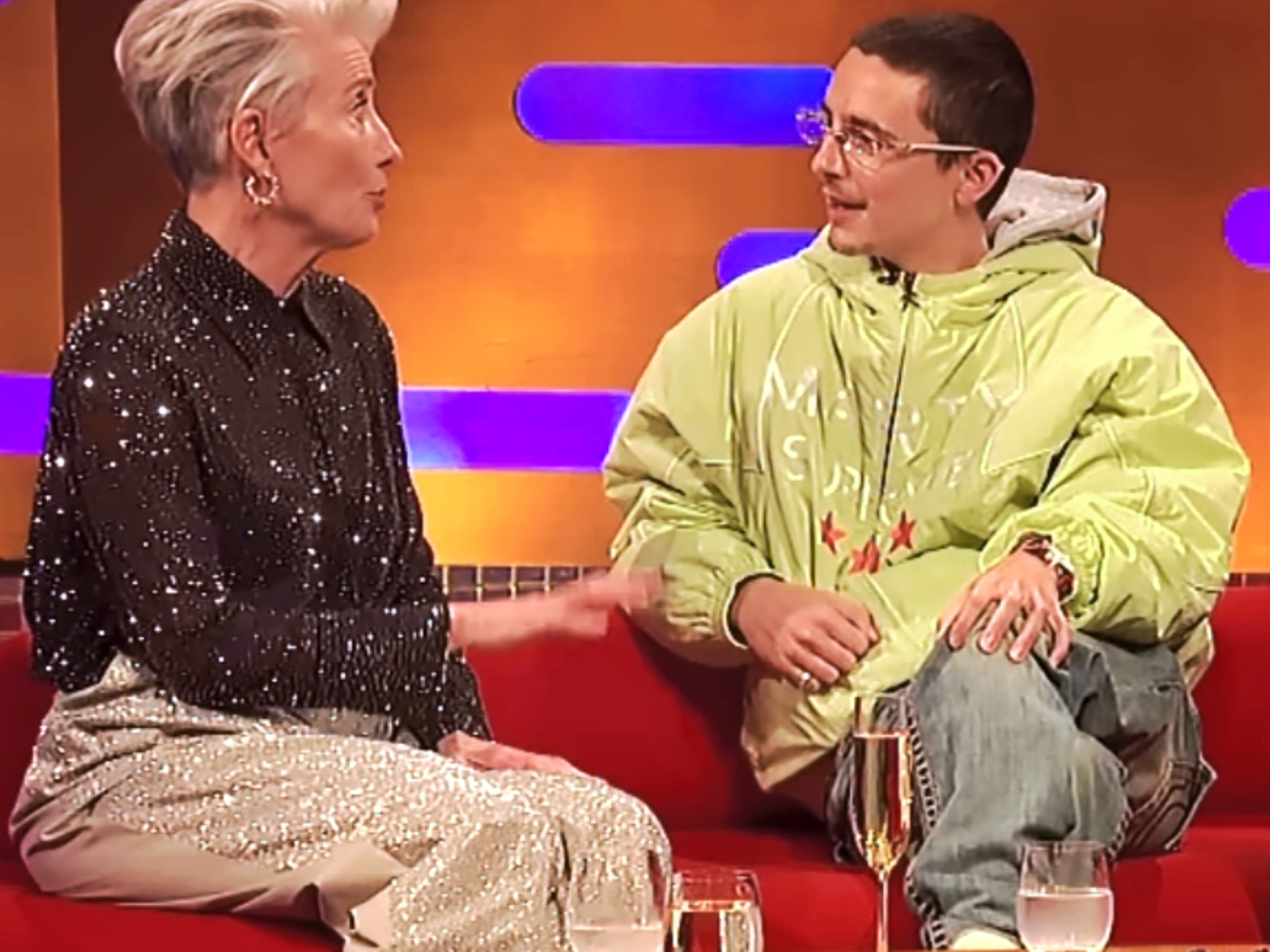
Timothée Chalamet with Emma Thompson on the Graham Norton Show. Screen shot: officialgrahamnorton/YouTube
For someone who grew up in a bi-religious, Judeo-Christian environment (his mother is Jewish, and his French paternal grandfather was a Protestant pastor), Timothée Chalamet’s surprising claim that he’s unaware of biblical lore, even one as famous as Samson and Delilah, is read by his fans as a joke. On the latest episode of the popular-among-stars Graham Norton Show, Mr Chalamet was asked by the host what happened to his hair after his head was shorn. The Dune lead tried to be a comedian and said, “It’s stollen.” He went on to explain why his head had to be shorn—“character shift”. He begged the director not to cut his locks any shorter because “you know, your hair—weirdly, we’re all attached. It’s kind of our personality—these follicles that grow out of our head.” The comment, intellectually adrift and substituting physiological description for meaning became the overture for an inevitable cultural clash.
Emma Thompson, who was seated to his right, reacted: “Samson”, evoking the biblical parable of hair, power, and betrayal. Mr Chalamet raised his right index finger as if to concur. He even managed to squeeze in “yeah”, but shook his head. Ms Thompson continued: “You know? It contains your power, could do.” Mr Chalamet said, “I’ve never heard of that.” The British actress, now clarifying the foundational tale, continued: “Samson and Delilah. She cut all his hair off and took all his power.” And the younger actor replied, seemingly self-satisfied: “I have no clue what you’re talking about.” The audience burst into laughter. In any previous era, this ignorance (even if pretend) would have been an embarrassment. Today, it’s a punchline—and a tacit acceptance that common lore can be left unacquainted.
In any previous era, this ignorance (even if pretend) would have been an embarrassment. Today, it’s a punchline—and a tacit acceptance that common lore can be left unacquainted
The laughter, although crucial to the success of the Graham Norton Show, obscured the true balance of depth on the sofa. When Ms Thompson attempted to make light, she accessed centuries of shared cultural capital, but when Mr Chalamet went for a joke (assuming he was playing along), he chose to be unaware of what she said. Perhaps shared social memory, like a credit card, needs activation to be useful? One reached for a reference steep in cultural richness, proceeding on the risky assumption that the nugget of wisdom was already canon, while the other’s earnestly blank response exposed a generational and intellectual gap in real time. It was less a meeting of the minds and more a high-speed collision between a library and a TikTok feed.
Ms Thompson embodied a generation trained in—or exposed to—canonical literacy, where biblical and mythic stories are part of everyday wit, if not conversation. Her joke carried intellectual weight because it drew on centuries of cultural resonance. Mr Chalamet’s register, on the other hand, represents a generation aware of pop culture, wears irony like a hoodie, and prefers surface aesthetics over underlying subtext. His easy “no clue” wasn’t just inherent ignorance, it was symptomatic of a cultural toolkit that doesn’t include historical/folkloric shorthand. Their chummy exchange did not hide an obvious clash. The moment became a compact allegory of generational divide. Ms Thompson’s depth was met with Mt Chalamet’s shrug, and the audience saw a clear thinning of cultural transmission, but was totally charmed by it.
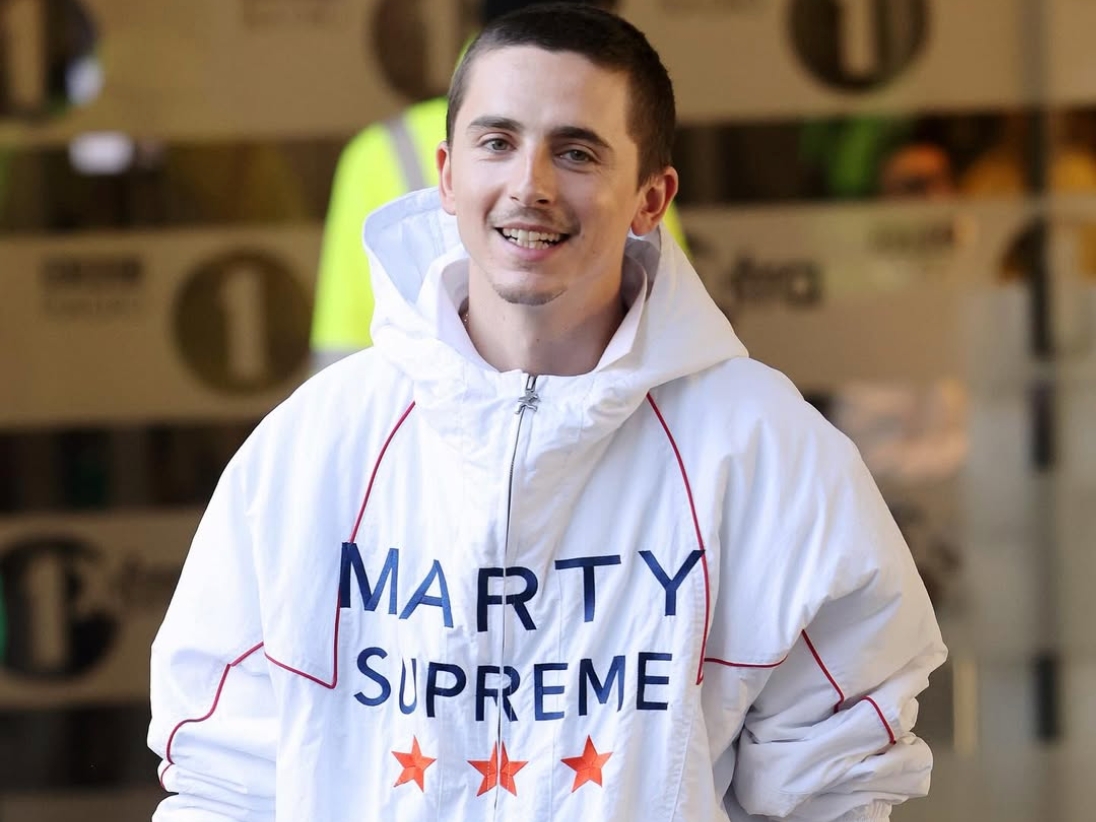
Timothée Chalamet ardently promoting his movie and the attendant merchandise. Photo: tchalamet/Instagram
The more we observe Timothée Chalamet, the more discernible it is that there is a Beng here, an angmo Beng. This commitment to surface aesthetics is not accidental. It is the uniform of Uncle Sam’s new elite. We need only to look at Mr Chalamet’s outfit for the show. Although Ms Thompson was rather blinked up in her fully-sequined shirt and her half-sequinned slacks, it was Mr Chalamet who outshone her in his oversized lime green (or yellow?) hooded top. In the front was sported the unmistakable words Marty Supreme and three stars that underscore the film of the same name, in which Mr Chalamet plays the lead as a table tennis star. The “Marty Supreme” clothing is not traditional movie merchandise. It is a highly strategic, “limited-edition” luxury streetwear collection created as the central pillar of the film’s marketing campaign. The capsule is the result of a three-way partnership involving the film studio A24, the Los Angeles brand Nahmias, founded by one Doni Nahmias, and the actor himself. The other fellow Beng (although he’s Canadian) who has worn the Marty Supreme hoodie is Justin Bieber.
What the angmo Beng (whether a caucasian or not, is no longer a socioeconomic descriptor), specifically American Beng, sacrifices in canonical knowledge, he makes up for in conspicuous aesthetic. If Ms Thompsom’s depth is her uniform, Mr Chalamet’s is his ‘sporty’ hoodie: the highly visible, highly exclusive, highly ho-hum Marty Supreme. The promotion is both blatant and louche: a brazen advertisement for a high-cost commodity, delivered with an affected, oversized casualness that speaks “I don’t have to try”, while being the most intentional marketing move on the couch. Emma Thompson would never need to promote a movie in such a manner, not even for Harry Porter. It is the American Beng’s visual manifesto. Samson’s locks carried the weight of betrayal and divine strength. Chalamet’s follicles, meanwhile, are just personality props, a generational shrug dressed up as something profound.
 Style on the Dot