Matthieu Blazy’s second outing for Chanel—the Métiers d’Art show in New York—is a vapid attempt at winning the American customer with a desperate bid to co-opt the grimy romance of the city

Chanel typically shows their Métiers d’Art collections overseas. Like so many houses this between-seasons, Chanel chose New York to present its wares. For them, in a reportedly disused subway station. Matthieu Blazy has gone underground, it seems. For a European designer, the New York subway might seem like the height of grit-chic, the pulse of the city’s plurality, but a tired trope is still a tired trope. Don’t mistake wide-eyed wonder for unique insight; you’re just admiring the most obvious exhibit. It’s like showing at the Great Wall if your port of call is Beijing. As the Chinese would say, 陈词滥调 (chenci landiao) or stale and overused. Was this Mr Blazy’s deliberate attempt to reset Chanel’s codes through the lens of American urban untidiness?
Chanel’s staging in a New York subway station is the fashion equivalent of painting “I ❤️ NY” on a couture gown. Pure fashion tourism. As it turned out, we did not overthink the possibility. Out came a T-shirt with the too-trite rebus, paired with a tweed skirt-suit. Originally designed in 1976 by graphic designer Milton Glaser as part of a campaign to promote tourism in New York State, Mr Blazy’s “interpretation” is now as charming as the equivalent in a gift shop in Times Square, except that it’s blessed with the touch of the petit mains at Lesage. But, does Chanel need to prove its supremacy by asserting that it can touch, transform, and elevate any cultural symbol—even a cheesy American logo? Or Superman’s pentagon shield with the ‘S’ replaced by the double ‘Cs’?
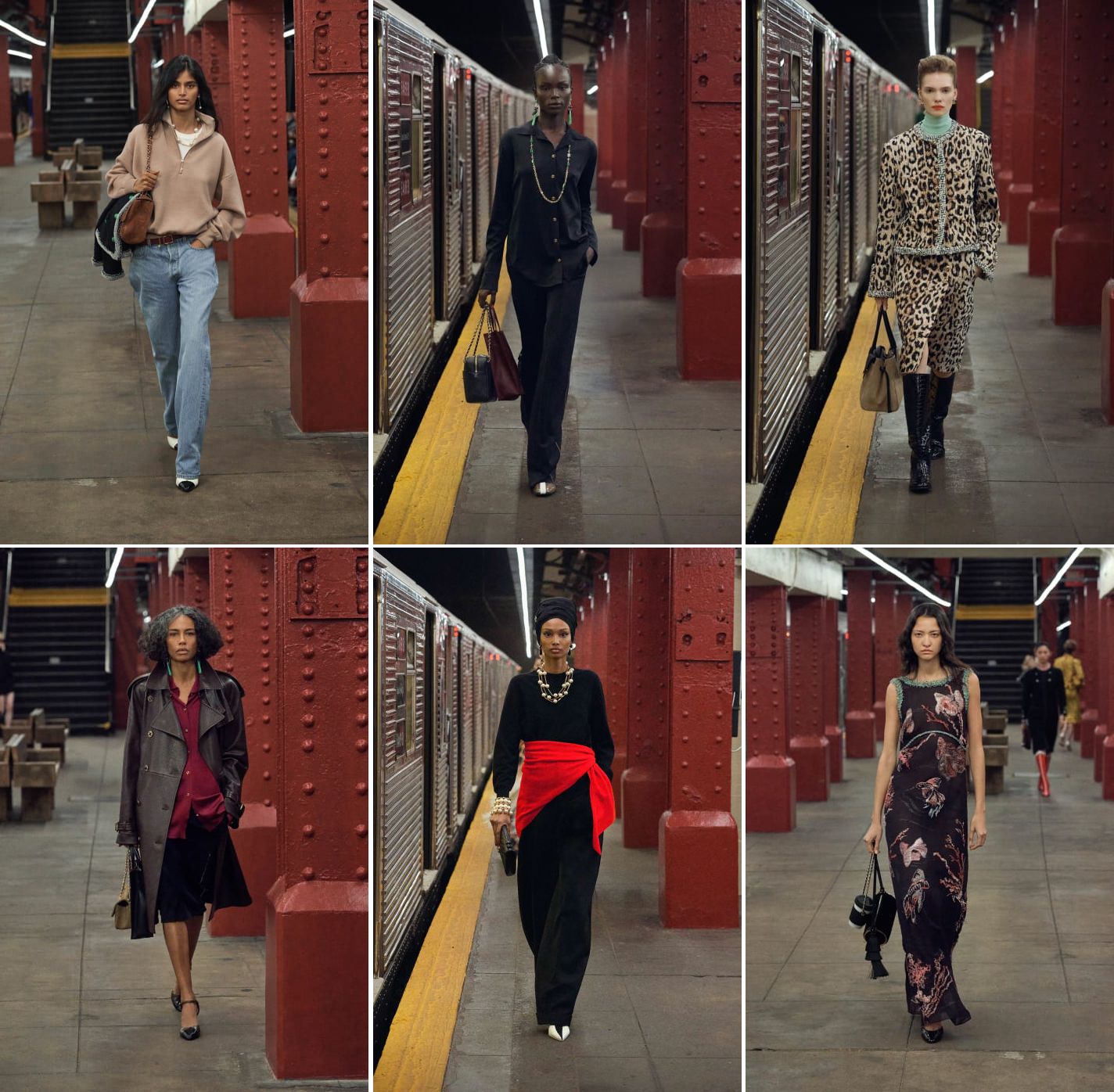
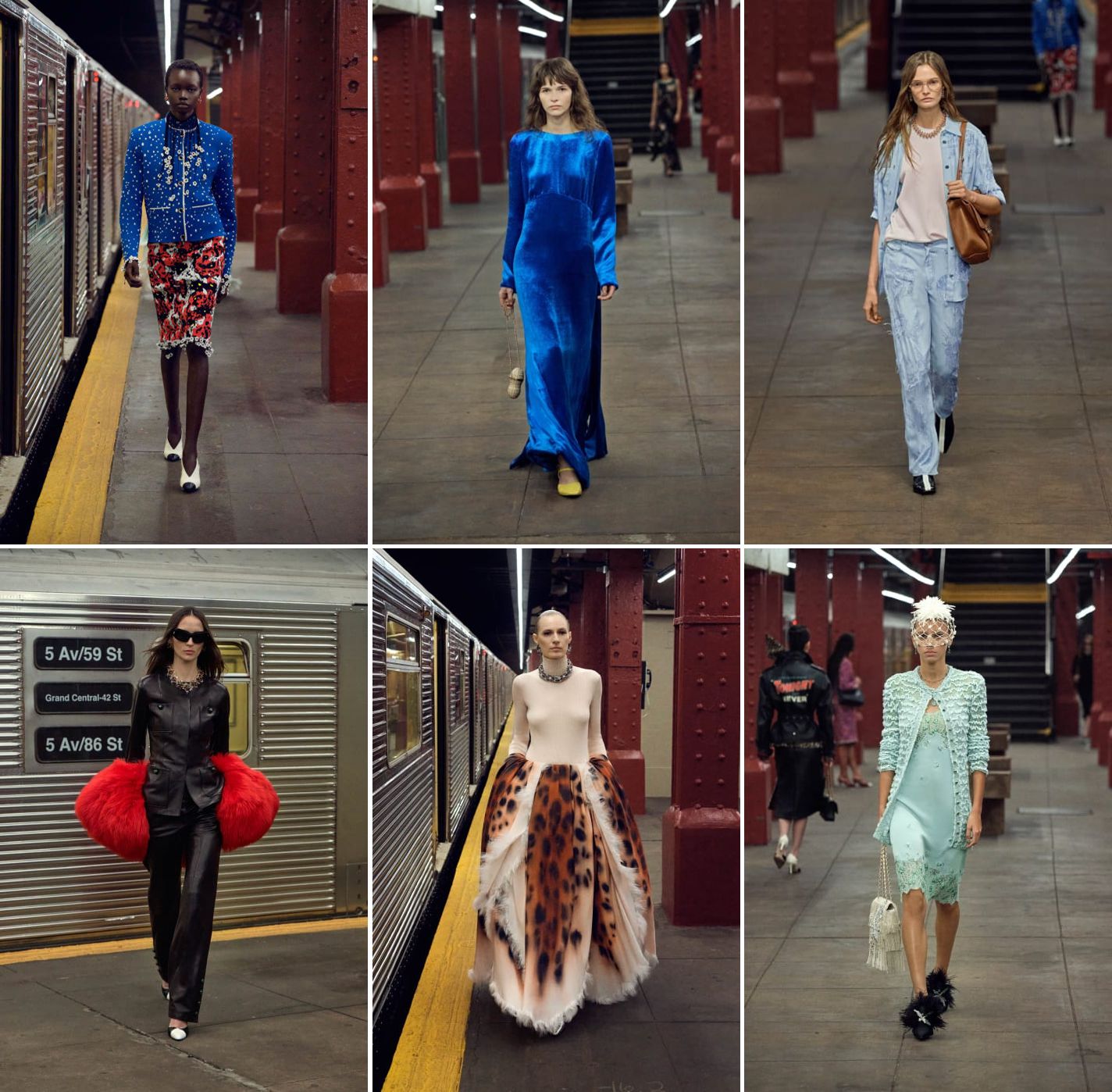
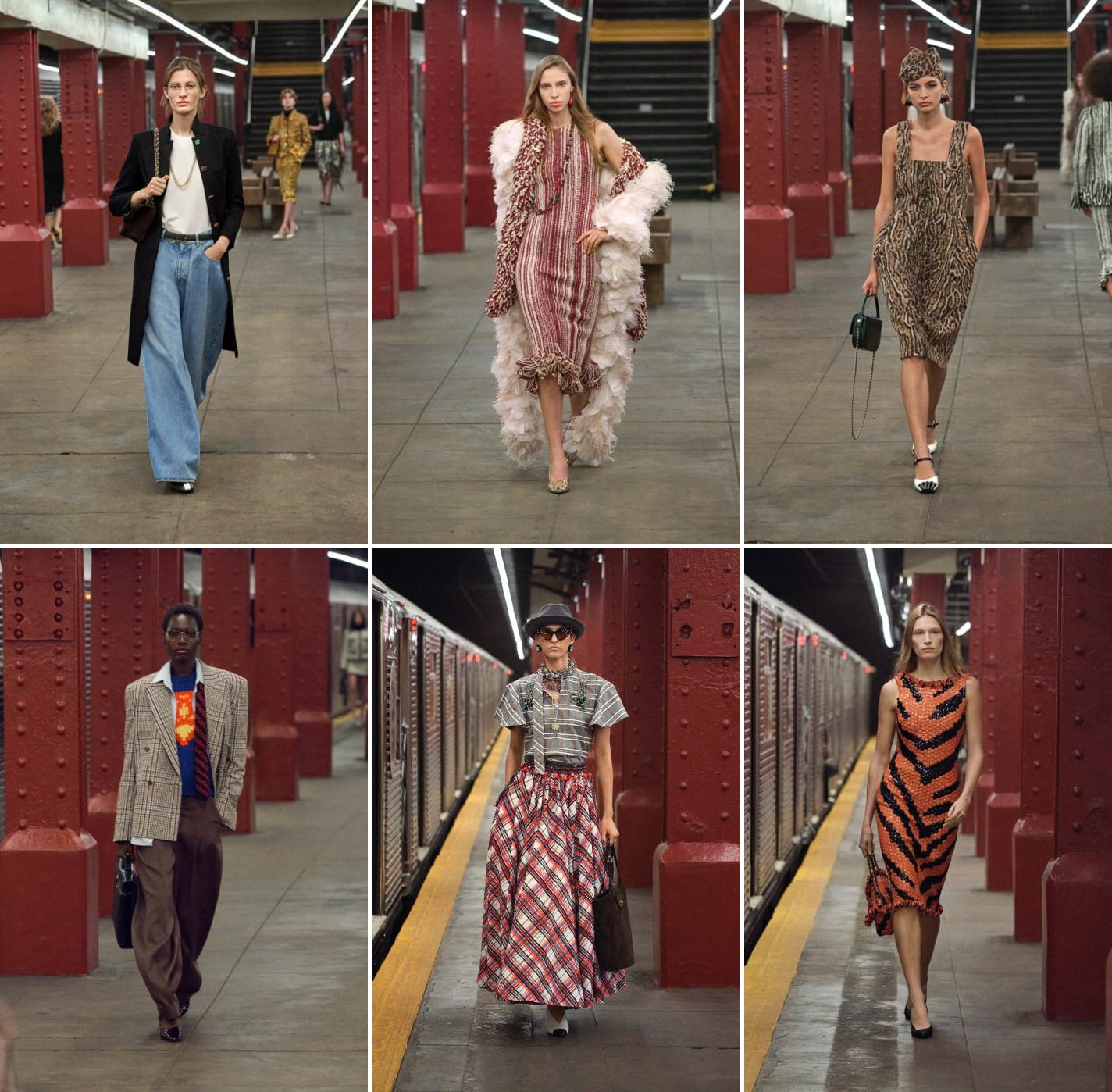
Some people (New Yorkers, really) are saying, with considerable contentment, that Chanel has finally embraced street style. The brand presented “archetypes” that are thought to be authentic and relatable, and what can be easier to connect to than women on their daily commute? It’s a very New York kind of satisfaction: the thrill of seeing one’s own clichés elevated to couture. To the locals, Chanel on the grounds that Donald Trump once called home was validating. But this is the paradox at the heart of Chanel’s American courtship: the U.S. market is both hostile and irresistible. The Trump tariffs are still in effect and they remind France that America can slam the door, anytime. Yet, the brand still sends its love letter underground, via a subway station. As (trade) war times go, seduction in hostile territory, dressed in luxury “street style” is possibly smart.
How does a brand of Chanel’s stature justify borrowing from commercial culture or the corner gift shop? It sits at the apex of luxury, yet it deliberately dips into the pool of mass-market iconography, as if it were throwing breadcrumbs to the social media frenzy from behind its hallowed double ‘Cs’. There is always craft as alibi. Chanel can do cheap and cheerful because Métiers d’Art craftsmanship transforms banality into sublimity. No symbol is, therefore, too lowly to be absorbed into the Chanel universe. Perhaps this is, as offered online, “postmodern luxury”—the value is generated not from the design’s originality, but from its commentary on its own lack of originality. The question is: Did Matthieu Blazy give all he had to his debut collection that, for a follow-up, all he had was to outdo America at its own game of kitsch?
Screen shot (top): chanel/YouTube. Photos: Chanel
 Style on the Dot