Karoline Leavitt is such a good soul that she could see calling someone “piggy” as honesty at its finest
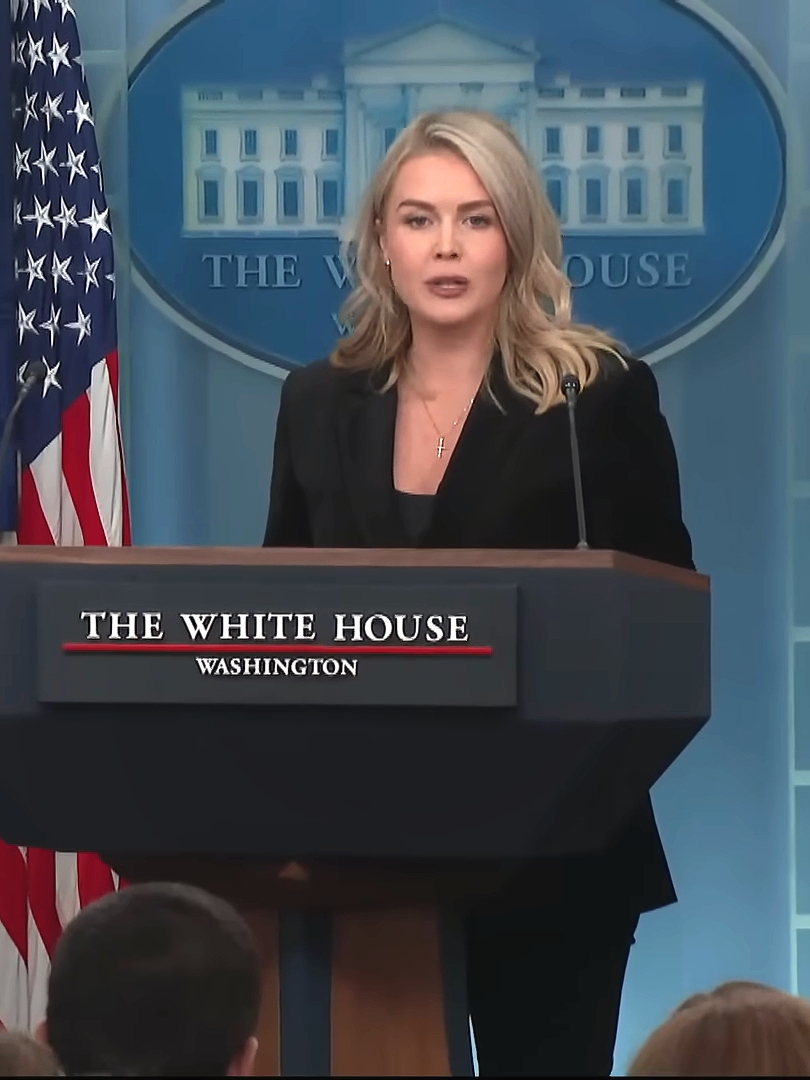
There she stood in forbidding raven, the truth she offered deathly grim. Yesterday, for her usual press briefing, White House press secretary Karoline Leavitt showed up in the James S. Brady Press Briefing Room in a black pantsuit, probably from one of her favourite labels such as Anne Taylor, and made in China. It was all no-nonsense, inky severity, but what she would soon utter was pure refuse. A reporter had asked her directly what Donald Trump meant when he called a another—specifically Bloomberg’s Catherine Lucey—“piggy”. His exacts words were: “Quiet. Quiet, piggy.” Ms Lucey was asking him “if there is any incriminating files”, with regards to the so-called Epstein Files, a topic that had an unusually high number of very wealthy individuals suddenly developing severe, career-threatening amnesia. You do your job and suddenly you appear to have physical porcine qualities.
It is not surprising that Ms Leavitt was asked about the undeniable insult. But she insisted it was not one. To her, it was something far more innocuous: a simple rebuke for dishonesty. The president, she insisted, calls out fake news when he sees it and gets frustrated with reporters who spread false information.” It was all in pursuit of “frankness”. She also pointed out to the press corp, like a mother to her brood, that Mr Trump was re-elected because of such bluntness and those before her should appreciate how ever-willing he has been to answer their questions. Her gentle reminder functions as a warning: journalists who bristle at Trump’s tone risk being cast as out of touch with his base. A spectacular example of spectacle management or how to turn insult into policy, and policy into proof of legitimacy.
It is not surprising that Ms Leavittt was asked about the undeniable insult. But she insisted it was not one
As a woman, why is it okay for her to defend anyone for calling another woman by a demeaning name? Or is this some exposure of the tension between gender solidarity and political loyalty, as some American media commentators have proposed? By defending the word use, Ms Leavitt helped normalise verbal aggression toward women in public life, reframing it as “frankness” instead of disrespect. She may be good at sanitising the language as mere candour, but she is not so good at convincing anyone that the “frankness” was necessary for the reporter to do her job. As press secretary, she isn’t, of course, just speaking personally, she’s institutionalising the idea that insults are acceptable presidential conduct. Mr Trump’s choice of description is not a neutral word, unlike the colour of her pantsuit. It is a gendered insult. Calling a professional journalist “Piggy” isn’t just plain rude; it is concise, and one word to undermine a woman’s appearance, work ethic, and fundamental human dignity. An utterly pathetic, economy of language.
In hyper-partisan politics that now defines the U.S., loyalty to the leader often outweighs siding with the sisterhood. Ms Leavitt’s role is to protect Trump’s image, even if it means defending language that demeans women. In practice, she was basically picking up his shit. Donald Trump reduced a complex accountability question into a childish nickname, thereby reframing the exchange as entertainment rather than inquiry. It’s also a reminder of how language becomes a weapon in public spectacle, where even a single word—that is a proper noun in the world of animated television shows—can ignite partisan battles over meaning. His insults are such frequent occurrences that the White House do not see anything wrong with it. You can call someone “piggy”, but—let’s be honest too—you should probably consult the nearest mirror for an immediate and mandatory intervention of self-awareness. What did they say about calling the kettle black—or orange?
 Style on the Dot