Is Donald Trump muzzling the BBC a war on global media a ploy for control or justice?
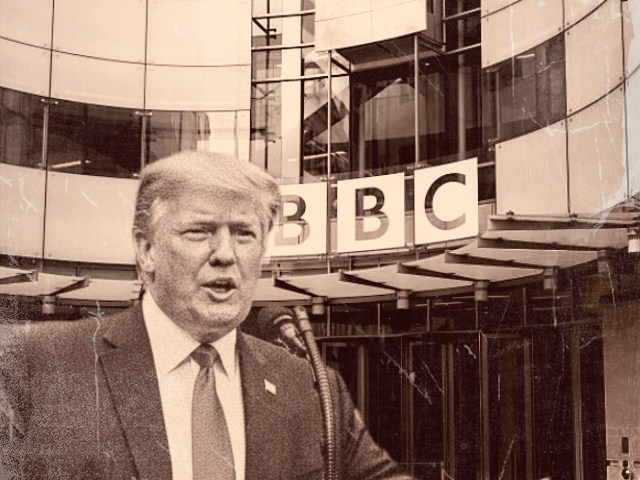
This week, the BBC is not just producing news, they are making headlines of their own. When the world’s most respected public broadcaster issued what read like a groveling apology, and subsequently saw its director-general Tim Davie and head of news Deborah Turness resigned, it was not merely an acknowledgment of a shoddy editorial error or insufficient editorial oversight. It was the sound of a global institution buckling under bluster. The weight of political and financial pressure appeared to show that Donald Trump didn’t just win a fight for a single quote, he successfully delivered a chilling message to every newsroom on our planet: Dissent will now cost you a billion dollars. His war on the media is no longer confined to the American border; it has centred on global control, and the silence it enforces is the real victory.
BBC chairman Samir Shah has issued not only a a public apology, but efforts to restore trust. The organization now faces a pivotal moment as it navigates leadership transitions and attempts to rebuild credibility amid growing political pressure. This is a rare and dramatic moment for the British broadcastor. But for many media watchers, Mr Shah’s apology was unusually contrite, especially for an institution that prides itself on editorial independence. His statement emphasized “deep regret” and a commitment to “restoring public trust,” which sounds to us like bending to political pressure rather than defending journalistic integrity. And the kind of language—“we failed”, “we let our audience down”, “we must do better”—feel more like a strategic retreat than a principled stand.
His war on the media is no longer confined to the American border; it is now centred on global control, and the silence it enforces is the real victory
The core error that upset Mr Trump was a Panorama documentary, in which the splicing of three quotes, delivered nearly an hour apart, into one statement. It created the misleading impression that the U.S. president had made a single, direct, continuous call to march and “fight like hell” at the capitol. The thing is, Mr Trump is not a quivering bowl of sensitivity that he would take what BBC edited as a vastly damaging allegation. This did not appear to be about hurt feelings; it was more a calculated flex. Mr Trump didn’t react because he was wounded; he was demonstrating dominance. It is hard to see his reaction as sensitivity when it looked to be strategy. The BBC edit was just the spark—his response was the fire meant to illuminate his global reach. It’s a hit-back to show how powerful he is across all seas!
Mr Trump’s entire political brand is built on projecting strength, not vulnerability. He’s not playing defense here; he’s playing offense. The outrage over the BBC edit was a strategic performance of power. Editors everywhere now know that even subtle framing can trigger massive backlash pivoted as personally injurious. Newsrooms may hesitate before challenging powerful figures, fearing not just criticism, but costly consequences. Donald Trump isn’t fooling anyone. That is the point. The power move isn’t about believability; it’s about visibility. It’s about showing that even the most respected media outlets will bend when he pushes. This wasn’t a man wounded. It was a man wielding influence like a builder’s hammer. One swing and it smashed everything in its path.
Illustration: Just So
 Style on the Dot