Wee Meng Chee managed to frame the initial stages of a grave legal crisis—a murder investigation—as a high-stakes, politically-charged performance, where he controlled the timing, the optics, and the narrative of his “surrender” Now, not only has the police extended his remand, they have announced that he and the deceased enjoyed a “special relationship”
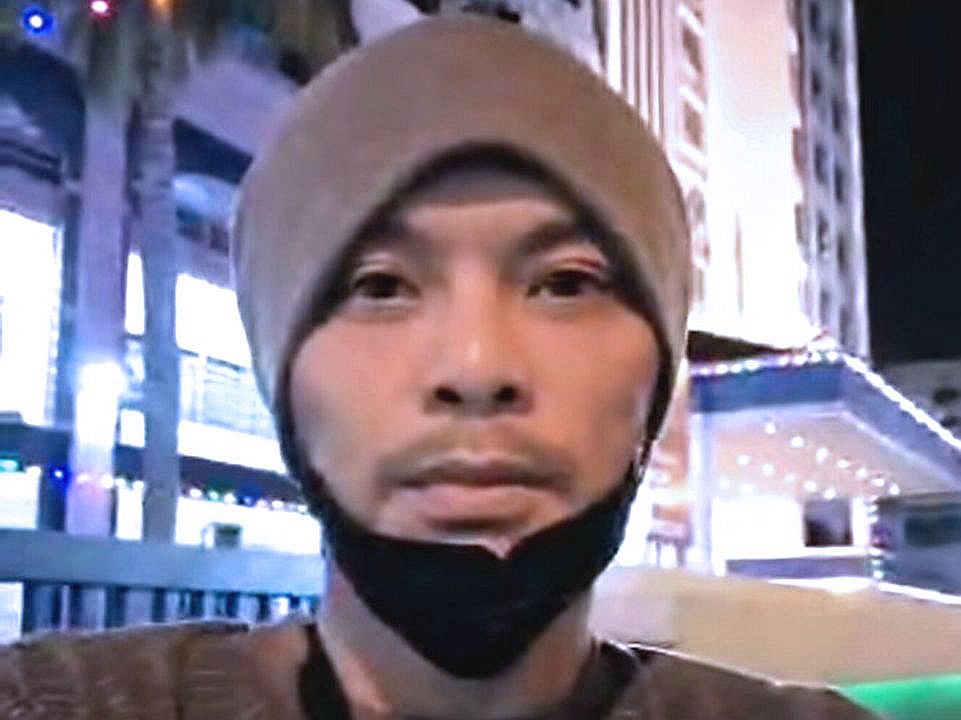
Wee Meng Chee moments before he “surrendered” to the police. Screen shot: namewee/Instagram
This is special. Seriously. The mysterious death of Taiwanese influencer Iris Hsieh Yu-Hsin (谢侑芯) in a Kuala Lumpur hotel room has officially upgraded from an unfortunate heart attack to a full-blown Malaysian noir, complete with a celebrity suspect and a revelation so vague, it is almost criminal itself. The Kuala Lumpur police had earlier in the week, extended the remand of Wee Meng Chee (黃明志, Huang Mingzhi, aka Namewee) as they delve into what became a murder investigation. The benefit of that extended period of introspection is the revelation that there was more to Mr Wee’s relationship with Ms Hsieh than he was willing to let on.
The Malaysian rapper, already facing drug charges, now finds himself breathing the very thick air of unsolved murder, with KL police dropping a bombshell about his “hubungan istimewa” or special relationship with the deceased. If this case were a movie, the critics would pan the dialogue—a “special relationship” is the least imaginative phrase to describe a scenario where a rap star is the last person seen with a woman now classified as a murder victim. The statement merely confirms what every tabloid suspected: that the hotel room wasn’t booked for a game of apateu, and the complication isn’t if things got messy, but how messy they truly got.
If this case were a movie, the critics would pan the dialogue—a “special relationship” is the least imaginative phrase to describe a scenario where a rap star is the last person seen with a woman now classified as a murder victim
That phrasing “special relationship” almost certainly wasn’t accidental. In police communications, wording is chosen very carefully because it shapes both public perception and the legal narrative. In a brilliant move of investigative hedging, Kuala Lumpur police chief Fadil Marsus, speaking to the media, used a delightfully ambiguous term to confirm that Mr Wee and Ms Hsieh weren’t just nodding in the hotel hallway. Sidestepping specifics—like whether it was platonic, romantic, or financial—by settling on a term that essentially translates to: We know they were a thing, but we haven’t decided what kind of a thing yet. “Special” suggests that their bond is relevant to the case. The investigators gave a subtle nod that this connection is the main event, but politely added, ‘No spoilers, yet.’
In his announcement, Mr Marsus added: “Mereka adalah kawan, dan mereka ada hubungan lain yang saya takkan sentuh or they are friends, and they have other relationships that I will not get into.” In the context of a high-profile murder investigation, the refusal to elaborate becomes a statement in itself. By choosing the phrase “special relationship” and then adding “they are friends, and they have other relationships that I will not get into”, the police are signaling that the bond between Mr Wee and Ms Hsieh wasn’t purely professional. If it were strictly about filming a video—as Mr Wee had claimed—or business collaboration, police could have said ‘they were working together’ or ‘they had a professional arrangement.’ The legal caution is understandable, but the ambiguity pretty much guarantees they weren’t just exchanging pleasantries about the Malaysian weather.

Namewee was in a “special relationship” with Taiwanese influencer Iris Hsieh. Screen shots: namewee/Instagram and irisirisss900/Instagram, respectively
It was a statement so broad, it could be used as a selimut (blanket). On home turf, fans and media interpret “special” as romantic or, worse, secretive, both magnifying scrutiny on the one who is incarcerated. Unsurprisingly, many consider “special” to be “suspect”. One commentator, reacting to “special”, wrote on Facebook: “警长最后一个知道啊 or the police chief the last to know?” Law enforcement offered a formal nod to the obvious, confirming the most widely accepted theory as to why the celebrity and the influencer were together: ‘It was probably exactly what you think it was.’ Similarly, in Taiwan, commentators interpreted “special” as implying intimacy or secrecy, fueling speculation about whether the influencer was romantically involved with the rapper.
Wee Meng Chee’s final remand is set to expire tomorrow, but the essential forensic proof—the toxicology and post-mortem reports—is still months away. First, the seeming drug use, then the murder investigation, and now, a “special relationship”. The only thing consistent about this case is its unpredictable commitment to the spectacular. In many ways, this parallels Wee Meng Chee’s own life, one so filled with the provocative, the profane, and, now, the polemical that it is tempting to say that from the start, it was 自导自演 (zidao ziyan)—self-directed, self-acted, self-edited. It is a rather macabre piece of performance art, rooted in his well-established reputation for courting controversy and blurring the line between art and reality. Now, the final, unscripted scene has become his masterpiece of self-sabotage, with no director in sight.
Update (12 November 2025, 21:20): Wee Meng Chee will be released on bail tomorrow, according to The Star. Investigations were unable to draw a link between Hsieh Yu-Hsin’s death and the rapper.
 Style on the Dot