Despite the glamour oozing out of her every social media posts, Heart Evangelista learned that an influencer’s empire doesn’t guarantee the nation’s heart—especially when her own fans turn on her
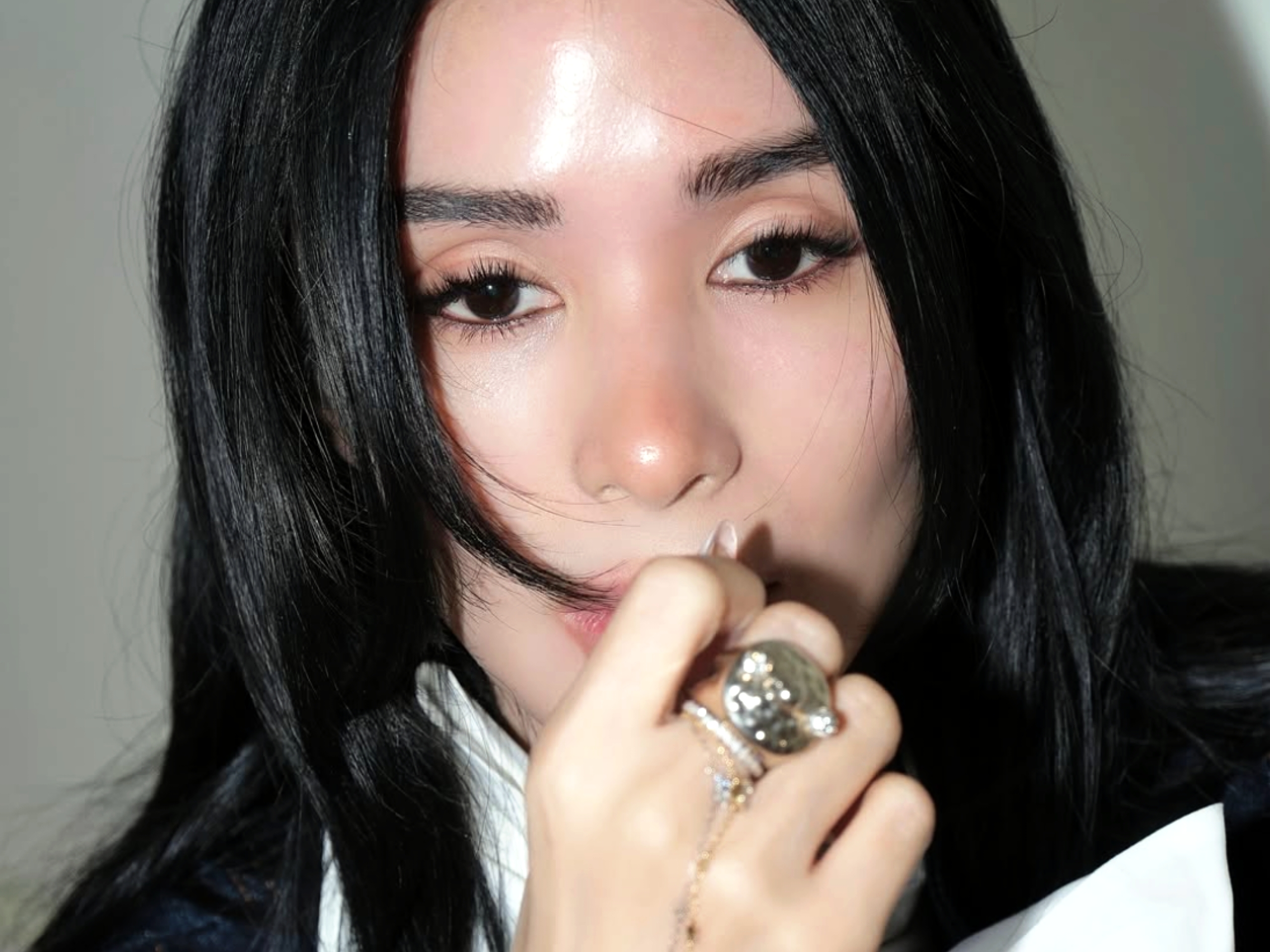
An old story shared here last year about Heart Evangelista’s popularity among a certain magazine editor has shot up in views recently. Usually, when past posts spike, the subjects in them are in the news, again. We have been following the developments of Heart Evangelista this past year, and have been fascinated by the controversies that she has been attracting, like the smell of a freshly baked pandesal (bread roll) to a hungry crowd. She’s making news again, but unfortunately for her, what she now requires is a PR team. But it remains to be seen if she’s assembled a crisis unit, or simply retained lawyers whose main mission is to silence online bashers and certain organizations she claims are deliberately trying to dismantle her personal brand.
Ms Evangelista, once celebrated for her glossy elegance and aspirational lifestyle, now finds herself at the center of intense public scrutiny, not, however, for her sponsored fashion, of which there are many, but for the company she keeps. Her husband, Senator Chiz Escudero, is under investigation for alleged involvement in a multi-million peso kickback scheme, which is part of a larger, multi-billion peso corruption scandal tied to government infrastructure projects. As accusations mount, the influencer’s continued display of luxury and her defensive public statements—including a pointed reminder of the couple’s prenuptial agreement—have only intensified suspicion. What began as admiration for her influencer empire has rapidly morphed into a brutal reckoning.
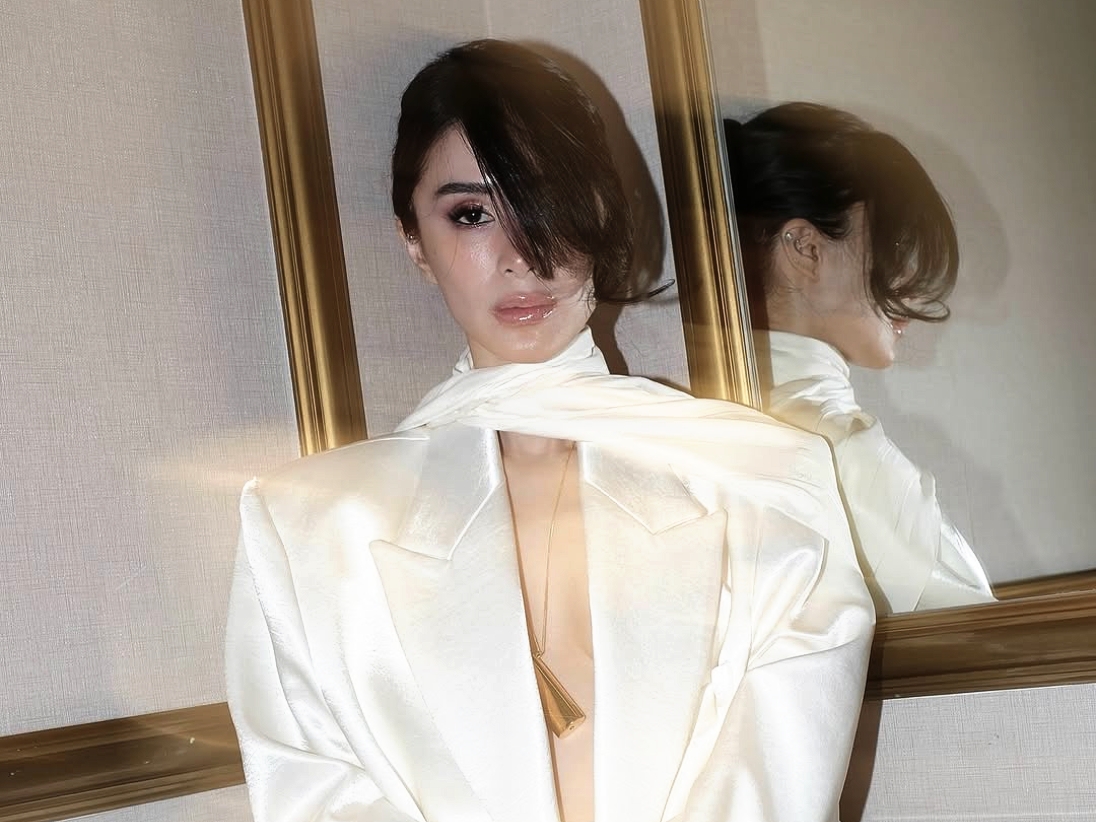
The same audience that once celebrated Ms Evangelista’s rise—from teen actress to “global fashion muse”—and adored her fashion choices is now dissecting her every post, every purchase, every silence. Her curated life of clothes and professionally fêted flying now provoke, rather than dazzle. As her senator husband faces whispers in the hallways, Ms Evangelista’s insistence on financial independence and her unapologetic display of luxury have only deepened public suspicion. The nation isn’t just watching her, they’re questioning her. And in the harsh glare of scandal, even the most polished, most decked up image begins to crack, or unstitch.
In a country where beauty queens often dominate the public imagination—with their tall frames, mestiza (mixed racial) features, and cultivated pageant polish, Ms Evangelista carved a different, but no less fashion-centric path. She is petite, with delicate features that can sometimes look tough as she aggressively curates her allure—anything from a sex kitten to a seductive school teacher. Her appeal isn’t rooted in traditional beauty queen aura, but in an unformidable style, topped with emotional vulnerability for camera lenses. This is not a matter of originality, but of meticulous adherence to a commercially viable celebrity template. Her IG page is a relentless, hyper-curated artifice; algorithmic femininity, optimized for monetization and mass appeal. She is the aesthetic equivalent of open source.
Her brand is saturated with luxury, but it’s hard to pin down what she actually stands for stylistically or culturally. It is a vacuum of meaning. She wears Schiaparelli, Dior, Chanel—but rarely uses fashion to say anything beyond “I am desirable, I am aspirational.” Her style is referential, not revolutionary. It’s a nod to old money, but is full of new pretense. It borrows from global fashion codes, but doesn’t challenge or localize them. She may speak fluent luxury, but the abundance of words come devoid of pith. On the cover of last September’s Harper’s Bazaar Malaysia, Ms Evangelista appeared as a “sophisticated lady”—the blurb sounded like it was plucked from a 1950s etiquette manual, not a 2025 fashion editorial. She is many things: emotionally performative, commercially agile, politically adjacent. But “sophisticated lady” reduces her to decorative civility, suggesting her value lies in how well she conforms, not how sharply she navigates the symbolic chaos around her.
And there was the timing. The Harper’s Bazaar Malaysia with Ms Evangelista on the cover dropped just weeks after Senator Escudero was publicly outed in the corruption scandal between late July and mid-August 2025, before being officially ousted as Senate President on 8 September 2025. It is hard to call that coincidence when her compatriots saw it as strategic, digitally-enhanced rebranding. The “sophisticated lady” label is a symbolic reset: a return to elegance, restraint, and emotional civility, designed to distance her from political toxicity. Who, we wondered at the time, was the rebrand for? Not for her fans, who were increasingly skeptical, and still are. Not for critics, who saw through the gloss, and still do. It’s for brands, editors(!), and gatekeepers—the ones who need her to remain marketable, not controversial. It’s a rebrand that says: I’m still safe to sponsor. But it also reveals the limits of aesthetic sovereignty: you can’t couture your way out of civic scrutiny forever.
Her initial silence on the scandal, later paired with legal threats against her critics, made her seem defensive rather than transparent. After her husband was unseated, Ms Evangelista remained publicly quiet. No statements, no interviews, no direct engagement with the issue. But then on 23—25 September, she went live on Instagram, expressing outrage over online criticism and announcing plans to pursue cyber libel cases against detractors. She argued that the scandal was costing her both her good name and her revenue streams, saying: “Do not come for my integrity when it comes to my work because goddamn it, I worked so hard.” The fact that she mention her work and the seeming hardship it entailed—paid no doubt—sounded like a need to protect brand integrity more than desperation to defend the truth.
In addition, Ms Heart revealed the existence of a prenuptial agreement during her Instagram Live, asserting flat-out: “His money is his, mine is mine.” This served less as a legal clarification than a reputational scalpel, severing her fashion takings from his political contamination. She wasn’t just protecting her assets; she was protecting her brand. It seemed to served a symbolic disclaimer: I am not implicated. I am independent. I am safe to sponsor. Her initial silence had already drawn scrutiny, but by foregrounding the pre-nup, she strategically reframed herself as financially and ethically autonomous. She can then continue to remain visible, aspirational, and untouchable, even as the scandal raged around her. She even skipped the Spring/Summer 2026 season of fashion week events in Milan and Paris to focus on the situation and attendant legal matters.

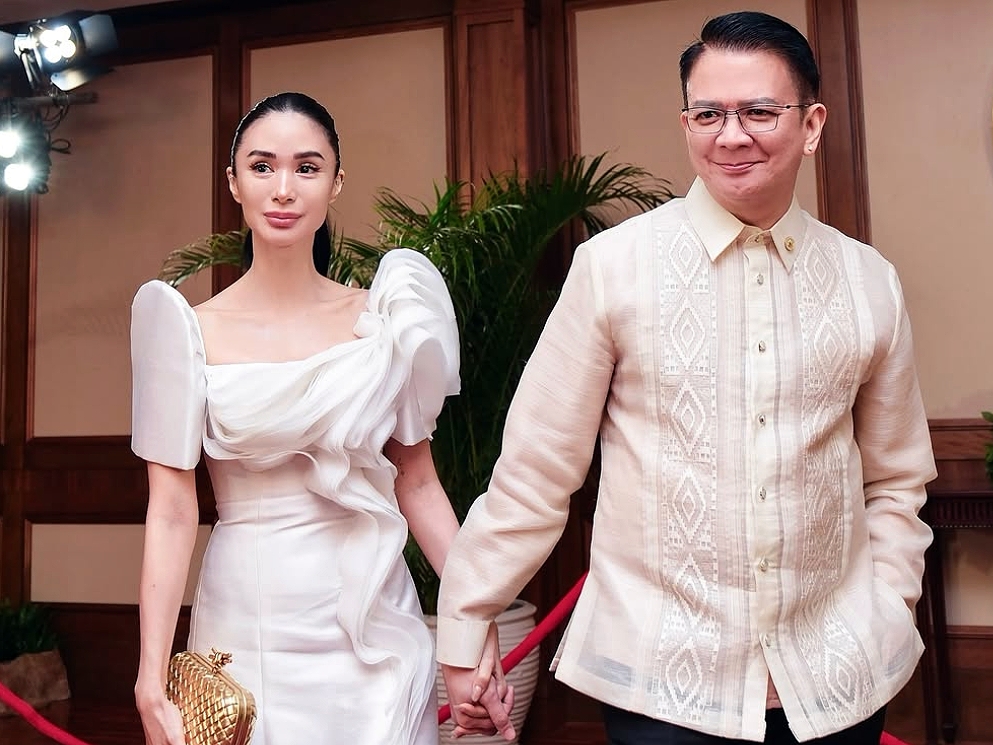
Heart Evangelista and Chiz Escudero at their renewal of vows
Ms Evangelista’s public declaration of financial independence via the prenuptial agreement was framed as self-protection, but it could have been the perfect marker of detachment at a moment when solidarity might have mattered more. Some of her critics thought she threw her husband under the bus. But 19 months earlier, the couple had renewed their vows at an emotionally performative ceremony. Held on Balesin Island, the ultra-exclusive private resort off the coast of Quezon Province in the Philippines, the event was a luxury signifier. A vow renewal here amid a political scandal was a statement of continuity. The fact that a professionally produced video of the ceremony was recorded and then shared by the bride and her guests on social media only underscored the event’s intended function as a propaganda reel for their brand’s survival. Even Ms Evangelista’s rare Paraiba tourmaline ring, worn during the vow renewal, sparked controversy for its rumored million-dollar value, but was later debunked as exaggerated. Perhaps the only thing truly renewed was the public’s interest in Ms Evangelista’s jewelry budget.
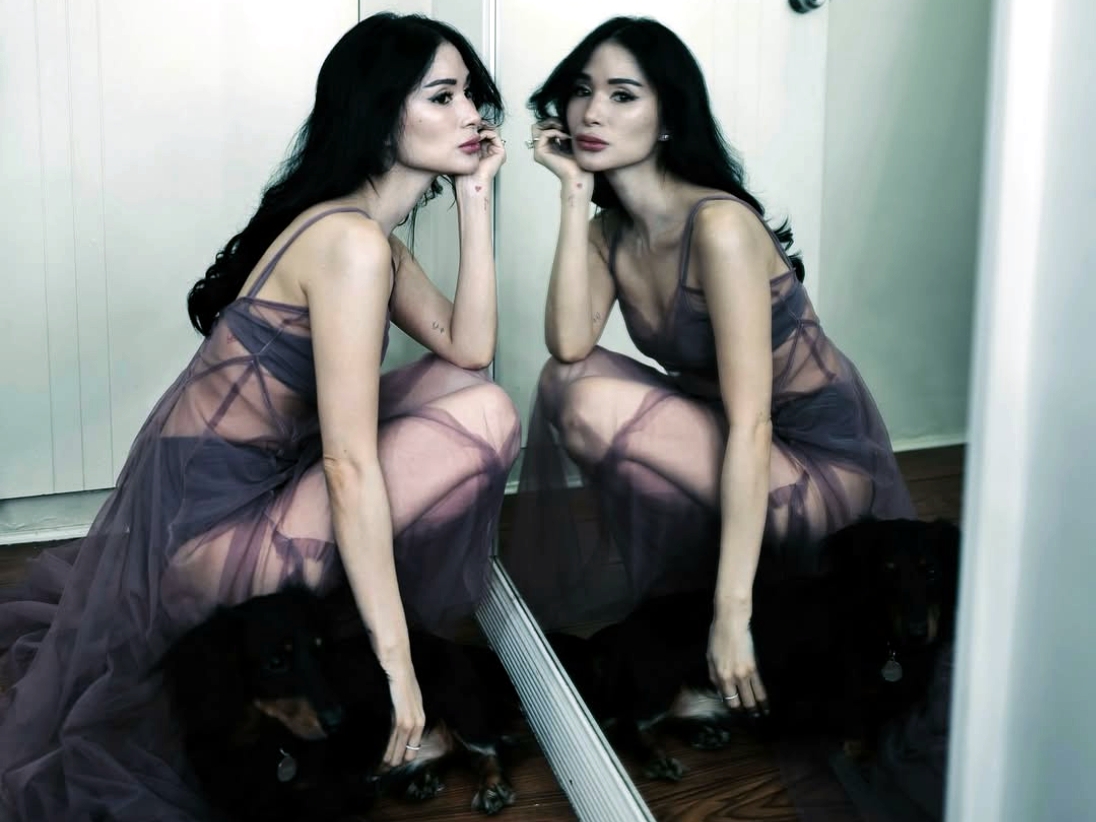
Last Wednesday, the actress/influencer shared a post from British author Vex King: “I’ve stopped being inspired by loud success. What moves me now are the people who rise without selling their soul or stepping on others…” It is not clear who she was referring to. But in view of her husband’s ouster, the ring controversy, and her own strategic silence, the quote read less like a reflection and more like a repositioning—a valiant attempt to reclaim moral clarity without naming names. It was the coda in a long overture of recalibration: the vow renewal in Balesin, the emphatic mention of the complete separation of assets, the defense of “work” as integrity, and the curated detachment from scandal. Heart Evangelista did not offer the public a confession, a reckoning, or a rebuke. She offered a mirror and, in it, the story continues, not because it is unresolved, but because it is endlessly restaged.
Photos/screen shots: iamhearte/Instagram
 Style on the Dot