Given today’s intense geopolitical climate, is Pitti Uomo accepting an unavoidable political risk by hosting Israeli-born designer Hed Mayner, whose globally celebrated aesthetic is fundamentally rooted in the military and religious symbols of his homeland?
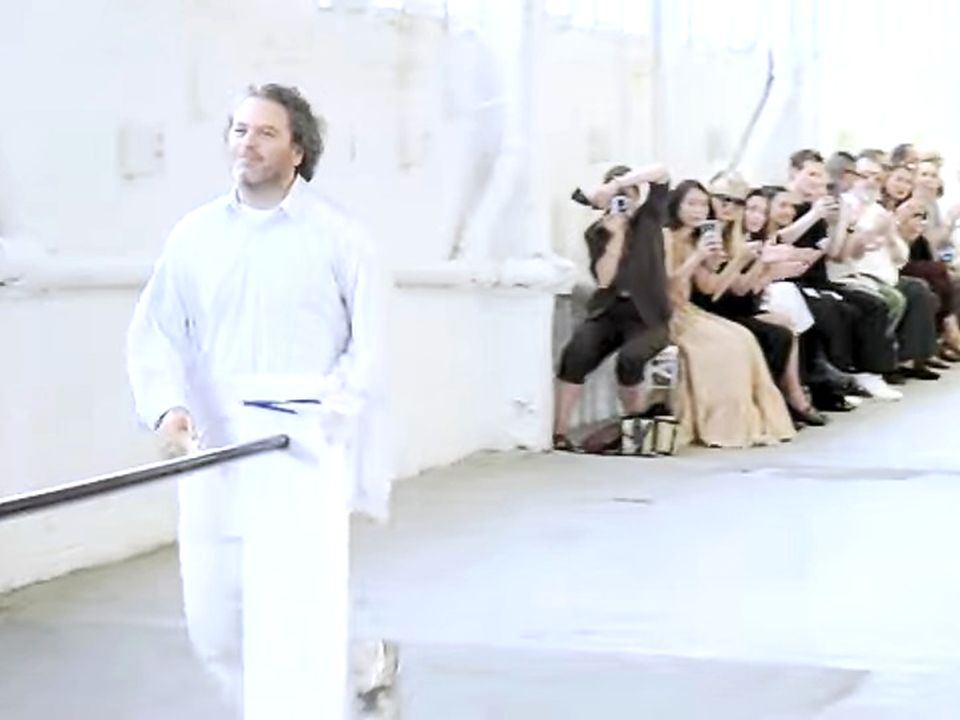
Hed Mayner at his spring/summer 2026 show in Paris. Screen shot: hedmayner/YouTube
Florence, that cradle of Renaissance refinement and Medici might, is about to host a designer whose aesthetic lies between Judean prophets and Berlin ravers. It was just announced that Hed Mayner, the Israeli designer known for his monastic draping and oversized, genderless silhouettes, has been invited to show at Pitti Immagine Uomo next January. In a statement shared on his Instagram page, Mr Mayner said, “It is a great honor to be a part of Pitti, which represents a genuine support for creativity, and I am so excited to be able to show my work in such an amazingly rich and historical city like Florence.” That was expressed with the breezy detachment of someone describing a weekend in Tuscany, not a runway moment shadowed by war. “Excited” just feels jarring: It’s the kind of language you’d expect from a designer debuting a new sneaker collab, not one stepping into a global spotlight amid a humanitarian catastrophe.
A chunk of the fashion crowd is swooning over the prospect of seeing Mr Mayner’s generous proportions and exaggerated tailoring in menswear enjoy greater exposure, but the timing of this invitation feels less like a bold artistic gesture and more like a diplomatic shrug. It is not about silhouettes any more than what it means to celebrate Israeli creativity while Palestinian lives are being erased in real time. In today’s climate, giving a platform to Israeli creatives can be interpreted as ignoring or minimising the ongoing humanitarian crisis in Gaza. It’s not necessarily about the designer’s personal politics—it’s about what their visibility represents in a global context where many feel Israel is acting with total impunity.

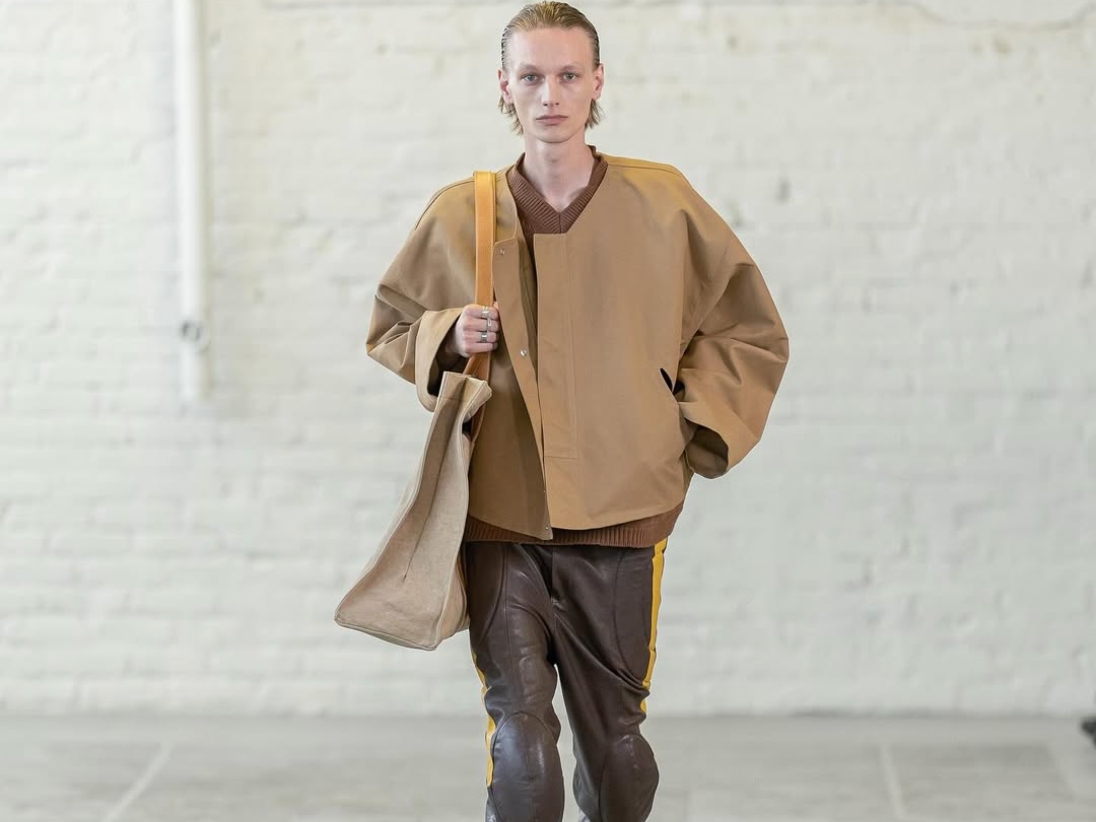
Hed Mayner spring/summer 2026
Based in Paris, Mr Mayner was born in the village of Amuka, in the Galilee region of Northern Israel. He studied at the Bezalel Academy of Arts and Design in Jerusalem before moving to Paris for the Institut Français de la Mode, culminating in his winning of the LVMH Karl Lagerfeld Prize in 2019. As a designer of his own eponymous brand, Mr Mayner is no stranger to symbolism. According to an AFP article from 2017, he “is not afraid to play with the totems of Israeli life, from a trench coat made from a military tent to a sleeveless beach top cut from a Jewish prayer shawl. Two years later, French Vogue described his collections as “timeless spirit imbued with spirituality”. We can’t help wonder: whose time? While the media swooned, what kind of spirituality is conjured by a prayer shawl reimagined as beachwear?
Let’s be clear: Mr Mayner is not the problem. His work is thoughtful, tactile, and often beautiful. But placing an Israeli designer centrestage while Gaza bleeds is a choice—one that Italian organizers made with full knowledge of the optics. This isn’t a neutral act. It’s a curatorial decision made by the Italian organizers who understand the symbolic weight of their platform. It’s not just about nationalism either; it’s about the global machinery that props up selective narratives. This isn’t about vilifying the designer. It’s about accountability; this does not diminish Mayner’s work—it demands that institutions rise to the moment with clarity, compassion, and courage. And that’s not too much to ask of fashion. It’s the bare minimum.
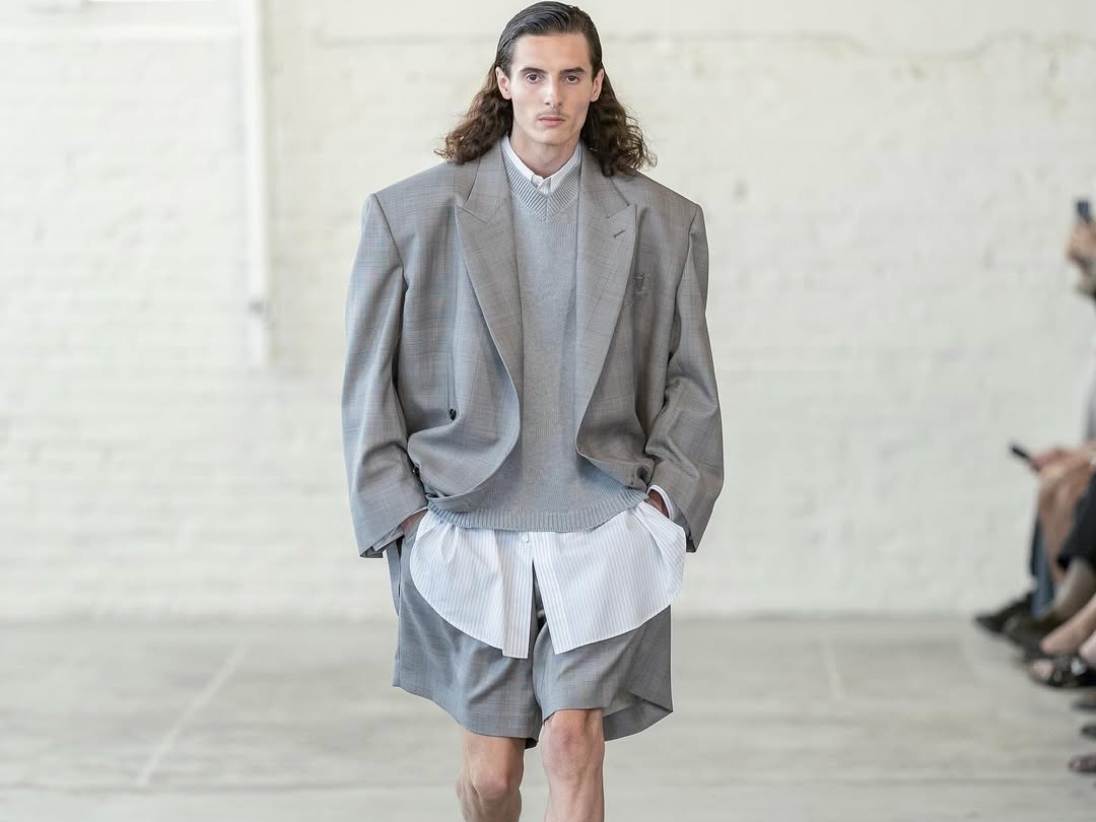
Hed Mayner spring/summer 2026. Photo: hedmayner/Instagram
Notable is how silent the designer and organisers have been on the issue. Special events coordinator at Pitti Immagine Uomo, Francesca Tacconi, said through an IG post, “Creating is thinking with your hands. That’s what Hed Mayner’s collection seems to whisper.” This positioning is almost deliberately quiet in the face of a world that’s anything but. When global events are screaming for attention, the silence from cultural institutions is deafening. The absence of any acknowledgment—let alone engagement—with the broader context has left some of us feeling that art is being used as a shield rather than a lens. Mayner’s work may “whisper,” but the world is shouting, and ignoring that dissonance can feel like complicity. And yes, America, we see you backstage, adjusting the lights, with your eyes focused on the stage.
We are told that art and culture do not mix, but America has shown that they do. Recent developments in the U.S. spotlight how art and culture are deeply entangled with politics, especially under Donald Trump’s administration. Mr Trump’s takeover of the Kennedy Centre—where he installed himself as chair, purged board members, and proposed a rebranding of the venue with his own name—shows how cultural institutions are ripe for ideological manipulation. There was even recommendations by House Republicans to rename the John F. Kennedy Center’s Opera House to the First Lady Melania Trump Opera House. His administration gutted funding for museums and arts programs, all while dictating what kind of performances were “acceptable”.
In Florence, the stakes are different, but the mechanism of control is the same. Pitti Uomo isn’t rebranding its venue, but it is engaging in institutional soft power. By selecting an Israeli designer whose work is rooted in military symbols during a humanitarian crisis, and then strictly framing that work with a neutral, aesthetic language or the more poetic “thinking with your hands”, the organizers are exercising a curatorial, as well as economic veto over political discourse. The lesson from America is clear: when institutions have the power to curate, their silence and their choices are never neutral. Pitti Uomo’s decision is an affirmation that the business of beautiful clothing will proceed, undisturbed by the clear cries of the world. Art is, regrettably, served as smokescreen.
Fashion loves to pretend it’s above politics, but it’s never really been. From Marie Antoinette’s shepherdess cosplay to Melania Trump’s “I Really Don’t Care” jacket, clothing has always been a billboard for ideology. And Pitti Uomo, with its peacocks and pageantry, is no exception. To the organisation, it is showing art. But it’s also possibly revealing what kind of politics it’s eager to host, and what kind it’s ready to ignore. Neither art not fashion exists in a vacuum; it’s shaped by the social, political, and cultural forces of its time. Whether it’s Picasso’s Guernica responding to the horrors of war, Ai Weiwei’s installations critiquing authoritarianism, or, crucially, Demna Gvasalia’s optics of conflicts for his Balenciaga runway in 2022, art and politics are entangled because both are about shaping how we see the world. To see is already to take a side.
 Style on the Dot