What is Vogue World: Hollywood, really?
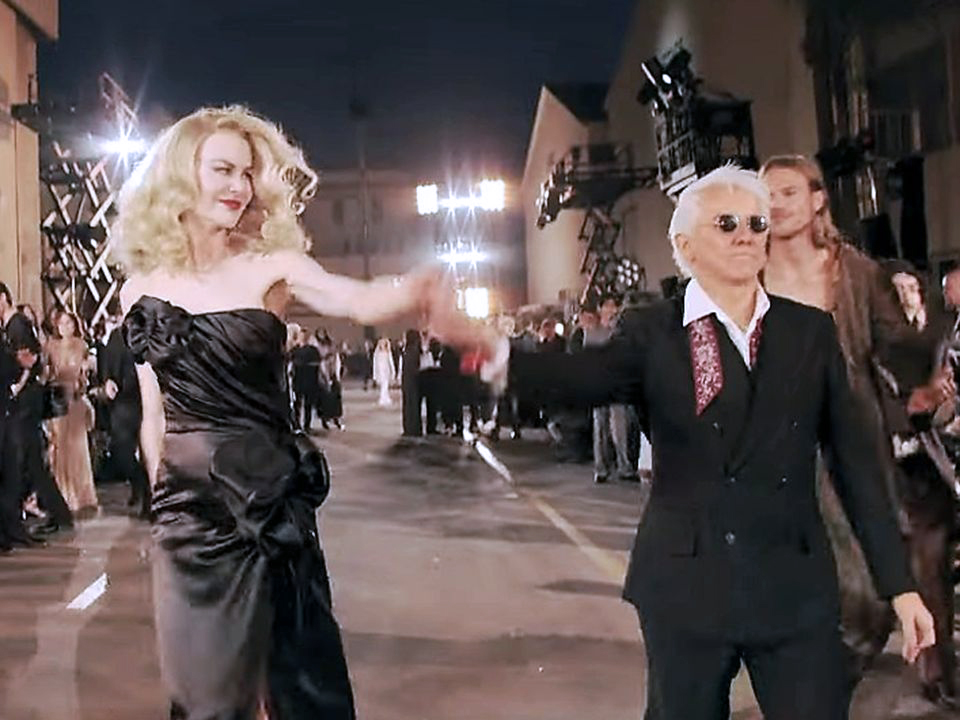
Nicole Kidman with Baz Luhrmann for the finale of Vogue World: Hollywood
Whether in print or digital format, Vogue has never been a magazine for the denizens. Yet, it’s self-memorialised Vogue World is inane entertainment for the masses. Their latest ‘Hollywood’ edition is no different. The symbolic contradiction at its heart is unmissable: a legacy institution of elite taste staging a mass-market spectacle dressed as editorial theatre. Saying it is ironic is putting it mildly. We woke up this morning to watch a livestream of incoherence, saturated with movie cliches. Nothing annoyed us more than the cinematic cosplay that magnified little more than editorial ambition and symbolic excess. It ran less like a fashion show than a choreographed hallucination of Hollywood’s self-image, with clothes no one would wear, not even to a State Dinner in Donald Trump’s upcoming new ballroom.
What makes Vogue World especially paradoxical is that, while it’s stage as public celebration, the choreography and content is unmistakably insider. Or as we would say here, a kakilang (自己人, Hokkien for one’s own people) for kakilang event. Even if it had been marketed to everyone, and livestreamed to all digital natives, it is truly a wink to those who already belong. Or, anyone Anna Wintour approves, from American actress Cynthia Erivo to Canadian counterpart Maitreyi Ramakrishnan. These are individuals who are willing to be dolled up in sponsored clothes to watch a show staged in the Paramount Studios lot—explicitly a backlot, not even a studio. The venue, while authentic, leaned into the most familiar visual trope of Hollywood: the ‘backstage’ chaos and the illusion of a movie set.
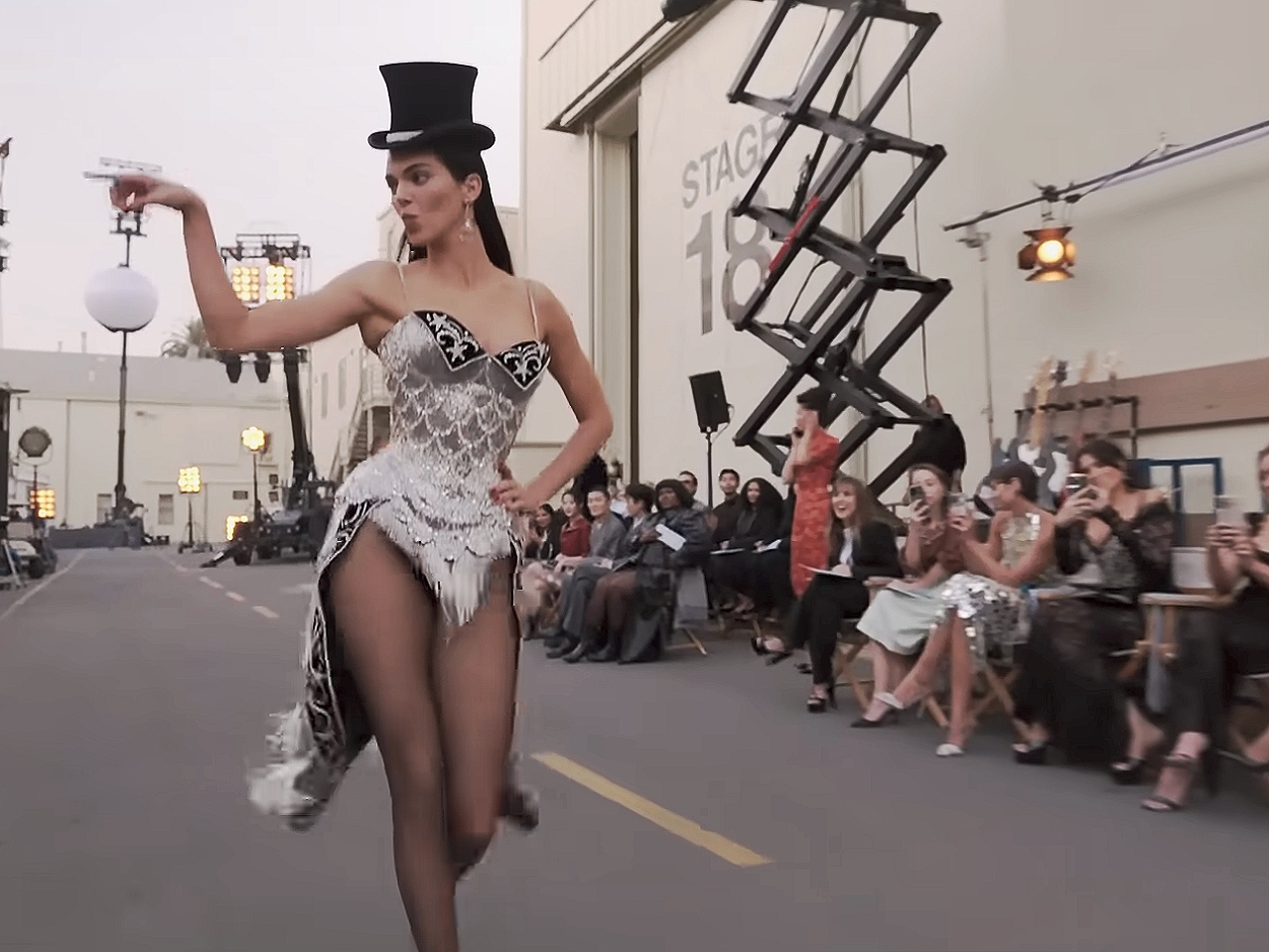
Kendall Jenner as second-rate Satine
And it was flimflam made possible by Anna Wintour’s pal, the Australian film director Baz Luhrmann. Even with a cinematic maximalist (2001’s Moulin Rouge) at the directorial helm, the substance stubbornly stayed away. What did remain was costume clichés in place of fashion soul. The blend of fashion and film could be a compelling concept, but if the execution is a parade of references rather than a creative synthesis, it can fall flat, or become nothing more than another high-budget event. It felt like a Grace Coddington fashion shoot gone horribly bad—stripped of emotional intelligence, narrative tension, and editorial soul. This was Hollywood cosplay, curated for virality. A glammed-up Macy’s Thanksgiving Parade. The question that popped up in our mind for the rest of the day: When the most powerful figures in fashion and film collaborate, why is the final product so painfully lightweight?
The regrettable thing, as we saw it: Mr Luhrmann’s directorial role at Vogue World: Hollywood was not just artistic; it was deeply entangled in the politics of proximity. His presence was both a creative decision and a symbolic flex of editorial favoritism. He is probably Ms Wintour’s most-loved film director and, no doubt, a constant companion at fashion shows and past Vogue Worlds. His involvement was almost inevitable. So, as can be predicted, he staged it like a film set, complete with cinematic lighting, director’s orders, prop men at work, and a narrative arc that was so flat, it never climaxed. By contrast, Ms Coddington’s shoots for Vogue (and she did reference films) were never just pretty. They were emotionally coded. A model in a gown wasn’t just styled; she was situated in a story, a mood, a rupture.

Betsy Gaghan. What do you call a model on a film set? Lost
With Mr Luhrmann in the picture, it was inevitable that compatriot Nicole Kidman, also a friend of Ms Wintour, opened the show… as Rita Hayworth. No prizes for guessing that her look referenced Gilda (1946), but extra points for sensing it was more like Satine (this LA evening, played poorly by Kendall Jenner) under a noir filter. Her wig was technically accurate (not in the right colour though), but was emotionally inert. Hayworth’s hair was a character in itself—Kidman’s version plonked like a prop. As a newly appointed Chanel ambassador, it was not surprising that the dress she wore was Matthieu Blazy’s take on Ms Haywood’s costume designed by the French-American Jean Louis. Ms Kidman did not move in the dress the way Ms Hayworth did in hers. One was regal, the other rebellious. One floated, the other prowled. The tribute looked expensive, but antiseptic. Staying on Ms Kidman’s extra-long segment, we thought we saw a waxwork than a resurrection.
Rita Hayworth’s Gilda was hot-blooded, performative, and emotionally manipulative. Nicole Kidman’s screen persona is cool, cerebral, and often tragic. The tribute asked her to channel a kind of erotic bravado that’s antithetical to her signature register. She could not even remove her opera gloves with the same magnetism that fired Ms Hayworth when she rolled hers down and then took them off. But if Ms Kidman’s performance was wooden, the Miu Miu alum, Betsy Gaghan’s portrayal of Diane Keaton’s Annie Hall was pure balsam (or choose your favourite timber). Vogue World clearly wasted no time in paying the late actress a tribute, but if Mr Luhrmann was the credible director that he’s supposed to be, he should have sent her home. Ms Gaghan was scenic wallpaper, even when she was helped by a near-identical outfit revived by Ralph Lauren. Annie Hall wasn’t just a look. It was a philosophy of emotional looseness, gender play, and intellectual vulnerability. Ms Gaghan’s appearance was less a cinematic echo than a dusty installation.

Angela Bassett as Queen Ramonda on a diplomatic mission
It would be too arduous to go through every character in the show, but a very curious Wakanda segment emerged, begging the question: was this Anna Wintour’s nod to inclusion, even if it looked editorially lazy? To be certain, it was visually arresting, but it was also emotionally ambiguous. It didn’t just stand out; it stuck out. Yes, Queen Ramonda (Angela Bassett) was there, but was this a fashion show or national costume day? The segment leaned into Afrofuturism: metallics, body-skimming silhouettes, and warrior choreography. It was one of the few moments of Vogue World that felt alive, not reenacted. But Wakanda is a cultural architecture of grief, resistance, and imagined sovereignty. To insert it, like a hyperlink, without context flattened it into just another aesthetic diversity. Besides, what was Marvel doing in a Turner Classic Movies tribute?
Baz Luhrmann as house director of nostalgia may not have been a questionable appointment if it did not have Anna Wintour’s finger prints everywhere. Her long-standing friendship with Mr Luhrmann—dating back to The Great Gatsby press tour, we learned, and Met Gala collaborations—made the choice and the casting feel less like innovation and more like editorial nepotism, cloaked in couture. The event blurred the line between vision and alliance. When your director and your stars are all part of the same creative household, is it still a tribute or just a reunion? The Paramount backlot became a runway of re-enactments, with celebrities styled as movie characters rather than themselves. Vogue World wanted to be both cathedral and carnival. Regrettably, it stages fashion as hallowed, but delivers it like a movie theme park ride.
Screen shots: vogue/YouTube
 Style on the Dot