Why whisper body autonomy when you can broadcast it with a costume designed for maximum, non-negotiable attention? In Taiwan, Lisa sure made her choice clear
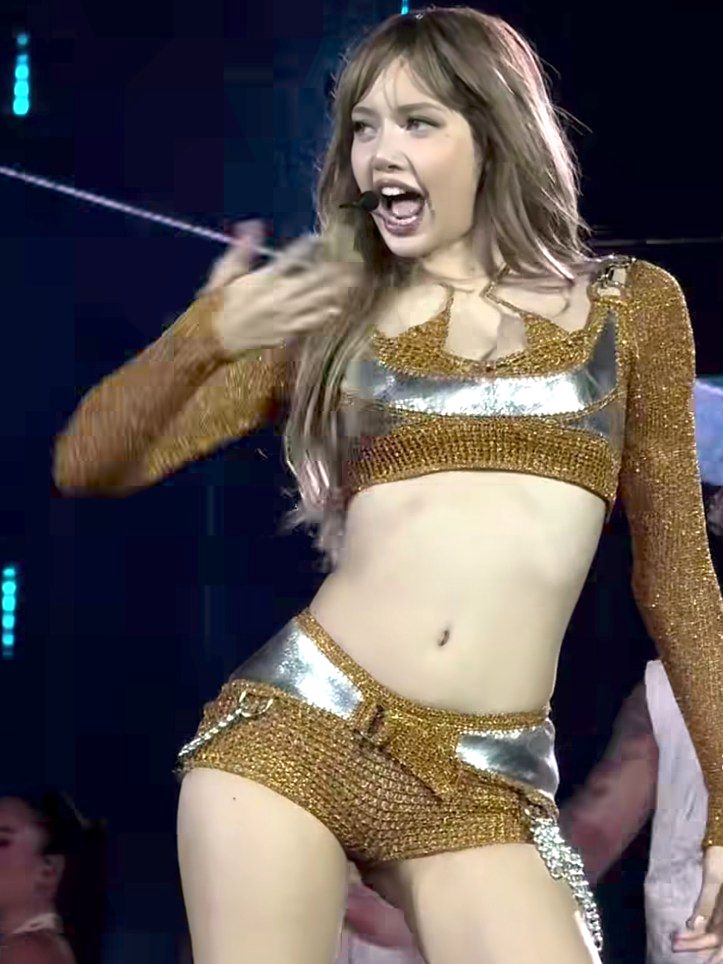
Blackpink performed in Kaohsiung (高雄) recently as part of their Dateline world tour. It was the quartet’s first Asian stop. On the second of the two-day concert, Lisa performed a solo segment—the women each had their own—of three songs. In Lisa’s set, which comprised of Thunder, When I’m With You, and Rockstar, she was togged in an abbreviated, metallic-knit two-piece with leather cut-outs by the Spanish label 404 State and fierce knee-high boots by Chinese brand Empty Behaviour that would not look out of place in the Mad Max series. The costume choice for Lisa, the forever-siren, was, frankly, predictable to a fault. Her fans would not expect more. But it was what she did in those threads that raised quite a few eyebrows.
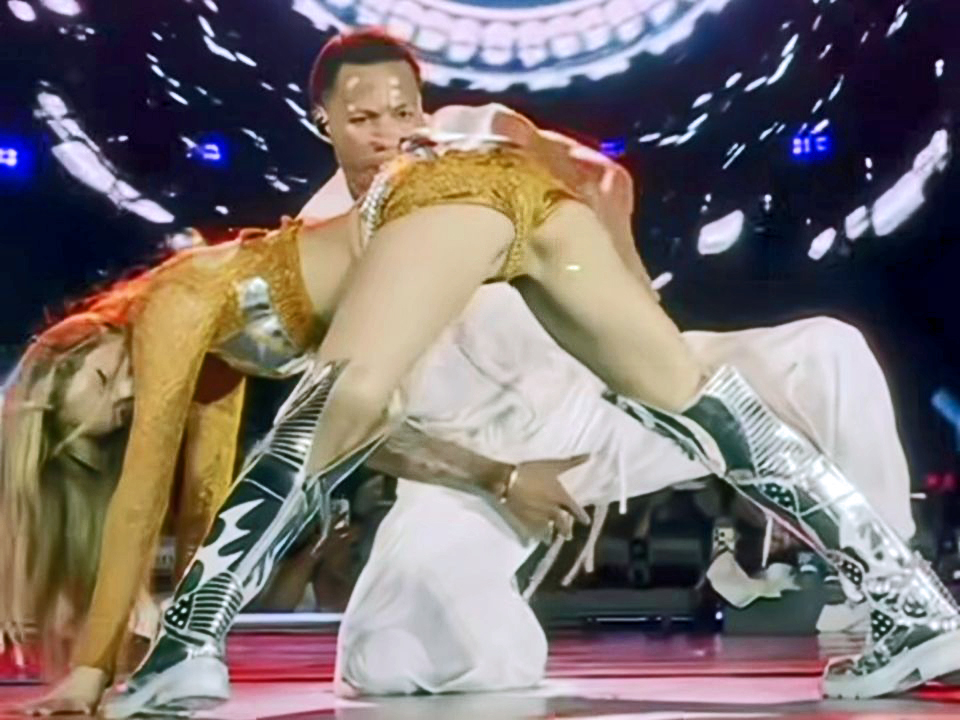
For the last song, Rockstar, serving as a climax, Lisa’s routine was wild, to put it mildly. By now, we know that her repertoire of moves is largely centred on provocation or, more precisely, seduction, as we clearly saw in the Victoria’s Secret Fashion Show last year. But, this time in the southern Taiwanese city, her performance was upgraded with a viewing. In one move captured by fan-cams, she was seen on all fours in a modified downward dog pose, her hips thrust up, and the legs then splayed. The abbreviated shorts with a narrow crotch point offered nearly no coverage. It was a single vertical bar of anatomical declaration. The spectacle forced an uncomfortable, unsolicited visual intimacy upon the audience. Her clothes have been described as “punk-glam”, but what do you call a moment where the calculated lack of fabric overrides creative merit?
The costume choice for Lisa, the forever-siren, was, frankly, predictable to a fault. Her fans would not expect more. But it was what she did in those threads that raised quite a few eyebrows
This was not merely dance; this was pushing the boundaries of exposure and emotional consent. Many of her fans would call our reaction parsing, prudish, even hate, but we are merely being observant, emotionally literate, and symbolically attuned. Lisa did not just offer a full view of the ticket booth; she had a male dancer emphasise the open house. The fellow, in all-white as if to serve as a backdrop to minimise any ambiguity, was stroking her right leg, from where her boots stopped to where her buttocks ended, while cupping his crotch. The choreography wasn’t just about Lisa—it’s about creating a sexual tableau, where male and female bodies interact in unsubtle ways. His gestures amplified Lisa’s exposure, turning it from anatomical display into sexual narrative.
These gestures aren’t random. They’re designed to provoke, titillate, and destabilize. You’re meant to feel something—and then be told not to “read too much into it”. But we did read something into it. When choreography becomes this precise, this intimate, and this anatomically charged, it is not just movement or how nubile the body is. It’s emotional architecture, set up with detachment: you can’t do anything about it other than your submit to your own voyeuristic indulgence. These days, audiences are trained to suppress discomfort in the face of spectacle, and calling it “just dance” becomes a convenient way to silence criticism. Pop spectacle, and by extension, red carpet arrivals, often sanitise sexual organs linguistically while exposing them visually. You’re shown as good as everything, but told it’s nothing.
We have been told that Lisa’s performance was intentionally structured to showcase a more mature, powerful, and sexually confident image. A common thing, it seems, for artists branching out into solo careers or more international markets. It is also about body autonomy, we were reminded. But the language of “body autonomy” has significantly been invoked to justify provocative performance choice. What we saw in Lisa’s gymnastics felt anatomically confrontational and emotionally unframed. That, to us, was not body autonomy any more than aesthetic aggression cloaked in the language of autonomy. We were not rejecting my body, my rules; but the idea that it must manifest as near-nudity, especially in a context where the audience wasn’t prepared or invited to partake, or emotionally calibrated.
We have to remind ourselves that Lisa has quite the resume when it comes to the dance of provocation. In September of 2023, she performed five times at the Paris nude revue Crazy Horse, but it is not clear if her act was risqué. Two months after her appearance, the BBC reported that she was blocked on China’s Weibo (微博) “amid speculation it’s do with her appearing in [the] cabaret”. But at the Crazy Horse, patrons knew what to expect. Conversely, at Lisa’s performance in Kaohsiung, no one was aware she would lift her derrière and splay her legs the way she did. Lisa was compensated handsomely for delivering this engineered level of provocation, which in turn generated billions in revenue, clicks, and media attention for her label and her brand. But what was the audience compensated with? Onanistic gratification?
The language of “body autonomy” has significantly been invoked to justify provocative performance choice
Lisa in her stage costume didn’t just flirt with provocation—she weaponized anatomical suggestion. The costume’s narrow crotch point was engineered to create a visual illusion of the unobscured to better simulate a horizontal tango. One instructor who teaches pattern making in a fashion school here told us that “no responsible teacher would tell a student to cut such a narrow crotch point that looked to be no more than an inch wide” to bridge the front of the shorts and the back because it offers “weak engineering support”. But as the fabric is a course knit, it may provide sufficient hold and grip. Still, how Lisa could escape the discomfort of chafing is not clear. She would have to suffer for her body-autonomous art, one that amplified the illusion through deliberate leg splay, pelvic articulation, and muscular tension.
Her fans have pointed out that she was not the first to be so daringly attired, citing Halle Berry at the Met Gala in May this year as the instigator. It is hard to understand that just because there has been a precedence, it’s okay to follow. Although Ms Berry’s clothing choice purportedly led to the ban of “nude dresses” on the Cannes red carpet later, her Met Gala appearance, it has been said, was in a fashion-centric, adult-only event known for pushing boundaries, while, by contrast, Lisa’s was for performing in a public concert, watched by the very young. A legal officer told us that the point is that Lisa was on stage. She was subjected to a different set of rules. What would be considered indecent or even illegal in a public setting, such as in the Kaohsiung public transport system, was reframed within the ground of the Kaohsiung National Stadium as “artistic expression”. Like the brand of boots she wore, empty behaviour?
Screen shots: Instagram
 Style on the Dot