Jamie Chua has gone from acquisition at Hermès to announcement on CNN, proving herself to be quite the international newsmaker she has positioned herself to be
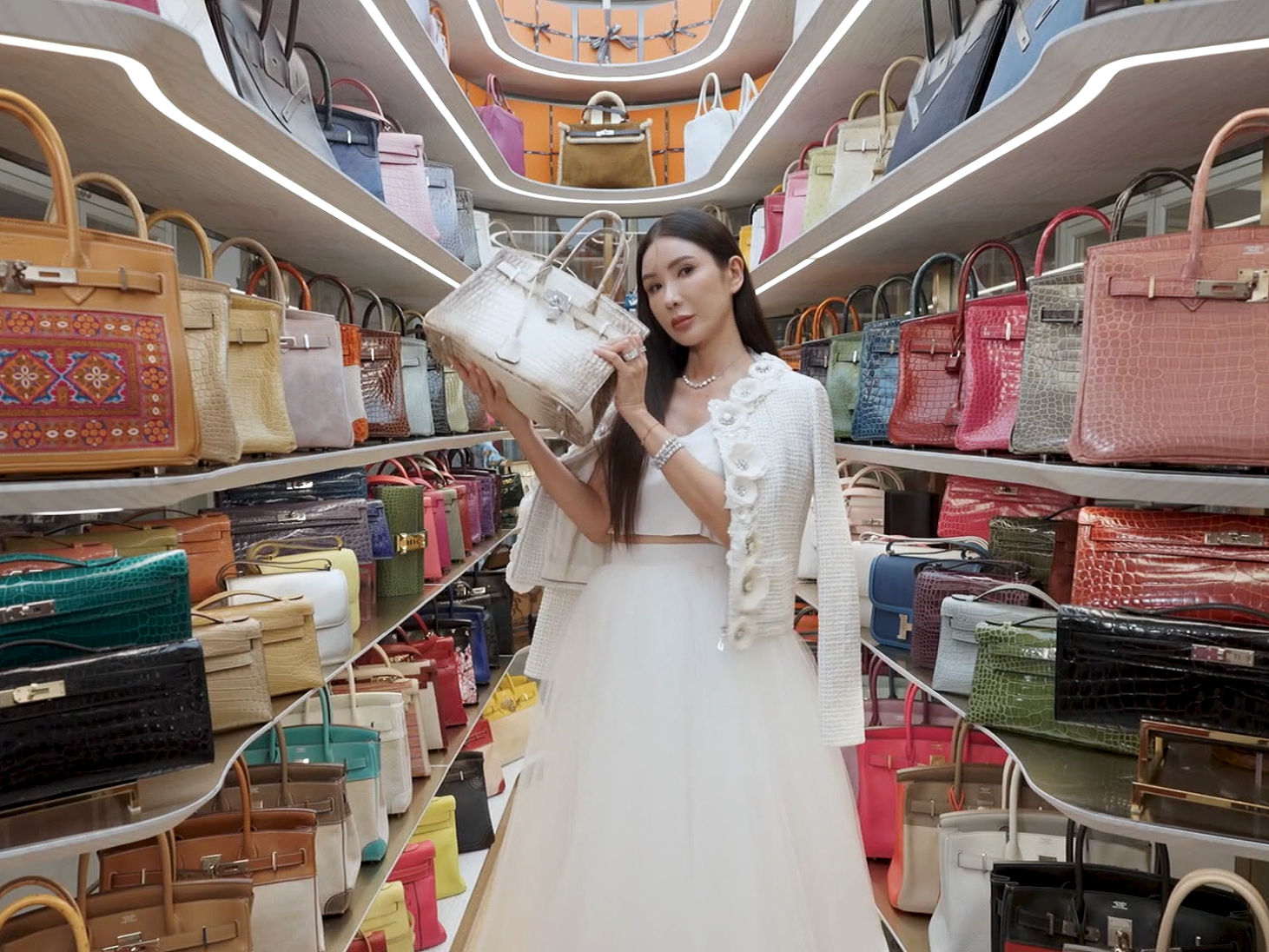
Jamie Chua with her many, many Hermès bags in her big, big storage facility
In the age of digital peacocking, securing a social media win is only half the battle. The other half is ensuring the whole world gets a real-time, curated look at your effortless triumph. Bona fide “socialite” Jamie Chua beautifully zipped up the separate seams. The former flight attendant was featured in CNN Business’s ‘Seasons’ series two days ago, introducing her famous fingerprint-access, climate-controlled closet and the Hermès vault in it, which have become less a clothing storage than a cultural mirror—reflecting our obsession with curated excess and the less discernible line between work and performance. The entire walk-in space, with reportedly more than 100 Hermès bags, is so click-worthy that it had warranted its own international media spotlight.
Togged in what appeared to be Chanel, Ms Chua confined the short tour for CNN to the main passage—a floor-to-ceiling vault flanked by shelves of Hermès bags. She revealed that she started “collecting” them when she was in her “late twenties”, singling out two of her most precious styles for admiration: a trio of the highly-coveted Himalayan Birkins (the first was secured in 2008, which then cost US$206,200) and a couple of the Kelly Quelle Idole, with their smiley faces that now easily fetch anything from US$40—US$60K, according to Sotheby’s. Ms Chua explained the appeal of Hermès bags: “To me, Hermès stands for the quality of craftsmanship, so I trust in that.” On her collection, she recited the most common justification: “I would classify it as more of an investment than a hobby. Actually, some of my special handbags have performed better than my portfolio.”
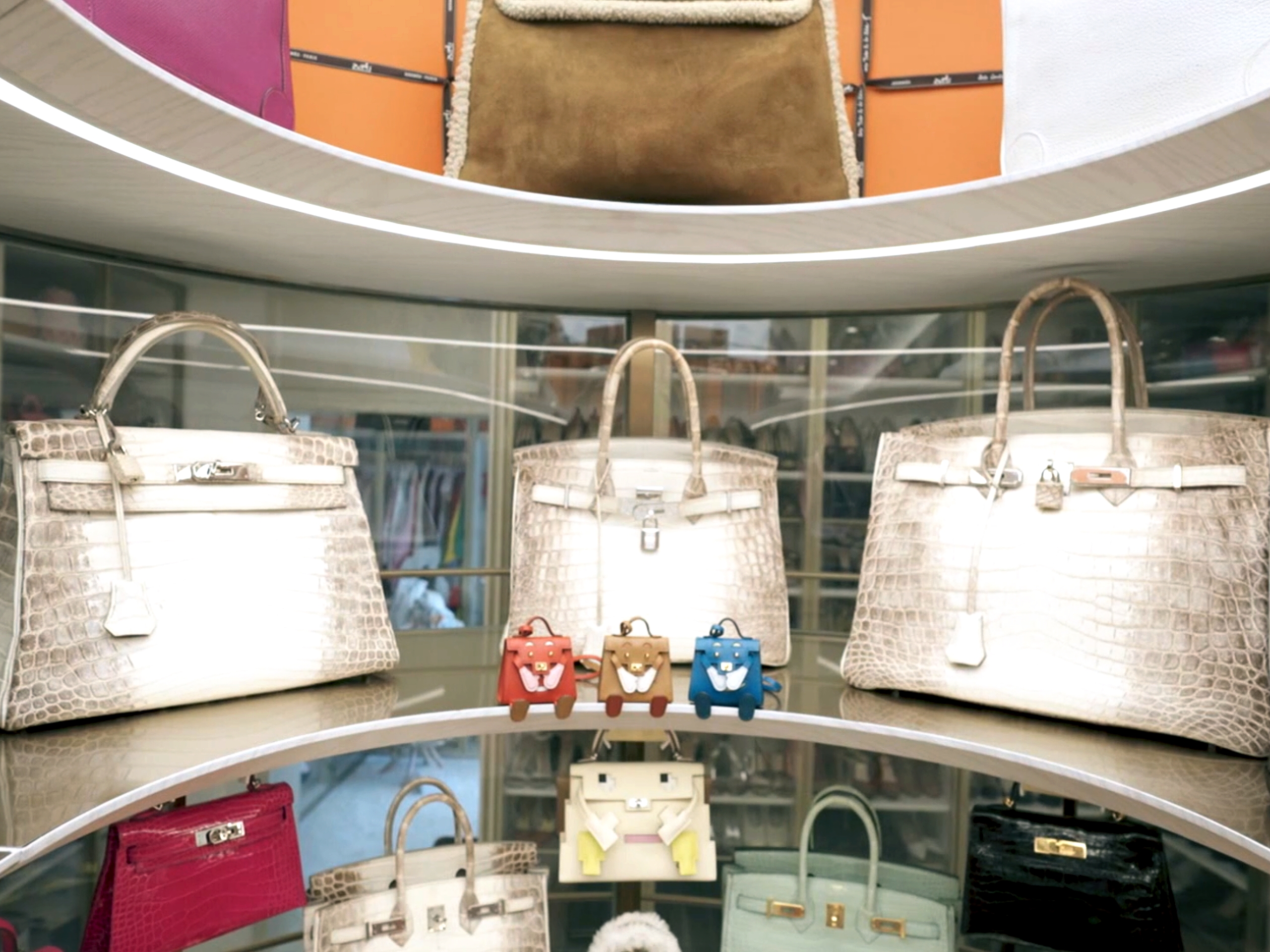
Among Ms Chua’s horde of Hermès is this trio of Himalayan Birkin
The decision by a global news network to feature her Hermès collection, rather than other Singaporean cultural capital, is more than just offering a lifestyle segment; it is a validation of the ultra-consumerist aesthetic. Ms Chua, amid her investment-grade bags, is a feminine exemplar of conspicuous consumption—a concept coined by economist Thorstein Veblen—and a type of vanity where wealth and luxury are showcased not just for personal enjoyment, but as a public signal of status, exclusivity, and success. It’s not inherently negative—many people admire this kind of aesthetic and display, and ambition. But this public elevation of consumption does raise interesting questions about identity, values, and what we choose to elevate in public life.
Even now, following the one-and-half-minute appearance on CNN, her media style can feel a tad hollow. Her online persona is largely built around visual opulence and seemingly unfettered consumption. Much of her work is about maintaining visibility, aesthetic appeal, and aspirational fantasy, creating a lucrative career with an ambiguity of purpose. But here’s the flip side: In today’s economy, visibility is currency. Curating a lifestyle, building a brand, and monetising attention is a form of labour—just not the kind we’re used to valuing. Her vault of Hermès bags isn’t just fashion—it’s a commentary on taste, exclusivity, and global wealth, and it is our island’s only museum of luxury. She should be awarded a cultural medallion for putting Singapore on the global map of such wondrous Hermès consumption.
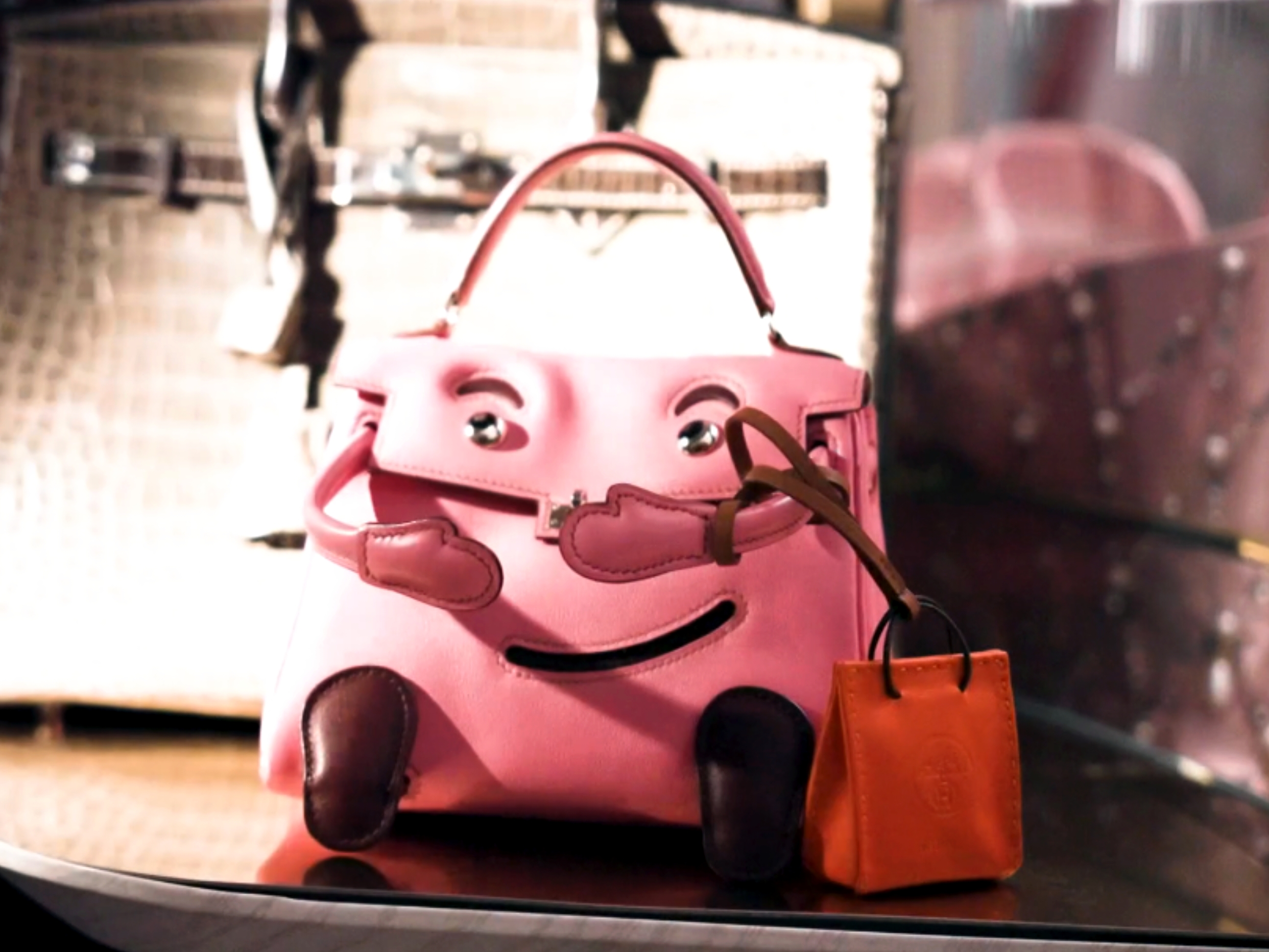
A pink Kelly Doll, also known as Quelle Idole
Ms Chua’s expensive-closet-as-recording-studio—reportedly a space where the primary employment requirement for domestic helpers is photography skill—could be the most impressive fetishisation of wealth our island has ever seen, especially when it’s framed as aspirational more than exclusionary. Even through CNN’s lens, this is not just about loving luxury; it’s about elevating it to a near-religious status, where material excess becomes a proxy for virtue, success, and even identity. The Birkin is no more a bag than a badge; the vault is less a showcase than a temple. Luxury has become moral currency and social media the amplifier. Sometimes a closet and its contents can be a visual résumé in a world where image often precedes nuance or depth.
The spectacular rise of Jamie Chua from air stewardess to international newsmaker is nothing less than the premium package of prestige. She has perfectly understood that in the new digital economy, the most valuable commodity is not scarcity, but surplus. And has cleverly elevated a climate-control space as gallery to showcase her biometrics-era cultural artefacts. The curated becomes canon and the collector becomes icon. There are likely more closets like hers spread throughout our island. But will the surfeit or such displays expose the hollowness at the heart of modern aspiration—where accumulation masquerades as achievement, and curated excess is seen as a cultural high? A vault may be filled with collectible bags, but it is our values that feel increasingly disposable. The art of the colour-coordinated display may be an alibi for skipping the museum, but applauding the spectacle may risk forgetting the substance.
Screen shots: cnn.com
 Style on the Dot