The Angels are back for the annual Victoria’s Secret show. Most of them are now equipped to fly, except they don’t. Yet they still soared, as they take their viewers on a flight of fantasy. Did you buy it?
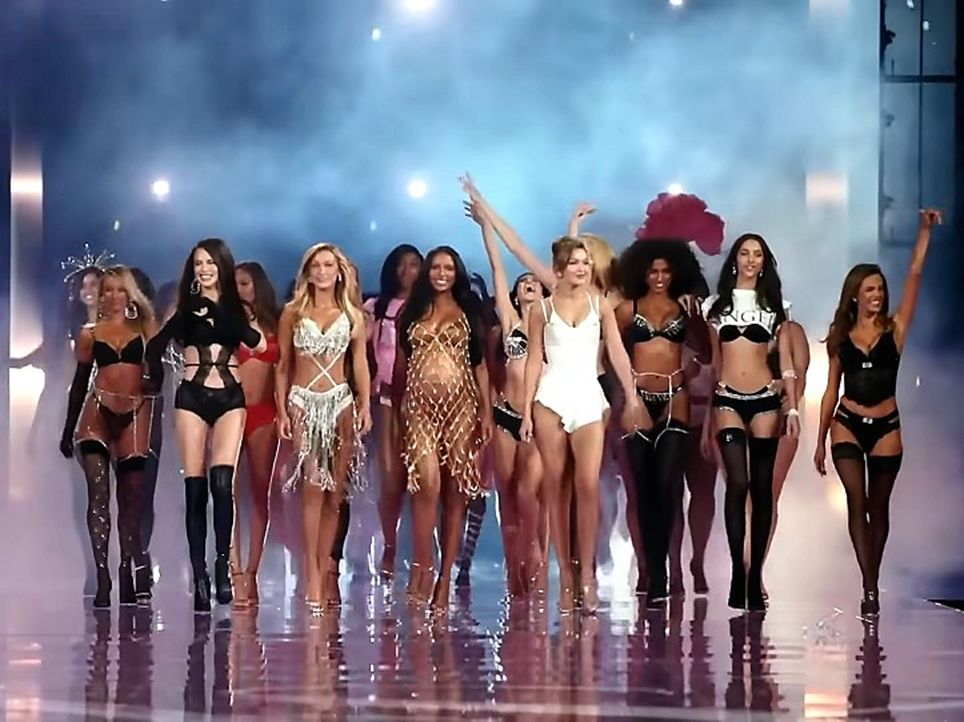
The finale of the Victoria’s Secret Fashion Show
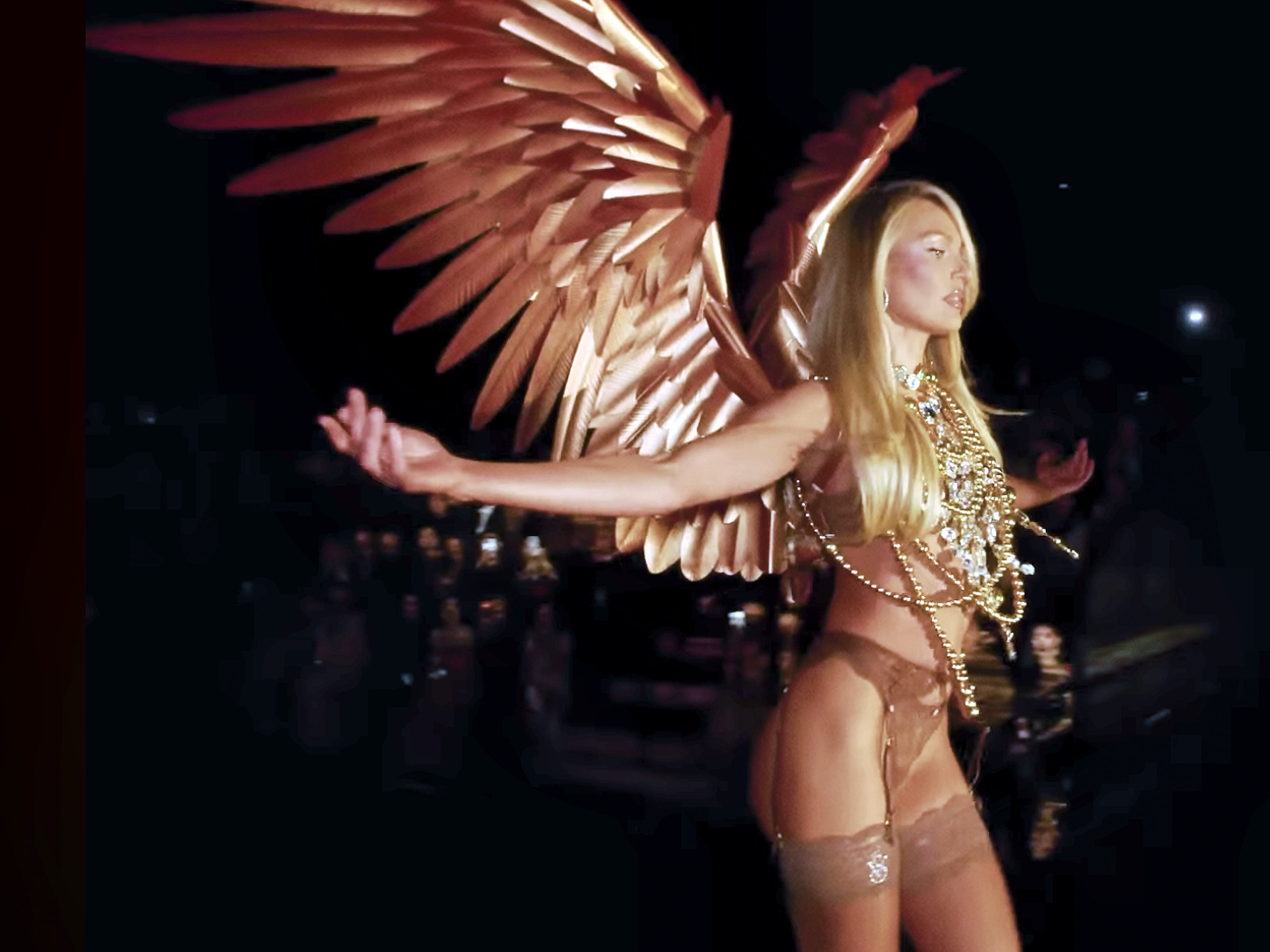
Candice Swanepoel with bronze wings
How hollow or how inane can you get? The Victoria’s Secret Fashion Show (VSFS) this year achieved a new high. It’s their second after the so-called re-entry last year into the cultural conversation. But, as with that show, the recent livestreamed spectacle was still a ghost of noughties excess desperately seeking to refit itself into a modern world that has, believe it or not, moved on. Far from being a true marker of fashion or cultural momentum, the 2025 iteration shows that the VSFS is nothing more than corporate nostalgia flashily packaged and sold as progress. It is still a bra and panty show; this time, with a lot more wings.
Even when they did not let the possessor take flight, the wings are crucial to the image of Victoria’s Secret because they symbolise angelic fantasy—light, ethereal, and curiously aspirational. Many of the models, in fact, take pride in being a VS Angel. The American basketball player Angel Reese walked the runway for the first time, and Vogue hailed that she “got her wings” at the show (the ESPN site Andscape even added “finally”). This used to be a cheeky nod to a model’s induction into the Victoria’s Secret glittery pantheon. But in 2025, it’s being repurposed as a symbol of achievement—from slam dunks to angel wings!—as if donning 15 kilogrammes (or more) of rhinestoned scaffolding is now equivalent to winning Olympic gold.

Angel Reese looking like she did not belong
Angel Reese is a national champion, a WNBA star, and a cultural icon in her own right. But the moment Vogue and other sites declared she “got her wings,” it reframed her success through the lens of brand validation. It’s not enough to be successful on the court—she must now be anointed by the fantasy-industrial machine. This is cringeworthy because VSFS tried to resurrect a fantasy that no longer feels aspirational, or even fresh. The entire production, from the lavish sets to the models blowing flirty kisses, is designed to lower the intellectual barrier and maximize the immediate, visceral commercial appeal. You don’t need to get to the end of the show to be sure that it is ultimately dated, dissonant, and drenched in glittery denial.
Sure, they had a very pregnant Jasmine Tookes open the show. What might be the statement here? Look, we’ve evolved! We celebrate motherhood now! On the mood board, it was a powerful image—a woman embracing her journey, her strength, her body, her belly. On the runway, it was a brand trying to graft relevance onto a format that still fetishises perfection, symmetry, and fantasy. The pregnancy became a prop, not a disruption. Ms Tookes did not look totally comfortable in her tentative steps. Her opener was then a waste. The rest of the show didn’t reflect maternal themes, bodily diversity (there was a plus-sized body or two), or emotional nuance. Tookes’ pregnancy was a standalone spectacle, not part of a broader narrative.
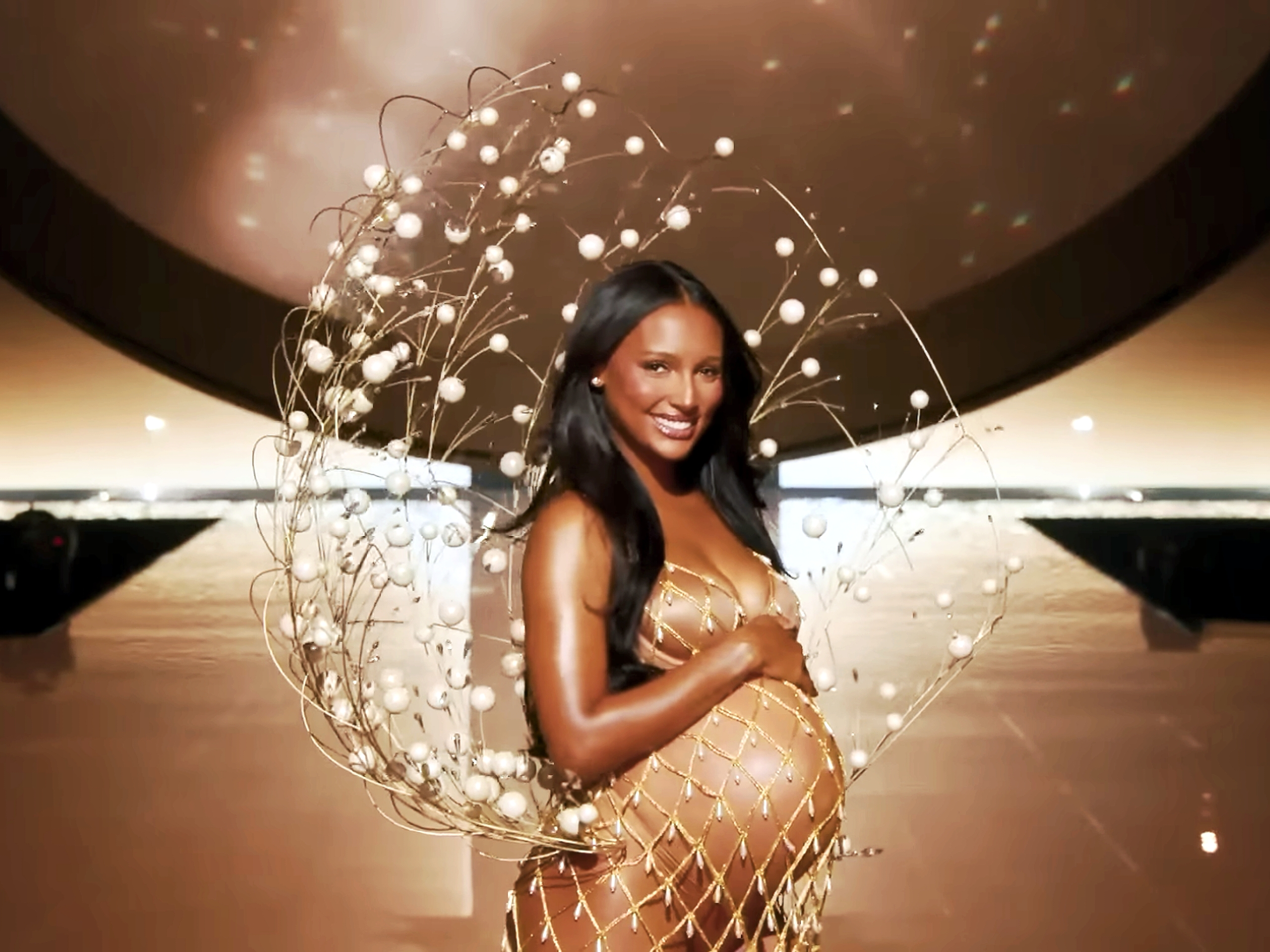
A very proudly pregnant Jasmine Tookes
The show wanted to say “we celebrate all women,” but it still demanded that they conformed to its visual grammar. Even pregnancy must be sexy, polished, and palatable. It’s not a celebration of motherhood more than a rebranding of it as lingerie-compatible. Even the performances celebrated diversity, but it appeared to forge a collision of incompatible aesthetics. Madison Beer opened the show styled like a burlesque apparition. By contrast, Missy Elliott, who closed it, emerged fully wrapped. Clearly she was there more to dominate than seduce. Between them were the synchronised sweetness of K-Pop group TWICE and the incendiary sass of Colombian singer Karol G (also fully clothes) to presumably celebrate global pop, but burst out as brand tourism.
These artists weren’t woven into a narrative or theme. They were inserted, like mood-board cut-outs on a crumbling brand collage. Madison Beer was, unsurprisingly, vaguely Ariana Grande in a segment that could be straight out of Crazy Horse or The Tiffany Show. Missy Elliot had a grander segment although we could not decide if she was performing at the Grammy’s or the Super Bowl Half Time. TWICE’s bubblegum optimism and Karol G’s raw sensuality didn’t harmonize with each other—or with the show’s confused fantasy. Sure, VSFS wanted to be everything at once: sexy and serious, carnal and confident. But instead of synthesis, we saw performances that were mood swings, not moments.
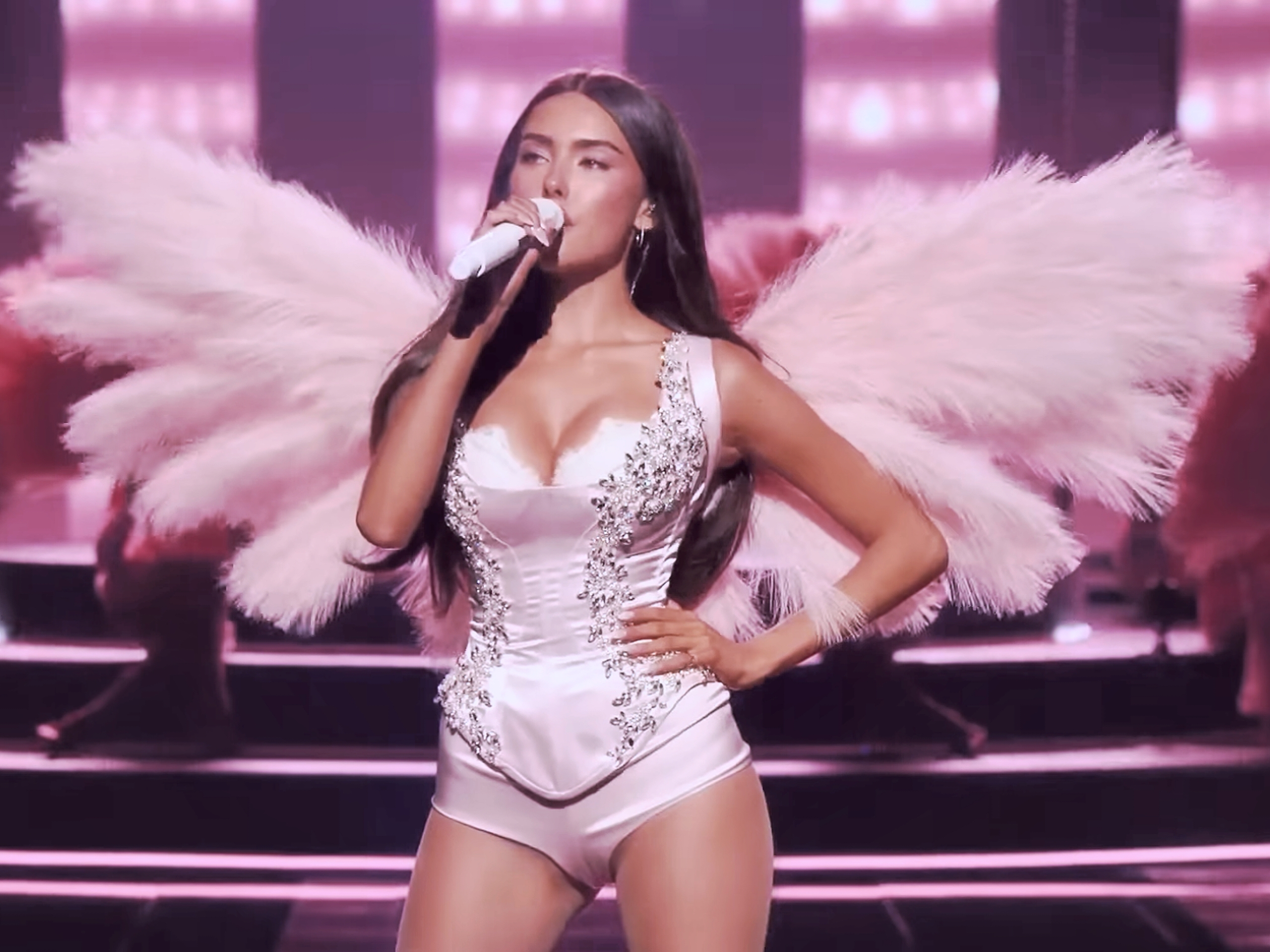
Madison Beer the showgirl
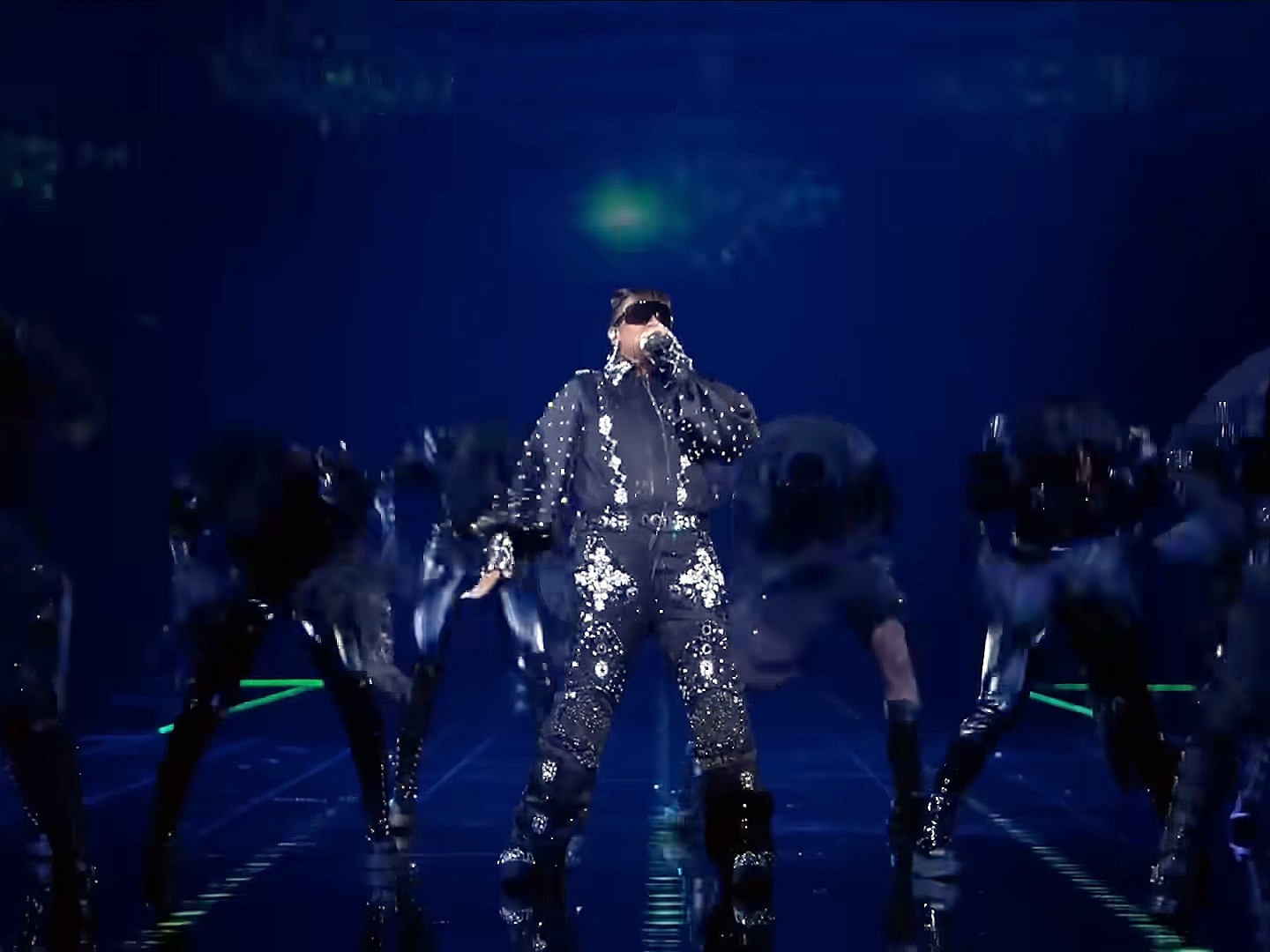
Fully-clothes Missy Elliott
The performances might have tuned down the sleeze for VSFS, but what we still got was pure sexual maximalism. Throughout the show, we could not decide if this was truly a presentation or some people’s masturbation material. It is hard to appreciate why all the models were made to pose, at the end of the runway, as if they were being recorded for their OnlyFans page. Or why there was a wind machine to ensure that their long hair tousled to a certain pre-coital sumptuousness. Whether it was fashion or algorithmic seduction, it was not hard to tell. In the end, not one lingerie (or, worse, the “fashion” segment featuring the line Pink) was memorable. Was this about celebrating women or selling sex? Was it fashion or fantasy? Underwear or undulations? The show made their choice.
The wind machine was less a theatrical flourish than a symbolic ventilator, breathing life into a fantasy that’s otherwise gasping for relevance. The wings did not take flight, but some people’s fantasy did. It gave the illusion of spontaneity, of passion, of movement—but it was all premeditated. This hyper-sexualization, ironically, clashes directly with the brand’s stated goal of “empowerment”. By clinging to an archaic, male-gaze idea of sexuality, the show confirmed that its primary motivation was and continues to sell an unattainable fantasy of desire. Victoria’s Secret Fashion Show was not hawking lingerie. It was peddling the illusion that desire can be choreographed, packaged, and sold back to us as empowerment. If only they realised that sometimes, the most relevant thing a relic can do is simply stay retired.
Screen shots: victoriassecret/YouTube
 Style on the Dot