After she accepted the Nobel Peace Prize, Maria Corina Machado said Donald Trump “deserves” it. Another sycophant in need of American backing in pursuit of peace
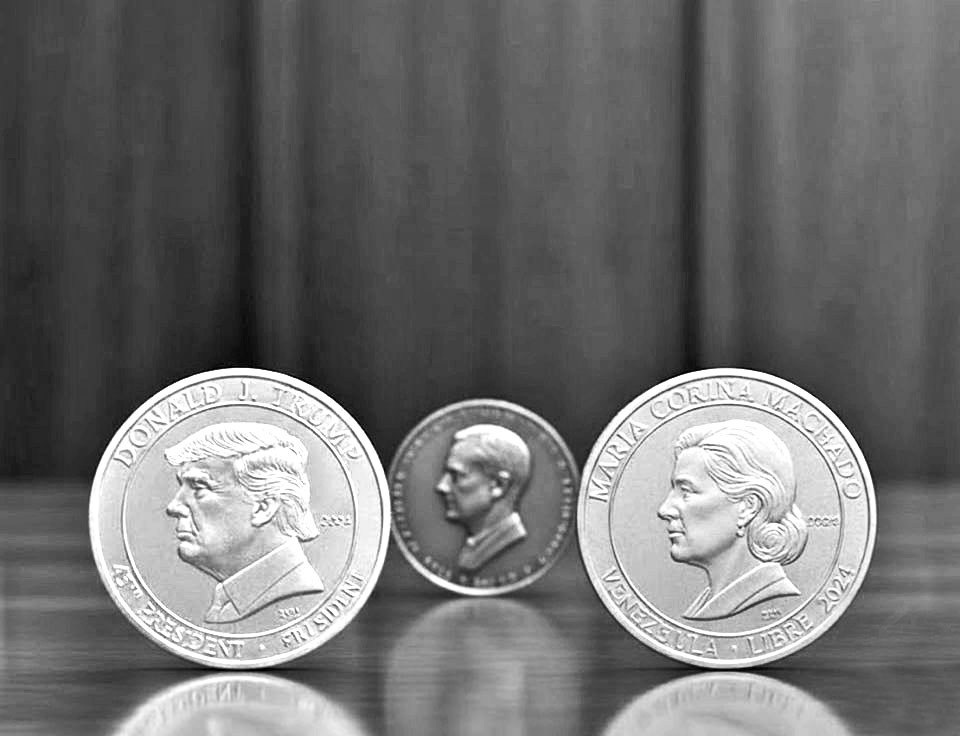
Just as her transformation from a face of Caracas elegance to a vibe of grassroots practical defines her as a political opposition, Maria Corina Machado’s metamorphosis from a global symbol of democratic resistance to a cheerleader of right-wing populism defines her as a Nobel laureate. In a Fox News interview last weekend, Ms Machado dedicated her Nobel Peace Prize to Donald Trump, praising his “decisive support” for Venezuela’s democratic movement, after winning it. Her triumph was framed by the Norwegian committee as recognition for her “tireless work promoting democratic rights for the people of Venezuela” and her efforts to transition the country from dictatorship to democracy. Yet her post-award remarks added a layer of geopolitical theater: she publicly dedicated the prize to both the “suffering people of Venezuela” and to President Trump, whom she credited as a principal ally in the fight for freedom.
This moment is rich with symbolic contradiction. Ms Machado, long positioned as a fierce opponent of authoritarianism in Venezuela, now aligns herself with a U.S. president whose own democratic credentials are hotly contested. Her praise of Mr Trump may be read as strategic flattery—an appeal for continued U.S. backing in Venezuela’s volatile political landscape. But it also risks undermining the moral clarity of her Nobel recognition by tethering it to a figure whose global reputation is so polarizing that he, who had actively campaigned for the Nobel Peace Prize himself, was dropped as a Nobel laureate. Ms Machado’s gesture wasn’t just about gratitude—it was a calculated performance of allegiance. The Nobel stage has once again become a theater of geopolitical signaling. And Ms Machado, knowingly or not, has turned her moment of triumph into a mirror for the politics of peace.
Machado’s gesture wasn’t just about gratitude—it was a calculated performance of allegiance
Ms Machado’s high praise show that Trump is a true geopolitical magnet. His pull isn’t just about ideology or policy. He is imbued with emotional spectacle, symbolic power, and strategic utility that lure world leaders to him like a celebrity to a public scandal. Trump is a walking symbol of bumbling dominance. His brand is built on disruption, bravado, and unapologetic assertion. Some women are attracted to that. And for opposition figures in fragile democracies, aligning with him can signal strength, defiance, and access to the world’s loudest boombox. More importantly, as the developments in the Middle-East show, he embodies American interventionism in a fresh new form. For Ms Machado, this aggressive U.S. policy, regardless of its methods or global controversy, represents the most effective path, possibly the only path, to end what is viewed as a brutal authoritarian dictatorship in Venezuela.
Mr Trump said that Ms Machado called him to accept the award “in his honor”, describing her as “very nice”. But niceness alone was not likely enough. She knew, as most world leaders do, that the U.S. president responds best when lauded. He rewards flattery like grandparents who reward children with candy. Public praise often leads to tangible support—sanctions, recognition, funding. Many such as Ms Machado understand this emotional economy: adulate him, and he might act. As he did to thundering ovations in the Middle-East. When his flame lures she the moth, it is not necessarily the warmth she seeks; it’s more likely firepower.
She knew, as most world leaders do, that the U.S. president responds best when lauded
Her seeming embrace of Donald Trump’s big stick diplomacy came after she accepted the Nobel Peace Prize, not as a precondition or campaign strategy. The timing raises questions about motive: was it heartfelt gratitude, political calculation, or a mix of both? Moreover, she did not nominate him, nor did she support him when he said he desired the prize that she eventually secured. There are many interpretations, but most glaring was the rewriting of the narrative. By crediting Mr Trump after her win, she reframes his role as pivotal to peace—bolstering his own claims to deserve the prize. It was an Academy Award moment when winners tend to say every nominee is worthy of the award, too. Publicly aligning with Mr Trump post-award could also be a way to reinforce ties with U.S. conservatives, security future support.
Her praise, coming after securing the Nobel Peace Prize, not during her campaign or struggle suggested that she used the moment to curry favour rather than express genuine gratitude. This risks alienating allies, especially among progressives and international human rights advocates. Her silence on Trump’s controversial actions in other regions (even when the Trump administration repeatedly authorized and carried out military strikes against vessels operating in the waters off the coast of Venezuela) raises questions about selective morality. In a world already divided, aligning with a polarizing figure like Trump can deepen ideological rifts. For now, her white T-shirt and jeans will continue to be her on-the-ground uniform of resistance, but has become a clever blend of humility and branding. Still, she’s not dressing for Oslo; she’s dressing for Caracas.
Illustration: Just So
 Style on the Dot