…the Nobel Peace Prize. And she made sure to state publicly that her victory is “dedicated” to Donald Trump. It is an amazing transformation for Maria Corina Machado, who traded tailored Caracas sleekness for grassroots T-shirt-and-jeans relatability
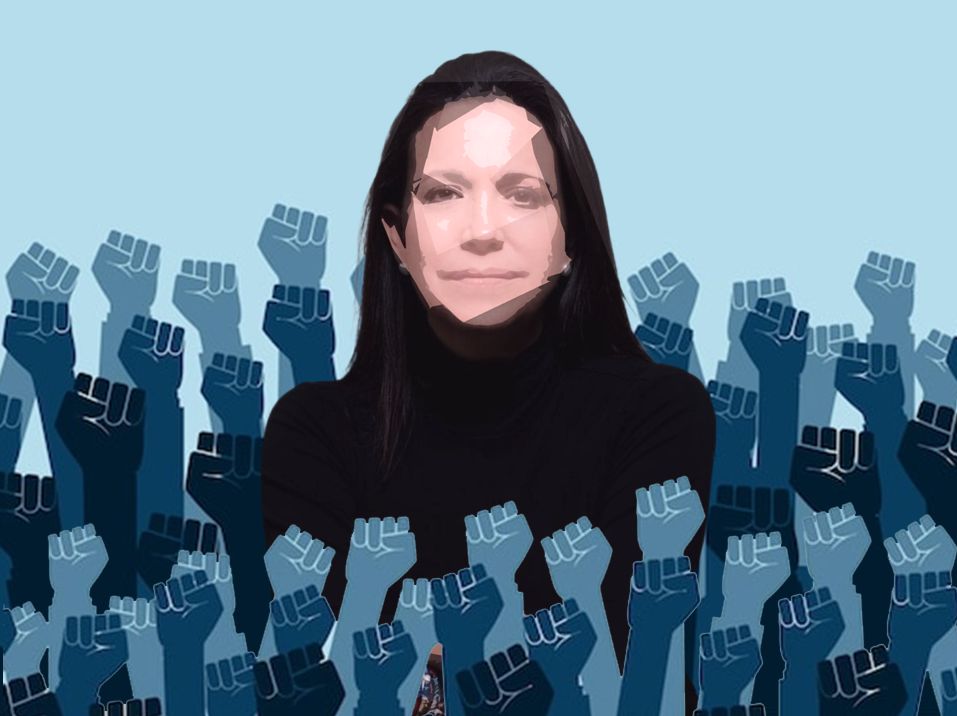
Shortly after Maria Corina Machado was announced as the winner of this year’s Nobel Peace Prize, the Venezuelan politician wrote on X: “I dedicate this prize to the suffering people of Venezuela and to President Trump for his decisive support of our cause!” She has always courted Donald Trump’s support, but by now she was exalting him. It marked a striking moment in her long-standing political alignment. This isn’t just political theater—it’s a calculated move. By hitching her wagon to Mr Trump’s, Machado amplifies her international visibility and reinforces her narrative of democratic resistance against the oppressive regime she is defying. Her message is evident: the struggles of Caracas are inextricably linked to Washington. Yet her victory is not just about powerful political patrons, it is rooted in her own personal transformation.
Ms Machado’s political ascent is not quite linear. To understand the decades-long route that led to the Nobel Peace Prize, one must look beyond the controversial X post and the mechanics of global politics. To us, the deeper, more compelling story of her transformation is written not in her words, but in her clothes. They have become a kind of silent manifesto. When she first entered the public eye around 2002 as a civic activist and co-founder of the electoral transparency group Súmate, and throughout her subsequent term in the National Assembly, she was the embodiment of the East Caracas elite. Her polish—the composed demeanor, the impeccable tailoring, the educated, successful woman of finance—was initially a strength, projecting competence and credibility. But in a nation polarized by socialist populism, this very sophistication was a double-edged sword: it made her an easy and potent target for a regime determined to weaponise class against the opposition.

Maria Corina Machado in a 2015 photo, wearing Gorpcore-style shirt and jeans
At the beginning of her career, as her socials show, Ms Machado was partial to ‘professional’ attire of female politicians—feminine shirts, sometimes Gorpcore in style, with their utility pockets; liquid blouses, mostly unbuttoned to expose the cleavage; sensible suits, often in white; and dresses with prints that might be considered tropical. These would not be out of place in the White House. In later years, there were attempts to look fashionable, too. One group of photographs she shared on Instagram in February 2023 showed her in a black jumpsuit, made less work wear with a not uninteresting statement necklace: a fringe of raffia and charms that reached her crotch, looking like an incomplete macrame project. Throughout a good part of her early political career, Ms Machado showed she had a sizeable wardrobe. As a public figure, she was expected to.
The luxury of a diverse, sophisticated wardrobe, however, became untenable when the government’s machinery of control shifted into overdrive. As the regime intensified its crackdown—disqualifying her from public office, blocking her from flying, even forcing her to lead her campaign across the country by truck and foot—Ms Machado shed her sleek, feminine aesthetic for the uniform of the working class, the protester, and the street campaigner. The tailored blouses and suits were replaced by a plain white cotton T-shirt (including those with the party logo), simple jeans, and durable sneakers. This sartorial shift is not a simple wardrobe update; it’s a calculated semiotic manoeuvre. It signaled mobility, humility, and resistance. Or, fashion as political theatre: the elite performing anti-elitism.

Ms Machado’s typical work attire—the white shirt
This contradiction is clearly strategic. Ms Machado is navigating a political terrain where the official media and figures loyal to the government have vilified her with extremely harsh language, even calling her a “puppet of the U.S.”. Despite the vitriol, she has remained “a beacon of peaceful resistance”, as her supporters describe her. While her office-y blouses and pearl earrings spoke to boardrooms and diplomatic salons, her far more casual attire of the past two years was calculated to appeal to her base. Her adoption of T-shirts and jeans was not merely pragmatic; it was a potent act of political semiotics. The white shirt she favoured, the international colour of peace and the visual antithesis of the “war criminal” the regime claimed she was, instantly neutralized the government’s rhetoric. The white T-shirt is not merely a costume change, but a calculated protest: a powerful, populist blend of resistance aesthetics and non-violence, worn by a leader the government is desperately trying to blacken.
There is a deeper irony here: Ms Machado’s visual transformation mirrors the broader displacement of Venezuela’s middle and upper classes. By dressing down, by turning to basics, she’s not just aligning with the economically disadvantaged—she’s also mourning the collapse of the class she once clearly belonged to. If her T-shirt is a campaign tool used as a shroud for a lost republic, then the rosary she wears—gifted to her by supporters—is the relic: a sacred object that carries memory, mourning, and metaphysical resistance. However, Ms Machado, a devout Catholic, doesn’t just wear one rosary—she layers them, sometimes in the colours of the Venezuelan flag. This visual excess turns a personal devotional object into a public statement. It is not amplifying a gesture, it is availing religious iconography as moral authority, divine protection, and emotional solidarity. It is not just faith; it is militant faith.

Ms Machado in the T-shirt of her party during a rally
The elite woman, divinely guided and, now, globally sanctified, is seen as an indefatigable and relatable figure of grassroots endurance. In a call by the Norwegian Nobel Institute to Ms Machado after the announcement of her win, she stated: “I’m just a part of a huge movement. When asked what changes she would like to make with the prize, she said: “It’s been a very long journey, at a very high cost for Venezuelan society. The Venezuelan people persevered. And I believe that we are very close achieving, finally, freedom for our country and peace for the region.” The verbal softening, like her change in dress, signals a crucial shift. Where she once called the present regime a “criminal dictatorship” and urged “clandestine resistance”, her new tone is hopeful, suggesting that the struggle has matured from rupture to perseverance, from mere resistance to the promise of restoration. Her soft, even conciliatory tone helped recast herself as a stateswoman, not just a protest icon.
Her new visual language is likely what the Nobel Committee has, in essence, validated. By awarding the Peace Prize to Maria Corina Machado (rather than to Donald Trump, who had desperately hoped for it), the world is not just rewarding her political struggle; it is endorsing the semiotic transformation from the old, ineffective opposition—symbolized by the tailored “Caracas blouses”—to the new, enduring resistance of the plain white T-shirts and rosaries. The prize is the final, dramatic repudiation of the regime’s attempts to smear her as a “wild demoness” or “war criminal” or, moments ago, “demonic witch”, a global rebuke of the regime’s aggression in de-legitimising her. Yet, this great recognition of her peaceful endurance contains another irony: the new “la libertadora”, as she is called, dedicated the award to President Trump, whose “decisive support” hints at a reliance on external force to achieve the liberation the Nobel Peace Prize celebrates.
Illustration (top): Just So
 Style on the Dot