Pierpaolo Piccioli’s nod to history at Balenciaga is a promise to sustain its vital pulse, even as he embraces a new gentler, soulful rhythm

For the past ten years, we were all weaned on one Balenciaga. It was conceptual, oversized, and provocative, so much so that it is now hard to recall a time when the brand was associated with the corporeal, the conventionally-sized, and the pleasing. Yet, in Paris this morning (our time), that reality at Balenciaga was decisively overwritten: we now revisit a certain propriety and comely proportion. Pierpaolo Piccolo’s debut at the French-owned Spanish house was totally new only because it so sharply pulled away from the decade-defining past. His own aesthetical flair remained; it was farewell to Demna Gvasalia’s baggy streetwear, adieu to his dystopian irony, and welcome to a course correction that spoke for the architectural, the emotional, the refined. As it urned out we were climbing the wrong mountain. Nice view, though.
In The Heartbeat, as the collection was titled, Mr Piccioli’s activated the heritage setting that strategically reasserted the one consistent aesthetic pillar of Balenciaga that existed long before the era of social media virality: architecture and form. Yet, crucially, he did not totally disregard two key designers who came before him: Nicolas Ghesquière and Mr Gvasalia, only a full bypass of the house anomaly, Alexander Wang. We saw Ghesquière-ish florals (except now they came as feathered flowers), chinos (now cut wide through the legs), and equestrian-style hats (sleeker, if that were even possible). We also saw Gvasalia- era eyewear in those bug-eyed sunglasses (so large they look like butterflies with spread-out wings) that many models wore, even with evening wear. and the extreme reinterpretation of the Gvasalia volume, now tempered. Mr Piccioli did not put out a brand reintroduction, it was a firm punctuation mark.


Concept indeed took back seat to construction. The most immediate correction Pierpaolo Piccioli made was to the silhouette. Where his predecessor favored anonymity through enveloping volumes—hoods pulled up, shoulders slumped in an existential shrug—Piccioli used structure, vaguely ’50s, to assert the wearer’s presence. These were clothes that carved out space: every cocoon coat, every sculpted Basque waistline, and every mini-shift or infanta skirt (cropped!) was an ode to the founder’s near obsession with the pursuit of form. Rather than stark and brutalist that characterised his predecessor’s aesthetic, Mr Piccioli chose fluid and technical. The effect was anti-casual fashion that operated not as a conceptual shield, but as wearable architecture to cocoon yet define the body beneath. This wasn’t merely a nostalgic re-tread of the archives, but a tailoring declaration: that the true pulse of Balenciaga throbs through the cut.
The collection also felt, at times, like it could have been Valentino 2.0, if Mr Piccioli was allowed to affect the change that the house seemingly wanted. His love of colour; fluffy feathers; asymmetric, draped shoulders; generous skirts; was transplanted to Balenciaga. The femininity that spoke of romantic empowerment was the crux behind the admiration of Valentino then. Mr Piccioli would now bring with him an established following of loyal customers from his highly successful tenure there, those who value his dramatic and masterful approach to colour, texture, and volume, rather than the kooky, retro sensibility of his successor. This could, effectively, be a loyal customer swap. Demna Gvasalia’s woman wore his clothes as armour to navigate a cynical, fast-paced world, while Mr Piccioli’s woman wore his as sculpture to celebrate her form and presence. Both men may have switched houses, but the women have not gone away.
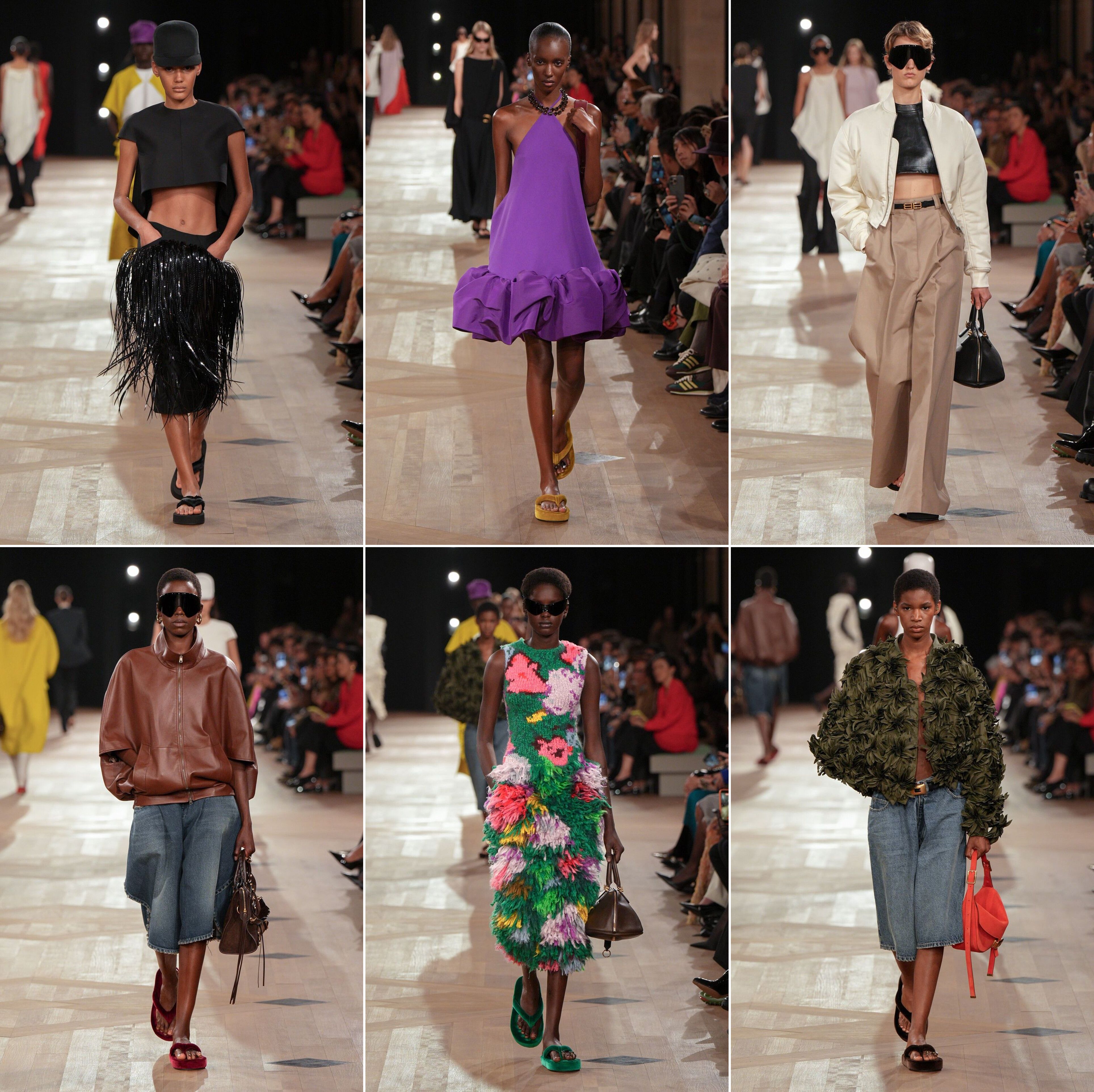
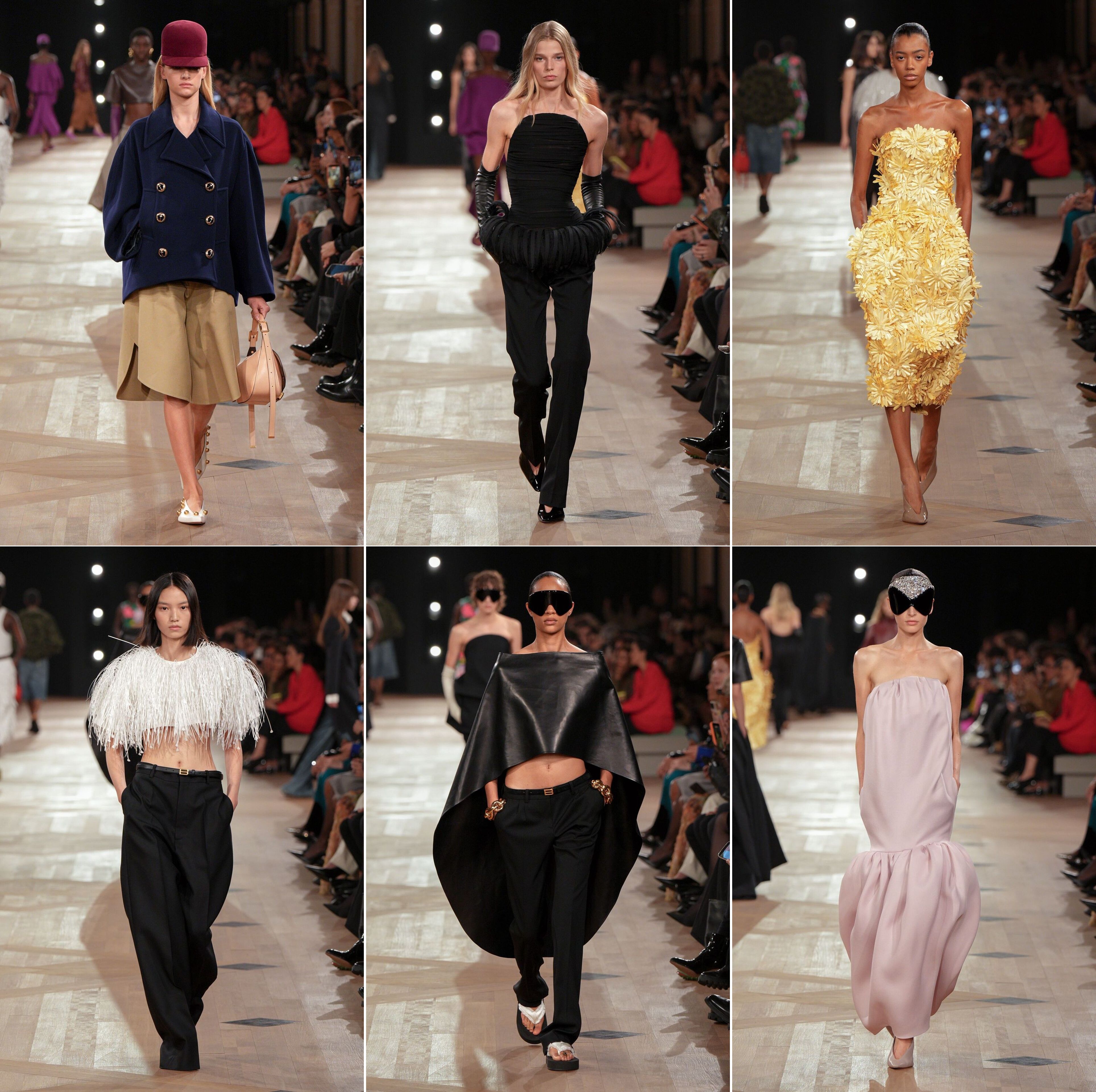
One thought lingered—and stayed: What about the customers Balenciaga so successfully gained in the last decade? Who or where will the streetwear die-hards and hypebeasts turn to? What would the shampoo boys and girls throughout our island and across the causeway buy, now that those oversized T-shirts with the logotype emblazoned on the chest are no more? Mr Gvasalia did not just redesign clothes; he engineered a completely new type of luxury consumer. And his reimagining (or reproportioning) proposed that ‘cool ’ isn’t what everyone loves, but what many hate. The less divisive Balenciaga becomes, the less its draw. People want to be outraged, to be scandalised, to be able to burn their bags. Balenciaga, through Mr Piccioli, is choosing its legacy over its viral moments.
The show was staged near Balenciaga’s main couture salons, at the Kering HQ, formerly the Laennec Hospital. While the venue itself was not surprising, one key element was clearly missing: the abrasive musical mixes of BFRND. This time, the uniformly attractive models walked to an avalanche of good taste that opened and closed with Lauryn Hill’s remake of Can’t Take My Eyes Off Of You. Despite subversion fatigue, and irony too, it is not clear if what fashion presently needs is pretty perfection. Mr Piccioli himself acknowledged this difficulty, stating that he wanted to work with the past—including Mr Demna’s archetypes—but with his own sensibility. Pierpaolo Piccioli took his bow at the end of the finale to standing ovation. Bounding up and down the runway, he was seen wearing the chunky Balenciaga sneakers his predecessor made famous. All it took was a pair of sneakers to state clearly: the future of Balenciaga must contain a controlled dose of the chaos that saved it.
Screen shot (top) balenciaga/YouTube. Photos: Balenciaga
 Style on the Dot