Viewpoint| Once considered a leader of the circular fashion revolution in Southeast Asia, Style Theory is now in need of an epitaph
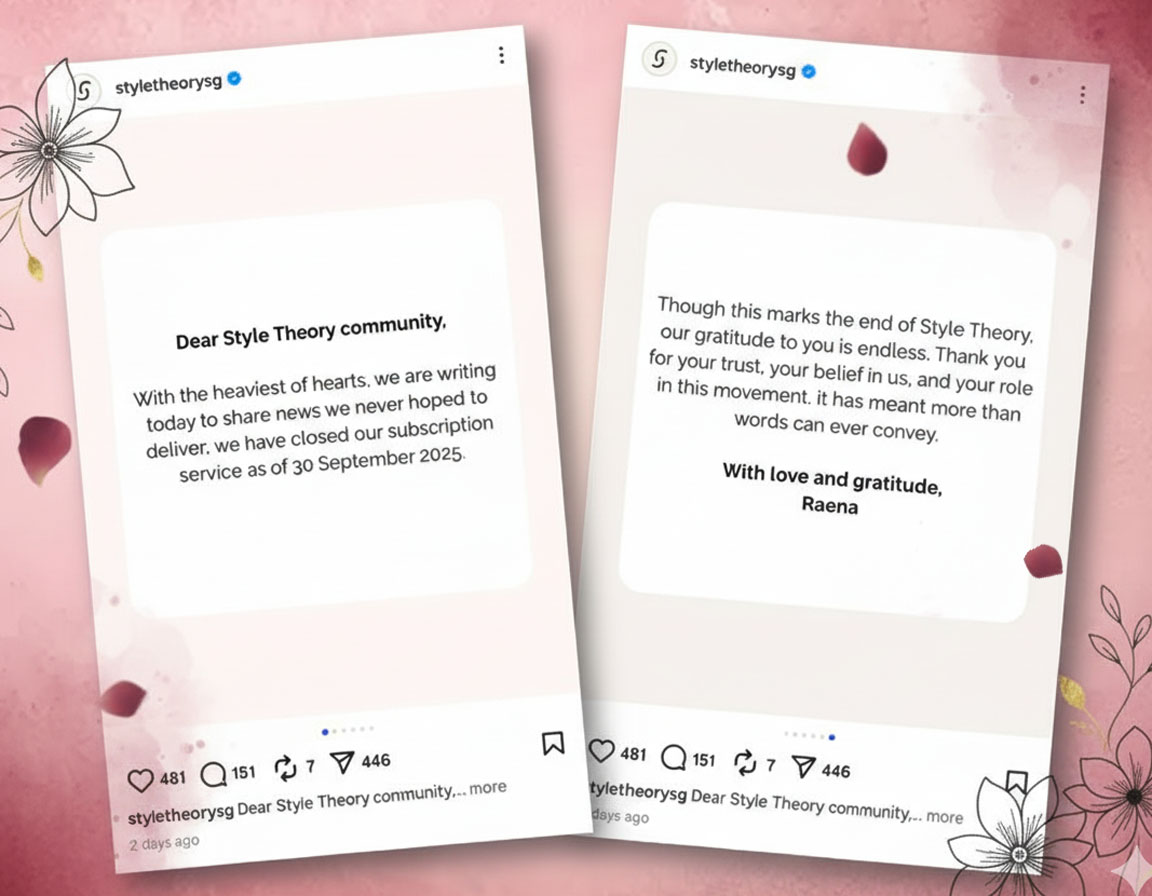
First and last of the six-slide post on Style Theory’s Instagram page. Illustration: Just So
In the rarefied, often delusional echo chamber of Southeast Asian venture capital, Style Theory was a beautiful anomaly. It was a digital answer to a very modern, very wealthy-world problem: the overstuffed, yet nothing-to-wear closet. But this week, shortly before their 10th year, the inevitable occurred. The online subscription-based rental platform, which successfully raised tens of millions from the most fashion-forward names in finance, including Japan’s SoftBank, suddenly pivoted—right into liquidation, confirming every cynical suspicion about the “sustainable” tech gold rush and the mining of the engorged wardrobe of millions.
Their services officially ended on September 30, according to a company statement that now sits like a bleak, single-page note on their non-functional app and social channels—the digital equivalent of a generic notice hastily taped to a lift lobby. It was co-founder Raena Lim, in a role she surely did not imagine, who delivered the bad news she “never hoped to deliver”. While the notice cited rising costs and the “withdrawal of key investors” as the main culprits, it was immediately savaged by the community for what it omitted. A brand that traded on transparency and aspirational sharing appeared to have kept the most critical information—specifically regarding financial and logistical finalisation—a guarded secret.

Raena Lim and Cheris Halim of Style Theory, Screen shot: styletheory/Instagram
Style Theory was founded in 2016 by “husband-and-wife” team Chris Halim and Raena Lim, both descended from the highest branches of institutional finance to start their own business. Mr Halim was a former trader, who cut his teeth at Bain & Company, while Ms Lim was with Goldman Sachs. Their clothing rental startup came about when her husband “one day looked at me and my bursting closet and asked me why women often complain that they have nothing to wear when they have wardrobes full of clothes,” she told Tatler in 2022. “This was the ‘aha’ moment that led us to realise that there was a problem that we could solve in the industry,” which recalled Malaysian founders of the also-closed Fashion Valet, Vivi Yusof ’s and husband Fadzaruddin Shah Anuar’s similar “aha moment”. Ms Lim did not say why a personal problem was, to them, an industry problem.
That hubristic leap from personal frustration to multi-million-dollar industry solution appeared to define the VC mindset. The company’s growth largely depended on the consignment model, an ingenious tactic that rendered the inventory ‘capital-light’ for the investors, effectively getting the community to front the value of the stock. Consignors entrusted their high-value designer bags and apparel (or indeterminate worth) to the platform, making them the silent, uncompensated owners of the company’s biggest asset. This model was financially elegant until destiny arrived right on schedule. Now, these consignors have been legally stripped of their status as owners and converted into mere unsecured creditors—a designation that places their claims for their own property at the absolute bottom of the liquidation queue, behind banks and secured lenders.

Style Theory app. Photo: Zhao Xiangji
The consignment partnership, once touted as a circular sharing economy, was revealed in the final accounting to be nothing more than a warehouse for a company now focused on its financial exit. One consignor told CNA, “I don’t know what to do. Should I just wait for their updates, or should I do anything?” She added, “I don’t know whether the bag (a S$4,000 Louis Vuitton bag) is with them or is in one of the customers’ places. It’s a luxury bag, it cost a lot, and they still owe me the payout.” In 2023, Style Theory boasted on Instagram that they were stocked with “over 60,000 pieces of apparel and over 2,500 pieces of bags”, except they did not actually own the stock. For some industry observers, this was an ethical liability beautifully dressed as a financial advantage.
The core business of a large-scale apparel rental platform is a logistical nightmare, as Chris Halim told the media. It requires meticulous, costly, and complex management of cleaning, repair, quality control, shipping, and reverse logistics. To use the couples’ preferred lingo, it is a low-margin, high-touch operation. However, the moment Style Theory took millions in VC money, it stopped being a fashion logistics company trying to make a small profit; it became a data enterprise chasing explosive metrics. The investor mandate was clear: scale faster, not more sustainably. This pressure to “blitzscale” led to aggressive expansion into markets like Indonesia and the launch of secondary ventures like ‘Second Edit’ (resale), all of which burned cash and complicated the already fragile operational backbone.
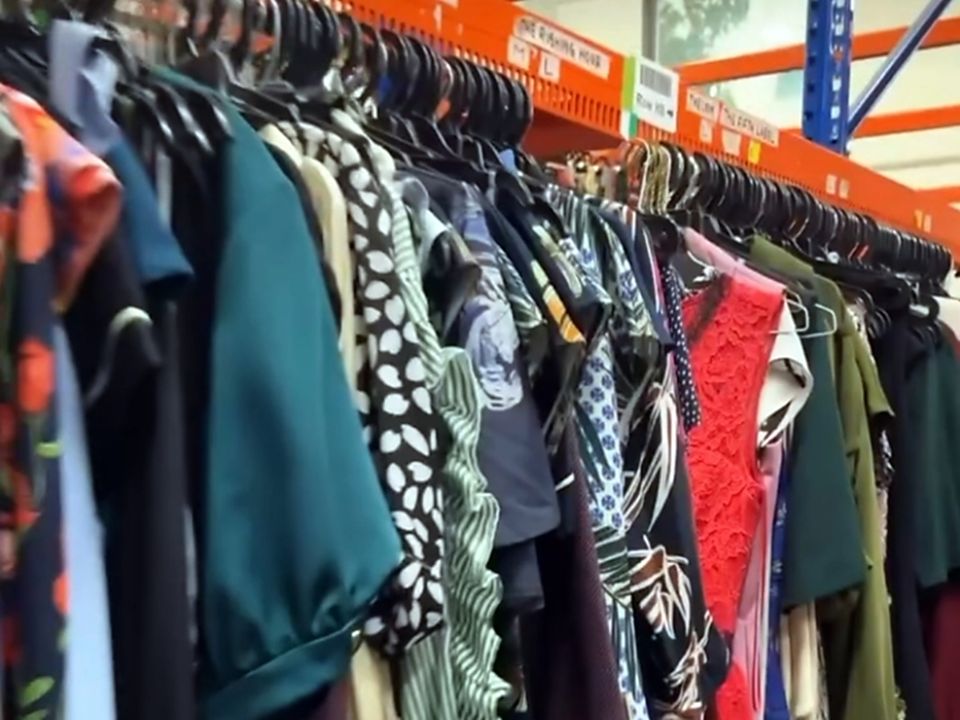
Style Theory’s tremendous stock level, but subscribers complained of not finding anything to rent. Screen shot: styletheory/Instagram
But perhaps the ultimate failing was in the products themselves. Subscribers often found that the “infinite wardrobe” Style Theory enthusiastically touted was less a runway collection and more a gathering of pieces few actually wanted to rent, a perennial complaint that dogged rental services globally. The operational necessity of circulating clothes efficiently often meant that the highly sought-after, genuinely fashionable items were constantly in rotation, leaving the average user to choose from a less-than-inspiring selection. The irony is striking: Style Theory offered customers the same problem the husband-and-wife team set out to solve: a dizzying variety of choices, yet still, there was nothing to truly secure. Option overload is, as the Halims knew all along, no option at all.
The inevitable end of the business, therefore, was not an organic failure, but a tactical withdrawal. The liquidation process, in its cold legal efficiency, ensures that the founders, likely having secured their personal finances during the years of capital influx, are personally shielded. They now walk away with a valuable lesson and a tidy sum, free to pursue their next glamorous venture. Meanwhile, the community they swore to serve—the subscribers who lost their refunds and the consignors chasing their handbags—are left to endure the logistical wreckage and financial indignity. Style Theory’s epitaph shouldn’t be about sustainability. It should serve as a warning against the model: privatising the gleam, socializing the grime.
 Style on the Dot